
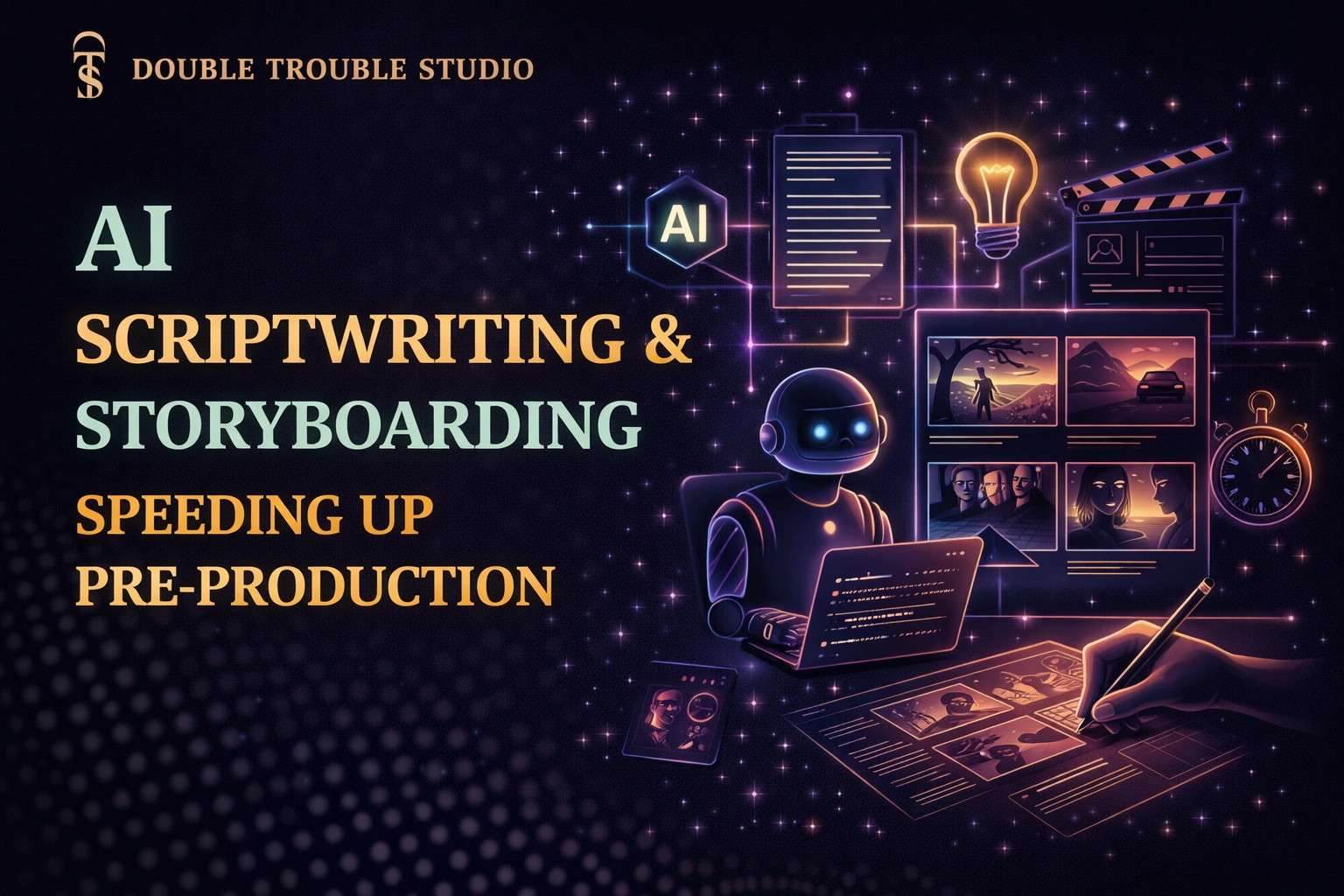
AI Scriptwriting & Storyboarding: Speeding Up Pre-Production
In high-end video production, pre-production has always been the most decisive stage. It is where ideas are transformed into structured narratives, where abstract concepts take shape, and where creative direction is aligned before execution begins. Every inefficiency at this stage multiplies downstream, affecting production timelines, budgets, and final output quality.
In 2026, artificial intelligence has redefined how pre-production operates. Scriptwriting and storyboarding — once heavily dependent on time, human iteration, and multiple revisions — are now accelerated through intelligent systems that assist in ideation, structure, and visualization, as seen in AI-driven PR and content strategies.
For luxury brands, production houses, and agencies, this transformation is not just about speed. It is about achieving clarity faster, exploring more creative directions, and making better decisions before production begins.
Because in premium content creation, time saved is valuable.
But clarity gained is invaluable.
The Strategic Importance of Pre-Production in Luxury Content
Luxury content operates at a different standard. Unlike mass-market communication, where speed and volume dominate, premium content requires precision, alignment, and intentionality, similar to luxury brand positioning strategy. Every frame must reflect brand positioning. Every narrative must feel curated.
Pre-production is where this precision is engineered.
Scriptwriting defines the emotional and narrative arc. Storyboarding translates that arc into visual sequences. Together, they act as the blueprint that ensures consistency across all stages of production.
Without a strong pre-production framework, even the most advanced filming setups or post-production techniques cannot compensate for structural gaps.
AI does not replace this framework.
It strengthens it.
The Evolution of Scriptwriting: From Manual Craft to AI-Assisted Intelligence
Traditionally, scriptwriting has been a layered process. It begins with ideation, followed by drafting, internal discussions, revisions, and eventual alignment. While this process allows for depth, it is inherently time-intensive.
AI has introduced a new dimension to this workflow. By processing prompts, audience intent, and contextual inputs, AI systems can generate structured scripts within minutes, aligned with content strategy frameworks. These scripts often include narrative flow, tone alignment, and scene breakdowns.
This acceleration changes how creative teams operate. Instead of spending time on initial drafts, they can focus on refining and enhancing narratives.
However, AI-generated scripts are not final outputs. They are frameworks that require human interpretation and refinement, similar to brand storytelling strategy. Emotional nuance, cultural context, and brand-specific storytelling still depend on human creativity.
AI accelerates ideation.
But storytelling remains an art.
Narrative Intelligence: Structuring Stories with AI
One of the most significant advantages of AI in scriptwriting is its ability to structure narratives effectively. It organizes ideas into coherent sequences, ensuring logical progression and clarity.
In luxury storytelling, structure is critical. The narrative must guide the audience through a journey — from intrigue to engagement to emotional connection, similar to PR storytelling frameworks. AI helps establish this flow quickly, reducing ambiguity.
For example, AI can identify pacing issues, suggest transitions, and maintain consistency in tone.
Narrative clarity enhances communication.
And communication defines impact.
Storyboarding in 2026: From Static Frames to Dynamic Visualization
Storyboarding has traditionally been a manual process involving sketches, visual references, and detailed planning. While effective, it requires time and specialized skills.
AI has transformed storyboarding into a dynamic process. By converting scripts into visual sequences, AI tools allow teams to visualize scenes almost instantly, aligned with digital content execution strategies. These visualizations may include camera angles, compositions, and basic environmental elements.
This capability is particularly valuable in early-stage planning. It allows creative teams to experiment with different visual approaches without committing to final designs.
Instead of static frames, storyboards become flexible visual prototypes.
They evolve alongside the narrative.
Visual Consistency and Brand Language
In luxury content, consistency is non-negotiable. Every visual element must align with brand identity, from color tones and lighting to composition and styling.
AI-assisted storyboarding helps maintain this consistency by aligning visuals with predefined parameters, similar to content consistency frameworks. It ensures that the overall aesthetic remains cohesive across scenes.
However, AI operates within the boundaries defined by input. Without clear creative direction, outputs can lack specificity.
Human oversight ensures that visual language remains intentional.
Consistency is not generated.
It is curated.
Speed as a Strategic Advantage
The most visible benefit of AI in pre-production is speed. Tasks that previously required hours or days can now be completed within minutes.
This speed allows teams to explore multiple ideas, iterate quickly, and refine concepts without delay, aligned with integrated workflow strategies. It reduces bottlenecks and accelerates decision-making.
In fast-paced environments such as digital marketing and event production, this advantage is significant.
However, speed must be managed carefully.
Speed enhances efficiency.
But depth ensures quality.
Collaborative Efficiency in AI-Driven Workflows
AI tools also improve collaboration across teams. Scripts and storyboards can be generated, shared, and revised quickly, enabling faster feedback cycles, similar to collaborative media strategies.
This is particularly valuable in projects involving multiple stakeholders.
Collaboration becomes more structured.
And structure improves outcomes.
AI Tools Transforming Pre-Production
In 2026, a range of AI tools support scriptwriting and storyboarding. These tools analyze language, generate visuals, and assist in structuring content, aligned with AI strategy frameworks.
Tools provide capability.
Strategy determines application.
Balancing Automation with Creative Direction
One of the key challenges in AI-driven pre-production is maintaining creative control.
Creative direction ensures that AI outputs align with brand identity, similar to competitive positioning strategies.
The balance between automation and artistry defines success.
Use Cases in Luxury Advertising
In luxury advertising, AI scriptwriting allows brands to explore multiple narrative directions quickly.
Storyboarding tools then visualize these concepts, ensuring alignment with positioning, similar to campaign strategy frameworks.
Pre-production becomes more strategic.
Use Cases in Event Recaps
Event recaps require structured storytelling to capture the essence of an experience.
AI assists in organizing footage into coherent narratives, often supported by event production services.
Recaps are storytelling assets.
Cost Efficiency and Resource Optimization
AI-driven pre-production reduces the time and resources required for initial planning.
Budgets can be optimized without compromising quality, aligned with performance optimization strategies.
Efficiency supports growth.
The Future of AI in Pre-Production
The future of AI in scriptwriting and storyboarding lies in deeper integration.
Tools are becoming more sophisticated, offering better alignment with brand tone and visual style, similar to integrated brand strategies.
AI will continue to evolve.
But storytelling will always require human insight.
AI-Driven Content Creation
AI-assisted pre-production enables faster content creation, supporting SEO strategies.
Structured narratives improve engagement, aligned with content marketing strategies.
SEO success is driven by meaning.
Frequently Asked Questions (FAQs)
What is AI scriptwriting?
Ans: AI scriptwriting uses artificial intelligence to generate structured scripts based on prompts, helping speed up ideation and content planning.
How does AI improve storyboarding?
Ans: AI converts scripts into visual sequences, allowing teams to quickly visualize scenes and plan production more efficiently.
Can AI replace creative professionals?
Ans: No, AI supports workflows, but human creativity and decision-making remain essential for high-quality outputs.
Is AI suitable for luxury brand content?
Ans: Yes, when used strategically. AI accelerates pre-production, while human expertise ensures premium quality.
What is the biggest advantage of AI in pre-production?
Ans: Speed and efficiency, enabling faster ideation, better collaboration, and improved decision-making.
Conclusion: Accelerating Without Compromising
AI has transformed pre-production into a faster, more adaptive process.
However, for luxury brands, where precision and storytelling depth are critical, human creativity remains indispensable.
Because in premium content creation, speed is an advantage.
But control defines excellence.
Design Your Pre-Production Strategy
If you are planning luxury ads, event recaps, or high-end video content, pre-production should be structured, strategic, and efficient.
From AI-assisted scriptwriting and storyboarding to creative direction and execution planning, our team ensures that your projects begin with clarity and end with impact.
📩 hello@dtsworld.in
📞 +91 80000 06021
📍 Andheri East, Mumbai
👉 Design Your Pre-Production Strategy