
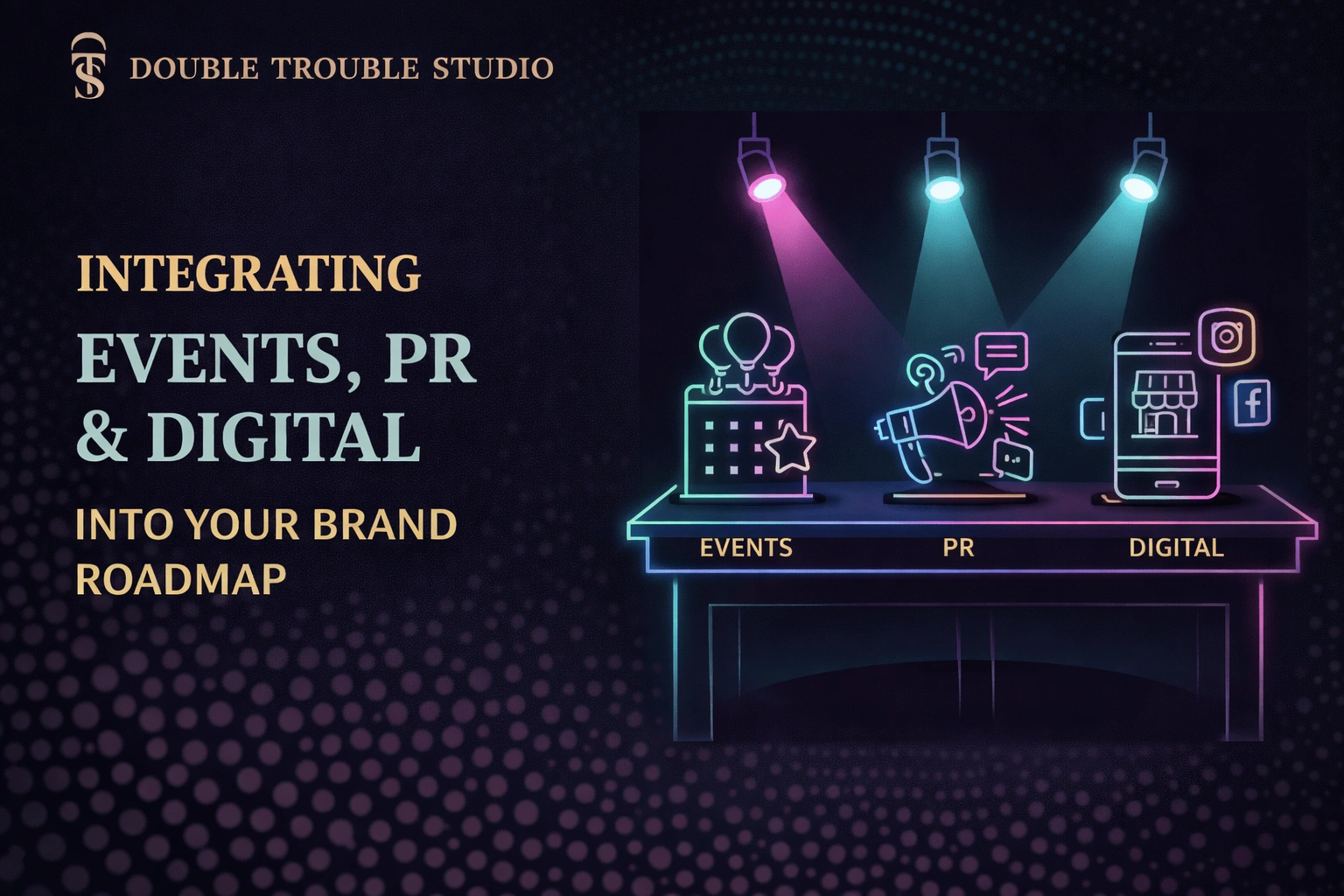
Integrating Events, PR & Digital into Your Brand Roadmap
In 2026, brand building is no longer driven by isolated functions. Events, public relations, and digital marketing cannot operate as independent verticals. They must function as a unified system, working together to create a consistent and controlled perception, as explored in brand narrative strategy.
For premium and luxury brands, this integration is not just beneficial.
It is essential.
An event without digital amplification is limited in reach. PR without experiential backing lacks depth. Digital without real-world credibility feels superficial. When these elements operate in silos, the result is fragmentation.
When they are integrated, the result is authority.
A brand roadmap that aligns events, PR, and digital transforms scattered activities into a structured narrative. It ensures that every interaction — whether physical, editorial, or digital — reinforces the same positioning, often supported by strategic brand roadmap services.
Because in premium markets, growth is not achieved through volume.
It is achieved through coherence.
Understanding Integration as a Strategic Architecture
Integration is often misunderstood as coordination. Many brands attempt to align their teams by sharing timelines or content plans. While this may improve efficiency, it does not create true integration.
True integration begins at the strategic level.
It requires defining a central narrative that all functions support, similar to frameworks in strategic roadmap planning.
Events, PR, and digital activities must contribute to the same objective, reinforcing the same message.
An event becomes the origin of experience. PR extends that experience into credibility. Digital amplifies and sustains it.
Without this architecture, activities remain disconnected.
With it, they become a unified brand system.
The Role of Events as Experiential Anchors
Events play a unique role in brand building. They provide a physical environment where the brand can be experienced directly.
In a strategic roadmap, events act as anchors. They are the moments around which other activities are structured, often executed through luxury event management services.
For example, a product launch event is not just a standalone activity. It becomes the central point from which PR stories and digital content are created.
The design of the event must align with the brand’s positioning.
In luxury branding, events are not about scale.
They are about precision.
This environment becomes the source of narrative for other channels.
PR as a Credibility Engine
Public relations extends the impact of events and campaigns by placing the brand within trusted platforms.
In an integrated roadmap, PR is not reactive. It is planned in alignment with events and digital activities, often supported by PR and digital marketing services.
Media coverage, influencer engagement, and editorial placements must reflect the same narrative established during the event, similar to premium media strategies.
PR also adds depth by providing context and meaning.
PR builds authority.
And authority sustains perception.
Digital as a Continuity Layer
Digital platforms provide continuity. They ensure that the brand remains present beyond specific moments.
In an integrated roadmap, digital is not just a distribution channel. It is a narrative extension, aligned with integrated PR and digital strategies.
Content created during events is adapted for digital platforms. PR coverage is amplified across channels.
Consistency remains essential.
Digital content must align with the same positioning defined in events and PR.
Continuity transforms visibility into sustained engagement.
Designing a Unified Narrative Across Channels
The foundation of integration lies in narrative design.
Before planning events, PR activities, or digital campaigns, the brand must define a central narrative, as explained in story-led PR frameworks.
This narrative acts as the connecting thread across all channels.
Events will showcase experiences. PR will highlight positioning. Digital will extend storytelling.
Without a unified narrative, integration becomes superficial.
With it, integration becomes strategic.
Timing and Sequencing in an Integrated Roadmap
Integration is not only about alignment, but also about timing.
A well-structured roadmap ensures that events, PR, and digital activities are timed to maximize impact, similar to launch roadmap strategies.
Pre-event content builds anticipation. PR prepares coverage. Events act as focal points. Post-event content sustains momentum.
Timing defines perception.
Audience Journey and Multi-Touchpoint Engagement
Integration must also consider the audience journey.
Different audiences interact with the brand through events, media, or digital content.
A unified roadmap ensures that these interactions feel connected, similar to content strategy planning.
Events create immersion. PR provides validation. Digital sustains engagement.
Together, they create a complete experience.
Maintaining Consistency Across Execution
Consistency is one of the most challenging aspects of integration.
A strong roadmap establishes clear guidelines for messaging, visual identity, and tone, often aligned with brand positioning strategy.
Regular coordination ensures alignment.
For luxury brands, consistency is the foundation of perception.
Challenges in Integration and How to Address Them
Integrating events, PR, and digital involves challenges such as misalignment, inconsistent messaging, and timing issues.
Addressing these challenges requires structured planning and clear communication, often supported by strategic roadmap frameworks.
Flexibility is also important.
Integration is dynamic and adaptive.
Long-Term Impact of an Integrated Approach
The true value of integration lies in its long-term impact.
It ensures that every activity contributes to a larger narrative, building cumulative perception over time, similar to performance measurement strategies.
Integration transforms activities into strategy.
Frequently Asked Questions (FAQs)
What does it mean to integrate events, PR, and digital?
It means aligning all functions within a unified strategy.
Why is integration important?
It ensures consistency and credibility.
How do events contribute?
They act as experiential anchors.
What role does digital play?
It provides continuity.
Can integration improve growth?
Yes, it creates sustained perception.
Conclusion: From Activities to Systems
In 2026, brand growth is defined by integration.
Events, PR, and digital are components of a unified system.
A structured roadmap ensures alignment and continuity.
Because in luxury branding, success is not defined by individual moments.
It is defined by how those moments connect.
Design Your Integrated Brand Roadmap
If you are planning your brand’s growth strategy, integrating events, PR, and digital ensures clarity and sustained impact.
From narrative design and event strategy to PR execution and digital amplification, our team ensures that your brand operates as a unified system.
📩 hello@dtsworld.in 📞 +91 80000 06021 📍 Andheri East, Mumbai
👉 Design Your Brand Roadmap