
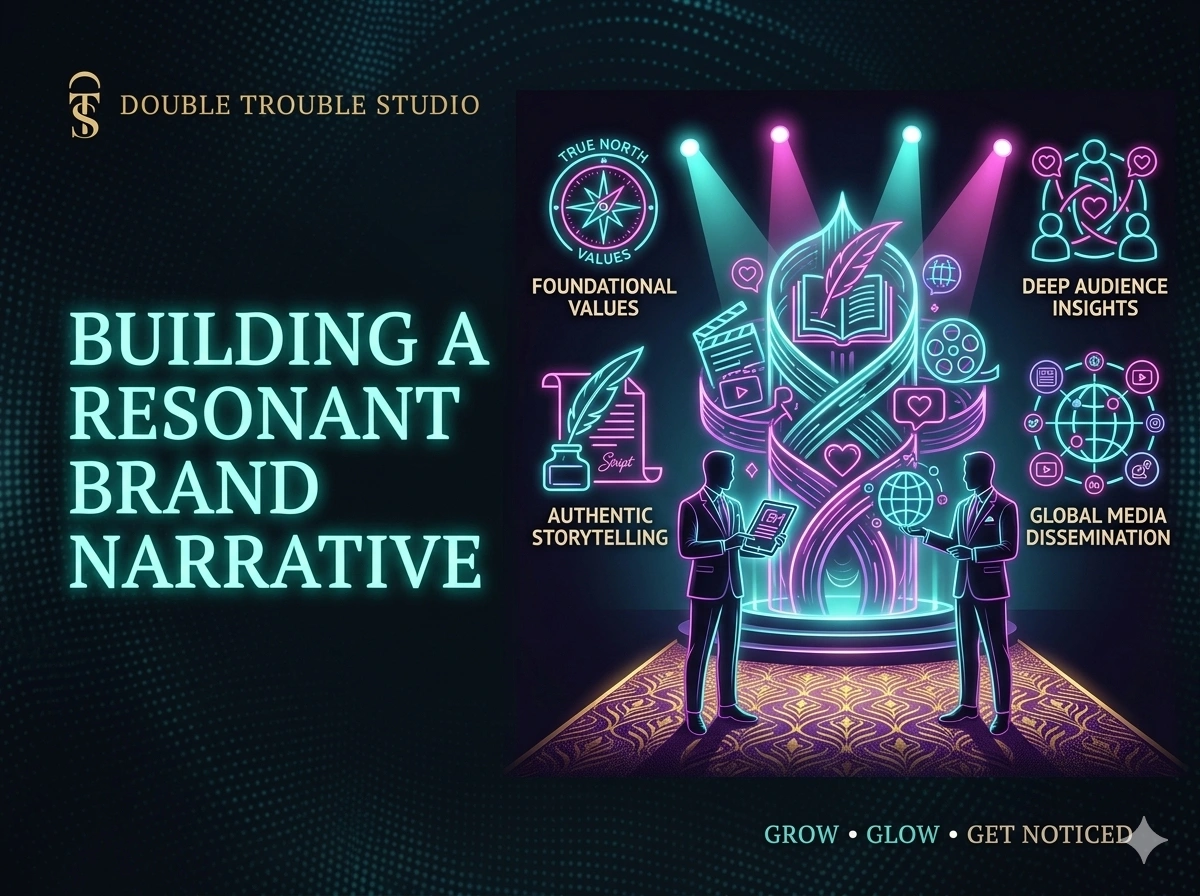
Building a Brand Narrative: Story-Led PR That Resonates
In luxury branding, visibility is no longer the differentiating factor. Premium audiences today are exposed to constant communication — launches, collaborations, celebrity appearances, and curated content across multiple platforms. Yet, despite this saturation, only a few brands remain memorable.
The difference lies in narrative.
A brand narrative is not simply what a brand says. It is how consistently and intentionally it communicates meaning across every touchpoint. In high-end environments, where perception defines value, narrative becomes the foundation of influence. Without it, even the most visually impressive campaigns feel fragmented. With it, even subtle communication carries weight.
In 2026, story-led PR has evolved into a strategic discipline. It is no longer about generating coverage. It is about shaping interpretation. Every message, every event, and every piece of content contributes to how the brand is understood.
Because in premium markets, attention may be immediate.
But resonance is built over time.
Moving Beyond Announcements to Narrative Architecture
Traditional PR models were built around announcements — product launches, brand milestones, and media coverage cycles. While these remain relevant, they no longer define success. Audiences today are not just consuming information. They are interpreting patterns.
A single announcement may generate attention, but it does not build identity. Narrative architecture, on the other hand, creates continuity. It ensures that every communication point is connected, reinforcing a larger story that evolves over time.
This requires a shift in approach. Instead of asking “What should we announce?”, brands must ask “What are we building over time?”. Each campaign, collaboration, or event becomes a chapter within a broader narrative.
In luxury branding, fragmentation reduces authority.
Continuity strengthens it.
Defining the Core Narrative Framework
Every strong narrative begins with clarity, but clarity in this context goes deeper than positioning statements. It requires a structured understanding of identity, audience, and intention.
A brand must define not only what it represents but also how it wants to be perceived within its category. Is it aspirational, understated, disruptive, heritage-driven, or contemporary? These distinctions influence tone, visuals, and communication strategy.
Equally important is audience alignment. Luxury audiences are not homogenous. High-net-worth individuals, corporate stakeholders, cultural influencers, and digital audiences interpret narratives differently. A strong narrative framework considers these layers while maintaining a consistent core.
Without this structure, messaging becomes reactive. With it, communication becomes directional.
Narrative is not created through words alone.
It is created through alignment.
Story Integration Across Brand Experiences
In premium environments, PR cannot exist in isolation from experience. A brand narrative must be reflected not only in communication but also in execution.
A luxury event, for example, is not just an operational activity. It is a narrative platform. The venue selection, guest list, design language, and even the flow of the event must align with the story being told.
If a brand positions itself as exclusive but hosts overcrowded events, the narrative breaks. If it communicates refinement but delivers inconsistent service, the perception shifts.
Consistency between narrative and experience is what creates credibility. When guests feel the story rather than just hear it, the impact becomes significantly stronger.
In luxury, experience validates communication.
Media Strategy as Narrative Curation
Media is often approached as a distribution channel, but in story-led PR, it becomes a curation tool. Not every platform contributes equally to perception. The choice of where a brand appears influences how it is interpreted.
Premium publications, niche digital platforms, and influential voices each carry distinct contextual weight. Aligning with the right channels ensures that the narrative is not diluted.
This also requires restraint. Overexposure can weaken exclusivity. Strategic placement, on the other hand, enhances desirability. The goal is not to be everywhere.
It is to be seen in the right places.
When media selection aligns with narrative, amplification becomes more precise and impactful.
Consistency Without Repetition
One of the challenges in narrative building is maintaining consistency without becoming repetitive. A strong narrative evolves, but it does not change direction.
Each communication touchpoint should reinforce the same core identity while offering a new perspective. This creates familiarity without redundancy. Over time, audiences begin to recognize the brand not just through visuals but through tone and intent.
Inconsistent messaging creates confusion. It forces audiences to reinterpret the brand repeatedly, weakening recall. Consistency, on the other hand, builds recognition and trust.
In luxury branding, subtle consistency often creates stronger impact than dramatic variation.
Emotional Positioning and Psychological Impact
Luxury branding operates as much on emotion as it does on logic. A well-crafted narrative does not simply inform. It positions the brand within the audience’s perception.
This positioning may evoke aspiration, exclusivity, belonging, or cultural relevance. The emotional layer is what transforms communication into connection.
However, emotional positioning in premium markets requires restraint. Overstatement can feel inauthentic. Subtlety, on the other hand, allows the audience to interpret and internalize the narrative.
When a brand resonates emotionally, it moves beyond visibility.
It becomes desirable.
The Role of Influencers and Cultural Voices
In 2026, influencers and cultural voices play a significant role in extending brand narratives. However, their impact depends entirely on alignment.
Collaborations must feel organic. The influencer’s identity, audience, and communication style should complement the brand’s narrative. When alignment exists, the message extends naturally. When it does not, it creates disconnect.
Luxury brands increasingly focus on fewer, more meaningful collaborations rather than widespread influencer engagement. This approach preserves narrative integrity while maintaining exclusivity.
Integration is more powerful than scale.
Real-Time Narrative Management
Modern PR operates in real time. Events, campaigns, and digital interactions unfold dynamically, often influencing perception instantly. This requires brands to manage narrative as it evolves.
Real-time content, live coverage, and audience engagement must all align with the established framework. This does not mean rigid control, but rather guided flexibility. The narrative should adapt without losing its core identity.
Monitoring audience response also becomes important. Feedback, engagement patterns, and media interpretation provide insights into how the narrative is being received.
In high-visibility environments, perception is fluid.
Control ensures it remains aligned.
Measuring Narrative Impact Beyond Metrics
Traditional PR metrics such as impressions and reach provide useful data, but they do not capture the full impact of a narrative. In luxury branding, qualitative perception often carries more weight.
How is the brand being described? What associations are being formed? How is it positioned within its category? These questions provide deeper insight into narrative effectiveness.
Long-term recall, audience sentiment, and peer perception within influential networks are often stronger indicators of success than numerical metrics alone.
Narrative is not measured only in numbers.
It is measured in meaning.
Conclusion: Narrative as a Long-Term Asset
Building a brand narrative is not a campaign. It is a continuous process that evolves with the brand. In India’s premium market, where competition is intense and differentiation is subtle, narrative becomes a long-term asset.
When developed with clarity and executed with consistency, it creates depth. It shapes perception, strengthens positioning, and builds lasting connection with the audience.
Brands that understand this do not rely on visibility alone. They invest in meaning.
Because in luxury branding, people may notice what you do.
But they remember what you stand for.
Frequently Asked Questions (FAQs)
What is a brand narrative in PR?
A brand narrative is a structured story that defines how a brand communicates its identity, values, and positioning across all touchpoints.
Why is story-led PR important in luxury branding?
It ensures consistency, builds emotional connection, and strengthens long-term brand perception.
How does narrative differ from regular marketing?
Narrative focuses on continuity and meaning, while traditional marketing often focuses on individual campaigns.
Can narrative be changed over time?
It can evolve, but its core identity should remain consistent to maintain recognition and trust.
What is the biggest mistake brands make in PR?
Inconsistency in messaging, which weakens perception and reduces impact.
Design Your Brand Narrative Strategy
If you are building a luxury brand, launching a high-impact campaign, or curating a premium event in India, your narrative should lead every decision — not follow it.
From defining your core story and aligning media strategy to integrating influencers and managing real-time communication, our team ensures that your brand is not just visible, but understood and remembered.
📩 hello@dtsworld.in 📞 +91 80000 06021 📍 Andheri East, Mumbai
👉 Design Your Brand Narrative Strategy