
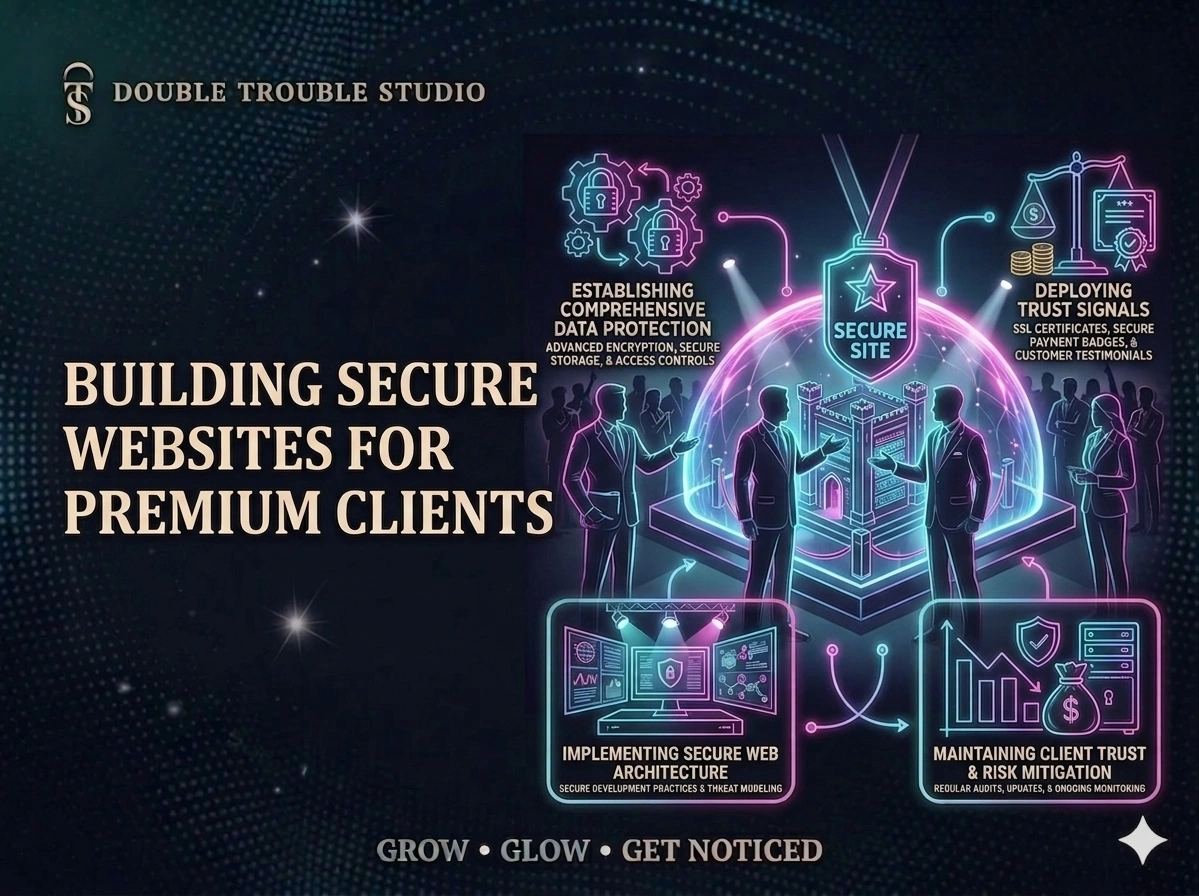
Building Secure Websites for Premium Clients (Data Protection & Trust Signals)
In 2026, website security is no longer a backend technical concern that operates invisibly behind design and functionality. For premium and luxury brands, it has become a visible component of brand perception. Clients interacting with high-end services are not only evaluating aesthetics and experience; they are also evaluating how safe, private, and trustworthy the digital environment feels.
A luxury website is not simply a platform for information or conversion. It is a controlled environment where clients share sensitive details, whether that includes personal data, financial information, or confidential event requirements. The expectation is not just protection, but assurance. Users must feel confident that their data is handled with discretion, that interactions are secure, and that the brand operates with integrity.
This transforms security from a technical layer into a strategic pillar. Data protection, privacy frameworks, and trust signals must be integrated into the website experience in a way that aligns with the brand’s positioning. Security should not feel like an added feature. It should feel inherent.
Because in premium markets, trust is not assumed.
It is demonstrated.
The Role of Data Protection in Luxury Digital Experiences
Data protection is the foundation of website security, but in the context of premium brands, it carries additional significance. Clients engaging with luxury services often share information that goes beyond standard transactional data. This may include personal preferences, event details, guest lists, financial arrangements, or confidential communications. The sensitivity of this information elevates the importance of how it is collected, stored, and managed.
From a structural perspective, data protection begins with secure architecture. Websites must be built using frameworks that prioritize encryption, secure hosting environments, and controlled access systems. HTTPS protocols, secure server configurations, and regular vulnerability assessments are no longer optional. They are expected standards.
However, technical implementation alone is not sufficient. Data protection must also be communicated effectively. Users should be aware that their information is handled securely, but this communication must be subtle and aligned with the brand’s tone. Overly technical explanations can feel overwhelming, while lack of clarity can create uncertainty.
Privacy policies, terms of use, and consent mechanisms play a critical role in this process. They must be clear, accessible, and transparent. Users should understand what data is collected, how it is used, and how it is protected. At the same time, these elements must be integrated seamlessly into the website experience, ensuring that they do not disrupt the overall flow.
Another important aspect is data minimization. Collecting only the information that is necessary reduces risk and enhances trust. Luxury clients value discretion, and excessive data requests can create discomfort. Forms and interactions should therefore be designed thoughtfully, balancing functionality with privacy.
Data protection is not a static requirement. It requires ongoing monitoring, updates, and adaptation to evolving standards. Security threats continue to change, and systems must be maintained proactively to address them.
Privacy as a Core Component of Brand Experience
Privacy is closely linked to data protection, but it extends beyond technical safeguards. It reflects how a brand respects and manages user information throughout the entire interaction.
For premium clients, privacy is not just a preference.
It is an expectation.
Luxury brands often operate within environments where discretion is critical. Whether it involves high-profile individuals, corporate stakeholders, or private events, confidentiality is essential. This expectation carries over into digital interactions.
A secure website must therefore ensure that user data is not only protected from external threats but also handled responsibly internally. Access to sensitive information should be limited to authorized personnel, and systems should be designed to prevent unnecessary exposure.
Privacy also influences user behavior. When clients feel confident that their information is handled responsibly, they are more likely to engage. Conversely, any uncertainty can reduce interaction and hinder conversion.
Transparency plays a key role in privacy. Users should understand how their data is used, but this communication must be balanced with the brand’s positioning. Luxury brands must maintain a refined tone while providing clarity.
Another important consideration is compliance with regulations. Data protection laws and privacy standards vary across regions, and websites must adhere to these requirements. Compliance is not only a legal obligation but also a signal of professionalism.
Privacy, when managed effectively, enhances trust.
It reinforces the brand’s credibility.
Trust Signals: Communicating Security Without Disruption
Trust signals are the visible elements that reassure users about the safety and credibility of a website. In luxury branding, these signals must be integrated carefully to ensure that they enhance perception without disrupting the overall experience.
Traditional trust signals include SSL certificates, secure payment icons, and privacy badges. While these elements are important, their presentation must be subtle. Overemphasis can create a sense of insecurity, while underrepresentation can reduce confidence.
Design plays a critical role in this integration. Trust signals should align with the visual identity of the website, maintaining consistency in style and tone. They should be placed strategically, appearing at moments where reassurance is most needed, such as during form submissions or payment processes.
Content-based trust signals are equally important. Testimonials, client experiences, and media features provide social proof. For luxury brands, these elements must be curated carefully. The focus should be on quality rather than quantity.
Another form of trust signal is consistency. A website that feels cohesive, refined, and professionally designed inherently communicates reliability. In contrast, inconsistencies in design or functionality can create doubt.
Performance is also a trust signal. Fast loading times, smooth interactions, and responsive design contribute to a sense of professionalism. Technical issues, even minor ones, can affect perception significantly.
Trust signals are not limited to visual elements.
They are embedded in the entire experience.
Secure User Interactions and Transaction Systems
User interactions are one of the most sensitive aspects of website security. Whether it involves submitting inquiries, booking services, or making payments, these interactions require robust systems to ensure safety.
Forms and data entry points must be designed with security in mind. Input validation, encryption, and secure data transmission are essential. At the same time, the user experience must remain smooth and intuitive.
Payment systems require additional layers of protection. Integration with secure payment gateways, tokenization, and compliance with industry standards ensure that financial transactions are handled safely. For luxury clients, the perception of security during transactions is particularly important.
Authentication systems also play a role. Secure login processes, multi-factor authentication, and session management enhance protection. However, these systems must be designed to balance security with convenience.
User interactions should feel effortless.
But they must be protected.
Backend Security and Continuous Monitoring
While frontend elements influence perception, backend security ensures actual protection. This includes server management, database security, and monitoring systems.
Regular updates and patches are essential to address vulnerabilities. Outdated systems can create entry points for threats, compromising both data and trust.
Monitoring systems allow for real-time detection of unusual activity. This enables quick response to potential threats, minimizing impact.
Backup systems are also critical. In the event of data loss or breach, backups ensure continuity. These systems must be secure and regularly tested.
Backend security operates invisibly, but its impact is significant.
It supports the entire structure.
Balancing Security with User Experience
One of the key challenges in building secure websites is balancing protection with usability. Excessive security measures can create friction, while insufficient measures can create risk.
Luxury websites must achieve a balance where security is strong but unobtrusive. Users should feel safe without being overwhelmed by processes.
This requires thoughtful design. Security elements should be integrated seamlessly, ensuring that they support rather than disrupt the experience.
The objective is to create an environment where security feels natural.
Not restrictive.
Long-Term Trust and Brand Reputation
Security is not a one-time implementation.
It is an ongoing commitment.
For premium brands, maintaining security over time is essential for protecting reputation. A single breach can have lasting consequences, affecting not only data but also perception.
Continuous improvement, regular audits, and proactive updates ensure that systems remain effective. Communication with clients also plays a role. Transparency in addressing issues reinforces trust.
Long-term trust is built through consistency.
It reflects the brand’s reliability.
Frequently Asked Questions (FAQs)
What is website security for luxury brands?
Ans: It involves protecting user data, ensuring privacy, and maintaining trust through secure systems and communication.
Why is data protection important for premium clients?
Ans: Premium clients often share sensitive information, making secure handling essential for trust.
What are trust signals on a website?
Ans: They are elements that reassure users about security and credibility, such as secure connections and testimonials.
How can websites balance security and usability?
Ans: By integrating security measures seamlessly without disrupting user experience.
Is security a one-time process?
Ans: No, it requires continuous monitoring, updates, and improvement.
Conclusion: Security as a Reflection of Trust
In 2026, building secure websites is not just about protecting data.
It is about protecting perception.
For luxury brands, security is a reflection of professionalism, reliability, and integrity. It influences how clients interact with the brand and how they evaluate its credibility.
Data protection, privacy, and trust signals must work together to create an environment that feels safe and refined.
Because in premium markets, trust is not given easily.
But once earned, it defines long-term success.
Build Your Secure Website
If you are creating or upgrading your website, security must be integrated from the ground up.
From data protection frameworks and secure systems to trust signal integration and performance optimization, our team ensures that your website delivers both safety and premium experience.
📩 hello@dtsworld.in 📞 +91 80000 06021 📍 Andheri East, Mumbai
👉 Build Your Secure Website Strategy