
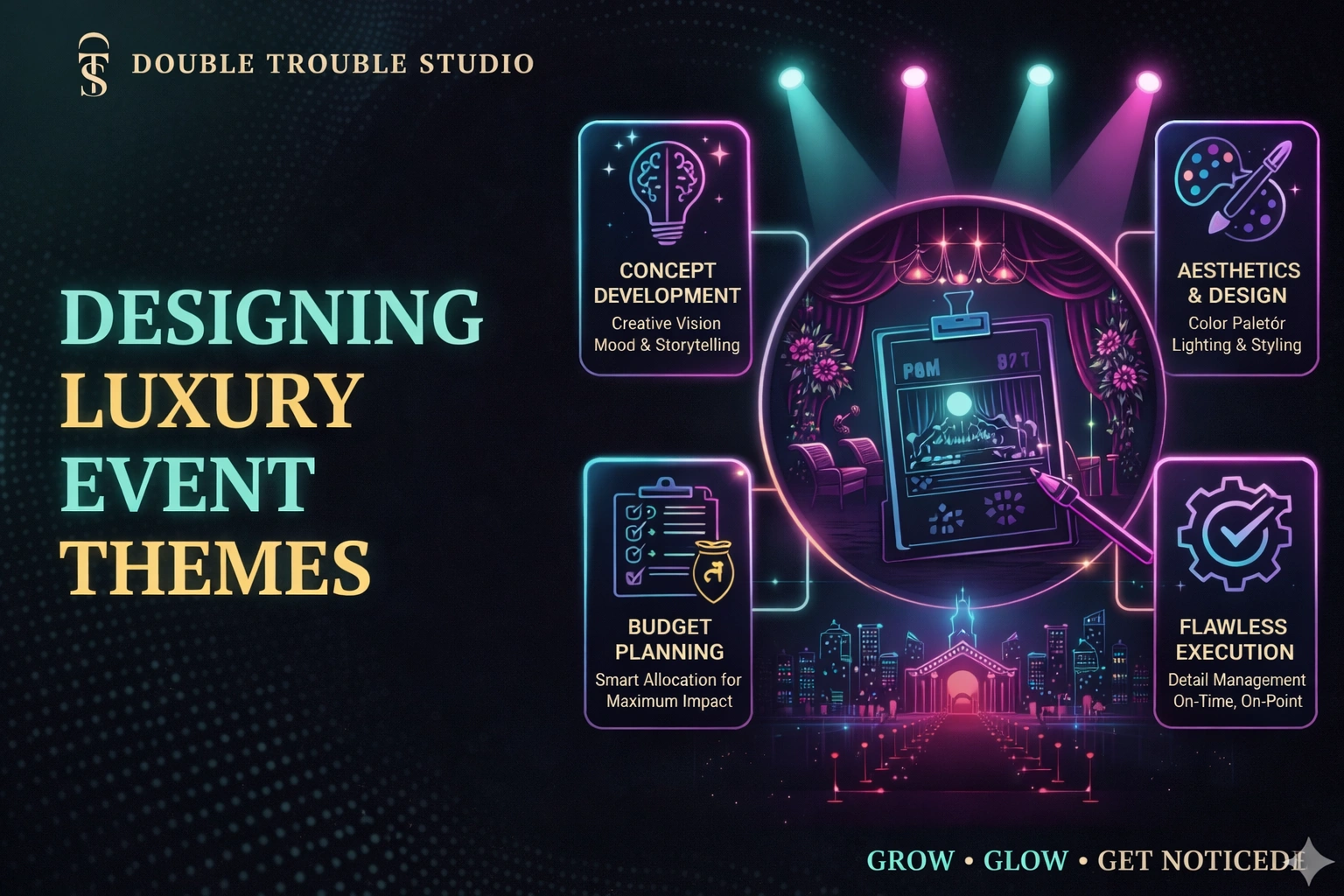
Designing Luxury Event Themes (Concept Development, Aesthetics & Execution)
In 2026, luxury events are no longer defined by scale alone. Grandeur, while still relevant, is no longer the primary differentiator. What distinguishes a truly premium event is its ability to create a cohesive, immersive, and emotionally resonant experience. At the center of this experience lies the event theme. It is not simply a decorative idea or a visual direction. It is the conceptual foundation that shapes every aspect of the event, from design and ambiance to guest experience and storytelling.
A luxury event theme is an interpretation of identity. Whether it is a high-profile wedding, a brand launch, or a private celebration, the theme must reflect the personality, values, and aspirations of the host or brand. It transforms an event from a collection of elements into a unified narrative, ensuring that every detail contributes to the same story.
Designing such themes requires a structured approach. Concept development, aesthetic design, and execution must work together seamlessly. Each stage builds upon the previous one, creating a process that moves from abstract ideas to tangible experiences.
Because in luxury events, a theme is not just seen.
It is experienced.
Concept Development: Translating Vision into Narrative
The process of designing a luxury event theme begins with concept development. This stage is not about selecting colors or décor styles. It is about defining the story that the event will tell. The concept serves as the foundation for all subsequent decisions, ensuring that the event remains cohesive and aligned with its purpose.
Understanding the client or brand is the first step in this process. For weddings, this involves exploring the couple’s personality, preferences, and cultural influences. For corporate or brand events, it requires a deep understanding of the brand’s identity, positioning, and objectives. The concept must reflect these elements while also creating a unique and memorable experience.
Inspiration can come from various sources, including art, architecture, fashion, nature, and cultural narratives. However, inspiration must be interpreted rather than replicated. The objective is not to recreate an existing idea but to adapt it in a way that feels original and relevant.
Once the inspiration is identified, it must be translated into a narrative. This narrative defines the tone of the event and guides all creative decisions. For example, a concept inspired by European heritage might focus on timeless elegance, while a contemporary concept might emphasize innovation and minimalism.
The narrative must be clear and focused. Overly complex concepts can create confusion and reduce impact. Simplicity, when executed thoughtfully, often creates a stronger impression.
Concept development also involves practical considerations. Budget, venue, and logistics must be taken into account to ensure that the concept is feasible. This requires collaboration between creative and operational teams.
The concept stage sets the direction.
It ensures that every element of the event aligns with a unified vision.
Aesthetic Design: Creating Visual and Sensory Harmony
Once the concept is established, the focus shifts to aesthetic design. This stage involves translating the narrative into visual and sensory elements that define the event’s atmosphere. Aesthetic design is not limited to décor. It encompasses every aspect of the environment, including lighting, textures, spatial layout, and even sound.
Color plays a central role in aesthetic design. The palette must reflect the theme while creating the desired emotional response. Luxury events often use refined color combinations that create depth and sophistication. The choice of colors influences not only the visual appeal but also the overall mood.
Materials and textures add another layer of complexity. Fabrics, finishes, and surfaces must be selected carefully to create a tactile experience. The combination of different textures can enhance the richness of the design, making it feel more immersive.
Lighting is one of the most powerful tools in aesthetic design. It shapes how spaces are perceived, highlights key elements, and creates ambiance. Soft, diffused lighting can create intimacy, while dramatic lighting can add impact and focus.
Floral design is another important component. Flowers are not just decorative elements; they contribute to the overall narrative. Their arrangement, color, and placement must align with the theme.
Furniture and layout also influence aesthetics. The arrangement of spaces should facilitate movement and interaction while maintaining visual coherence. Seating, pathways, and focal points must be designed with both functionality and aesthetics in mind.
Sound and music, although often considered separately, are integral to the aesthetic experience. They reinforce the mood and enhance immersion.
Aesthetic design is not about individual elements.
It is about harmony.
Execution: Transforming Design into Experience
Execution is the stage where concepts and designs are brought to life. It is the most complex phase, requiring coordination, precision, and attention to detail. In luxury events, execution must be flawless. Even minor inconsistencies can disrupt the experience.
Planning is essential for successful execution. Detailed timelines, resource allocation, and coordination plans ensure that every aspect of the event is managed effectively. This includes working with multiple vendors, managing logistics, and ensuring that all elements are delivered on time.
Vendor selection plays a critical role in execution. High-quality vendors who understand the requirements of luxury events are essential. Their expertise contributes to the overall quality of the event.
On-site coordination is equally important. The setup process must be monitored closely to ensure that the design is implemented accurately. Adjustments may be required to address unforeseen challenges.
Attention to detail is what distinguishes luxury execution. Every element, from table settings to lighting adjustments, must be reviewed and refined. This level of precision ensures that the final experience aligns with the original vision.
Guest experience is the ultimate measure of execution. The event must flow seamlessly, allowing guests to engage with the environment naturally. This includes managing transitions, timing, and interactions.
Execution is not just about implementation.
It is about realization.
Creating Emotional Impact Through Thematic Consistency
One of the defining characteristics of a successful luxury event theme is its ability to create emotional impact. This is achieved through consistency. Every element of the event must reinforce the same narrative, creating a cohesive experience.
Consistency ensures that the theme is not just visible but felt. Guests should be able to recognize the narrative through visuals, interactions, and atmosphere. This creates a sense of immersion.
Emotional impact also depends on subtlety. Luxury events often rely on understated elegance rather than overt displays. The details must be refined and intentional.
Personalization enhances emotional impact. Incorporating elements that reflect the host’s identity or story creates a deeper connection. This makes the event more memorable.
Emotional impact is not created through scale.
It is created through alignment.
Innovation and Trends in Luxury Event Themes
Luxury event design continues to evolve, influenced by changing preferences and technological advancements. Contemporary themes often incorporate elements such as interactive installations, digital enhancements, and sustainable design.
Technology allows for new forms of expression. Projection mapping, immersive lighting, and digital displays can enhance storytelling. However, these elements must be integrated carefully to maintain refinement.
Sustainability is also becoming an important consideration. Eco-friendly materials, responsible sourcing, and waste reduction are increasingly valued.
Trends provide inspiration, but they must be adapted to align with the brand or client. Following trends without interpretation can reduce originality.
Innovation in luxury events is not about novelty.
It is about evolution.
Challenges in Designing Luxury Event Themes
Designing luxury event themes involves several challenges. One of the most common is maintaining consistency across multiple elements. With numerous components involved, ensuring alignment requires careful planning.
Another challenge is balancing creativity with practicality. Concepts must be innovative but also feasible within the given constraints.
There is also the challenge of differentiation. As luxury events become more competitive, creating unique themes requires deeper creativity.
Addressing these challenges requires expertise and collaboration.
Frequently Asked Questions (FAQs)
What is a luxury event theme?
Ans: It is a cohesive concept that defines the design, atmosphere, and narrative of an event.
How is a theme developed?
Ans: Through understanding the client, identifying inspiration, and creating a clear narrative.
Why is aesthetic design important?
Ans: It shapes the visual and sensory experience of the event.
What ensures successful execution?
Ans: Planning, coordination, and attention to detail.
Can themes be personalized?
Ans: Yes, personalization enhances emotional impact and uniqueness.
Conclusion: Designing Experiences, Not Just Events
Designing luxury event themes is not about decoration.
It is about storytelling.
From concept development to execution, every stage must contribute to a cohesive experience that reflects identity and creates emotional resonance. The theme acts as the foundation, guiding every decision and ensuring that the event feels unified and refined.
In a world where experiences define value, the ability to design meaningful and memorable events is essential.
Because in luxury events, what matters is not just what is created.
It is what is experienced.
Design Your Luxury Event Theme
If you are planning a premium event or wedding, creating a cohesive and immersive theme requires both creative vision and precise execution.
From concept development and aesthetic design to vendor coordination and on-site management, our team ensures that your event reflects sophistication, consistency, and impact.
📩 hello@dtsworld.in 📞 +91 80000 06021 📍 Andheri East, Mumbai
👉 Design Your Luxury Event Experience