
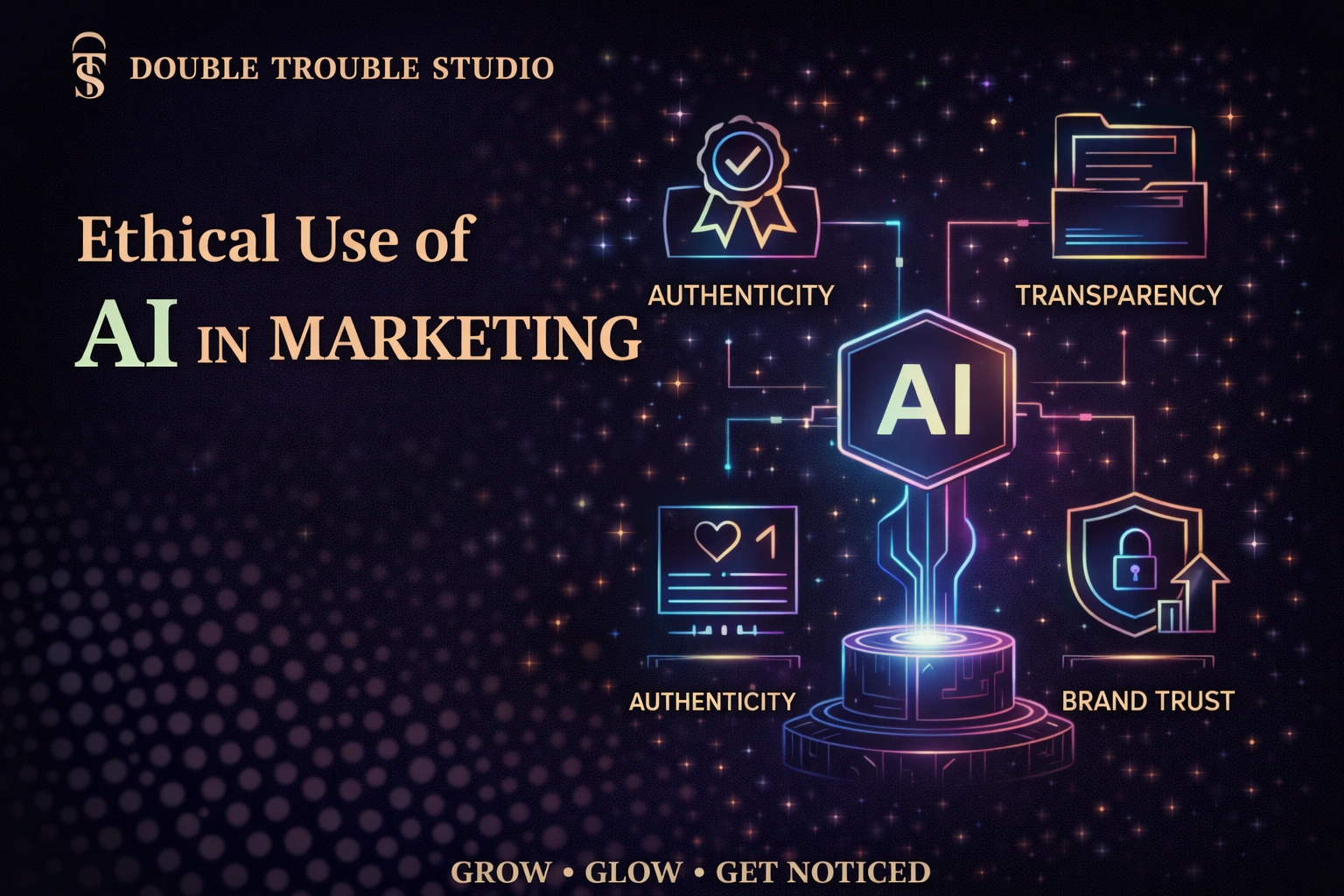
Ethical Use of AI in Marketing (Authenticity, Transparency & Brand Trust)
In 2026, artificial intelligence has become deeply integrated into marketing systems across industries, reshaping how brands create content, engage audiences, and scale communication. From automated copywriting and AI-generated visuals to predictive targeting and personalization, the role of AI has expanded far beyond operational efficiency. It now influences how brands are perceived, how narratives are constructed, and how trust is built or eroded.
For luxury and premium brands, this transformation introduces a complex challenge. While AI enables faster execution and broader reach, it also raises questions about authenticity, transparency, and ethical responsibility. These questions are not abstract. They directly influence how audiences interpret brand intent. In markets where perception defines value, ethical misalignment can have lasting consequences.
Ethical use of AI in marketing is therefore not a technical consideration. It is a strategic one. It determines whether a brand is seen as credible or opportunistic, thoughtful or automated, intentional or artificial. As AI continues to evolve, the brands that succeed will not be those that use it most aggressively, but those that use it most responsibly.
Because in modern marketing, technology amplifies actions.
But ethics define perception.
Authenticity in the Age of AI-Generated Content
Authenticity has always been a cornerstone of effective marketing, but its importance has increased significantly in the age of AI. As content becomes easier to produce and distribute, audiences are becoming more sensitive to what feels real and what feels constructed. This shift is particularly relevant in luxury branding, where authenticity is closely tied to perceived value.
AI-generated content introduces a paradox. On one hand, it allows brands to create highly polished and visually compelling material. On the other hand, it can create a sense of artificiality if not managed carefully. Content that appears overly perfect, repetitive, or detached from real-world context can weaken emotional connection.
Authenticity in AI-driven marketing is not about avoiding technology. It is about ensuring that technology does not replace the brand’s voice, identity, and intention. For example, when AI is used to generate copy, it must be refined to reflect the brand’s tone. Generic language, even if grammatically correct, can dilute identity. Similarly, AI-generated visuals must align with the brand’s aesthetic and feel grounded in reality.
Another dimension of authenticity is storytelling. AI can assist in structuring narratives, but it cannot replicate lived experience, cultural nuance, or human perspective. Luxury brands, in particular, rely on these elements to create depth. Craftsmanship, heritage, and experiential value cannot be communicated effectively through templated content.
This is why human oversight remains critical. Creative teams must review, refine, and contextualize AI outputs to ensure that they reflect genuine intent. Authenticity is not achieved through efficiency. It is achieved through alignment.
As audiences become more aware of AI-generated content, the expectation for authenticity will continue to rise. Brands that rely too heavily on automation without maintaining their unique voice risk being perceived as interchangeable. In contrast, brands that integrate AI while preserving their identity can enhance authenticity rather than compromise it.
Transparency as a Strategic Requirement
Transparency has become a defining factor in modern marketing. Audiences are no longer passive recipients of brand communication. They actively evaluate how content is created, how data is used, and how messages are constructed. AI introduces new layers to this evaluation.
The use of AI in marketing raises questions about disclosure. Should audiences be informed when content is AI-generated? How much information should be shared about the processes behind personalization or targeting? These questions do not have simple answers, but they highlight the importance of clarity.
Transparency is not about revealing every technical detail. It is about ensuring that the audience does not feel misled. For example, if AI is used to create visuals that simulate real environments, the brand must consider whether this representation aligns with audience expectations. If it creates a false impression, it can damage trust.
In PR and advertising, transparency also extends to endorsements and collaborations. AI-generated influencers, virtual models, and synthetic voices are becoming more common. While these innovations offer creative possibilities, they also blur the line between reality and simulation. Brands must ensure that their use of such elements is communicated clearly.
For luxury brands, transparency must be balanced with discretion. Over-explaining processes can disrupt the sense of refinement, while under-communication can create suspicion. The objective is to maintain clarity without compromising brand tone.
Transparency builds confidence. It signals that the brand is aware of its responsibilities and is willing to engage with its audience honestly. In contrast, lack of transparency can lead to skepticism, particularly in an environment where misinformation and manipulation are increasingly discussed.
Building and Protecting Brand Trust in AI-Driven Marketing
Trust is one of the most valuable assets a brand can have, and it is also one of the most fragile. In the context of AI-driven marketing, trust is influenced by how consistently the brand aligns its actions with its stated values.
AI introduces efficiency, but it also introduces distance. Automated systems can create a perception that communication is impersonal or transactional. For luxury brands, which rely on emotional connection and personalized experiences, this perception can be particularly damaging.
Building trust in an AI-driven environment requires intentional effort. Brands must ensure that automation does not replace human interaction entirely. While AI can support communication, it should not eliminate opportunities for genuine engagement.
Consistency is also critical. AI systems often operate across multiple channels, generating content and interactions at scale. If these outputs are not aligned, they can create inconsistencies in tone, messaging, or experience. Such inconsistencies can weaken trust over time.
Another important factor is data ethics. AI-driven marketing often relies on data to personalize content and optimize targeting. How this data is collected, stored, and used has direct implications for trust. Brands must ensure that their data practices are responsible and transparent.
Trust is not built through statements alone. It is built through repeated actions that demonstrate reliability and integrity. In the context of AI, this means ensuring that technology enhances the brand’s values rather than contradicting them.
The Risk of Over-Automation and Loss of Human Connection
One of the most significant risks in AI-driven marketing is over-automation. The ability to automate content creation, distribution, and engagement can lead to systems that operate efficiently but lack human nuance.
Luxury branding depends on human connection. It is not purely transactional. It involves relationships, experiences, and emotional resonance. Over-automation can disrupt these elements, making interactions feel mechanical.
For example, automated responses to customer inquiries may provide quick answers, but they may lack empathy. Similarly, AI-generated campaigns may be visually impressive but fail to capture cultural or contextual nuances.
This does not mean that automation should be avoided. It means that it should be balanced. AI should handle tasks that benefit from efficiency, such as data analysis or initial content generation. Human input should guide areas that require judgment, empathy, and creativity.
The objective is not to replace human involvement.
It is to enhance it.
Ethical Challenges in AI Marketing Systems
The integration of AI into marketing introduces several ethical challenges that brands must address. One of the most significant is bias. AI systems are trained on data, and if that data contains biases, the outputs may reflect them. This can affect targeting, messaging, and representation.
Another challenge is manipulation. AI can be used to create highly persuasive content, but this capability must be used responsibly. Misleading or overly manipulative messaging can damage trust.
There is also the issue of accountability. When AI systems are used to generate content or make decisions, determining responsibility can become complex. Brands must ensure that they maintain oversight and take responsibility for outcomes.
Addressing these challenges requires clear policies and guidelines. Ethical considerations must be integrated into the design and implementation of AI systems.
Long-Term Brand Value and Ethical Alignment
Ethical use of AI is not only about avoiding risks. It is also about creating long-term value. Brands that demonstrate responsibility and integrity can strengthen their positioning and build deeper relationships with their audience.
In luxury markets, where perception is closely tied to trust, ethical alignment becomes a competitive advantage. Consumers are more likely to engage with brands that reflect their values and operate transparently.
This alignment also supports sustainability. Ethical practices in AI usage can contribute to broader initiatives, such as responsible data management and inclusive representation.
Long-term value is built through consistency. Ethical decisions made today influence how the brand is perceived in the future.
Frequently Asked Questions (FAQs)
What is ethical AI in marketing?
Ans: It refers to the responsible use of AI technologies in marketing, ensuring authenticity, transparency, and respect for audience trust.
Why is authenticity important in AI-driven marketing?
Ans: Authenticity ensures that content feels genuine and aligned with the brand’s identity, preventing loss of emotional connection.
How does transparency affect brand perception?
Ans: Transparency builds trust by ensuring that audiences understand how content is created and how data is used.
Can AI harm brand trust?
Ans: Yes, if used irresponsibly or without oversight, AI can create inconsistencies, misleading content, or loss of authenticity.
How can brands use AI ethically?
Ans: By combining AI capabilities with human oversight, clear guidelines, and a commitment to responsible practices.
Conclusion: Ethics as the Foundation of Modern Marketing
Artificial intelligence has transformed marketing, but it has not changed the principles that define success. Authenticity, transparency, and trust remain central.
AI amplifies what brands do. It can enhance communication, improve efficiency, and expand reach. But it can also magnify inconsistencies and ethical missteps.
The responsibility lies with the brand.
Using AI ethically requires clarity, discipline, and intention. It requires understanding not just what technology can do, but what it should do.
Because in modern marketing, trust is not built through innovation alone.
It is built through integrity.
Build Your Ethical AI Marketing Strategy
If you are integrating AI into your marketing systems, ethical alignment is essential for long-term success.
From content creation and transparency frameworks to data practices and brand communication, our team helps you build strategies that combine innovation with responsibility.
📩 hello@dtsworld.in 📞 +91 80000 06021 📍 Andheri East, Mumbai
👉 Build Your Ethical AI Strategy