
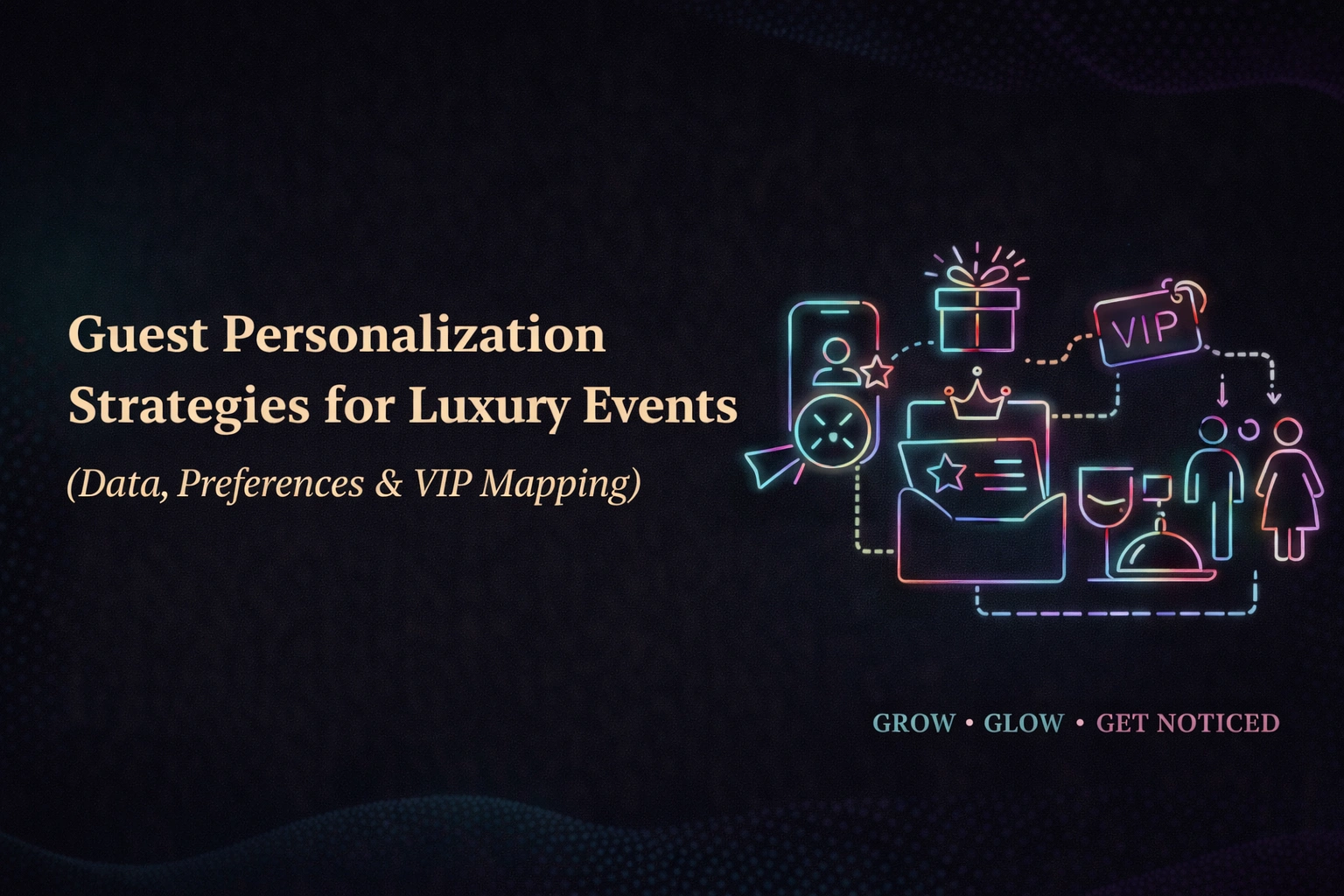
Guest Personalization Strategies for Luxury Events (Data, Preferences & VIP Mapping)
In luxury events, personalization is no longer a differentiator. It is a baseline expectation. Guests attending premium weddings and corporate galas are not simply looking for visual excellence or large-scale production. They are seeking experiences that feel tailored, intuitive, and deeply considered.
What separates an impressive event from an unforgettable one is not how much is delivered, but how relevant every element feels to the guest. Personalization transforms a structured event into a meaningful experience. It builds emotional connection, enhances comfort, and elevates perception.
In India’s rapidly evolving luxury event industry, where global exposure has refined expectations, personalization has become a strategic necessity. It is no longer about adding exclusive features. It is about aligning every decision with guest expectations.
Because in luxury environments, relevance defines value.
Personalization as a System, Not a Gesture
Guest personalization is often misunderstood as a collection of isolated gestures. A customized welcome note, a curated gift, or a special seating arrangement may contribute to the experience, but they do not define personalization in its entirety.
True personalization is systemic. It is built into the planning process from the very beginning. Every decision, from communication to execution, must reflect an understanding of the guest.
Luxury events involve multiple layers of interaction. Guests engage with invitations, logistics, hospitality, entertainment, and post-event communication. If personalization is not consistent across these layers, the experience feels fragmented.
To understand how structured guest systems enable this level of consistency, refer to the broader framework here: 👉 http://dtsworld.in/blog/the-complete-guide-to-guest-management-for-premium-events-weddings
This pillar guide establishes the foundation of guest management, while personalization builds on top of it.
The Strategic Role of Data in Personalization
Data is the backbone of personalization. Without accurate and organized data, even the most creative ideas cannot be executed effectively. In luxury events, assumptions are risky. Precision is required.
Guest data extends beyond basic information. It includes behavioral patterns, preferences, cultural considerations, and social relationships. Understanding these dimensions allows planners to anticipate needs rather than react to them.
However, data collection must be intentional. Collecting excessive information without a clear purpose creates complexity without value. The focus should remain on actionable insights that directly influence the guest experience.
When data is structured and applied correctly, it transforms planning from reactive to predictive. It allows planners to design experiences that feel effortless because they are pre-aligned with expectations.
Interpreting Preferences: From Information to Experience
Collecting data is only the first step. The real value lies in interpretation. Preferences must be translated into actionable decisions that enhance the event experience.
For example, understanding dietary preferences is not just about menu selection. It influences service design, kitchen coordination, and guest satisfaction. Similarly, knowing seating preferences affects social comfort and engagement.
In luxury events, personalization is often subtle. Guests may not consciously recognize the effort behind it, but they feel its impact. That sense of ease and relevance is what creates a premium experience.
Every preference, when interpreted correctly, becomes an opportunity to enhance the journey.
VIP Mapping: Designing Priority Within Scale
Luxury events often involve a wide range of guests, but not all guests hold the same level of significance. VIP mapping allows planners to identify individuals who require a higher degree of attention and customization.
These may include family decision-makers, corporate stakeholders, celebrities, or high-value clients. Their experience has a direct impact on the perception of the event.
VIP mapping is not limited to identification. It requires structured planning. This includes personalized communication, dedicated assistance, and carefully managed interactions throughout the event.
In premium environments, the treatment of VIPs reflects the overall quality of execution. It signals attention to detail, professionalism, and strategic thinking.
Personalization Across the Guest Lifecycle
Personalization must extend across the entire guest lifecycle. It cannot be confined to a single stage. Consistency is what creates a seamless experience.
The journey begins with the invitation. Personalized communication at this stage sets expectations and creates anticipation. It continues through pre-event coordination, where guest-specific logistics are managed.
During the event, personalization becomes experiential. It is reflected in hospitality, service, and interaction. After the event, it continues through follow-ups and engagement.
When every stage is aligned, the experience feels cohesive. When personalization is inconsistent, it feels forced. The goal is to create continuity that guests can experience without consciously noticing.
Technology and Data Integration in Luxury Events
Technology plays a critical role in enabling personalization at scale. Managing hundreds or even thousands of guests requires systems that can organize, track, and update information in real time.
Digital platforms allow planners to centralize guest data, manage RSVPs, and track preferences. They also enable real-time communication, ensuring that changes are addressed instantly.
However, technology should remain invisible. Guests should not feel the presence of systems. They should only experience the results. When technology becomes noticeable, it disrupts the sense of effortlessness that defines luxury.
The objective is not to showcase technology, but to use it as a silent enabler.
Emotional Personalization: Beyond Data and Logistics
While data-driven personalization is essential, emotional personalization adds depth to the experience. It focuses on how guests feel rather than what they receive.
Emotional personalization involves understanding relationships, cultural context, and social dynamics. It ensures that interactions feel genuine rather than transactional.
In luxury weddings, this may involve acknowledging family hierarchies or cultural traditions. In corporate events, it may involve recognizing key stakeholders or long-term relationships.
This layer of personalization cannot be automated. It requires human insight and sensitivity. It is what transforms efficiency into connection.
Balancing Personalization with Operational Control
As personalization increases, so does complexity. Without structured systems, this can lead to operational challenges. Luxury events require a balance between customization and efficiency.
Not every element needs to be personalized. The focus should remain on high-impact areas that significantly influence guest experience. Over-customization can create confusion and disrupt flow.
Strategic personalization ensures that resources are used effectively. It allows planners to deliver high levels of detail without compromising execution.
Control is essential. Without it, personalization can become overwhelming rather than enhancing.
Common Pitfalls in Guest Personalization
One of the most common mistakes is relying on incomplete data. Without accurate information, personalization efforts may miss the mark. This can create inconsistencies that affect the overall experience.
Another challenge is over-personalization. Attempting to customize every element can lead to complexity and inefficiency. Guests value simplicity and clarity more than excessive detail.
Lack of coordination between teams is another issue. If personalization strategies are not aligned across vendors and staff, execution becomes inconsistent.
Recognizing these pitfalls allows planners to design more effective systems.
Why Personalization Defines Modern Luxury Events
Luxury is no longer defined by scale alone. It is defined by relevance. Guests expect experiences that reflect their preferences and expectations.
Personalization ensures that every interaction feels intentional. It creates a sense of exclusivity without the need for excess. This approach aligns with the evolving definition of luxury, which prioritizes experience over display.
In India’s competitive event industry, personalization has become a key differentiator. It signals professionalism, attention to detail, and a deep understanding of guest expectations.
It is not an addition to the event.
It is the foundation of the experience.
Conclusion: Personalization is the New Standard of Excellence
Guest personalization is not about complexity. It is about clarity. It ensures that every decision aligns with guest expectations, creating a seamless and refined experience.
From data collection to VIP mapping, every step must be structured and intentional. When executed correctly, personalization becomes invisible. Guests do not see the process behind it.
They only experience the result.
And in luxury events, that experience defines success.
Frequently Asked Questions (FAQs)
Q. What is guest personalization in luxury events and why is it important?
Guest personalization refers to tailoring every aspect of the event experience based on individual preferences, expectations, and roles. It is important because it enhances emotional connection, improves comfort, and creates a more meaningful experience. In luxury events, personalization is essential for delivering exclusivity and attention to detail.
Q. How can event planners effectively collect and manage guest data?
Event planners can collect guest data through RSVP forms, direct communication, and coordination with hosts. This data must then be organized using structured systems or digital tools. Effective management ensures that the information can be used seamlessly during planning and execution without causing confusion or delays.
Q. What is VIP mapping and how does it impact event success?
VIP mapping involves identifying high-priority guests and designing their experience with greater attention and precision. It impacts event success by ensuring that key individuals feel valued and comfortable. Their satisfaction often influences overall perception and can significantly affect the event’s outcome.
Q. How can personalization be scaled for large luxury events?
Personalization can be scaled by focusing on high-impact areas such as communication, hospitality, and seating arrangements. Technology plays a key role in managing data and coordination. While not every detail can be customized, strategic personalization ensures that the experience remains consistent and effective.
Q. What are the risks of over-personalization in events?
Over-personalization can create operational complexity and disrupt the flow of the event. It may also overwhelm guests with unnecessary details. The goal should be to enhance the experience without adding confusion. Balance is essential to maintain both efficiency and quality.
Q. How does personalization enhance guest satisfaction and engagement?
Personalization ensures that guests feel understood and valued. It reduces friction and enhances comfort, allowing guests to engage more naturally with the event. This leads to higher satisfaction and a more positive overall experience.
Q. How does personalization influence brand perception in corporate events?
In corporate events, personalization reflects professionalism and strategic thinking. It demonstrates attention to detail and strengthens relationships with stakeholders. A well-personalized event enhances brand credibility and leaves a lasting impression.
Contact Us
If you are planning a luxury wedding or corporate event, personalization requires more than ideas. It requires structured data, strategic planning, and precise execution.
From guest profiling and VIP mapping to seamless on-ground coordination, every detail must be aligned to create a refined experience.
📩 hello@dtsworld.in 📞 +91 80000 06021 📍 Andheri East, Mumbai
👉 Design Personalized Guest Experiences with DTS