Guest Personalization Strategies for Luxury Events: Data, Preferences and VIP Mapping
Luxury events are defined by more than impressive décor, premium cuisine, celebrity appearances or high-end venues. The strongest experiences make guests feel personally recognised without making the personalisation feel forced, obvious or intrusive. A guest remembers when the team understands their requirements before they need to ask.
Guest personalisation allows luxury brands, families and event hosts to design experiences around real relationships, preferences and responsibilities. It connects guest data, RSVP information, hospitality requirements, seating logic, privacy needs and VIP mapping into one structured system. When these elements are managed correctly, the event feels effortless and emotionally relevant.
A personalised luxury event does not mean creating a completely different programme for every attendee. It means using accurate information to make the most important touchpoints feel considered. The invitation, arrival, seating, hospitality and follow-up should reflect what the organiser genuinely knows about the guest.
The objective is to create recognition without overexposure. Guests should feel understood, respected and comfortable, while the operational systems behind the experience remain discreet.
Quick Answer
Guest personalisation in luxury events involves collecting relevant and permission-aware guest information, organising preferences, mapping VIP relationships and using those insights to improve communication, arrival, seating, hospitality and post-event follow-up. The data should help the team anticipate real needs rather than create unnecessary or artificial attention.
A strong personalisation strategy combines one verified guest database, clear guest segments, relationship owners, privacy controls and well-trained on-ground teams. Personalisation succeeds when it improves comfort and relevance without making the guest feel monitored.
What Is Guest Personalisation in Luxury Events?
Guest personalisation is the process of adapting communication, service and event touchpoints according to a guest’s known relationship, preferences and practical requirements. It begins before the invitation is sent and continues through post-event communication.
The information used may include preferred name, designation, communication channel, dietary requirement, accessibility need, seating preference, arrival protocol and privacy instruction. It may also include the guest’s relationship with the host or brand, previous event history and relevant professional interests.
Luxury event guest personalisation should always be purposeful. The organiser should collect only the information needed to improve the experience. Data that does not support a clear hospitality or operational decision should not be collected simply because technology makes it possible.
The best personalisation feels natural. A guest may notice that the team already knows their preferred title, understands their dietary requirement or has placed them near an appropriate relationship. They should not feel that every detail of their behaviour has been recorded.
Why Personalisation Matters in Premium Experiences
Luxury guests are often familiar with premium venues, elaborate entertainment and high-production events. What makes an experience feel truly distinctive is the quality of recognition and care across smaller touchpoints.
A personalised invitation communicates that the guest is not simply part of a large database. A prepared arrival makes the guest feel expected. Appropriate seating and relevant introductions show that the organiser understands the relationship rather than merely managing attendance.
These details influence both emotional memory and brand perception. A guest who feels understood is more likely to remain engaged, attend future experiences and speak positively about the host. Personalisation can therefore support loyalty, referrals and long-term relationship value.
However, poor personalisation can produce the opposite effect. Incorrect assumptions, excessive familiarity or careless use of private information can make the guest uncomfortable. The strategy must be based on verified data, relevance and discretion.
Personalisation Is Not the Same as Special Treatment
Luxury event personalisation is often confused with visible VIP treatment. The two are related, but they are not the same. Personalisation is about delivering the right experience for the individual, while special treatment may simply create public hierarchy.
A senior business leader may value a discreet arrival and private introduction more than a public announcement. An elderly wedding guest may need convenient seating and transport support without wanting additional attention. A celebrity may require controlled access rather than ceremonial recognition.
The most effective personalisation is usually quiet. It removes friction, protects privacy and makes the guest more comfortable. It should not turn every preference into a public performance.
Luxury brands should therefore avoid using personalisation only as a way to display status. The objective is to create relevance, not spectacle.
Building the Guest Data Foundation
Every personalisation strategy depends on the quality of the guest data behind it. Incomplete, outdated or scattered information creates inconsistent communication and operational mistakes.
The event should use one verified guest database rather than several disconnected spreadsheets, messages and handwritten notes. Every approved change should be entered into the same system so that invitation, registration, seating and hospitality teams work from current information.
A useful guest record may include:
• Correct guest identity
• Relationship context
• Communication preference
• Hospitality requirements
• Access and seating
• Privacy instructions
The database should also identify who owns the relationship. A name without context does not tell the team whether the guest is a senior investor, family elder, celebrity representative, media professional or first-time attendee.
Data should remain relevant to the event. The organiser should not build unnecessary personal profiles that serve no clear hospitality, security or relationship purpose.
Collecting Data Through Invitations and RSVPs
The RSVP process is one of the best opportunities to collect useful guest preferences. It allows the organiser to request information directly and transparently before planning is finalised.
A well-designed RSVP form may ask about attendance, approved companions, dietary restrictions, accessibility and transport support. For destination events, it may also collect hotel and travel details required for logistics.
The form should remain concise. Guests should not be asked to answer questions that the organiser already knows or that do not affect the experience. A long form can feel administrative and reduce completion.
The wording should explain why certain information is being requested. For example, dietary questions can be framed as part of hospitality planning, while accessibility questions can be presented as a way to prepare appropriate assistance.
Transparency makes data collection feel respectful rather than intrusive. Guests are more likely to provide accurate information when they understand how it will be used.
Using Existing Relationship Knowledge Carefully
Luxury brands and hosts may already know important details about repeat guests. A returning client may prefer a specific communication channel, while a frequent wedding guest may require particular mobility support.
Existing knowledge can improve personalisation, but it should be reviewed before every event. Preferences change, professional roles evolve and information from an earlier occasion may no longer be accurate.
The team should confirm important details rather than relying entirely on memory. An assistant or relationship owner can verify preferences discreetly where direct confirmation is not appropriate.
Historical information should support the current experience, not define the guest permanently. The organiser should remain open to change and avoid treating previous behaviour as a fixed identity.
Personalisation becomes valuable when it is current, accurate and relevant.
Managing Consent and Guest Privacy
Guest data must be handled responsibly. Luxury event personalisation should never depend on collecting or sharing information without a clear reason.
Access to guest information should be restricted according to responsibility. The registration team may need names and access levels, while the hospitality team may require dietary information. Not every department needs to view the complete guest profile.
Sensitive notes should be written carefully and professionally. Informal or judgemental descriptions can create privacy and reputation risks if they are shared or exposed.
Guest information should not be retained indefinitely without purpose. After the event, the team should review which details are required for ongoing relationships and which information should be removed according to internal policy.
Discretion is part of luxury service. A guest should feel that the organiser is prepared, not that their personal information is being circulated across the event team.
Creating Useful Guest Preference Profiles
A preference profile should contain information that can genuinely improve the experience. It should not become a collection of every available detail.
Useful preferences may relate to communication, food, mobility, privacy, seating and event participation. A guest may prefer email over WhatsApp, require vegetarian cuisine, avoid media interaction or need a shorter walking route.
The profile should distinguish between confirmed requirements and informal observations. A medically necessary dietary restriction must not be treated in the same way as a possible preference mentioned casually at an earlier event.
The relationship owner should review high-priority profiles before the event. This helps confirm that important information is current and prevents incorrect assumptions.
A clear profile allows the team to prepare relevant support without repeatedly asking the guest for the same details.
Understanding VIP Mapping
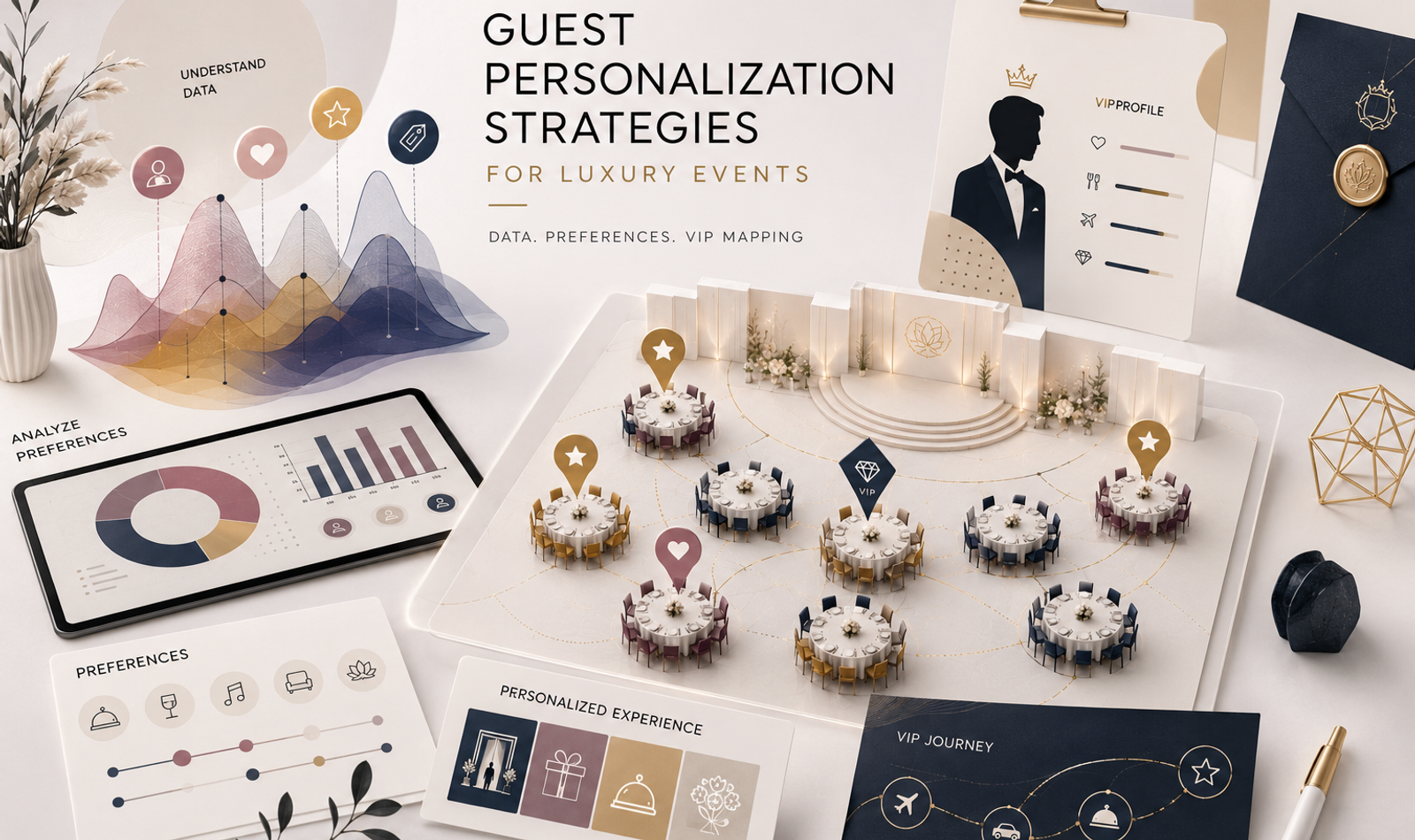
VIP mapping is the structured process of identifying high-priority guests, understanding their relationships and preparing the correct experience around them. It is more detailed than placing a general VIP label beside a name.
A guest may be important because of family relationship, business value, public profile, protocol requirement or role within the event. Each reason creates different operational needs.
A celebrity may require security and content approval. An investor may require access to senior leadership. A wedding elder may require comfort, assistance and respectful seating. A government guest may require formal protocol.
VIP mapping helps the team understand why the guest is important and what must be protected. It prevents a generic VIP process from being applied to people with completely different expectations.
Mapping Relationships, Not Only Status
A valuable VIP map shows how guests connect to the host, brand and each other. This information supports seating, introductions and communication.
For example, two senior guests may hold equal status but require different experiences because one is a close partner and the other is attending for the first time. Their seating, relationship owner and follow-up should reflect that difference.
Relationship mapping is also important in private weddings, where family history and social dynamics may influence placement. A technically correct table plan can still create discomfort if relationships are ignored.
The map should help the team answer several questions. Who invited the guest? Who should welcome them? Who should introduce them? Where should they be seated? Who should follow up after the event?
This context turns guest management into relationship management.
Creating Practical VIP Categories
A single VIP category is rarely sufficient for luxury events. The team may need to separate guests by operational requirement rather than public importance.
Useful categories may include:
• Celebrity and talent
• Founders and investors
• Government protocol
• Family and elders
• Media and partners
• Speakers and performers
Each category should have a clear arrival, access, seating and hospitality protocol. The difference should exist in the system even when it remains invisible to other guests.
The labels used internally should remain respectful and functional. They should help teams understand the experience required without creating unnecessary judgement or hierarchy.
Practical categorisation improves execution because teams know exactly what each type of guest may require.
Assigning a VIP Relationship Owner
Every high-priority guest should have a named relationship owner. This person provides continuity across invitation, confirmation, arrival, hospitality and follow-up.
The relationship owner may be a host, senior event manager, public relations professional, family representative or celebrity coordinator. The correct owner depends on how the relationship was established.
Their responsibility is not to remain physically beside the guest throughout the event. It is to ensure that the right people are informed and that important details are completed.
The owner should know the guest’s arrival plan, access needs, seating location and relevant preferences. They should also understand any promised introduction, meeting or post-event action.
Clear ownership reduces the risk of an important guest being overlooked because several people assumed someone else was responsible.
Personalising Invitation Communication
The invitation should reflect both the event identity and the relationship with the guest. A single standard message may be appropriate for general invitees, but priority guests often require more personal communication.
A founder may contact an investor directly before the formal invitation is shared. A family member may call an elder. A celebrity invitation may be coordinated through a manager with complete information about the appearance.
The guest’s preferred title and communication channel should be respected. An executive who normally communicates by email may not appreciate repeated informal messages, while a close family guest may expect a phone call.
Personalisation should improve clarity rather than simply add decorative language. The guest should understand why they are being invited and whom to contact.
The invitation stage creates the emotional foundation of the relationship journey.
Personalising Pre-Event Information
Pre-event communication should provide the information most relevant to each guest category. Not every attendee needs the same amount of detail.
A general guest may require the venue address, timing, dress code and parking information. A speaker may require rehearsal timing, backstage access and session details. A celebrity representative may require security contacts and controlled arrival instructions.
Destination guests may need hotel, transport and itinerary information. Elderly guests may benefit from a direct assistance contact. Media attendees may require credentials and approved coverage guidelines.
Segmented communication reduces overload and makes messages easier to use. It also avoids sending private or irrelevant instructions to the wider guest list.
Personalisation is strongest when the guest receives exactly what they need, when they need it.
Personalising the Arrival Experience
Arrival is one of the most powerful moments for guest recognition. A prepared team can make the guest feel expected before a word is spoken.
Vehicle details, expected timing and entry route may be recorded for priority guests. The welcome team can then identify the arrival and direct the guest without visible confusion.
Personalised arrival does not always require a separate entrance. A known guest may simply be greeted by name, directed immediately and escorted by the correct relationship owner.
Guests with accessibility or mobility needs may require a shorter route, vehicle access or seating assistance. These arrangements should be prepared before arrival rather than created in response to visible difficulty.
The best arrival personalisation removes uncertainty and waiting.
Personalising Registration and Check-In
Registration should use guest data to reduce repetition. If the organiser already has the required information, the guest should not be asked to provide it again.
A priority guest may receive pre-issued credentials or direct verification. A family group may be checked in together, while a media guest may be routed toward a credential desk.
The registration team should know preferred names and important access notes. However, sensitive details should not be discussed publicly at the counter.
When a guest’s name cannot be found, the situation should be handled through a separate exception process. The team should verify the relationship discreetly without making the guest feel rejected.
Personalised check-in combines recognition with privacy and speed.
Personalising Seating and Social Placement
Seating is one of the most important applications of guest data and VIP mapping. It influences comfort, conversation, visibility and relationship development.
A seating plan should consider more than rank. Professional interests, family relationships, language, accessibility, age and privacy may all affect placement.
At a corporate event, two guests with complementary business interests may benefit from being seated nearby. At a wedding, elders may require quieter tables and shorter walking distances.
Celebrities and public figures may need a location that allows controlled access and exit. Media guests may require clear sightlines while remaining separate from private conversations.
Personalised seating should create comfort and meaningful interaction without making the arrangement feel overly engineered.
Using Preference Data in Hospitality
Hospitality personalisation should focus on practical relevance. Food, beverages, comfort and assistance can all be improved through accurate preference data.
Dietary requirements should be communicated clearly to the catering team. The guest should not need to explain the same restriction repeatedly to different servers.
Preferred beverages or specific service needs may be prepared for high-priority guests where appropriate. However, the gesture should remain discreet and should not create visible inequality.
For destination events, hospitality may include room preferences, airport transfers, luggage support and personalised itineraries. These details can significantly influence how the complete event is remembered.
The best hospitality personalisation feels attentive rather than excessive.
Personalising Introductions and Networking
Luxury corporate events and private gatherings often create opportunities for meaningful introductions. Guest mapping can help the host connect people more thoughtfully.
The team may identify shared interests, professional relevance or existing relationships before the event. This allows introductions to feel natural and useful.
However, not every possible connection should be forced. The relationship owner should understand whether the guest is open to networking and whether the timing is appropriate.
A brief, well-considered introduction may create more value than a large networking activity. Luxury events often benefit from quality of interaction rather than volume.
Guest personalisation can therefore support both emotional experience and strategic outcomes.
Personalising Event Content and Participation
Some events require different levels of participation from guests. A speaker, panel member, performer, sponsor or media guest may need a journey that supports their specific role.
Speakers may receive personalised schedules, briefing notes and backstage support. Sponsors may require visibility updates and hosted introductions. Media guests may need approved quotes, content areas and access timings.
For private events, participation may involve family responsibilities, ceremonial roles or special moments. These should be communicated clearly to prevent uncertainty.
The guest should always understand what is expected and where they need to be. Personalised coordination protects both the programme and the guest’s confidence.
When role-based communication is clear, the event runs more smoothly.
Protecting Privacy in Photography and Content
Guest personalisation must include content and privacy preferences. Some attendees may welcome photography, while others may require controlled or limited exposure.
Celebrity representatives may need to approve images, captions or publication timing. Corporate guests may not want confidential screens or conversations visible in event content.
Private wedding guests may also have individual preferences regarding tagging and online sharing. These expectations should be communicated to photography, PR and social media teams.
A guest-content map can identify who may be photographed, where content can be captured and which material requires approval.
Respecting privacy is one of the strongest forms of personalisation because it demonstrates genuine understanding of the guest’s boundaries.
Using Technology for Guest Personalisation
Technology can help centralise data, automate communication and improve team visibility. CRM systems, RSVP platforms and event-management tools can support personalisation at scale.
The technology should allow guest segmentation, preference recording, access control and task ownership. It may also support digital credentials, live attendance updates and post-event follow-up.
However, complex software does not automatically create a personal experience. The information must still be accurate, and teams must understand how to use it.
Technology should reduce repetitive work so that people can focus on hospitality and relationships. It should never replace judgement, sensitivity or personal communication.
The best systems combine digital efficiency with human attention.
Using Real-Time Guest Updates
Guest requirements may change close to or during the event. A flight may be delayed, a plus-one may cancel or a seating requirement may change.
The team should have a controlled method for updating important information in real time. Changes should reach only the departments that need them.
For example, a delayed VIP arrival may require updates for security, hospitality and the relationship owner. It should not create unnecessary communication across the entire event team.
The master guest system should record the latest approved status. Outdated printed lists or screenshots should be removed where possible.
Real-time coordination helps personalisation remain accurate even when the event changes.
Personalisation for Luxury Weddings
Luxury weddings require a deeply relationship-based approach because guests are connected through family, friendship and social history.
Personalisation may involve family-specific communication, travel coordination, room allocation, dietary preferences and ceremony roles. Elders may require assistance, while destination guests may need detailed itineraries.
Seating must consider family relationships and cultural expectations. The closest table is not always the most appropriate position if comfort or social dynamics are ignored.
Welcome gifts, room notes and personalised assistance can strengthen the emotional experience when they reflect genuine relationships.
Wedding personalisation should feel warm and thoughtful rather than commercial or overly systemised.
Personalisation for Corporate Events
Corporate event personalisation should connect guest experience with business relevance. Investors, clients, partners, speakers and media attendees require different information and access.
Guest profiles may include professional interests, existing projects and requested introductions. This allows the host to create more meaningful conversations.
A senior client may receive direct communication from an account leader, while a new prospect may require a different type of follow-up. Speakers and panel members need role-specific coordination.
Personalisation should remain professional and permission-aware. Business information should not be shared widely across teams.
The objective is to make the event more relevant while protecting trust and confidentiality.
Personalisation for Celebrity-Attended Events
Celebrity guest personalisation requires discretion, security and representative coordination. The experience should be designed around agreed requirements rather than public assumptions.
Arrival, access, holding areas, hospitality and departure should be confirmed through authorised representatives. Photography and media obligations must also be documented clearly.
The guest may require a private waiting space, controlled introductions or limited interaction. These requirements should be respected without making them visible to the wider audience.
The on-ground team should know only the information necessary for their role. Sensitive details should remain restricted to senior coordinators.
Celebrity personalisation succeeds when the appearance feels smooth, secure and professionally managed.
Personalisation for Hospitality and Brand Launches
Hospitality launches and private brand previews often depend on sensory experience and relationship building. Guest personalisation can make the event feel more relevant without changing the central programme.
Repeat clients may receive personalised greetings or preferred seating. Industry partners may receive specific product information or hosted introductions.
Media guests may require organised assets, while potential clients may benefit from a private demonstration or consultation. These journeys should be mapped before the event.
The brand should avoid turning personalisation into aggressive sales activity. Gratitude and experience should remain central.
The strongest brand events use personalisation to deepen interest rather than pressure the guest.
Common Guest Personalisation Mistakes
One of the biggest mistakes is collecting information without a clear purpose. Unused data creates complexity and privacy risk without improving the experience.
Another mistake is assuming preferences instead of confirming them. A detail from a previous event may no longer be accurate, and an informal observation may not represent a genuine requirement.
Visible over-personalisation can also make guests uncomfortable. Publicly announcing private preferences or creating excessive attention may feel intrusive rather than luxurious.
Teams may also fail when data is accurate but not shared with the correct people. A dietary requirement is only useful if the hospitality team receives it.
Personalisation requires accurate information, controlled access and disciplined execution.
The PULSE Personalisation Framework
Luxury event teams can use the PULSE framework to structure guest personalisation from planning through follow-up.
Profile the Guest by recording verified identity, relationship, preferences and requirements. The profile should remain relevant to the current event.
Understand the Context by identifying why the guest is attending and what experience they need. This prevents generic treatment.
Link the Relationship by assigning a clear owner and mapping important connections. The guest should know who represents the host.
Serve with Discretion by applying information quietly across arrival, seating, hospitality and privacy. Personalisation should improve comfort without drawing attention.
Evaluate and Update by reviewing feedback, correcting outdated information and recording only what remains useful for future engagement.
The PULSE framework keeps personalisation focused on relevance, relationships and responsible execution.
Measuring Guest Personalisation
Personalisation should be measured by the quality of the guest experience, not by the amount of data collected. More information does not automatically produce better hospitality.
Useful indicators may include RSVP accuracy, preference fulfilment and reduction in repeated guest requests. The team may also review VIP response time, seating issues and hospitality concerns.
Post-event feedback can reveal whether communication felt relevant and whether guests felt recognised. Repeat attendance, referrals and relationship progression may provide longer-term evidence.
Privacy incidents and incorrect assumptions should also be tracked. These failures show where personalisation processes require stronger controls.
The objective is to improve relevance while reducing friction and risk.
Frequently Asked Questions
What Is Guest Personalisation in Luxury Events?
Guest personalisation is the process of adapting communication, access, seating, hospitality and follow-up according to verified guest relationships, preferences and practical requirements. It aims to make the experience more relevant without becoming intrusive.
What Guest Data Should Event Organisers Collect?
Organisers should collect only information required for communication, access, hospitality, safety and relationship management. This may include contact details, RSVP status, dietary needs, accessibility, approved companions and privacy preferences.
What Is VIP Mapping?
VIP mapping identifies high-priority guests, their relationship with the host and the experience they require. It supports arrival, seating, introductions, privacy and follow-up planning.
Why Is Guest Preference Data Important?
Preference data helps the team prepare appropriate hospitality and communication before the guest arrives. It reduces repeated questions and makes service feel more coordinated.
How Should Guest Data Be Collected?
Guest data can be collected through RSVP forms, direct confirmation and authorised relationship owners. The organiser should explain why relevant information is being requested.
How Can Luxury Events Protect Guest Privacy?
Access to guest data should be limited by responsibility. Sensitive information should be stored carefully, shared only when necessary and reviewed after the event.
How Should VIP Guests Be Categorised?
VIP guests should be categorised according to operational needs such as security, protocol, relationship, access and privacy. A single general VIP label is usually not sufficient.
How Does Personalisation Improve Event Seating?
Personalisation allows seating to consider relationships, professional relevance, accessibility, privacy and comfort. It creates more appropriate and meaningful placement.
Can Technology Automate Guest Personalisation?
Technology can support segmentation, communication and preference tracking, but it cannot replace human judgement. Teams must still verify information and apply it sensitively.
How Is Celebrity Guest Personalisation Different?
Celebrity personalisation requires representative coordination, controlled access, security, privacy and content approval. Information should remain restricted to relevant team members.
How Can Weddings Personalise Guest Experiences?
Weddings can personalise communication, travel support, room allocation, seating, hospitality and family roles. The experience should remain warm and relationship-led.
How Can Corporate Events Use Guest Personalisation?
Corporate events can personalise invitations, introductions, content access and follow-up according to professional interests and relationship stage. Confidentiality must remain protected.
What Is the Biggest Personalisation Mistake?
The biggest mistake is using unverified or irrelevant information. Incorrect assumptions can make the guest uncomfortable and damage trust.
How Should Personalisation Be Measured?
Measure preference fulfilment, issue reduction, feedback, repeat attendance and relationship outcomes. Privacy problems and incorrect data should also be reviewed.
Does Double Trouble Studio Provide Personalised Guest Management?
Double Trouble Studio supports luxury weddings, corporate events, brand launches, hospitality experiences and celebrity-attended events with guest profiling, RSVP management, preference mapping, VIP coordination and personalised hospitality planning.
How Double Trouble Studio Designs Personalised Guest Experiences
Double Trouble Studio approaches guest personalisation as a combination of data, relationships and on-ground execution. We help organise guest information so that every important preference and requirement supports a clear event decision.
Our work can include guest-list strategy, RSVP planning, preference collection, VIP mapping, relationship ownership, seating, hospitality and arrival coordination. We also support privacy protocols, media alignment and post-event follow-up.
The objective is not to make personalisation highly visible. It is to ensure that every guest receives the right communication, access and support without experiencing unnecessary friction.
Each strategy is adapted to the event’s audience, purpose, venue and brand positioning. Luxury weddings, corporate gatherings and celebrity events require different systems, even when the commitment to personal attention remains the same.
Conclusion
Guest personalisation can transform a luxury event from a well-produced occasion into a meaningful relationship experience. The difference lies in how accurately the organiser understands the guest and how discreetly that information is used.
Data creates the foundation, but human judgement creates the experience. Preferences must be verified, VIP relationships must be mapped and teams must understand what information is relevant to their responsibilities.
The strongest personalisation is rarely dramatic. It appears through accurate communication, appropriate seating, prepared hospitality, protected privacy and thoughtful follow-up.
When these systems work together, guests do not feel managed through a database. They feel expected, recognised and genuinely valued.
Plan Personalised Luxury Guest Experiences with Double Trouble Studio
A luxury event should recognise every important guest without making the personalisation feel artificial or intrusive. Double Trouble Studio designs guest-management systems that combine accurate data, preference mapping, VIP coordination and discreet on-ground hospitality.
Our approach can support luxury weddings, corporate summits, brand launches, hospitality previews and celebrity-attended events. From invitation and RSVP planning to seating, arrival, guest care and post-event follow-up, every touchpoint is designed around the relationship.
Connect with Double Trouble Studio to create a personalised guest experience aligned with your audience, venue and event objectives.
📩 hello@dtsworld.in | 📞 +91 80000 06021 | 📍 Andheri East, Mumbai
Need this for your brand?
Let DTS build your next campaign.
From PR, celebrity management and events to websites, social media, SEO and AI video production — Double Trouble Studio helps brands grow with strategy and execution.
Discuss Your Requirement →