
How to Get Featured in Premium Media (Pitching, Relationships & Timing)
In 2026, securing coverage in premium media is no longer a matter of sending press releases and waiting for responses. The media landscape has evolved into a highly curated ecosystem where editors, journalists, and platforms are constantly filtering information to maintain relevance, credibility, and audience value. For luxury brands, this environment presents both an opportunity and a challenge. While premium media coverage can significantly enhance positioning and authority, gaining access requires a strategic and disciplined approach.
Unlike mass outreach strategies that focus on volume, premium media engagement is built on precision. Editors are not looking for promotional content; they are looking for meaningful stories that align with their publication’s identity and audience expectations. This means that brands must go beyond basic announcements and develop narratives that offer depth, perspective, and relevance.
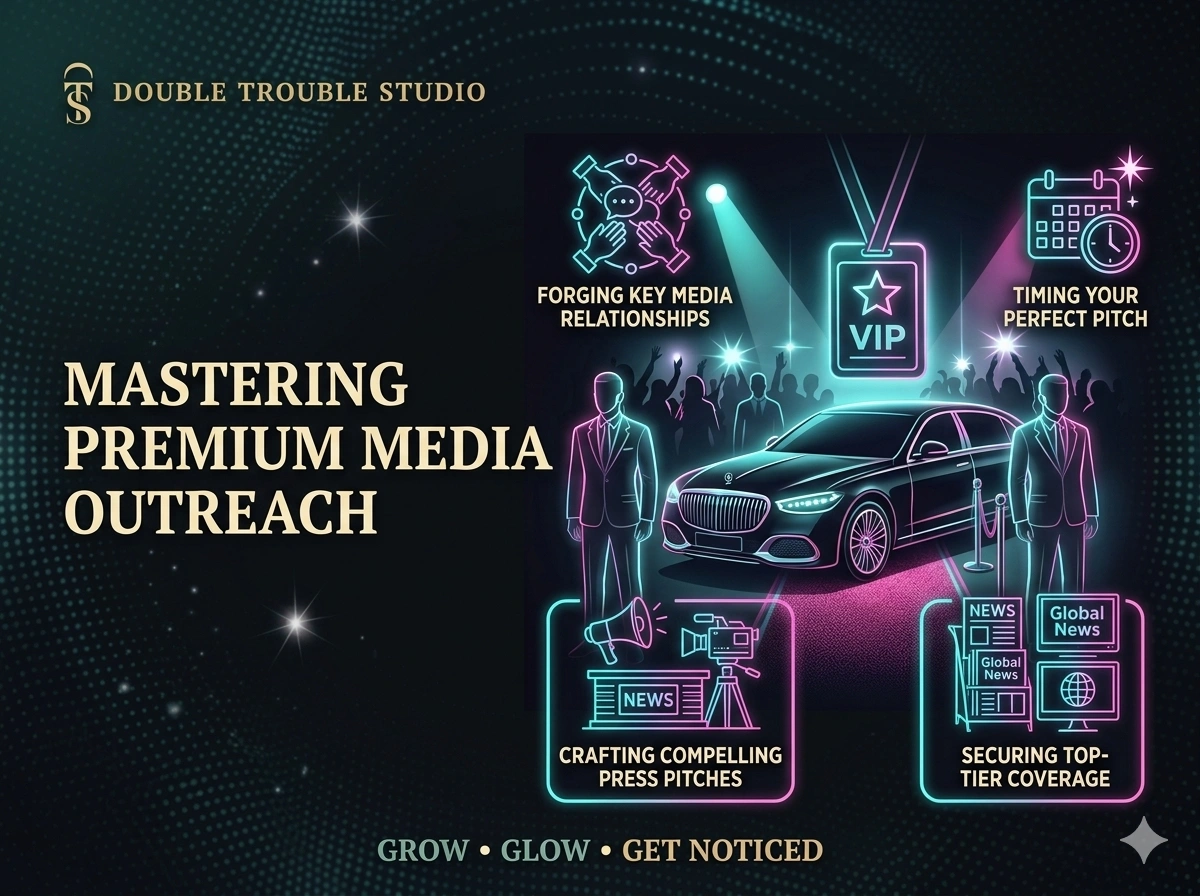
The process of getting featured involves three critical components: pitching, relationships, and timing. Each of these elements must be aligned with the brand’s positioning and executed with consistency. Together, they create a system that allows brands to engage with media effectively and build long-term visibility.
Because in premium media, access is not given.
It is earned.
Understanding the Premium Media Landscape
Before approaching media outreach, it is essential to understand how premium media operates. High-end publications are not simply platforms for information. They are curators of culture, trends, and perspectives. Their content is carefully selected to maintain a specific tone and level of quality.
This means that every feature must contribute to the publication’s identity. Editors evaluate not only the relevance of a story but also how it aligns with their audience. A story that may be compelling in one context may not be suitable in another.
Luxury brands must therefore align their approach with the publication’s positioning. This involves researching the types of stories they feature, the tone of their content, and the preferences of their audience. Understanding these factors allows brands to tailor their outreach effectively.
Another important aspect of premium media is selectivity. These platforms receive a high volume of pitches, and only a small percentage are accepted. This makes it essential for brands to stand out through clarity, relevance, and authenticity.
Premium media is not driven by quantity.
It is driven by curation.
Crafting Effective Pitches That Capture Attention
Pitching is one of the most critical aspects of securing media coverage, and in luxury PR, it requires a refined approach. A pitch is not simply a message; it is a representation of the brand. It must communicate value clearly and concisely while reflecting the brand’s identity.
The first element of an effective pitch is clarity. Editors do not have time to interpret vague or overly complex messages. The pitch must immediately convey what the story is about and why it matters. This requires a clear understanding of the narrative and its relevance to the publication.
The second element is specificity. Generic pitches are easily overlooked. Each pitch should be tailored to the publication and the journalist. This includes referencing previous articles, aligning with the publication’s tone, and demonstrating an understanding of their audience.
Storytelling is central to pitching. Instead of presenting information in a transactional manner, the pitch should highlight the story behind the brand. This could include unique perspectives, behind-the-scenes insights, or cultural relevance. The objective is to provide something that adds value to the publication.
Tone is also important. The pitch should be professional and refined, avoiding overly promotional language. Luxury brands must maintain a sense of discretion, allowing the story to speak for itself.
Length is another consideration. A pitch should be concise but informative. It should provide enough detail to capture interest without overwhelming the reader.
An effective pitch does not demand attention.
It earns it.
Building Long-Term Relationships with Media Professionals
While pitching is important, relationships are the foundation of successful media engagement. In premium media, relationships often determine whether a story is considered. Editors and journalists are more likely to engage with brands they trust and understand.
Building relationships requires time and consistency. It involves engaging with media professionals beyond immediate needs. This could include sharing insights, providing value, or simply maintaining communication.
Trust is a key component of these relationships. Brands must demonstrate reliability, professionalism, and respect for the journalist’s work. This includes meeting deadlines, providing accurate information, and maintaining transparency.
Personalization plays a significant role in relationship building. Understanding the interests and preferences of journalists allows brands to communicate more effectively. This creates a sense of connection and increases the likelihood of collaboration.
Another important aspect is mutual value. Relationships should not be one-sided. Brands must consider how they can contribute to the journalist’s work, whether through unique stories, access to information, or expert insights.
Consistency is essential. Relationships must be maintained over time, not just when coverage is needed. This creates a foundation of trust that supports long-term engagement.
Relationships in premium media are not transactional.
They are strategic.
Timing: Aligning Stories with Opportunity
Timing is one of the most overlooked aspects of media outreach, yet it plays a critical role in determining success. Even the most compelling story may be overlooked if it is presented at the wrong time.
Understanding editorial calendars is essential. Many publications plan their content in advance, particularly for themes such as seasonal trends, events, or industry developments. Aligning pitches with these timelines increases the likelihood of acceptance.
Cultural relevance is another factor. Stories that connect with current trends, events, or conversations are more likely to gain attention. However, relevance must be balanced with authenticity. The story should align naturally with the trend rather than appear forced.
Internal timing also matters. Brands must ensure that their messaging, visuals, and assets are ready before outreach begins. Delays or inconsistencies can disrupt the process and reduce credibility.
Frequency of outreach should also be considered. Sending multiple pitches in a short period can overwhelm recipients, while infrequent communication can reduce visibility. Finding the right balance is key.
Timing is not just about when a pitch is sent.
It is about when it is received.
Integrating PR with Brand Strategy
Media coverage should not be treated as an isolated activity. It must be integrated with the brand’s overall strategy to create a cohesive narrative.
This involves aligning PR efforts with marketing, digital presence, and experiential activities. For example, a product launch, event, or campaign can provide a strong foundation for media outreach.
Consistency across channels ensures that the brand’s message remains clear. The tone, visuals, and narrative should align across all touchpoints, reinforcing the same perception.
Integration also enhances impact. Media coverage can be amplified through social platforms, website content, and other channels. This creates a broader and more sustained presence.
PR is not a standalone effort.
It is part of a system.
Maintaining Exclusivity While Increasing Visibility
One of the key challenges in luxury PR is balancing visibility with exclusivity. While media coverage increases exposure, excessive presence can reduce the sense of rarity that defines luxury.
This requires a selective approach. Brands must choose opportunities carefully, focusing on quality rather than quantity. Each feature should contribute to positioning and reinforce the brand’s identity.
Limiting the number of placements can enhance their impact. A single feature in a respected publication can carry more weight than multiple features in less relevant contexts.
Exclusivity is not about avoiding visibility.
It is about controlling it.
Measuring Success in Premium Media Coverage
Measuring the success of media coverage requires a nuanced approach. Traditional metrics such as impressions and reach provide useful data, but they do not capture the full impact.
Quality of coverage is a key factor. The relevance of the publication, the tone of the article, and the alignment with positioning all influence effectiveness.
Engagement and response also provide insights. Feedback from audiences, inquiries, and interactions indicate how the coverage is perceived.
Long-term impact is another consideration. Media coverage contributes to brand positioning over time, and its effects may not be immediate.
Measurement must therefore consider both immediate results and long-term value.
Challenges in Securing Premium Media Features
Securing coverage in premium media involves several challenges. One of the most common is competition. High-end publications receive a large volume of pitches, making differentiation essential.
Another challenge is maintaining consistency. Misalignment between messaging and positioning can reduce credibility.
There is also the challenge of patience. Building relationships and securing coverage takes time, and results may not be immediate.
Addressing these challenges requires strategic planning and disciplined execution.
Frequently Asked Questions (FAQs)
How can brands get featured in premium media?
Ans: By creating strong story angles, building relationships, and aligning pitches with the right timing.
What makes a pitch successful?
Ans: Clarity, relevance, and alignment with the publication’s audience.
Why are relationships important in PR?
Ans: They build trust and increase the likelihood of coverage.
How does timing affect media outreach?
Ans: It ensures that stories align with editorial calendars and trends.
Is premium media coverage important?
Ans: Yes, it enhances credibility, visibility, and brand positioning.
Conclusion: Access Through Strategy
Getting featured in premium media is not about sending more pitches.
It is about sending the right ones.
Pitching, relationships, and timing must work together to create opportunities for meaningful coverage. Each element contributes to a system that allows brands to engage with media effectively and build long-term visibility.
In a curated media landscape, access is determined by relevance, credibility, and consistency.
Because in premium media, what matters is not just being featured.
It is being featured in the right way.
Build Your Media Strategy
If you are looking to secure coverage in premium media, a structured approach is essential.
From crafting compelling pitches and building relationships to aligning timing and integrating PR with your brand strategy, our team helps you create systems that deliver meaningful visibility.
📩 hello@dtsworld.in 📞 +91 80000 06021 📍 Andheri East, Mumbai
👉 Build Your Media Strategy