
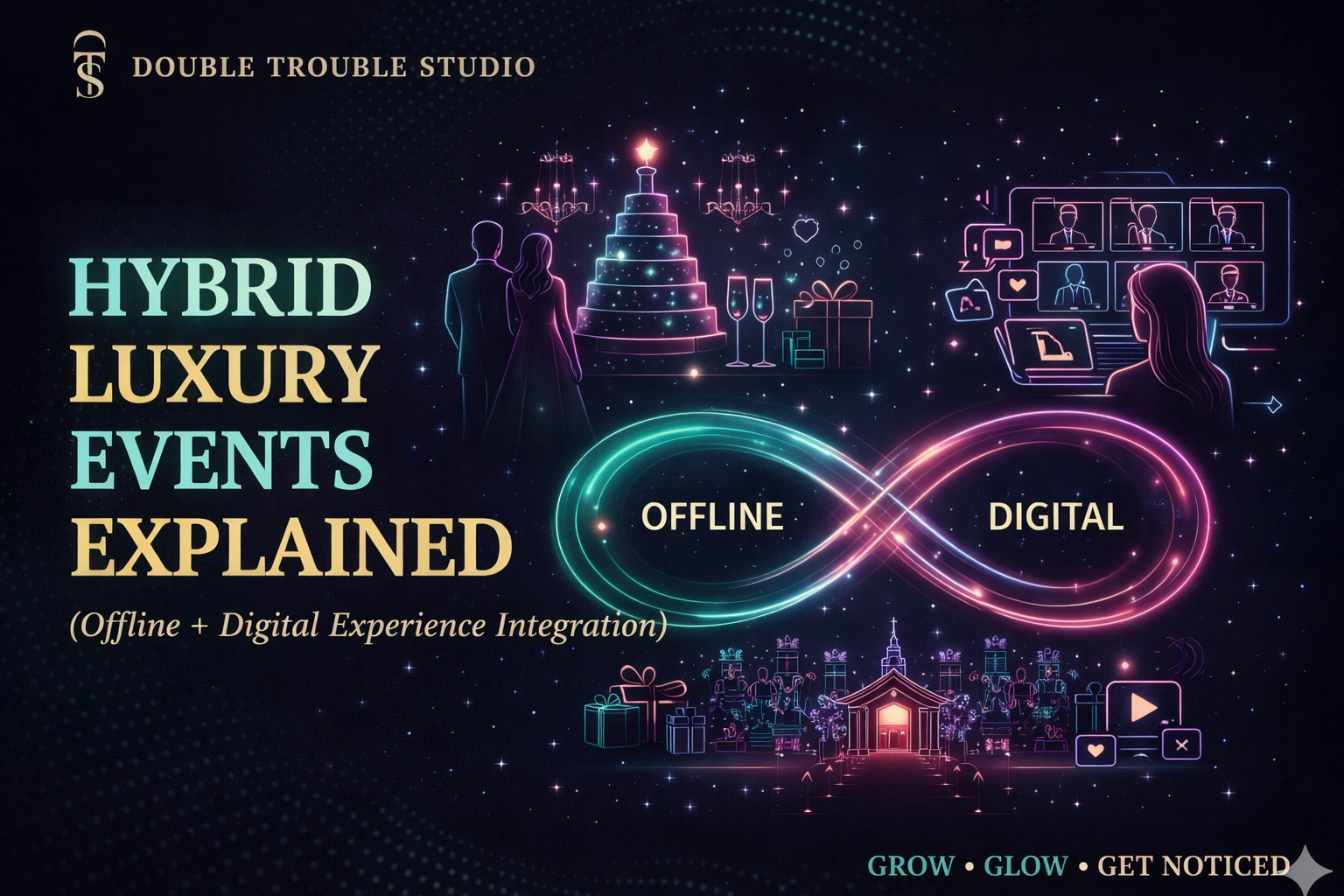
Hybrid Luxury Events Explained (Offline + Digital Experience Integration)
In 2026, the definition of a luxury event has expanded beyond physical spaces. While in-person experiences remain central to premium events, digital integration has become an essential layer that enhances reach, personalization, and continuity. Hybrid luxury events represent this evolution, combining offline experiences with digital environments to create a unified and immersive journey for audiences across locations.
This shift is not driven solely by technology. It is driven by changing expectations. High-net-worth audiences, global clients, and digitally connected communities expect flexibility without compromising exclusivity. They want to participate in experiences regardless of location, while still feeling part of something refined and curated. Hybrid events address this expectation by blending physical presence with digital access.
However, integrating offline and digital elements is not simply a matter of adding live streaming or virtual components to an event. For luxury brands, the challenge lies in maintaining consistency, quality, and emotional impact across both environments. The digital experience must reflect the same level of sophistication as the physical event, ensuring that neither feels secondary.
Hybrid luxury events therefore require a structured approach. Concept, design, technology, and execution must be aligned to create a seamless experience that feels cohesive rather than fragmented.
Because in premium events, integration is not about adding layers.
It is about creating continuity.
Understanding the Concept of Hybrid Luxury Events
Hybrid events combine physical and digital experiences into a single framework, allowing audiences to engage with the event in multiple ways. In a luxury context, this concept must be approached with precision. The objective is not to replicate the physical event digitally but to extend its narrative and accessibility.
The physical component remains the core of the experience. It provides the tangible elements that define luxury, including ambiance, design, and personal interaction. The digital component complements this by enabling remote participation, content amplification, and extended engagement.
This dual structure requires careful planning. Both components must be designed simultaneously to ensure alignment. The narrative, visuals, and interactions should feel consistent across environments, creating a unified experience.
Hybrid events also introduce new opportunities for personalization. Digital platforms allow for tailored content, interactive features, and customized experiences. This enhances engagement while maintaining exclusivity.
However, the integration must be seamless. Disjointed experiences can create confusion and reduce impact. The audience should feel that they are part of the same event, regardless of how they are participating.
Hybrid events are not two separate experiences.
They are one experience expressed through multiple channels.
Designing the Physical Experience as the Foundation
The physical aspect of a hybrid luxury event remains the primary touchpoint. It defines the atmosphere, sets the tone, and establishes the emotional core of the experience. Designing this component requires the same level of attention to detail as any high-end event.
Concept development is the starting point. The theme and narrative must be clearly defined, guiding all design decisions. This ensures that the physical environment aligns with the overall vision.
Aesthetic design plays a critical role. Elements such as décor, lighting, and spatial layout must create a cohesive environment. Each detail contributes to the overall experience, reinforcing the brand’s identity.
Guest experience is also central to the physical component. From arrival to departure, every interaction must be seamless and refined. This includes hospitality, service, and flow.
The physical event also serves as the content source for the digital component. High-quality visuals, performances, and interactions are captured and shared digitally. This requires coordination between design and production teams.
The physical experience is not just a setting.
It is the anchor.
Building the Digital Layer: Extending the Experience
The digital component of a hybrid luxury event is not an afterthought. It is an integral part of the experience that extends the event’s reach and engagement. Designing this layer requires the same level of creativity and precision as the physical event.
Digital platforms provide various opportunities for interaction. Live streaming allows remote audiences to experience the event in real time. Interactive features, such as chat or Q&A sessions, enable engagement.
However, the digital experience must be curated. High production quality is essential. Video, audio, and design must reflect the same standards as the physical event. Poor quality can disrupt the perception of luxury.
User interface and navigation also influence the digital experience. Platforms should be intuitive and visually aligned with the brand. This ensures that the experience feels cohesive.
Content adaptation is another important aspect. Digital audiences may engage differently from physical attendees. Content must be structured to suit their preferences while maintaining consistency.
The digital layer is not a replication.
It is an extension.
Ensuring Consistency Across Offline and Digital Environments
Consistency is one of the most critical factors in hybrid luxury events. Both physical and digital components must reflect the same identity, narrative, and quality standards.
Visual consistency includes color palettes, typography, and design elements. These must be aligned across environments to create a cohesive experience.
Narrative consistency ensures that the story remains clear. The messaging, tone, and sequence of events should be consistent, regardless of the platform.
Experience consistency involves maintaining the same level of refinement. Digital participants should feel that they are part of the same premium experience as physical attendees.
Achieving consistency requires coordination across teams. Designers, technical teams, and event planners must work together to ensure alignment.
Consistency is not automatic.
It is designed.
Technology as an Enabler, Not the Focus
Technology plays a central role in hybrid events, but it must be used strategically. The objective is not to showcase technology but to enhance the experience.
Tools such as live streaming platforms, augmented reality, and interactive applications can add value. However, they must be integrated seamlessly. Overuse or misalignment can distract from the core experience.
Reliability is essential. Technical issues can disrupt the event and affect perception. Systems must be tested thoroughly to ensure smooth operation.
Technology should support the narrative.
Not overshadow it.
Audience Experience and Engagement
Hybrid events introduce diverse audience groups, including physical attendees and digital participants. Each group has different expectations and behaviors, requiring tailored approaches.
Physical attendees expect immersive and personal experiences. Digital participants expect accessibility and interaction. Balancing these expectations is essential.
Engagement strategies must consider both groups. Interactive elements, such as live polls or virtual networking, can enhance participation.
Personalization enhances engagement. Digital platforms allow for customized content, while physical experiences can include tailored interactions.
The objective is to create a unified experience where all participants feel valued.
Operational Execution and Coordination
Executing a hybrid luxury event requires meticulous planning and coordination. Multiple teams, including event planners, technical experts, and content creators, must work together.
Timelines must account for both physical and digital components. Coordination ensures that all elements are aligned and executed seamlessly.
On-site management includes overseeing setup, managing schedules, and addressing issues. Digital management involves monitoring platforms, ensuring quality, and facilitating interaction.
Communication between teams is critical. Real-time updates and coordination ensure that the event runs smoothly.
Execution is not just about delivery.
It is about synchronization.
Measuring Success in Hybrid Events
Evaluating hybrid events requires a combination of metrics. Physical attendance, digital engagement, and overall experience must be considered.
Feedback from participants provides insights into the effectiveness of the event. Engagement metrics, such as interaction and participation, indicate success.
Long-term impact is also important. Hybrid events can extend beyond the event itself, creating ongoing engagement.
Measurement must be comprehensive.
Challenges in Hybrid Luxury Events
Hybrid events present several challenges. One of the most significant is maintaining quality across both environments. Digital components must meet the same standards as physical ones.
Another challenge is complexity. Coordinating multiple elements requires expertise and planning.
There is also the challenge of balancing visibility with exclusivity. Digital access increases reach but must be managed carefully.
Addressing these challenges requires a strategic approach.
Frequently Asked Questions (FAQs)
What is a hybrid luxury event?
Ans: It is an event that integrates physical and digital experiences into a unified framework.
Why are hybrid events important?
Ans: They expand reach and enhance engagement while maintaining premium experiences.
How can consistency be maintained?
Ans: Through aligned design, narrative, and execution across all components.
What role does technology play?
Ans: It enables integration and interaction but must support the experience.
Are hybrid events suitable for all luxury brands?
Ans: Yes, when designed strategically.
Conclusion: Integration as the Future of Luxury Events
Hybrid luxury events represent a shift in how experiences are designed and delivered. By integrating offline and digital elements, brands can create more dynamic and inclusive experiences.
However, success depends on alignment. Concept, design, technology, and execution must work together to create a cohesive experience.
Because in luxury events, the value lies not in the components.
It lies in how they are connected.
Design Your Hybrid Luxury Event
If you are planning a premium event, integrating physical and digital experiences requires both creative vision and technical expertise.
From concept development and design to technology integration and execution, our team ensures that your event delivers a seamless and impactful experience.
📩 hello@dtsworld.in 📞 +91 80000 06021 📍 Andheri East, Mumbai
👉 Design Your Hybrid Event Strategy