Luxury public relations is not simply ordinary publicity presented with more sophisticated visuals.
A luxury brand operates through a distinct value system involving desire, craftsmanship, cultural relevance, scarcity, service, identity and emotional meaning.
Its communication must therefore achieve more than broad visibility.
It must help the right audience understand why the brand deserves attention, trust and premium consideration.
A luxury label can appear in several publications and still fail to build a distinctive reputation. A premium hotel can attract influencers without establishing what makes its guest experience different. A designer can receive social engagement while remaining difficult for customers, buyers and journalists to position clearly.
These situations occur when communication begins with exposure rather than strategy.
A strong luxury brand PR strategy begins with positioning.
The organisation must define the world it represents, the audience it serves, the qualities it wants to own and the evidence that supports those qualities.
Public relations then turns this positioning into credible stories, editorial opportunities, expert commentary, cultural partnerships, events and customer experiences.
Media outreach is one part of this system.
Journalists do not cover a brand simply because its products are expensive or its campaign photographs look beautiful. They need a relevant story, clear news value and a reason their audience should care.
A luxury fashion label may attract editorial interest through craftsmanship, design innovation, cultural heritage or a distinctive founder perspective.
A premium hotel may become relevant through architecture, destination identity, culinary experiences, sustainability, creative partnerships or changing travel behaviour.
A luxury event company may contribute stories about guest experience, design, privacy, hospitality and the evolution of premium celebrations.
The strongest luxury PR does not repeatedly announce that the brand is luxurious.
It demonstrates luxury through detail, point of view, evidence and experience.
What Is a Luxury Brand PR Strategy?
A luxury brand PR strategy is a structured communication plan designed to build prestige, authority, relevance and trust around a premium organisation.
It connects brand positioning with media relations, storytelling, leadership visibility, events, influencers, partnerships, customer experience and reputation management.
The strategy should explain what the brand wants to be known for, which audiences matter and what communication outcomes support business growth.
It also defines what the brand should not do.
Luxury communication often requires restraint. Constant discount messaging, indiscriminate influencer partnerships, mass press distribution and excessive exposure can weaken the sense of selectivity the brand is trying to create.
This does not mean luxury brands should avoid reach or digital growth.
It means reach should remain connected with relevance, consistency and perceived value.
The objective is not to appear everywhere.
It is to appear in the right contexts with a clear and credible identity.
Luxury PR Is About Perception and Proof
Luxury value exists partly through perception.
Customers evaluate the product, but they also evaluate the brand’s story, design, service, associations, environment and cultural meaning.
A premium price creates expectations.
The audience may expect greater quality, personal attention, creativity, expertise, privacy or scarcity.
PR helps shape these expectations, but it must also provide proof.
A brand claiming craftsmanship should show the people, techniques, materials and time involved.
A hotel claiming personalised service should demonstrate the systems and human attention that create that experience.
An event company claiming precision should explain how it manages guest movement, production, hospitality and contingency planning.
A skincare brand claiming innovation should provide credible information about formulation, testing and intended use.
The public story and actual customer experience must support one another.
When they do not, greater publicity may increase scrutiny rather than build prestige.
Begin With Luxury Brand Positioning
Positioning explains the distinctive place the brand wants to occupy in the customer’s mind.
It should answer several questions.
Who is the brand for?
What does it provide beyond functional utility?
Why should customers choose it rather than another premium option?
Which qualities make it recognisable?
What evidence makes those qualities credible?
A brand cannot rely only on words such as exclusive, elegant, premium and world-class.
These descriptions are widely used and provide limited distinction.
Positioning requires a more specific point of view.
A luxury resort may position itself around private access to nature and deeply local hospitality.
A jewellery label may focus on architectural design and modern heirloom value.
A premium event company may position itself around experience design and discreet operational precision.
A fashion brand may represent contemporary Indian craft without relying on conventional heritage styling.
These positions create clearer PR opportunities because they provide something meaningful to discuss.
Define the Meaning of Luxury for the Brand
Luxury does not mean exactly the same thing in every category.
For one customer, luxury may mean rarity and status.
For another, it may mean time, convenience, privacy, craftsmanship, customisation or emotional significance.
The organisation should define its own interpretation.
A hospitality brand may view luxury as freedom from friction.
A designer may define it as human skill and limited production.
A professional service firm may express luxury through discretion, access and highly personalised attention.
This definition should influence product design, service, imagery, language and partnerships.
If the brand defines luxury as quiet personalisation but communicates through loud mass-market promotions, the positioning becomes inconsistent.
Identify the High-Value Audience
Luxury audiences should not be described only through income.
Financial capacity matters, but premium purchasing is also influenced by taste, identity, values, social context and category knowledge.
The brand may serve established luxury customers, aspirational consumers, collectors, global Indians, corporate decision-makers, wedding families, design-conscious travellers or younger customers seeking culturally meaningful products.
Each audience interprets luxury differently.
A collector may value rarity and provenance.
A destination-wedding family may value hospitality, privacy and operational confidence.
A younger fashion customer may value originality, representation and responsible production.
A corporate buyer may value reliability, discretion and stakeholder experience.
The PR strategy should understand these motivations.
Understand the Audience’s Cultural Context
Luxury communication does not operate in isolation from culture.
Ideas of status, beauty, celebration, travel and success continue to evolve.
Some audiences may move away from visible logos towards subtle design and private experiences.
Others may value regional craftsmanship, responsible sourcing or personalised products.
Younger audiences may question traditional ideas of exclusivity while still seeking distinction and quality.
The brand should understand these shifts rather than relying on outdated stereotypes of luxury customers.
Research may include customer interviews, sales feedback, search behaviour, cultural trends, media coverage and social conversation.
The objective is to identify how the audience defines value today.
Establish a Clear Brand Point of View
A luxury brand needs a perspective that influences its stories and decisions.
This point of view may concern design, service, culture, materials, travel, beauty or celebration.
A brand without a point of view becomes dependent on products and visual styling alone.
Its PR activity may then consist of repetitive launches, celebrity attendance and generic founder profiles.
A strong point of view creates broader editorial relevance.
A hotel may discuss the importance of designing with the destination rather than importing an international visual formula.
A luxury events company may argue that premium experiences are defined by emotional flow and guest care rather than décor alone.
A designer may discuss the difference between preserving craft and freezing it in the past.
These ideas give journalists and audiences something to engage with.
Build a Luxury Narrative
The brand narrative connects origin, belief, approach, evidence and future direction.
The origin explains why the brand began.
The belief explains how it sees the category.
The approach explains what it does differently.
The evidence demonstrates that the promise is real.
The future shows where the brand is going.
A useful luxury narrative should remain specific and believable.
It should not invent dramatic founder hardship or exaggerated social purpose.
The most compelling story may come from a design observation, a customer frustration, family knowledge, technical expertise or commitment to a particular form of service.
The narrative should be broad enough to create many stories over time.
Avoid Making Heritage the Only Story
Heritage can provide valuable authenticity and depth.
However, heritage alone does not automatically make a brand relevant to contemporary customers.
A family legacy, traditional technique or historic location should be connected with current design, service or customer behaviour.
The PR story should explain how the brand interprets heritage rather than simply stating how old it is.
A craft label may combine traditional skill with modern silhouettes.
A hotel in a historic property may preserve architecture while introducing contemporary hospitality.
A jewellery house may reinterpret family archives for new generations.
This tension between continuity and evolution creates stronger editorial material.
Use Craftsmanship as Evidence
Craftsmanship is one of the most common luxury claims.
The brand should make it visible.
It can show materials, processes, specialist skills, time, prototypes and quality decisions.
The people behind the work can become important storytellers.
A craft story should avoid reducing artisans to decorative background figures.
Their expertise, contribution and agency should be represented respectfully.
The brand should also be precise.
Handmade, handcrafted, hand-finished and artisan-produced can have different meanings.
Communication should reflect the actual process.
Position Through Customer Experience
Luxury positioning is created through experience as much as product.
Public relations can communicate the systems customers do not normally see.
A hotel may explain private arrival planning, personal preferences, concierge access and destination curation.
An event company may discuss guest communication, hospitality desks, movement design, security and backstage coordination.
A luxury retailer may explain private appointments, customisation, after-sales care and packaging.
These operational details can become strong proof of premium value.
They also differentiate the brand from competitors using similar visual language.
Define the PR Objectives
The strategy should begin with clear objectives rather than a general desire for visibility.
A new brand may need awareness and category understanding.
An established company may need repositioning.
A regional luxury business may want national recognition.
A heritage brand may need relevance among younger audiences.
A hotel may want destination-wedding enquiries.
A fashion label may want buyer, stylist and editorial interest.
The objective should identify the audience, intended change and timeframe.
For example, the brand may aim to increase awareness among luxury travellers and wedding planners in selected Indian cities over six months.
Another objective may be to establish the founder as a credible voice on contemporary craftsmanship.
These objectives guide media, content and measurement decisions.
Create a Luxury PR Message Architecture
A message architecture translates positioning into usable communication.
It may include one central brand statement, several supporting narrative pillars and specific proof points.
The central statement explains what the brand represents.
The pillars may include craftsmanship, design, service, cultural relevance and innovation.
Proof points may include materials, processes, customer outcomes, partnerships, locations, expertise or awards.
The architecture should also identify language the brand should avoid.
Overused luxury vocabulary can make the communication feel generic.
The objective is clarity and distinction rather than excessive description.
Develop Narrative Pillars
Narrative pillars are the themes the brand can return to consistently.
A luxury resort may use destination, privacy, culinary culture and personalised service.
A jewellery brand may use design, materials, craftsmanship and modern heirlooms.
A premium events company may use guest experience, production precision, creative design and cultural storytelling.
Each pillar should support several stories.
The destination pillar might include architecture, local partnerships, seasonal experiences and travel trends.
The craftsmanship pillar might include people, materials, techniques and design development.
Three or four strong pillars generally provide more focus than a long list of broad values.
Build a Luxury Story Bank
A story bank is an organised collection of PR opportunities.
It may include founder insights, product origins, customer stories, design processes, craftspeople, destination details, cultural partnerships, research, milestones and behind-the-scenes operations.
Each story can be connected with a narrative pillar, audience and media category.
The bank should be reviewed regularly.
Luxury businesses often contain strong stories that remain invisible because the PR team receives information only when a product launches.
Conversations with design, operations, sales, customer service and leadership can reveal more valuable material.
Understand Editorial Story Value
A brand announcement becomes editorially relevant when it connects with a wider audience interest.
A product launch may reflect a design movement, material innovation or cultural shift.
A hotel opening may represent a new destination or form of travel.
A founder story may reveal a meaningful industry change.
An event may demonstrate changing expectations among premium guests.
The PR team should ask why the story matters beyond the brand.
A journalist’s responsibility is to the publication’s audience, not to the company’s promotional calendar.
The pitch should therefore explain relevance, timeliness, distinctiveness and evidence.
Create Strong Luxury Story Angles
Luxury brands need several types of story angles.
A positioning angle explains the brand’s distinctive philosophy.
A design angle explores creative influences, materials or process.
A craftsmanship angle focuses on skill, production and people.
A founder angle connects personal experience with a broader category insight.
A trend angle places the brand within changing customer behaviour.
A destination angle explores location, culture and travel.
A service angle demonstrates how premium experience is delivered.
A collaboration angle focuses on meaningful creative or cultural partnerships.
A business angle may cover growth, market entry, leadership or investment.
The PR team should choose the angle according to the outlet rather than sending every possible story at once.
Use the Founder Story Carefully
Luxury brands often depend strongly on founder identity.
The founder may represent taste, expertise, access and creative direction.
A good founder story explains what the person noticed, believed and changed.
It should not function only as a biography.
The journalist needs to understand why the founder’s experience matters to a broader audience.
The founder may discuss changing luxury behaviour, design philosophy, category problems or customer expectations.
The story should also include evidence of execution.
Personal vision becomes credible when supported by product, service and business progress.
Develop the Founder as a Thought Leader
Founders can contribute to editorial conversations beyond company announcements.
A hospitality founder may discuss destination development and experience-led travel.
A designer may comment on craftsmanship, representation or fashion consumption.
An event specialist may discuss privacy, guest experience and premium celebrations.
Thought leadership should remain within genuine expertise.
The founder should not comment on every cultural trend simply to gain media exposure.
Clear expertise builds authority over time.
Use Product Stories With Context
A luxury product story requires more than images, prices and adjectives.
The PR team should explain why the product exists, how it was developed and what it reveals about the brand or customer.
A watch collection may involve engineering, material selection or a cultural reference.
A bridal collection may reflect changing ceremony formats or individual expression.
A furniture range may combine regional techniques with contemporary living.
The story should help the audience see the product differently.
High-quality visuals remain essential, but the editorial idea gives those visuals meaning.
Use Service Stories
Service is often one of the most important but least visible luxury differentiators.
A service story can explain how the brand anticipates needs, protects privacy, manages detail or provides access.
The company may discuss concierge processes, custom consultations, travel planning, guest communication or after-sales care.
These stories can be especially valuable for hospitality, events, property, automotive and professional services.
The brand should avoid revealing private customer information while demonstrating capability.
Develop Cultural Story Angles
Luxury brands often operate through culture, design and identity.
Cultural stories can involve artists, musicians, architects, chefs, craftspeople, filmmakers or regional traditions.
The partnership should create real value rather than functioning as borrowed credibility.
The PR story should explain why the collaboration exists and what each participant contributes.
Cultural references should be handled with knowledge and respect.
A brand should not reduce a community or tradition to a visual theme without meaningful involvement.
Build Sustainability Stories With Evidence
Sustainability has become an important part of premium communication, but it is also highly scrutinised.
The brand should avoid broad claims without supporting information.
It may discuss material sourcing, durability, repair, waste, packaging, energy, local production or supplier relationships.
The communication should distinguish current achievements from future goals.
A luxury product may create sustainability value through longevity and repairability, but those benefits should be demonstrated.
Honest progress is more credible than claims of complete environmental perfection.
Develop Innovation Angles
Innovation does not need to mean technology alone.
It may involve material development, customer experience, production, design, distribution or service.
A brand can explain what existed before, what it changed and why the change matters.
The PR team should avoid describing ordinary updates as revolutionary.
Journalists may ask for evidence, comparisons and customer outcomes.
Specificity creates stronger credibility.
Use Data and Research
Original research can strengthen luxury PR when it reveals meaningful customer or category behaviour.
A hospitality brand may study changing premium travel preferences.
An event company may analyse expectations around guest communication, privacy or sustainability.
A property company may examine how high-value buyers evaluate design and amenities.
The research method and sample should be explained honestly.
Small internal observations should not be presented as universal market facts.
Data becomes more compelling when combined with real human examples.
Use Customer Stories Responsibly
Luxury customer stories can demonstrate transformation, experience and service quality.
However, premium customers may expect discretion.
The brand should obtain permission and decide how much personal information is appropriate.
Some stories can be anonymised.
A wedding company may discuss the logistical complexity and solution without identifying the family.
A hotel may describe a customised experience without revealing the guest.
The story should focus on the challenge, approach and result rather than private status.
Build a Targeted Media Strategy
A luxury media list should be organised by relevance, not only prestige.
It may include fashion, lifestyle, design, travel, hospitality, business, trade, regional and cultural outlets.
The team should identify the publication section and journalist most likely to cover the subject.
A design story may suit an interiors or architecture editor.
A craftsmanship story may suit fashion, culture or sustainability writers.
A founder-growth story may suit business media.
A destination property may require travel, design, food and regional outreach.
Each outlet should receive an angle adapted to its audience.
Research Publications Consistently
The PR team should read target publications before pitching.
It should understand current sections, recurring formats, visual preferences and recent themes.
The team should review journalist bylines and avoid sending a story they covered recently without a new development.
Luxury publications often maintain a distinct editorial voice.
A pitch should respect that identity.
Generic emails addressed to several editors at once reduce credibility.
Media research should continue throughout the year rather than beginning only when the brand wants coverage.
Pitch Vogue Strategically
A pitch for Vogue should generally connect with fashion, beauty, culture, weddings, design, identity or creative talent.
The story should provide more than premium imagery.
It may focus on a new design language, a meaningful craft collaboration, changing bridal behaviour, beauty innovation or an emerging creative perspective.
The brand should avoid assuming that a celebrity association automatically creates editorial value.
The pitch should explain the cultural or creative relevance.
High-quality editorial images are essential.
Product shots covered with logos and promotional text are unlikely to provide the same flexibility.
Pitch GQ Strategically
A GQ pitch may connect with men’s fashion, grooming, watches, automobiles, travel, entertainment, fitness, culture or luxury lifestyle.
The story should reflect contemporary interests rather than outdated stereotypes.
A menswear label may discuss new approaches to tailoring or personal style.
A hotel may offer a distinctive travel, culinary or design experience.
A founder may provide genuine expertise in automobiles, watches, fitness, business or culture.
The brand should understand the outlet’s recent coverage before selecting the angle.
An identical pitch should not be sent to Vogue and GQ.
Pitch Lifestyle Publications
Lifestyle outlets cover a broad range of topics, but the pitch still needs a precise section and audience.
A food story should include chef access, menu relevance and professional photography.
A travel story should explain the destination, timing and experience.
A wellness story should use credible expertise and responsible claims.
An interiors story should provide architecture, materials and design context.
Broad editorial scope does not mean the publication will cover a general brand announcement.
Pitch Business and Trade Media
Business publications may care about strategy, leadership, market development, customer behaviour and growth.
Trade media may value operational insight, data, technical innovation and category relevance.
A luxury brand can therefore develop stories beyond lifestyle coverage.
A hotel group may discuss expansion and service models.
A fashion company may discuss manufacturing, exports or retail.
An event business may discuss premium-event economics, technology or guest management.
These stories can strengthen authority among partners, investors, employees and professional customers.
Use Regional Media
Regional media can provide powerful relevance for luxury businesses operating in specific cities or states.
A local outlet may care about investment, employment, cultural partnerships, tourism, a new opening or a founder’s connection with the region.
The pitch should demonstrate local understanding.
Changing only the city name in a national press release is not sufficient.
Regional-language communication may be appropriate.
Local photographs, spokespeople and examples can strengthen credibility.
Build Journalist Relationships
Media relations should continue between announcements.
PR teams can provide reliable information, expert access, data and useful sources.
They should respond quickly and correct errors honestly.
A relationship does not mean expecting automatic coverage.
It means becoming a credible and professional contact.
Journalists should not be pressured through repeated calls or messages across several platforms.
One relevant email and a respectful follow-up are generally more effective.
Write Concise Media Pitches
A media pitch should communicate the story quickly.
The subject line should explain the development and angle.
The opening paragraph should establish why the story matters now.
The second paragraph can explain the brand’s relevance, evidence and available access.
The final line can offer interviews, images, data or a preview.
The pitch should not include the company’s complete history.
Supporting information can be provided through a media kit or link.
Concise outreach respects the journalist’s time and forces the PR team to identify the strongest idea.
Avoid Generic Luxury Language
Words such as exclusive, iconic, world-class, timeless and luxurious appear in many brand pitches.
These adjectives do not prove distinction.
The pitch should replace broad claims with concrete information.
Instead of calling a collection timeless, explain the materials, construction and intended longevity.
Instead of describing a hotel as exclusive, explain the number of rooms, private access or personalised service.
Instead of calling an event unforgettable, describe the experience design and guest journey.
Specificity is more persuasive than promotional vocabulary.
Prepare an Editorial Media Kit
A professional media kit should include accurate and current information.
It may contain the brand background, founder biography, fact sheet, product details, high-resolution images, captions, credits, spokesperson information and relevant data.
The files should be clearly named and easy to access.
The brand should identify which images are approved for editorial use.
Copyright and photographer credits should be confirmed.
The kit supports the pitch but does not replace the editorial story.
Invest in Editorial-Quality Photography
Luxury PR depends strongly on visual communication.
The brand should prepare images that publications can use without extensive modification.
These may include horizontal and vertical formats, product details, founder portraits, interiors, process images and lifestyle photography.
The visuals should represent the brand accurately.
Excessive logos, social-media text and promotional layouts reduce editorial usability.
The photography should support the specific story angle.
A craftsmanship story needs process and detail, not only a campaign model.
Prepare Spokespeople
Founders, designers and executives should be prepared before interviews.
They should understand the publication, likely audience and central story.
They should be able to explain the brand’s point of view naturally.
Media preparation should include difficult questions.
A journalist may ask about pricing, sourcing, sustainability, competition or growth.
The spokesperson should not depend only on polished brand phrases.
Clear examples and evidence create stronger interviews.
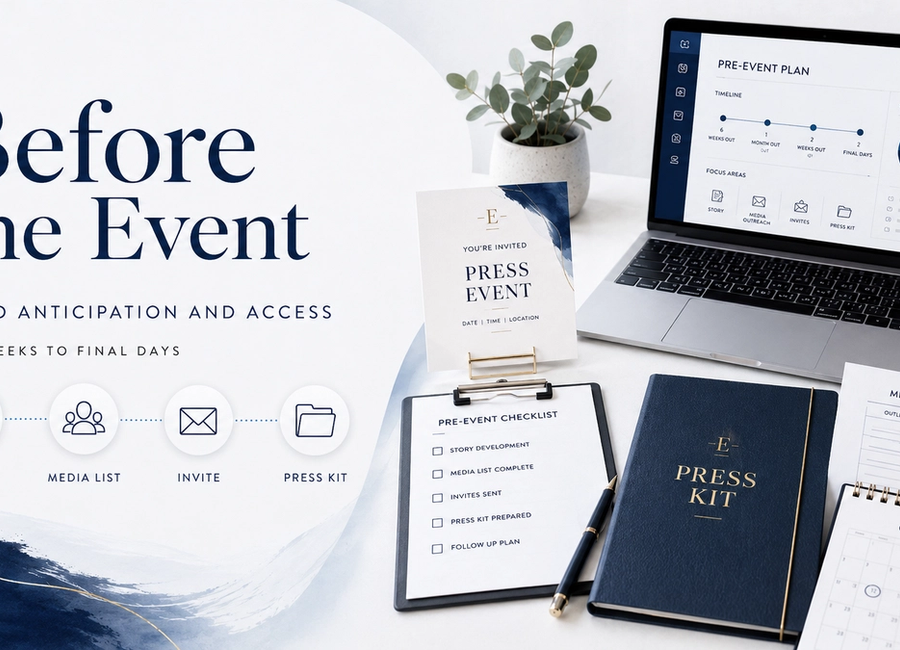
Use Events as PR Platforms
Luxury events can create cultural relevance, media access and customer experience.
The event should reflect the brand narrative.
A design-led launch may involve artists, architecture and material storytelling.
A hotel opening may showcase destination, food and service.
A jewellery event may include craftsmanship demonstrations or private consultations.
The venue, guest list, programme and partnerships should support the same positioning.
Adding unrelated celebrity attendance may create short-term attention but distract from the brand story.
Design Media Experiences Carefully
Media guests should receive a clear and professional experience.
The invitation should explain the event, timing, access and story relevance.
Journalists should not be invited only to fill the room.
The brand can provide useful access to founders, experts, products or behind-the-scenes processes.
Attendance should not be made conditional on positive coverage.
Transport, check-in, photography and information should be coordinated carefully.
The event itself becomes evidence of the brand’s service quality.
Work With Influencers Strategically
Influencers can provide visual storytelling, community access and social proof.
The selection should reflect audience fit, content quality, geography and brand alignment.
A creator with a large following may not suit the luxury positioning.
Another with a smaller but design-conscious audience may provide greater relevance.
The partnership should feel natural.
The brand should define deliverables, disclosure, content rights, exclusivity and paid amplification.
Influencer content should complement PR rather than replace independent editorial coverage.
Use KOLs and Experts
Key opinion leaders can add authority in categories where expertise matters.
A designer, architect, chef, dermatologist, collector or industry specialist may provide depth.
The individual should have genuine knowledge and a relevant audience.
KOL content may produce less mass reach but stronger trust among valuable decision-makers.
The partnership should not require the expert to make claims beyond their experience.
Use Celebrity Partnerships Carefully
Celebrity associations can increase awareness and prestige.
However, the celebrity should not overshadow the brand.
The partnership needs a strategic reason.
A celebrity may represent a specific form of style, achievement, creativity or cultural relevance connected with the brand.
Contracts should define appearances, content, usage, exclusivity, approvals and crisis rights.
The PR announcement should explain the partnership rather than assuming fame provides the complete story.
Build Partnerships With Cultural Credibility
Luxury brands can work with artists, designers, chefs, institutions, museums, galleries and craft organisations.
The collaboration should produce a meaningful outcome.
A superficial logo exchange provides limited long-term value.
The PR story should explain the shared idea, creative process and benefit to audiences.
Both parties should have clear roles and rights.
Cultural partnerships require respect for creative independence.
Integrate PR With Social Media
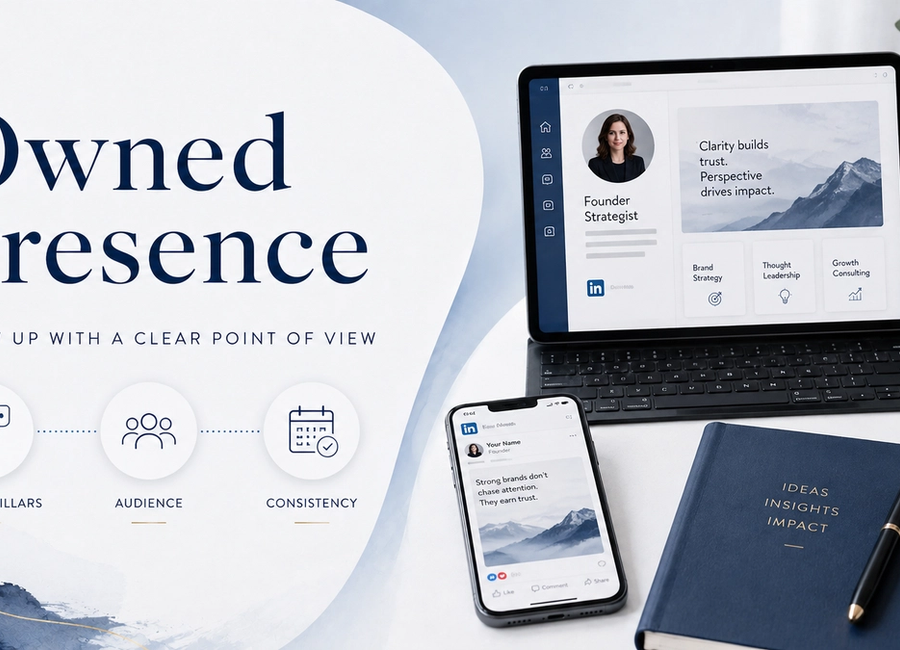
Social media should extend the brand narrative rather than operate as a separate promotional feed.
Media coverage can be expanded through founder commentary, videos, carousels and behind-the-scenes content.
The company should not copy the complete article or misuse publication logos.
Different platforms require different expression.
Instagram may focus on visual experience.
LinkedIn may focus on leadership and business insight.
YouTube may provide detailed stories and interviews.
The message should remain consistent across channels.
Integrate PR With SEO
PR can increase branded search and referral traffic.
The website should be prepared for audiences who discover the brand through coverage.
Service, product, location, founder and contact information should be accurate and easy to find.
Media stories can also inspire deeper website content.
A publication feature about craftsmanship may connect with an owned article explaining the process.
Search data can help the PR team understand which customer questions are growing.
This information can support future media angles.
Integrate PR With Paid Media
Strong PR themes can be extended through advertising.
The brand may promote a founder’s related post, a campaign film, a case study or a report.
Paid campaigns should generally guide audiences towards owned pages where the brand can provide more information and a clear next step.
Media coverage can be included as proof where permitted.
The brand should not describe sponsored content as independent press.
Paid amplification should preserve the luxury tone and avoid excessive frequency.
Build a Luxury Content Funnel
At the awareness stage, the brand may use editorial coverage, films, events, celebrity partnerships and visual campaigns.
At the interest stage, audiences may explore founder stories, product details, design features and destination content.
During consideration, customers need case studies, reviews, service explanations and trusted proof.
At conversion, the brand should provide private appointments, consultations, booking access or tailored enquiries.
After purchase, communication should support service, loyalty and advocacy.
PR contributes throughout this funnel by creating authority and relevant stories.
Protect Scarcity Without Creating Inaccessibility
Luxury brands often benefit from scarcity, but communication should not become confusing or unnecessarily difficult.
The audience should understand how to enquire, book or purchase.
Private access and limited availability can be explained clearly.
Artificial scarcity damages trust when audiences discover it was not genuine.
The brand should distinguish between selectivity and poor customer service.
A difficult response process does not create luxury.
Manage Reputation Proactively
Luxury reputation can be affected by service failures, customer complaints, celebrity controversies, product claims and privacy incidents.
The brand should maintain monitoring and escalation systems.
Customer issues should be addressed before they become public crises where possible.
The PR team should understand operational risk and work closely with customer service, legal and leadership.
A premium reputation is protected through daily consistency, not only crisis statements.
Prepare a Luxury Crisis Playbook
The crisis plan should cover likely scenarios, authority, contacts, holding statements and stakeholder communication.
Luxury brands should pay particular attention to privacy, customer treatment, product quality and high-profile partners.
During a crisis, scheduled promotional content may need to be paused.
Affected customers should receive direct support.
The public response should remain factual and empathetic.
Luxury language should not be used to avoid responsibility.
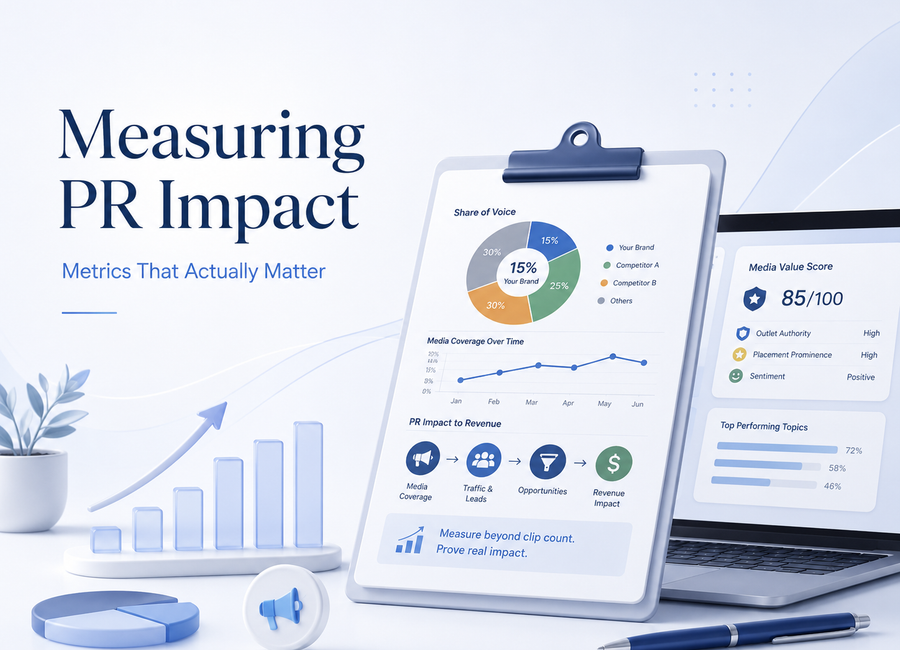
Measure Luxury PR Performance
Measurement should reflect the original objectives.
Visibility metrics may include media coverage, reach, event attendance and content views.
Quality metrics may include publication relevance, article prominence, message inclusion and visual representation.
Audience outcomes may include awareness, brand association, trust, consideration and branded search.
Commercial outcomes may include qualified enquiries, appointments, bookings, sales and partnerships.
The brand should avoid treating every media mention as equal.
Quality and audience relevance matter more than article count alone.
Measure Media Quality
One detailed feature in a respected publication may create more value than many copied press-release mentions.
The report should examine whether the brand appears in the headline, introduction and main story.
It should consider the authority and audience of the publication.
The article’s message, imagery and tone should also be reviewed.
Sponsored and earned media should remain separate in reporting.
Measure Message Pull-Through
Message pull-through shows whether the coverage communicated the intended positioning.
An article may mention the product but ignore the craftsmanship.
A feature may focus entirely on the celebrity while giving little attention to the brand.
The PR team should analyse whether the central brand belief and evidence appeared.
Weak pull-through may indicate that the pitch, interview or story angle needs improvement.
Measure Branded Search and Website Behaviour
Luxury PR often influences people to search later rather than click immediately.
The brand can monitor searches for its name, founder, products and campaigns.
Website analytics may show changes in direct traffic, product exploration, appointment requests and booking activity.
The analysis should consider other campaigns and seasonal demand.
PR may contribute to the increase without receiving complete direct attribution.
Measure Qualified Enquiries
High-value luxury businesses should focus on enquiry quality.
A campaign may generate substantial traffic but few suitable customers.
The sales team should classify enquiries according to location, budget, need and timeline.
The report can then connect media and campaign activity with qualified opportunities.
One relevant enquiry may be commercially more important than hundreds of general visits.
Measure Reputation and Brand Lift
Research can examine changes in awareness, perception, desirability and trust.
The brand may test whether audiences associate it with the intended qualities.
High visibility is not useful if people remember only the celebrity or event.
For repositioning campaigns, pre- and post-activity research can help evaluate whether the desired perception has changed.
Avoid Advertising Value Equivalency as ROI
Advertising value equivalency attempts to assign a paid-media cost to editorial coverage.
It does not prove revenue, customer action or reputation impact.
Editorial and advertising environments are not identical.
The figure should not be presented as verified return on investment.
A stronger report combines media quality, audience outcomes, search behaviour, enquiries and business results.
Understand Attribution Limits
A luxury customer may encounter a media feature, social post, event, search result and personal recommendation before converting.
The final action may occur through a direct call or private appointment.
No one channel should receive unsupported full credit.
The brand can use analytics, CRM information, customer surveys and sales feedback to build a reasonable view of influence.
The report should explain assumptions clearly.
Build a Luxury PR Dashboard
The dashboard should connect campaign scope, media quality, audience response and business outcomes.
It may include target publications, secured features, message inclusion, branded search, website behaviour, qualified leads and revenue.
Qualitative insights should also be included.
Journalist feedback, customer comments and partnership opportunities can reveal value that simple totals miss.
The dashboard should remain focused on the original objectives.
Common Luxury PR Mistakes
One common mistake is defining luxury through adjectives rather than evidence.
Another is pursuing prestigious media without a relevant editorial story.
Brands may send the same pitch to fashion, business, travel and regional publications.
Some rely excessively on celebrity attendance and influencer content.
Others produce beautiful imagery but provide little information for journalists.
A brand may claim craftsmanship while failing to show the process or people involved.
Luxury communication may also become so vague that customers do not understand the offering.
Another mistake is using constant discounts and urgent sales language that contradict premium positioning.
Brands may report media quantity without evaluating message quality or commercial impact.
Finally, the public story may promise exceptional service while the real customer experience remains inconsistent.
A Practical Luxury Brand PR Process
The process begins with business, customer and cultural research.
The organisation defines its meaning of luxury, audience and distinctive position.
A central brand narrative and several narrative pillars are created.
Proof points are collected across product, craftsmanship, service, customer experience, leadership and partnerships.
The PR team builds a story bank and identifies timely editorial angles.
Target publications and journalists are researched according to audience and subject relevance.
Media materials, photography, biographies and data are prepared before outreach.
Personalised pitches are developed for fashion, lifestyle, travel, business, trade and regional media.
Founders and spokespeople receive media preparation.
Events, creators, experts and cultural partners are selected according to the central positioning.
PR activity is integrated with website content, social media, search and paid campaigns.
Customer-service and crisis systems protect the experience behind the public promise.
Performance is measured through media quality, message pull-through, search interest, qualified enquiries and long-term reputation outcomes.
The strategy is then refined according to audience, journalist and commercial feedback.
Frequently Asked Questions
Q1. What is a luxury brand PR strategy?
A luxury brand PR strategy is a structured communication approach designed to build prestige, authority, and emotional value around a premium brand. It connects positioning, storytelling, media relations, cultural relevance, and customer experience into one consistent narrative that builds long-term desirability rather than just short-term visibility.
Q2. How is luxury PR different from regular public relations?
Luxury PR is not focused on mass exposure alone. It prioritises relevance, perception, and selective visibility. Instead of simply pushing announcements, it builds meaning through craftsmanship, design, cultural context, service experience, and brand philosophy—supported by credible storytelling and editorial-quality execution.
Q3. Why is positioning the foundation of luxury PR?
Positioning defines what the brand stands for, who it serves, and why it deserves attention. Without clear positioning, even strong media coverage fails to create distinction. In luxury PR, positioning guides every story, partnership, and communication decision so the brand remains consistent and recognisable across all touchpoints.
Q4. What kind of stories work best in luxury PR?
Strong luxury PR stories go beyond product launches. They include craftsmanship, founder perspective, design philosophy, cultural relevance, customer experience, innovation, and service excellence. The key is not to say the brand is “luxury,” but to demonstrate it through depth, detail, and real evidence.
Q5. Why do many luxury PR campaigns fail to build reputation?
They often start with exposure instead of strategy. Brands focus on visibility through media, influencers, or events without a clear narrative or positioning. As a result, audiences see activity but don’t understand what the brand truly stands for or why it is different.
Q6. How should media relations be handled in luxury PR?
Media outreach must be story-driven, not announcement-driven. Journalists need relevance, cultural or industry insight, and a clear reason their audience should care. Each pitch should be tailored to the publication’s focus—fashion, travel, business, lifestyle, or trade—rather than using a generic press release.
Q7. What role do influencers and celebrities play in luxury PR?
They can amplify visibility and reinforce desirability, but they should never replace the brand narrative. Their selection must align with positioning, audience relevance, and cultural fit. Poorly chosen partnerships can dilute exclusivity instead of enhancing it.
Q8. How is success measured in luxury PR?
Success is not measured only by media volume. It includes media quality, message pull-through, audience perception, branded search growth, website engagement, qualified enquiries, and business outcomes. The focus is on influence and relevance, not just coverage quantity.
Conclusion
Luxury brand PR is ultimately a discipline of meaning-building, not just media exposure.
It works when positioning, storytelling, craftsmanship, cultural context, and customer experience all align into one coherent narrative. The goal is not to appear everywhere, but to appear in the right places with the right story and the right level of credibility.
When executed correctly, luxury PR does more than generate publicity—it builds desire, trust, and long-term brand authority that directly supports premium positioning and commercial growth.
Build a Luxury PR System That Actually Positions Your Brand
At Double Trouble Studio, we develop luxury communication strategies that combine PR, digital marketing, storytelling, and brand positioning into one integrated system designed for visibility and conversion.
📩 info@dtsworld.in 📞 +91 80000 06021 📍Andheri (West), Mumbai
Need this for your brand?
Let DTS build your next campaign.
From PR, celebrity management and events to websites, social media, SEO and AI video production — Double Trouble Studio helps brands grow with strategy and execution.
Discuss Your Requirement →