
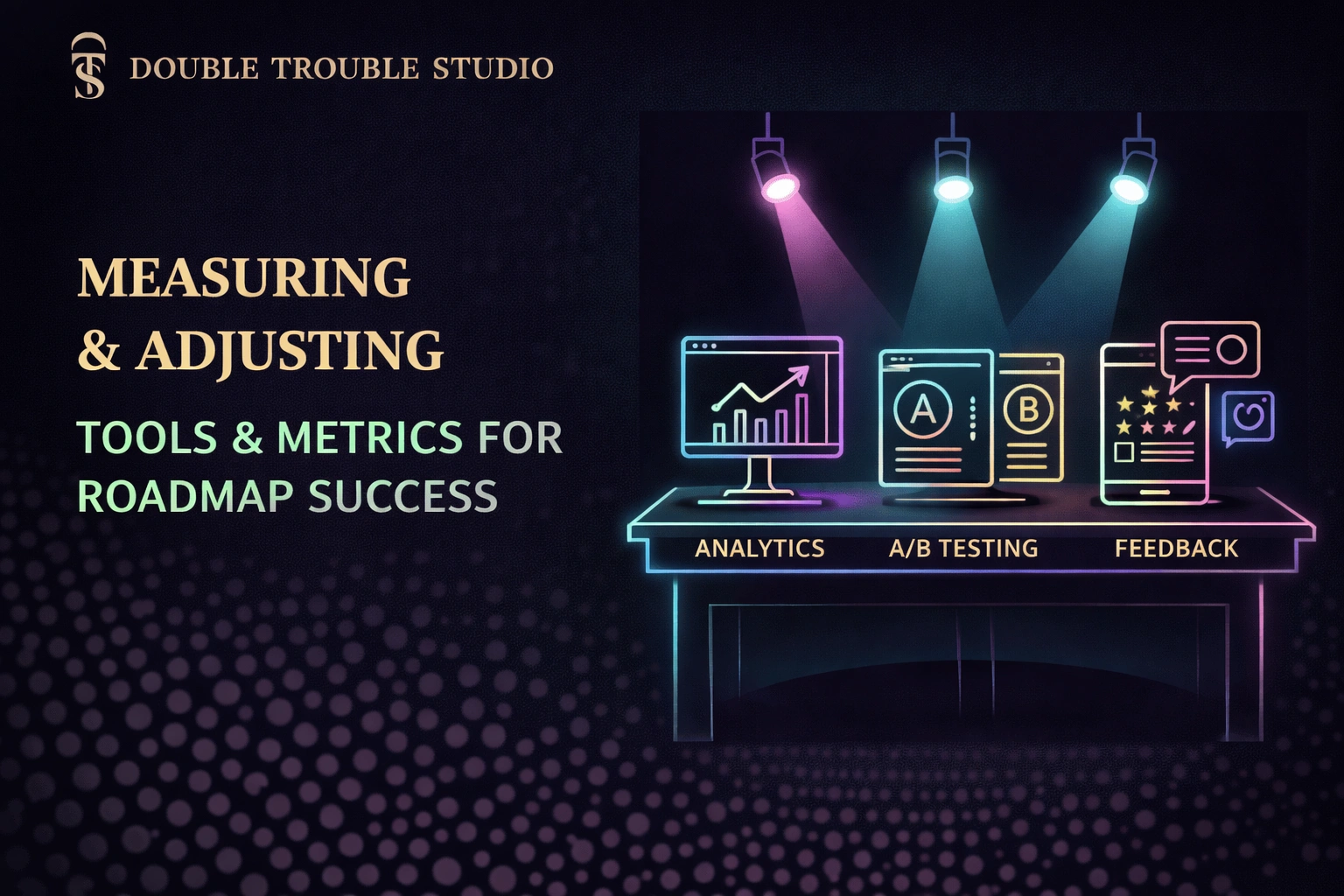
Measuring & Adjusting: Tools & Metrics for Roadmap Success
In 2026, building a brand is no longer defined by activity.
It is defined by interpretation.
Brands are no longer limited by lack of data. They are overwhelmed by it. Every campaign, every piece of content, every interaction generates measurable signals. Yet, despite this abundance, many brands struggle to understand what truly matters.
The problem is not measurement.
It is meaning.
A brand roadmap is only as strong as its ability to evaluate progress and adapt intelligently. Without structured measurement, even the most well-designed strategies become directionless. Without adjustment, even successful strategies become outdated.
For premium and luxury brands, this challenge is even more critical. Growth is not just about increasing numbers. It is about strengthening perception, maintaining consistency, and reinforcing positioning over time.
This requires a different approach to measurement.
Not one focused solely on volume.
But one focused on alignment.
Because in premium markets, success is not defined by how much attention you generate.
It is defined by how accurately that attention reflects your identity.
Rethinking Measurement Beyond Surface-Level Metrics
Most brands begin their measurement journey with accessible metrics. Views, impressions, clicks, and engagement rates are easy to track and compare. These numbers provide immediate feedback and create a sense of activity.
However, in a strategic roadmap, these metrics are insufficient on their own.
They indicate visibility, but not perception.
A campaign may generate high engagement while failing to reinforce the intended positioning. A piece of content may reach a wide audience but attract the wrong segment.
For luxury brands, this distinction is critical. Visibility without alignment can dilute identity. Growth without clarity can weaken perception.
Measurement must therefore move beyond surface-level indicators. It must evaluate how effectively the brand is communicating its intended message.
This requires a shift in mindset.
Metrics are not the objective.
They are signals.
And signals must be interpreted within context.
Defining What Success Actually Means
Before selecting tools or tracking data, it is essential to define what success looks like within the roadmap.
In many cases, success is reduced to growth metrics. Increased reach, higher engagement, or improved conversion rates are treated as indicators of progress.
While these metrics are important, they do not fully capture brand development.
In premium branding, success operates on multiple layers.
There is quantitative growth, which includes measurable outcomes such as audience expansion or revenue increase. There is qualitative growth, which includes perception, positioning, and consistency.
A roadmap must account for both.
For example, a luxury hospitality brand may define success not only by bookings, but by the type of audience it attracts, the quality of media coverage, and the consistency of its brand experience.
This layered definition ensures that measurement aligns with strategy.
Without it, metrics become disconnected from purpose.
Structuring KPIs That Reflect Brand Reality
Key Performance Indicators serve as the bridge between strategy and measurement. However, selecting the right KPIs requires careful consideration.
In premium branding, KPIs must reflect both performance and perception.
Performance-based KPIs may include audience growth, engagement depth, or conversion behavior. These provide insight into how the brand is interacting with its audience.
Perception-based KPIs are more nuanced. They may include sentiment analysis, brand recall, or consistency across platforms. These indicators require interpretation rather than simple tracking.
Balancing these two types of KPIs is essential.
Overemphasis on performance metrics can lead to short-term optimization at the expense of long-term positioning. Ignoring performance metrics can result in lack of measurable progress.
KPIs must therefore act as a balanced system.
They should guide decisions without distorting strategy.
Tools as Enablers, Not Decision-Makers
The expansion of digital platforms has introduced a wide range of tools for measurement. Analytics dashboards, social listening platforms, and reporting systems provide detailed insights into performance.
However, tools do not create strategy.
They support it.
A common mistake is over-reliance on tools. Brands often assume that more data leads to better decisions. In reality, excessive data can create confusion.
The effectiveness of a tool depends on how it is used.
For example, analytics platforms can provide detailed insights into audience behavior. Social listening tools can reveal how the brand is perceived in conversations. CRM systems can track customer interactions and lifecycle patterns.
Each of these tools serves a specific purpose.
The challenge lies in integrating their outputs into a coherent understanding.
Tools provide information.
Interpretation provides insight.
Establishing a Measurement Rhythm
Measurement is not a one-time activity. It is a continuous process that must be integrated into the roadmap.
This requires establishing a rhythm.
Regular intervals for evaluation ensure that progress is monitored consistently. These intervals may vary depending on the nature of the activity.
Short-term evaluations focus on campaign performance. Mid-term reviews assess alignment with milestones. Long-term assessments evaluate overall brand progression.
This layered approach ensures that both immediate and strategic outcomes are considered.
For luxury brands, this rhythm must be controlled. Frequent changes based on short-term data can disrupt consistency. Infrequent evaluations can delay necessary adjustments.
Balance is essential.
Measurement must inform action.
But it must not dictate it impulsively.
Identifying When to Adjust the Strategy
One of the most critical aspects of measurement is determining when to adjust the roadmap.
Not all fluctuations require intervention. Some variations are natural and do not indicate underlying issues.
The key is to identify patterns rather than isolated data points.
Consistent misalignment between expected and actual outcomes may indicate a need for adjustment. For example, if audience engagement is high but does not translate into desired perception, the messaging may need refinement.
Similarly, if PR coverage increases visibility but does not align with positioning, the narrative may require adjustment.
Adjustments must be strategic, not reactive.
They should address root causes rather than surface symptoms.
Maintaining Consistency While Adapting
Adjustment does not mean transformation.
One of the risks in roadmap execution is overcorrection. Frequent changes in response to data can create inconsistency, confusing the audience.
In luxury branding, consistency is critical. It builds recognition and trust over time.
Adjustments must therefore operate within defined boundaries. Core positioning, values, and identity should remain stable. Tactical elements such as content formats, timing, or channel focus can be adapted.
This approach ensures that the brand evolves without losing its identity.
Adaptation should refine.
Not redefine.
Integrating Feedback Beyond Data
While quantitative data provides valuable insights, it does not capture the full picture. Feedback from customers, partners, and stakeholders adds a qualitative dimension to measurement.
This feedback may come through direct interactions, event experiences, or informal conversations. It provides context that numbers alone cannot offer.
For example, audience sentiment expressed during events may reveal insights about perception that are not visible in digital metrics.
Integrating this feedback into the measurement process ensures a more comprehensive understanding.
Numbers indicate patterns.
Feedback explains them.
Long-Term Learning and Strategic Evolution
Measurement is not only about evaluating current performance. It is also about building knowledge for future strategy.
Patterns observed over time provide insight into what works and what does not. These insights inform future decisions, improving the effectiveness of the roadmap.
For premium brands, this long-term perspective is essential. Growth is not achieved through isolated successes, but through continuous refinement.
Each cycle of measurement and adjustment strengthens the brand’s strategic foundation.
Learning is cumulative.
And cumulative learning drives sustained growth.
Frequently Asked Questions (FAQs)
What is the purpose of measuring a brand roadmap?
Ans: It ensures that activities align with strategic objectives and provides insight into performance and perception.
Are metrics like views and engagement enough?
Ans: No, they indicate visibility but do not fully capture brand perception or alignment.
How often should a roadmap be evaluated?
Ans: Regularly, with a mix of short-term, mid-term, and long-term reviews.
When should a strategy be adjusted?
Ans: When consistent patterns indicate misalignment between objectives and outcomes.
Can too much data be a problem?
Ans: Yes, excessive data without clear interpretation can lead to confusion and ineffective decisions.
Conclusion: Measurement as Strategic Intelligence
Measuring and adjusting a brand roadmap is not about tracking numbers.
It is about understanding meaning.
In 2026, brands that succeed are those that can interpret data within the context of their identity. They use metrics not as endpoints, but as tools for refinement.
For luxury brands, this approach ensures that growth remains aligned with positioning. It allows them to adapt without losing clarity, and to evolve without compromising identity.
Because in premium branding, success is not defined by activity alone.
It is defined by how intelligently that activity is understood and refined.
Design Your Measurement Framework
If you are building or executing a brand roadmap, structured measurement ensures clarity, alignment, and continuous improvement.
From KPI definition and tool integration to strategic evaluation and adjustment, our team helps you create a system that supports both performance and perception.
📩 hello@dtsworld.in 📞 +91 80000 06021 📍 Andheri East, Mumbai
👉 Design Your Brand Measurement Strategy