
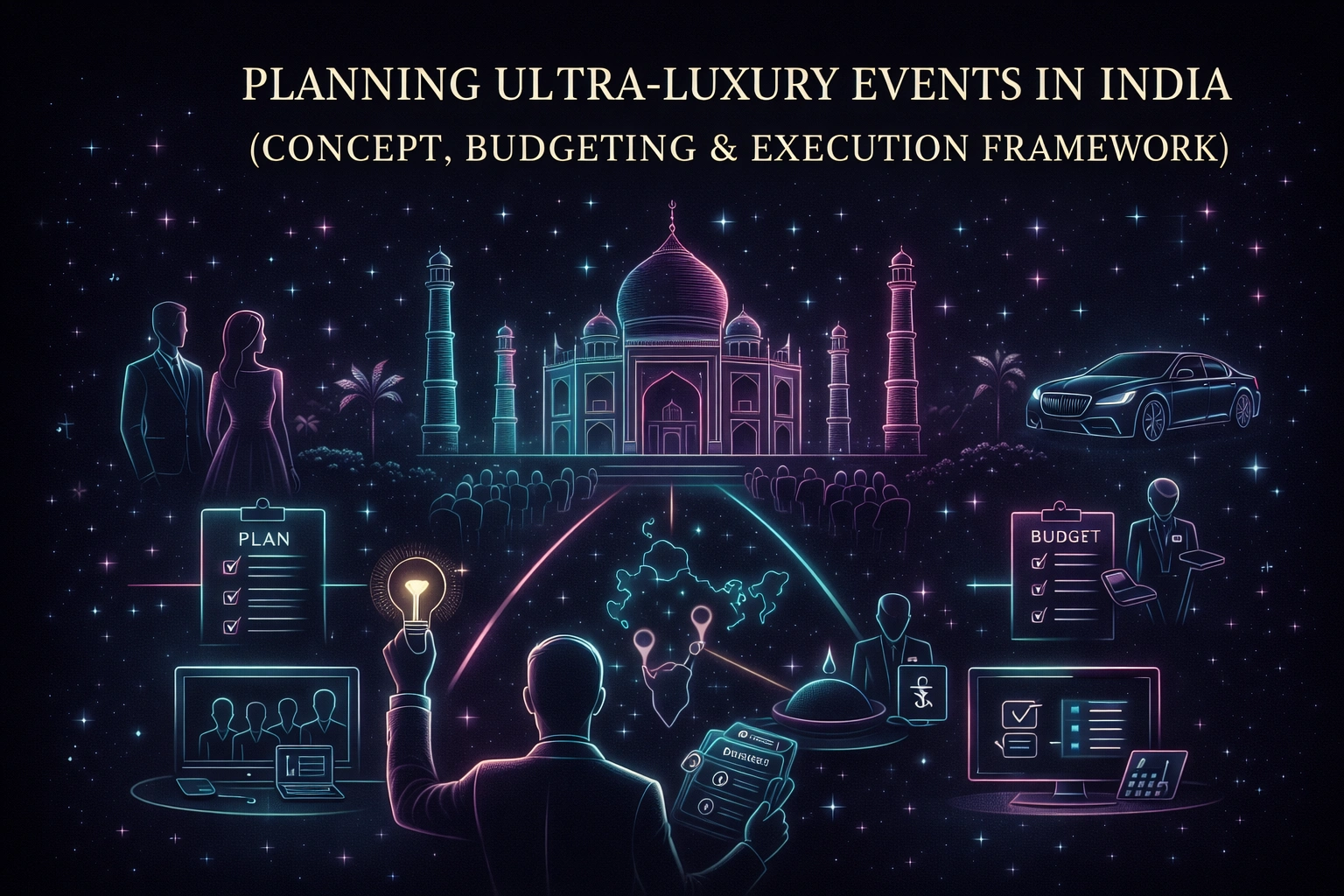
Planning Ultra-Luxury Events in India (Concept, Budgeting & Execution Framework)
In India’s rapidly evolving luxury landscape, events have transformed from celebratory gatherings into highly curated experiences that reflect identity, status, and storytelling. Ultra-luxury events, in particular, go beyond scale and aesthetics. They are defined by precision, personalization, and seamless execution across every touchpoint.
From destination weddings and corporate galas to private celebrations and brand experiences, the expectations associated with ultra-luxury events are significantly higher. Guests are not only evaluating the visual elements but also the flow, comfort, and emotional impact of the experience. This requires a level of planning that is both strategic and meticulous.
In this context, ultra-luxury event planning in India has evolved into a structured discipline. It combines creativity with operational excellence, ensuring that every detail contributes to a cohesive experience. Because in luxury environments, success is not defined by how grand an event appears.
It is defined by how flawlessly it is executed.
Understanding Ultra-Luxury Events as a Strategic Experience
Ultra-luxury events are not simply larger versions of standard events. They operate within a completely different framework where expectations are shaped by global exposure and refined preferences. Every element must align with a clear vision and deliver consistent quality.
These events often involve multiple layers, including design, hospitality, entertainment, logistics, and guest management. Each layer must function seamlessly within the overall structure. Any inconsistency can disrupt the experience and affect perception.
To understand how luxury events are structured at a foundational level, you can explore this comprehensive guide: 👉 https://www.dtsworld.in/blog/the-definitive-guide-luxury-event-wedding-planning
This pillar resource provides a broader overview of luxury event planning, while this blog focuses specifically on ultra-luxury frameworks.
Concept Development: Building a Strong Creative Foundation
The concept is the starting point of any ultra-luxury event. It defines the narrative, tone, and direction of the entire experience. Unlike standard events, where themes may be decorative, ultra-luxury concepts are immersive and deeply integrated.
Concept development involves understanding the client’s vision, preferences, and objectives. It translates these inputs into a cohesive idea that guides every aspect of planning. This includes visual design, guest experience, and storytelling elements.
In India, where cultural diversity plays a significant role, concept development must also consider traditions and regional influences. Balancing global aesthetics with local context is essential for creating a unique and meaningful experience.
Experience Design: Creating Emotional Impact
While concept provides direction, experience design brings it to life. It focuses on how guests interact with the event at every stage. This includes arrival, engagement, and departure, ensuring that each moment feels intentional.
Experience design in ultra-luxury events is about subtlety and precision. It ensures that transitions are smooth, interactions are meaningful, and the overall flow feels natural. Guests should not notice the complexity behind the scenes.
In premium environments, emotional impact is a key differentiator. Guests remember how the event made them feel, not just how it looked. This makes experience design a critical component of planning.
Budgeting: Structuring Investment for Maximum Impact
Budgeting in ultra-luxury events is not about limiting expenditure. It is about structuring investment to maximize impact and efficiency. Large budgets do not eliminate the need for planning. They increase the need for precision.
Cost allocation must be aligned with the event’s priorities. High-impact areas such as guest experience, hospitality, and logistics often require significant investment. At the same time, efficiency must be maintained in less visible areas.
Hidden costs are a common challenge in ultra-luxury events. These may include service charges, logistical complexities, and last-minute changes. Anticipating these factors ensures better financial control and prevents unexpected overruns.
Vendor Selection: Building the Right Ecosystem
Vendors play a crucial role in the execution of ultra-luxury events. Selecting the right partners is essential for maintaining quality and consistency. This involves evaluating expertise, reliability, and alignment with the event’s vision.
Luxury events often require specialized vendors with experience in high-end environments. Their ability to anticipate challenges and deliver precision is critical. Working with the right ecosystem reduces risk and enhances execution.
Vendor coordination is equally important. All partners must operate within a unified framework, ensuring that their contributions align with the overall concept. This creates a cohesive and seamless experience.
Logistics and Operations: Managing Complexity with Precision
Logistics is one of the most complex aspects of ultra-luxury event planning. It involves coordinating multiple elements, including transportation, accommodation, production, and on-ground movement. Each of these must be managed with precision.
In India, logistical challenges can vary significantly based on location, scale, and infrastructure. Destination events, in particular, require additional planning to ensure smooth execution.
Operational efficiency ensures that these complexities remain invisible to guests. When logistics are managed effectively, the event feels effortless. When they are not, even the most visually impressive setups can fail.
Guest Management: Delivering Personalized Experiences
Guest management is at the heart of ultra-luxury events. It involves understanding guest profiles, preferences, and expectations to deliver personalized experiences. This goes beyond basic coordination.
From invitations and communication to seating and hospitality, every interaction must be tailored. Guests should feel valued and comfortable throughout the event. This level of personalization enhances satisfaction and engagement.
In large-scale events, managing guest experience requires structured systems and real-time coordination. This ensures that every detail is executed consistently.
Technology Integration: Enhancing Efficiency and Experience
Technology plays a significant role in modern ultra-luxury events. It supports planning, coordination, and execution, allowing for greater efficiency and control. Digital platforms enable real-time updates and seamless communication.
Technology also enhances guest experience. From personalized itineraries to contactless check-ins, it simplifies interactions and reduces friction. However, it must remain invisible to maintain the premium feel.
The goal is to use technology as an enabler, not a focal point. It should enhance the experience without overshadowing it.
Execution Framework: Turning Vision into Reality
Execution is where planning meets reality. It involves translating concepts and strategies into a seamless event experience. This requires coordination, monitoring, and adaptability.
An effective execution framework includes clear timelines, defined responsibilities, and real-time tracking. This ensures that every element is delivered as planned. It also allows for quick adjustments when needed.
In ultra-luxury events, execution must be flawless. Guests should not experience delays, confusion, or inconsistencies. Every moment must reflect the original vision.
Risk Management and Contingency Planning
No event is entirely predictable. External factors, technical issues, or last-minute changes can introduce challenges. Risk management ensures that these situations are handled effectively.
Contingency planning involves identifying potential risks and preparing solutions in advance. This allows teams to respond quickly without disrupting the event.
In premium environments, preparedness is essential. It ensures that even unexpected situations are managed seamlessly.
Post-Event Analysis: Learning and Refinement
The planning process does not end with execution. Post-event analysis provides valuable insights into performance and areas for improvement. It involves reviewing outcomes against expectations.
This analysis helps identify strengths and weaknesses, allowing planners to refine strategies for future events. It also strengthens relationships with clients and vendors.
Continuous improvement is essential in luxury event planning. It ensures that each event builds on the success of the previous one.
Why Ultra-Luxury Events Require a Structured Framework
Ultra-luxury events operate at a level where expectations are high and complexity is significant. Without a structured framework, managing these events becomes challenging.
A well-defined framework ensures that every element is aligned with the overall vision. It provides clarity, reduces risk, and enhances efficiency. More importantly, it supports the delivery of seamless experiences.
In India’s competitive luxury event market, this level of structure is a key differentiator. It reflects professionalism and expertise, setting high-end events apart.
Conclusion: Precision Defines Luxury
Planning ultra-luxury events in India requires more than creativity. It requires strategy, structure, and execution excellence. From concept development to post-event analysis, every stage must be carefully managed.
When these elements come together, the result is an event that feels effortless and refined. Guests experience seamless transitions, meaningful interactions, and lasting impressions.
Because in ultra-luxury events, success is not about how much is done.
It is about how perfectly it is delivered.
Frequently Asked Questions (FAQs)
Q. What defines an ultra-luxury event in India?
An ultra-luxury event in India is defined not just by its scale or budget, but by the level of precision, personalization, and execution involved. These events focus on delivering curated experiences where every detail is intentionally designed, from guest journey and hospitality to aesthetics and storytelling. Unlike standard events, ultra-luxury experiences are highly customized and often involve multiple layers of coordination, including international standards, cultural integration, and seamless logistics. The goal is to create an environment where complexity is completely invisible and every interaction feels effortless and refined.
Q. How is budgeting different in ultra-luxury event planning?
Budgeting in ultra-luxury events is not about restricting costs but about structuring investment for maximum impact and efficiency. Instead of focusing on cost-cutting, planners prioritize allocating resources to high-impact areas such as guest experience, logistics, and hospitality. These events often involve hidden costs such as extended service hours, premium vendor requirements, and last-minute changes, which must be anticipated early. A well-structured budget ensures that financial decisions align with the event’s vision while maintaining control and flexibility throughout execution.
Q. Why is concept development critical in luxury events?
Concept development serves as the foundation of an ultra-luxury event, guiding every decision from design to execution. It goes beyond selecting a theme and instead focuses on building a cohesive narrative that shapes the entire guest experience. A strong concept ensures consistency across all touchpoints, including décor, entertainment, and communication. In India, where cultural elements play a significant role, concept development also involves balancing tradition with modern luxury aesthetics. Without a clear concept, even high-budget events can feel fragmented and lack identity.
Q. How are large-scale logistics managed in ultra-luxury events?
Managing logistics in ultra-luxury events requires a highly structured and detail-oriented approach. It involves coordinating transportation, accommodation, production setups, and guest movement across multiple locations and timelines. Planners use centralized systems and real-time monitoring to ensure that every logistical element operates seamlessly. In destination events, additional complexities such as local infrastructure and vendor coordination must also be addressed. The objective is to manage all operational challenges behind the scenes so that guests experience a smooth and uninterrupted event flow.
Q. What role does technology play in ultra-luxury event execution?
Technology plays a critical role in enhancing both operational efficiency and guest experience in ultra-luxury events. It enables planners to manage data, track guest preferences, and coordinate multiple teams in real time. Tools such as digital RSVPs, contactless check-ins, and personalized itineraries help streamline processes and reduce friction. However, in luxury environments, technology must remain subtle and unobtrusive. Its purpose is to support the experience without becoming visible, ensuring that the event maintains its premium and refined feel.
Q. How is guest experience managed at a premium level?
Guest experience in ultra-luxury events is managed through a combination of personalization, planning, and real-time coordination. Every interaction, from invitation to departure, is designed to reflect the guest’s preferences and expectations. This includes tailored communication, seamless hospitality, and thoughtful service delivery. Planners often use data and segmentation strategies to ensure that different guest groups receive appropriate levels of attention. The focus is on creating comfort, clarity, and emotional engagement, ensuring that guests feel valued throughout the event.
Q. Why is post-event analysis important in luxury event planning?
Post-event analysis is essential for understanding the effectiveness of planning and execution. It involves reviewing performance across various aspects such as guest experience, logistics, budgeting, and vendor coordination. This process helps identify strengths and areas for improvement, providing valuable insights for future events. In the luxury segment, where expectations are constantly evolving, continuous refinement is crucial. Post-event analysis ensures that each event builds on previous success, enabling planners to deliver increasingly sophisticated and seamless experiences.
Q. How do luxury event planners handle last-minute changes?
Last-minute changes are inevitable in ultra-luxury events, and managing them effectively requires a combination of preparation and flexibility. Planners create contingency frameworks in advance, allowing them to adapt quickly without disrupting the overall structure. Real-time communication and centralized control systems ensure that updates are implemented seamlessly across all teams. The key is to absorb these changes internally so that guests remain unaffected. In luxury events, adaptability is essential, but it must always be supported by strong planning and execution systems.
Q. How do ultra-luxury events maintain consistency across multiple functions?
Ultra-luxury events often span multiple days and functions, each with its own identity while still being part of a larger narrative. Maintaining consistency requires a unified strategy that aligns design, communication, and experience across all touchpoints. Planners ensure that every function reflects the overarching concept while offering unique elements to keep the experience engaging. This balance between consistency and variation is what creates a cohesive yet dynamic event journey for guests.
Q. What makes ultra-luxury event execution different from standard events?
The primary difference lies in the level of detail, precision, and personalization involved. Ultra-luxury events require a strategic approach where every element is interconnected and aligned with a clear vision. Execution is not just about delivering individual components but about ensuring that they function seamlessly together. This involves advanced planning, experienced vendors, and real-time coordination. The result is an event that feels effortless to guests, even though it is supported by highly complex systems behind the scenes.
Contact Us
If you are planning an ultra-luxury event in India, success requires more than creativity. It requires a structured approach that combines concept, budgeting, and execution.
From vision development and vendor selection to logistics management and seamless execution, every detail must be aligned to deliver a world-class experience.
📩 hello@dtsworld.in 📞 +91 80000 06021 📍 Andheri East, Mumbai
👉 Plan Ultra-Luxury Events with Precision at DTS