
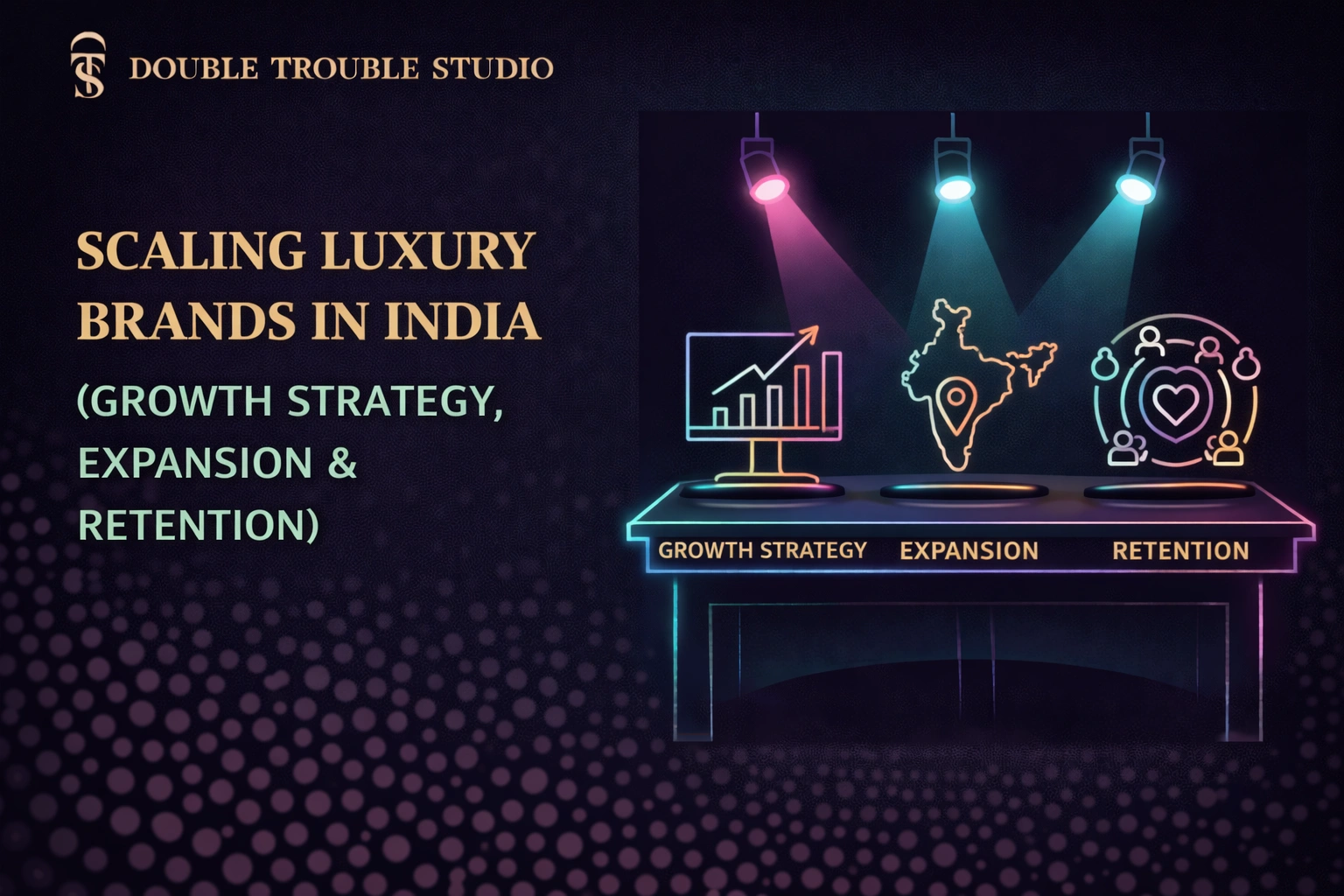
Scaling Luxury Brands in India (Growth Strategy, Expansion & Retention)
In 2026, India has emerged as one of the most dynamic markets for luxury brands globally. The rise of high-net-worth individuals, increased global exposure, and evolving consumer aspirations have created a fertile environment for premium businesses across hospitality, fashion, automotive, and lifestyle sectors. However, scaling a luxury brand in India is not a straightforward process. It requires a nuanced understanding of cultural diversity, regional preferences, and the delicate balance between exclusivity and accessibility.
Unlike mass-market growth strategies that rely on rapid expansion and volume-driven marketing, luxury brand scaling in India demands precision, patience, and alignment. The focus is not on reaching the largest possible audience but on reaching the right audience in the right context. Every stage of growth must reinforce the brand’s positioning while adapting to the unique characteristics of the Indian market.
This makes scaling a strategic exercise rather than a purely operational one. Growth strategy, expansion planning, and retention mechanisms must work together to create a sustainable framework. Each element must contribute to the brand’s long-term value rather than short-term visibility.
Because in India’s luxury market, growth is not defined by speed.
It is defined by control.
Understanding the Indian Luxury Landscape
India’s luxury market is characterized by diversity. Unlike more homogeneous markets, India presents a wide range of cultural, economic, and regional variations. Consumer preferences differ significantly across cities, regions, and demographics, requiring brands to adopt a localized approach.
Metropolitan cities such as Mumbai, Delhi, and Bangalore serve as primary hubs for luxury consumption. These markets are influenced by global trends and have a higher concentration of affluent consumers. However, emerging cities are also becoming important as wealth distribution expands.
Indian luxury consumers are increasingly informed and aspirational. They seek products and experiences that reflect global standards while maintaining relevance to local culture. This creates an opportunity for brands to blend international positioning with localized nuances.
Another defining characteristic is the importance of experience. Indian luxury consumers value personalized service, attention to detail, and emotional engagement. This places greater emphasis on customer experience as a driver of growth.
Digital influence is also significant. Social media, online platforms, and digital content play a central role in shaping perception and driving engagement. Brands must therefore integrate digital strategies into their growth frameworks.
Understanding this landscape is essential for designing effective scaling strategies.
Growth Strategy: Building a Strong Foundation
The first step in scaling a luxury brand in India is establishing a clear growth strategy. This involves defining positioning, identifying target audiences, and aligning all activities with the brand’s identity.
Positioning is particularly critical. The brand must define what it represents and how it differentiates itself from competitors. This includes its value proposition, aesthetic, and narrative. Clear positioning ensures that growth efforts remain consistent.
Target audience identification requires a detailed understanding of consumer segments. This includes demographics, preferences, and behaviors. Luxury brands must focus on high-value segments rather than broad audiences.
Content and communication play a central role in growth strategy. Storytelling must reflect the brand’s identity while resonating with the Indian audience. This includes adapting language, visuals, and narratives to local contexts.
Digital platforms are key drivers of growth. Websites, social media, and online campaigns must provide a seamless and engaging experience. High-quality visuals, intuitive interfaces, and consistent messaging enhance perception.
PR and media engagement also contribute to growth. Features in relevant publications, collaborations, and events increase visibility and credibility.
Growth strategy is not about expansion alone.
It is about alignment.
Expansion: Scaling Without Dilution
Expansion is a critical phase in scaling luxury brands, but it must be approached carefully to avoid diluting the brand’s identity. In India, expansion involves both geographic and operational considerations.
Geographic expansion requires selecting the right locations. Metropolitan cities provide immediate opportunities, but emerging markets offer long-term potential. The choice of location must align with the brand’s positioning and target audience.
Physical presence, such as stores, showrooms, or properties, must reflect the brand’s identity. Design, layout, and service standards must remain consistent across locations. This ensures that the experience is uniform.
Partnerships play a significant role in expansion. Collaborating with local stakeholders, developers, or distributors can facilitate entry into new markets. However, these partnerships must align with the brand’s values.
Operational systems are essential for maintaining consistency. Training programs, quality control measures, and standardized processes ensure that every touchpoint reflects the same standards.
Digital expansion complements physical growth. Online platforms allow brands to reach wider audiences while maintaining control over messaging. E-commerce, virtual experiences, and digital campaigns enhance accessibility.
Expansion is not about increasing presence indiscriminately.
It is about growing strategically.
Customer Experience as a Growth Driver
In the luxury segment, customer experience is one of the most powerful drivers of growth. Indian consumers place significant value on service, personalization, and attention to detail.
Every interaction with the brand must reflect its positioning. This includes pre-purchase engagement, the purchase process, and post-purchase support. Consistency across these stages builds trust.
Personalization enhances the experience. Understanding customer preferences and tailoring interactions accordingly creates a sense of exclusivity. This can include customized services, curated recommendations, and personalized communication.
Hospitality and service standards are particularly important in India. Clients expect a high level of attentiveness and responsiveness. Training staff to deliver these standards is essential.
Digital experience also contributes to customer satisfaction. Websites, apps, and online interactions must be seamless and intuitive. This ensures that the brand remains accessible without compromising its premium feel.
Customer experience is not a component of growth.
It is the foundation.
Retention: Building Long-Term Relationships
Retention is a critical aspect of scaling luxury brands. Acquiring new customers is important, but maintaining relationships with existing clients creates long-term value.
Loyalty programs, exclusive memberships, and personalized engagement strategies can enhance retention. These initiatives create a sense of belonging and encourage repeat interactions.
Communication plays a key role in retention. Regular updates, personalized messages, and meaningful interactions keep the brand relevant. However, communication must be refined and non-intrusive.
Experiential engagement, such as events and private interactions, strengthens relationships. These experiences allow clients to connect with the brand on a deeper level.
Feedback and continuous improvement are also important. Understanding client expectations and addressing concerns ensures that the brand evolves with its audience.
Retention transforms customers into advocates.
Integrating Digital, PR, and Experiential Strategies
Scaling luxury brands in India requires an integrated approach that combines digital, PR, and experiential strategies. These elements work together to create a cohesive growth framework.
Digital platforms provide reach and engagement. PR builds credibility and authority. Experiential initiatives create direct interaction.
Integration ensures that these elements reinforce each other. A media feature can be amplified through digital channels, while an event can generate content for multiple platforms.
Consistency across channels ensures that the brand’s message remains clear. This alignment enhances perception and strengthens positioning.
Integration is not optional.
It is essential.
Challenges in Scaling Luxury Brands in India
Scaling luxury brands in India involves several challenges. One of the most significant is maintaining consistency across diverse markets. Regional differences require adaptation, but this must not compromise the brand’s identity.
Another challenge is balancing exclusivity with accessibility. Expanding reach without diluting perception requires careful planning.
There is also the challenge of competition. As more brands enter the market, differentiation becomes more important.
Operational complexity increases with scale. Managing multiple locations, teams, and systems requires strong infrastructure.
Addressing these challenges requires strategic clarity and disciplined execution.
Frequently Asked Questions (FAQs)
What defines luxury brand scaling in India?
Ans: It involves expanding presence while maintaining positioning and delivering consistent experiences.
Why is positioning important?
Ans: It ensures that growth efforts remain aligned with the brand’s identity.
How can brands expand without dilution?
Ans: By selecting locations carefully and maintaining consistent standards.
What drives customer retention?
Ans: Personalized experiences, consistent service, and meaningful engagement.
Is digital important for luxury brands in India?
Ans: Yes, it plays a central role in visibility and engagement.
Conclusion: Growth Through Precision and Alignment
Scaling luxury brands in India is not about rapid expansion.
It is about strategic growth.
By focusing on positioning, controlled expansion, and long-term retention, brands can create sustainable success in a complex and dynamic market. Each stage of the process must reinforce the brand’s identity and deliver consistent experiences.
In India’s evolving luxury landscape, the brands that succeed are those that combine global standards with local understanding.
Because in premium markets, growth is not just about reaching more people.
It is about reaching the right people in the right way.
Build Your Growth Strategy
If you are scaling a luxury brand in India, a structured roadmap is essential.
From positioning and expansion planning to customer experience and retention strategies, our team helps you design systems that deliver sustainable growth.
📩 hello@dtsworld.in 📞 +91 80000 06021 📍 Andheri East, Mumbai
👉 Build Your Luxury Growth Strategy