
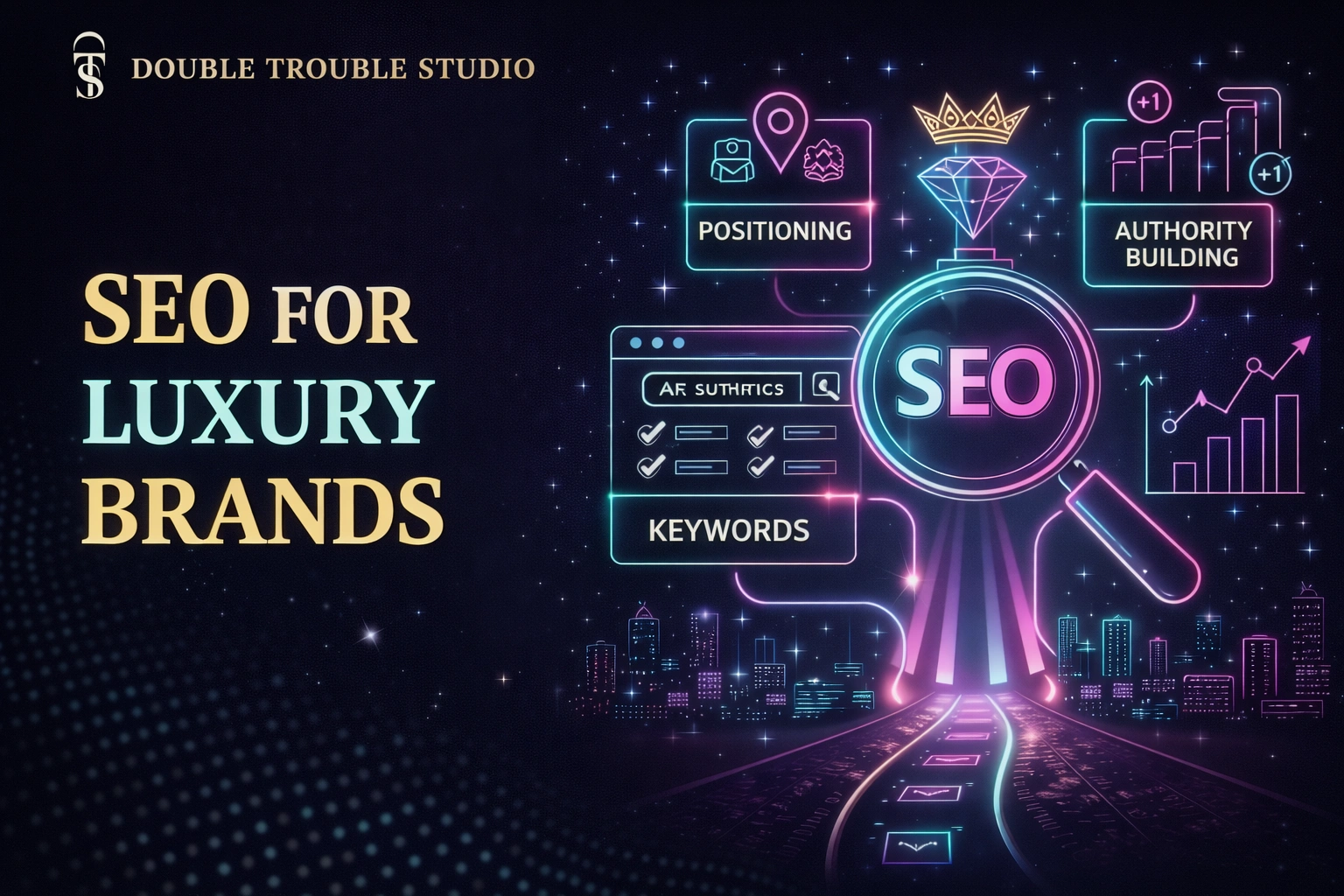
SEO for Luxury Brands (Positioning, Keywords & Authority Building)
In 2026, search engine optimization is no longer just a technical discipline focused on rankings and traffic. For luxury brands, SEO has evolved into a strategic framework that directly influences perception, authority, and long-term positioning in digital environments. Unlike mass-market businesses, where SEO is often used to maximize visibility and drive volume, luxury brands must approach SEO with a different objective. The goal is not to attract everyone. The goal is to attract the right audience while reinforcing exclusivity and credibility.
This distinction fundamentally changes how SEO strategies are designed. High traffic does not necessarily translate to high-value clients. In fact, excessive visibility in the wrong context can dilute brand perception. Luxury SEO is therefore not about appearing everywhere. It is about appearing in the right places, with the right narrative, at the right moment in the user’s journey.
Search engines have also evolved. They now prioritize context, intent, and authority rather than simple keyword matching. This shift aligns closely with the needs of luxury brands. Content must demonstrate expertise, depth, and consistency to rank effectively. At the same time, it must reflect the brand’s identity and maintain a premium tone.
SEO for luxury brands is therefore not a separate activity.
It is an extension of brand strategy.
It influences how the brand is discovered, how it is perceived, and how it competes in a digital landscape that is increasingly saturated.
Positioning Through Search: Controlling Perception at the Discovery Stage
Positioning is one of the most critical aspects of luxury SEO, yet it is often overlooked. Many brands focus on ranking for high-volume keywords without considering how those keywords align with their identity. This can lead to visibility in contexts that do not support premium positioning.
In luxury branding, the first interaction often occurs through search. A potential client may look for services, inspiration, or information, and the results they encounter shape their initial perception. If the brand appears alongside mass-market competitors or generic content, it can weaken its positioning.
This is why keyword selection must be aligned with brand identity. Instead of targeting broad, high-volume terms, luxury brands should focus on more specific, intent-driven queries. These queries may have lower search volume, but they attract users who are more aligned with the brand’s offering.
For example, a luxury event company may benefit more from ranking for highly specific search terms related to premium experiences rather than generic event-related keywords. This ensures that the audience encountering the brand already has a level of intent and understanding.
Content also plays a role in positioning. The tone, structure, and depth of content must reflect the brand’s identity. Articles, guides, and landing pages should not only provide information but also reinforce perception. The language used should be refined, the visuals should be consistent, and the overall experience should feel premium.
Search results are not just about visibility.
They are about context.
Where the brand appears and how it appears influences how it is perceived.
Keyword Strategy: Precision Over Volume
Keyword strategy in luxury SEO requires a shift from volume-driven thinking to precision-driven planning. Traditional SEO often prioritizes keywords with high search volume, assuming that more traffic leads to more opportunities. However, for luxury brands, this approach can be counterproductive.
High-volume keywords often attract a broad audience with varying levels of intent. This can result in increased traffic but lower relevance. Luxury brands must prioritize quality over quantity, focusing on keywords that align with their target audience.
This involves understanding search intent. Users searching for luxury services often use more specific language. Their queries may include references to quality, exclusivity, or location. Identifying these patterns allows brands to create content that matches user intent more accurately.
Long-form keywords, often referred to as long-tail keywords, play a significant role in this strategy. These keywords may have lower search volume, but they indicate higher intent. Users searching for detailed queries are often closer to making a decision.
Another important aspect is contextual relevance. Keywords must be integrated naturally into content. Over-optimization can make content feel forced, reducing readability and credibility. Search engines now prioritize natural language, making it essential to focus on clarity rather than repetition.
Keyword strategy also extends to content structure. Headings, subheadings, and internal linking should support the overall narrative. This helps search engines understand the content while improving user experience.
Precision in keyword strategy ensures that traffic is aligned with intent.
And aligned traffic leads to better outcomes.
Authority Building: Establishing Long-Term Credibility
Authority is one of the most important factors in modern SEO. Search engines evaluate not only the relevance of content but also the credibility of the source. For luxury brands, authority is closely linked to reputation.
Building authority requires consistency. Content must demonstrate expertise and provide value over time. This involves creating in-depth articles, guides, and resources that address relevant topics comprehensively.
Backlinks also play a significant role in authority building. When reputable websites reference or link to a brand’s content, it signals credibility. However, in luxury SEO, the quality of backlinks is more important than quantity. Links from high-end publications, industry platforms, and relevant sources carry more weight.
PR and SEO are closely connected in this context. Media coverage, features, and collaborations contribute to authority. When a brand is mentioned in reputable outlets, it enhances both visibility and credibility.
User engagement is another factor. Time spent on the website, interaction with content, and repeat visits indicate value. High-quality content encourages these behaviors, reinforcing authority.
Technical factors also contribute to authority. Website performance, mobile optimization, and security influence how search engines evaluate the site. A well-structured, fast, and secure website supports both user experience and rankings.
Authority is not built quickly.
It requires sustained effort.
But once established, it creates a strong competitive advantage.
Content as the Foundation of Luxury SEO
Content is the core of any SEO strategy, but for luxury brands, it serves an additional purpose. It acts as a medium for storytelling, positioning, and authority building.
Luxury content must go beyond surface-level information. It should provide depth, insights, and perspective. This not only improves search performance but also enhances credibility.
The structure of content is important. Long-form articles, detailed guides, and case studies allow brands to explore topics comprehensively. This aligns with search engine preferences while providing value to users.
Visual elements also play a role. High-quality images, videos, and design elements enhance engagement and reinforce perception. Content should feel cohesive, with visuals supporting the narrative.
Consistency is key. Regular updates and new content ensure that the website remains relevant. However, frequency should not compromise quality. Each piece of content must meet the brand’s standards.
Content is not just a tool for SEO.
It is a reflection of the brand.
Balancing Visibility with Exclusivity
One of the unique challenges in luxury SEO is balancing visibility with exclusivity. While SEO aims to increase visibility, luxury branding relies on selectivity.
This requires a strategic approach. Brands must choose where and how they appear. Ranking for every possible keyword is not necessary. Instead, the focus should be on relevant and high-quality opportunities.
Content distribution also plays a role. Sharing content across platforms can increase reach, but it must be done carefully to maintain positioning.
Exclusivity does not mean invisibility.
It means controlled visibility.
Measuring Success in Luxury SEO
Success in luxury SEO cannot be measured solely by traffic or rankings. These metrics provide insights, but they do not capture the full picture.
Quality of traffic is more important than quantity. Engagement, inquiries, and conversions provide a better understanding of performance.
Brand perception is also a key metric. Feedback, client interactions, and market positioning indicate how the brand is perceived.
Long-term growth is another factor. SEO is not a short-term strategy. It requires consistent effort and gradual improvement.
Measurement must therefore be holistic.
Challenges in Luxury SEO
Luxury SEO presents several challenges. One of the most common is misalignment between SEO tactics and brand positioning. Over-optimization or aggressive strategies can weaken perception.
Another challenge is competition. As more brands invest in SEO, standing out becomes more difficult.
There is also the challenge of patience. Building authority and achieving results takes time.
Addressing these challenges requires a strategic approach.
Frequently Asked Questions (FAQs)
What is luxury SEO?
Ans: It is a strategic approach to search optimization that focuses on positioning, authority, and attracting high-value audiences.
How is luxury SEO different from regular SEO?
Ans: It prioritizes quality over quantity, focusing on perception and relevance rather than volume.
Why are keywords important in luxury SEO?
Ans: They help align search intent with brand positioning, ensuring relevant traffic.
How can brands build authority?
Ans: Through high-quality content, backlinks, and consistent engagement.
Is SEO important for luxury brands?
Ans: Yes, it influences visibility, perception, and long-term growth.
Conclusion: SEO as a Strategic Asset
SEO for luxury brands is not just about rankings.It is about positioning.
It influences how the brand is discovered, how it is perceived, and how it builds authority over time. By focusing on precision, quality, and consistency, luxury brands can create a digital presence that supports their overall strategy.
Because in premium markets, visibility alone is not enough.Perception defines value.
Build Your Luxury SEO Strategy
If you are developing your digital presence, a structured SEO strategy is essential.
From keyword planning and content creation to authority building and performance optimization, our team helps you create strategies that align with your brand’s positioning.
📩 hello@dtsworld.in 📞 +91 80000 06021 📍 Andheri East, Mumbai
👉 Build Your Luxury SEO Strategy