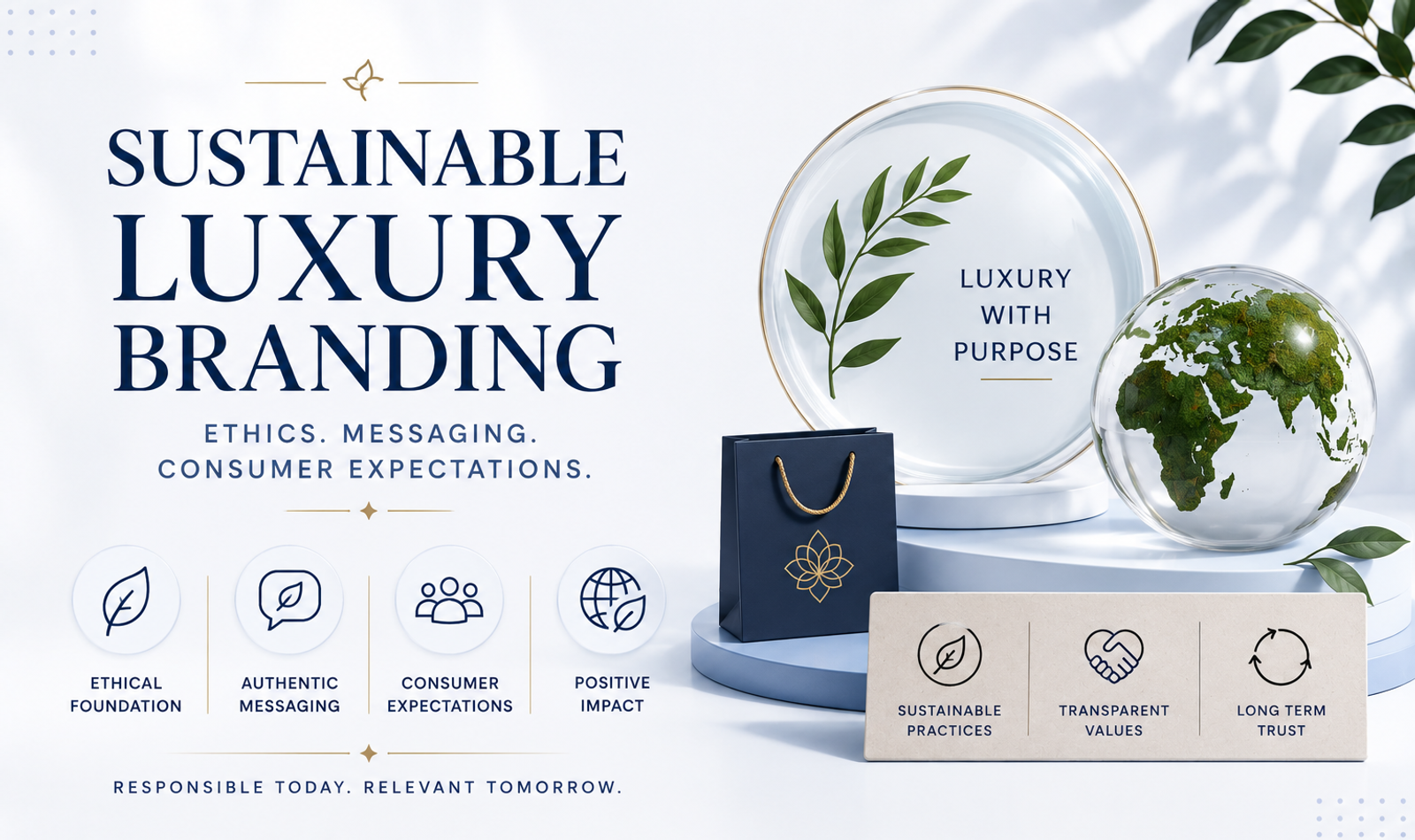
Sustainable Luxury Branding: Ethics, Messaging & Consumer Expectations
Sustainable luxury branding is no longer a soft trend or a decorative value statement. It has become an important part of how premium customers evaluate trust, quality, responsibility and long-term brand value.
Luxury brands were once built mainly around exclusivity, craftsmanship, status, heritage and desire. These qualities still matter, but modern luxury customers expect more. They want to know how a product is made, where materials come from, how people are treated, whether packaging is responsible, whether the brand’s promises are honest and whether the experience feels aligned with their values.
This does not mean luxury brands must become plain, overly functional or guilt-driven. Sustainable luxury still needs beauty, aspiration, refinement and emotional appeal. However, the meaning of luxury is changing. For many customers, true luxury now includes care, responsibility, transparency, longevity and thoughtful consumption.
A brand that claims sustainability without proof risks losing trust. A brand that ignores sustainability completely may feel outdated. A brand that communicates ethical responsibility with clarity, restraint and evidence can build deeper customer confidence.
This guide explains how sustainable luxury branding works, how ethics should influence brand strategy, how messaging should avoid greenwashing and how premium brands can meet modern consumer expectations without losing desirability.
What Is Sustainable Luxury Branding?
Sustainable luxury branding is the process of building a premium or luxury brand around responsible practices, ethical choices, long-term value and transparent communication.
It connects luxury qualities such as design, craftsmanship, exclusivity and experience with sustainability principles such as responsible sourcing, durability, reduced waste, fair production, mindful consumption, circularity and honest messaging.
A sustainable luxury brand does not simply add green colours, leaf icons or environmental claims to its identity. It builds sustainability into the brand’s product, service, supply chain, packaging, storytelling and customer experience.
The goal is not to make the brand look eco-friendly. The goal is to make responsibility a believable part of the brand’s value.
For example, a luxury fashion brand may focus on slow production, artisan craft, natural materials and repair services. A premium hospitality brand may focus on local sourcing, low-waste operations, energy efficiency and community connection. A luxury event company may focus on responsible décor, mindful production, reusable materials and sustainable vendor choices. A premium beauty brand may focus on ingredient transparency, refillable packaging and ethical sourcing.
Sustainable luxury branding must be specific to the category.
The strategy should explain what sustainability means for that brand, not simply repeat generic environmental language.
Why Sustainability Matters in Luxury Branding
Sustainability matters because luxury customers are becoming more aware of the impact behind their choices.
A customer may still desire beauty, status and premium experience, but they may also question waste, overproduction, excessive packaging, unethical sourcing and vague brand claims.
This creates a new challenge for luxury brands.
They must remain aspirational while becoming more accountable.
In the past, luxury often meant abundance. Today, luxury can also mean intention. Customers may value fewer but better products, longer-lasting materials, refined craftsmanship, meaningful experiences and brands that do not encourage careless consumption.
Sustainability also strengthens trust.
When a brand communicates responsibly and supports its claims with proof, customers feel more confident. They are more likely to believe the brand is serious, thoughtful and future-ready.
For premium brands, sustainability can become a point of differentiation.
It can help the brand stand apart from competitors that rely only on aesthetics, price or status.
Sustainability Should Begin With Ethics
Ethics are the foundation of sustainable luxury branding.
Before a brand talks about sustainability, it must examine how it operates.
Ethics may include fair treatment of workers, responsible sourcing, honest pricing, transparent communication, quality control, environmental care, community respect and long-term accountability.
A luxury brand should ask important questions.
Are materials sourced responsibly? Are vendors treated fairly? Is production waste being considered? Is packaging excessive? Are sustainability claims accurate? Is the customer being informed honestly? Is the brand encouraging meaningful value or unnecessary overconsumption?
Ethics should not be treated as a campaign theme.
They should influence decisions across product development, supply chain, customer experience, marketing and partnerships.
Customers may not see every operational decision, but they can sense when a brand’s communication feels sincere or superficial.
Ethical luxury is built from the inside out.
The Difference Between Sustainable Luxury and Greenwashing
Greenwashing happens when a brand exaggerates, misleads or vaguely communicates environmental or ethical responsibility.
In luxury branding, greenwashing can be especially damaging because premium customers expect credibility and detail.
A brand may say it is sustainable without explaining how. It may use natural visuals to imply responsibility without evidence. It may highlight one eco-friendly element while ignoring larger issues. It may use broad terms such as conscious, green, clean, ethical or eco-friendly without defining them.
Sustainable luxury requires proof.
A brand should explain what it is doing, why it matters and where its limitations are.
For example, instead of saying “we are a sustainable luxury brand,” the brand can say it uses made-to-order production to reduce excess inventory, works with selected artisan clusters, uses recyclable packaging and offers repair support to extend product life.
This is more specific and more trustworthy.
Customers do not expect every brand to be perfect. But they do expect honesty.
Consumer Expectations Are Changing
Modern luxury consumers are more informed than before.
They search, compare, read reviews, watch behind-the-scenes content, follow creators, check brand values and evaluate whether a brand’s image matches its behaviour. This makes a strong web development and digital marketing ecosystem increasingly important for communicating brand values consistently across discovery and consideration.
They want premium brands to be transparent without becoming boring. They want beauty without waste. They want quality without exploitation. They want exclusivity without irresponsibility. They want brands to have values, but they do not want empty moral language.
This means sustainable luxury messaging must be balanced.
It should not sound preachy. It should not guilt the customer. It should not overclaim. It should not reduce the brand’s emotional appeal.
Instead, it should make responsibility feel desirable, intelligent and connected to premium value.
A sustainable luxury brand should help the customer feel that they are choosing better, not simply buying more.
Sustainability as a Luxury Value Proposition
Sustainability can become a powerful value proposition when it is linked to quality and longevity.
Luxury customers often value products and experiences that last.
Durability, timelessness, craftsmanship, repairability, provenance and thoughtful design all support sustainability while also strengthening luxury perception.
A well-made product that lasts for years is more sustainable than a trend-driven item designed for quick replacement. A carefully planned event that reduces waste without reducing beauty is more thoughtful than an event built only around excess. A hotel that uses local sourcing and efficient operations can create a richer guest experience while reducing unnecessary impact.
Sustainability should not be positioned as a compromise.
It should be positioned as part of superior value.
The message should be clear: responsible choices can make luxury more meaningful, more intelligent and more future-ready.
Define What Sustainability Means for Your Brand
Every luxury brand must define its own sustainability focus.
Trying to claim everything can make the brand sound vague.
A fashion brand may focus on slow production, responsible materials and artisan livelihoods. A hospitality brand may focus on local sourcing, energy efficiency and community engagement. An event and wedding brand may focus on waste reduction, reusable production, responsible gifting and vendor selection. A beauty brand may focus on ingredients, packaging and testing ethics. An automotive or mobility brand may focus on fleet efficiency, service planning, maintenance and responsible operations.
The brand should select the sustainability priorities that are most relevant to its category and customer.
This creates focus.
It also makes messaging easier.
Instead of using broad sustainability language, the brand can communicate specific commitments.
A focused sustainability strategy is more credible than a long list of unsupported claims.
Build a Sustainable Brand Positioning Statement
Sustainable luxury positioning should connect responsibility with desire.
The positioning must still explain who the brand serves, what it offers, why it is different and why customers should value it.
A useful internal structure is:
For a specific luxury customer, the brand offers a premium product or experience that combines distinctive value with responsible choices, supported by credible proof.
For example, a sustainable luxury fashion brand may position itself as a modern Indian label for customers who value refined design, slow production and craft-led pieces that last beyond seasonal trends.
A sustainable luxury event brand may position itself as a planning partner for premium celebrations that combine refined design, guest hospitality and responsible production choices.
A sustainable hospitality brand may position itself as a boutique stay experience that combines comfort, local culture and mindful operations.
The positioning should not make sustainability feel separate from luxury.
It should make sustainability part of the brand’s desirability.
Build Messaging Around Transparency
Transparency is one of the most important parts of sustainable luxury branding.
Customers want to understand what the brand does, but they do not want to be overwhelmed by technical language.
The brand should communicate sustainability in a clear and accessible way.
It should explain materials, processes, sourcing, packaging, production, vendor choices, community involvement and customer care where relevant.
The brand should also be honest about progress.
A brand does not need to claim perfection. It can say what it has already done, what it is improving and what it is working towards.
This kind of honesty builds trust.
For example, a brand may say it has moved to reduced plastic packaging and is now working on refill models. Or it may say it works with local vendors to reduce transport impact while continuing to evaluate better material options.
Transparency makes sustainability believable.
Use Proof Points, Not Empty Claims
Sustainable luxury messaging should be supported by proof points.
Proof points may include certifications, supplier information, material details, production methods, waste reduction processes, packaging choices, customer care programmes, repair services, refill systems, community partnerships, local sourcing, traceability or measurable improvements.
Not every brand will have formal certifications from day one.
That is acceptable.
A new brand can still share process evidence, supplier stories, material selection, behind-the-scenes details and internal standards.
The important thing is to avoid vague claims.
Instead of saying “eco-friendly packaging,” explain whether the packaging is recyclable, reusable, reduced, refillable or made with specific responsible materials.
Instead of saying “ethical sourcing,” explain what sourcing standards are followed and why those choices matter.
Specificity creates credibility.
Design Sustainable Luxury Packaging
Packaging is one of the most visible parts of sustainable luxury branding.
Luxury brands often use heavy boxes, multiple layers, ribbons, inserts and decorative materials to create a premium unboxing experience. However, modern consumers are increasingly aware of waste.
This creates an opportunity to rethink packaging.
Sustainable luxury packaging should feel refined, tactile and thoughtful without being excessive.
The brand can use recyclable materials, reusable boxes, reduced layers, refill formats, elegant paper systems, minimal plastic, durable containers or packaging that serves a second purpose.
The unboxing experience should still feel premium.
Sustainability should not mean ordinary presentation.
A beautifully designed, reduced-waste package can feel more modern than overdone packaging.
The message should be intentionality, not excess.
Sustainable Luxury in Fashion and Lifestyle Brands
Fashion and lifestyle brands have a strong opportunity to build sustainable luxury through design, durability and craft.
They can focus on timeless pieces, limited production, made-to-order systems, responsible materials, artisan partnerships, tailoring, repair, care guidance and collection restraint.
The messaging should encourage customers to buy with intention.
Instead of promoting constant newness, the brand can promote wardrobe longevity, styling versatility, craftsmanship and emotional connection.
This does not reduce luxury appeal.
It can increase it.
Customers who invest in fewer but better pieces may feel more connected to the brand and more confident in their purchase.
Sustainable fashion branding should show the process behind the product.
Material details, artisan stories, fit guidance, care instructions and styling education can all support trust.
Sustainable Luxury in Hospitality
Hospitality brands can build sustainable luxury through local sourcing, energy efficiency, water responsibility, low-waste operations, community connection, responsible design and guest education.
A sustainable hospitality experience should not make guests feel restricted.
It should make them feel more connected to the place.
Local ingredients, regional craft, thoughtful architecture, natural materials and community partnerships can enrich the guest experience.
Sustainability should be woven into hospitality storytelling.
A boutique hotel can highlight local food producers, responsible amenities, mindful housekeeping practices, cultural experiences and waste reduction systems.
The communication should feel warm and experiential.
Guests should feel that sustainability adds depth to the stay.
Sustainable Luxury in Events and Weddings
Luxury events and weddings can create significant waste if they are not planned responsibly.
This makes sustainability an important opportunity for event brands.
A sustainable luxury events and weddings strategy may include reusable décor, responsible florals, digital invitations, local vendors, curated gifting, food waste planning, thoughtful production design, efficient logistics and conscious material choices.
However, sustainable events should not feel less beautiful.
The goal is to design with intelligence.
A luxury wedding can still feel grand, emotional and visually stunning while reducing unnecessary waste.
Messaging should focus on thoughtful celebration.
Clients should understand that responsible planning can create more meaningful events without compromising elegance.
Event brands can also document behind-the-scenes planning to show how sustainability is integrated into execution.
Sustainable Luxury in Beauty and Wellness
Beauty and wellness brands can build sustainable luxury through ingredient transparency, responsible sourcing, refillable packaging, cruelty-free practices, mindful production and education.
Customers want to know what they are applying to their skin, where ingredients come from and how packaging is handled.
The brand should avoid vague clean beauty language unless it clearly explains its standards.
Instead, it should provide ingredient education, product compatibility guidance, usage instructions and honest communication about benefits.
Luxury beauty should combine sensory appeal with credibility.
Texture, fragrance, packaging and ritual matter, but proof and transparency matter too.
A sustainable beauty brand can build trust by helping customers make informed decisions.
Sustainable Luxury in Automotive and Mobility
Luxury mobility and automotive brands can also approach sustainability strategically.
The focus may include efficient route planning, fleet maintenance, cleaner vehicle options, responsible operations, digital documentation, reduced idle time, corporate travel planning and premium service quality.
Sustainability in mobility should be practical.
Customers still expect comfort, punctuality, safety and professionalism.
The brand can communicate how responsible operations improve reliability and reduce unnecessary waste.
For premium mobility brands, sustainability should be connected to efficiency, trust and modern service standards.
Tone of Voice for Sustainable Luxury
The tone of sustainable luxury messaging should be calm, clear and confident.
It should avoid guilt-based language.
Luxury customers do not want to feel judged. They want to feel that the brand is helping them make a better choice.
The tone should also avoid exaggerated environmental claims.
Words such as fully sustainable, completely eco-friendly or 100 percent green should be used only if they can be proven clearly.
A strong tone focuses on progress, responsibility, quality and intention.
For example, instead of saying “save the planet with our luxury collection,” the brand can say “crafted in limited quantities with considered materials, refined detailing and a focus on longevity.”
This sounds more premium and more credible.
Visual Identity for Sustainable Luxury
Sustainable luxury does not have to look rustic, earthy or overly green.
Many brands make the mistake of using obvious eco visuals such as leaves, brown textures and nature icons without considering luxury identity.
A sustainable luxury visual system can be minimal, architectural, refined, editorial, soft, modern or culturally rooted.
The visual identity should reflect the brand’s positioning.
A fashion label may use refined editorial photography and natural textures. A hospitality brand may use warm light, local materials and sensory environments. An event brand may use elegant layouts and refined production details. A beauty brand may use clean packaging, soft colours and ingredient-led visuals.
Sustainability can appear through materiality, restraint and clarity.
It does not need to be visually loud.
Educate Without Overexplaining
Education is important in sustainable luxury branding, but it should be balanced.
Customers may want to know why a material matters, how a process works or what makes a product responsible. However, too much technical explanation can reduce emotional appeal.
The brand should layer information.
The main message should be simple and desirable. Deeper details can appear on product pages, blogs, FAQs, labels, packaging inserts, social carousels or founder notes.
For example, a product page can show a clear sustainability benefit first, followed by detailed sourcing or material information below.
This approach respects both emotional and rational decision-making.
Luxury branding should inspire first and explain clearly after.
Build Sustainability Into the Website
A luxury brand website should include sustainability information in a structured way.
This may include a sustainability page, material information, sourcing details, packaging explanation, FAQs, process pages, impact updates, supplier stories and care guidance.
The website should not bury sustainability behind vague statements.
Customers should be able to find clear information when they want it.
At the same time, sustainability should be integrated into the broader brand story.
It should appear on product pages, service pages, about pages and customer experience sections where relevant.
Professional website development and marketing can help connect brand storytelling, customer experience, SEO and conversion rather than treating these as separate functions.
The website is also important for SEO and AI-search visibility.
Clear, helpful, specific content helps customers and search systems understand the brand’s expertise and values.
PR for Sustainable Luxury Brands
Public relations can help sustainable luxury brands build credibility.
However, sustainability PR must be handled carefully.
Media stories should be based on real practices, not inflated claims.
Possible PR angles include founder vision, responsible sourcing, artisan partnerships, circular design, mindful hospitality, sustainable event planning, packaging innovation, community initiatives or category education.
A strong PR, media and marketing story connects responsibility with luxury value.
It should explain why the brand’s approach matters and how it reflects changing customer expectations.
The brand should prepare proof before approaching media.
This may include images, process details, founder quotes, supplier information, customer stories, certifications or measurable progress.
Credible PR can make sustainable luxury more visible and trustworthy.
Influencer and Creator Strategy
Creators can help communicate sustainable luxury when they are carefully selected.
The brand should work with creators whose lifestyle, audience, tone and values match the positioning.
For sustainable luxury, authenticity matters.
A creator who promotes excessive consumption every day may not be the right fit for a mindful brand.
The collaboration should focus on experience, education and storytelling rather than only promotion.
Creators can show product longevity, styling ideas, behind-the-scenes craft, responsible event details, hospitality experiences or founder conversations. Brands can also use premium AI video and VFX to develop visual storytelling around materials, processes, environments and sustainability concepts where appropriate.
Long-term creator relationships are often better than one-time posts.
They allow the audience to see consistency.
Sustainability and Premium Pricing
Sustainability can support premium pricing when it is connected to value.
Responsible materials, skilled labour, low-waste production, durability, limited quantities and thoughtful packaging may increase cost. Customers may accept premium pricing when they understand the reason.
However, sustainability should not be used as an excuse for high prices without proof.
The brand must communicate value clearly.
It should explain how responsible choices improve quality, longevity, experience or impact.
For example, made-to-order production may reduce waste and allow better fit. Durable materials may extend product life. Repair services may protect the customer’s investment. Local sourcing may improve freshness, authenticity or community value.
Premium pricing becomes stronger when customers understand the full value system.
Customer Experience and Sustainable Luxury
Customer experience should reflect sustainable values.
A brand that talks about responsibility should also communicate responsibly.
This includes honest product information, careful packaging, clear care guidance, thoughtful delivery, responsive service and transparent policies.
For luxury services, customer experience may include sustainable planning options, vendor recommendations, waste-conscious execution and post-event reporting.
For product brands, it may include repair support, refill options, care instructions, exchange clarity and responsible shipping choices.
For high-touch experiences such as destination celebrations, professional guest management can also help coordinate hospitality and logistics more efficiently while maintaining a premium experience.
The customer should feel that sustainability is part of the brand’s behaviour, not just its marketing.
Experience turns messaging into belief.
Measuring Sustainable Luxury Branding
Sustainable luxury branding should be measured through both brand and business indicators.
Useful metrics may include customer trust, enquiry quality, repeat purchase, average order value, PR coverage, website engagement, sustainability page visits, customer feedback, review language, social saves, shares, referrals and reduced reliance on discounts.
The brand should also track whether customers understand its sustainability position.
Do they mention quality, longevity, responsible materials or ethical choices? Do they ask better questions? Do they trust the pricing more? Do they return because they believe in the brand’s values?
Sustainability success is not only measured through visibility.
It is measured through credibility and behaviour.
Common Mistakes in Sustainable Luxury Branding
One common mistake is using vague sustainability language.
Claims such as eco-friendly, conscious, natural or green should be explained clearly.
Another mistake is making sustainability look too ordinary.
A luxury brand still needs aspiration, design quality and emotional appeal.
A third mistake is overclaiming.
Customers may respect honest progress more than exaggerated perfection.
Brands also make the mistake of separating sustainability from the core brand.
Responsibility should not appear only on one campaign. It should be visible across product, service, experience and communication.
Another mistake is ignoring proof.
Without proof, sustainability messaging becomes weak.
Finally, some brands talk about sustainability while encouraging constant unnecessary consumption.
This creates a mismatch.
Sustainable luxury should promote intention, quality and longevity.
How to Build a Sustainable Luxury Brand Roadmap
A sustainable luxury roadmap should begin with an ethics and operations audit.
The brand should review sourcing, materials, production, packaging, vendors, logistics, customer experience and communication.
Next, it should define the sustainability priorities that are most relevant to the category.
Then it should build positioning, messaging, proof points and visual identity around those priorities.
The website should be updated with clear sustainability information.
Content should educate customers without sounding preachy.
PR and creator collaborations should be based on real practices.
Customer experience should support the brand’s responsibility promise.
Finally, the brand should review progress regularly and communicate improvements honestly.
Sustainable luxury branding is not a one-time campaign.
It is an ongoing commitment.
Frequently Asked Questions
What is sustainable luxury branding?
Sustainable luxury branding is the process of building a premium brand around responsible practices, ethical choices, transparent messaging and long-term value.
Why is sustainability important for luxury brands?
Sustainability is important because modern luxury customers expect quality, responsibility, transparency and meaningful value beyond surface-level status.
How can luxury brands avoid greenwashing?
Luxury brands can avoid greenwashing by using specific claims, clear proof, honest language, transparent sourcing and realistic communication about progress.
Can sustainability support premium pricing?
Yes. Sustainability can support premium pricing when it is linked to quality, longevity, craftsmanship, responsible sourcing, better experience and clear proof.
What should sustainable luxury messaging include?
It should include the brand’s sustainability priorities, proof points, material details, process information, customer benefits and honest progress updates.
Does sustainable luxury have to look earthy?
No. Sustainable luxury can look refined, modern, editorial, minimal or culturally rooted. It does not need to rely on obvious green or rustic visuals.
How can event brands use sustainable luxury?
Event brands can use sustainable luxury through reusable décor, responsible florals, digital invitations, local vendors, mindful gifting and waste-conscious planning.
How can hospitality brands communicate sustainability?
Hospitality brands can communicate sustainability through local sourcing, responsible amenities, community partnerships, low-waste practices and guest experience storytelling.
How does sustainability improve brand trust?
Sustainability improves trust when customers see honest claims, clear proof, responsible behaviour and consistency between brand messaging and experience.
What is the biggest mistake in sustainable luxury branding?
The biggest mistake is making broad sustainability claims without proof. Luxury customers expect transparency, specificity and honesty.
Conclusion
Sustainable luxury branding is about creating premium value with responsibility, ethics and transparency.
It does not mean removing beauty, aspiration or exclusivity. It means making luxury more thoughtful, credible and future-ready.
Modern consumers expect luxury brands to care about how products are made, how services are delivered, how materials are sourced and how honestly brands communicate their impact.
The strongest sustainable luxury brands do not rely on vague green claims.
They define what sustainability means for their category, support their message with proof, build responsible customer experiences and communicate with clarity.
Ethics should guide the brand from the inside.
Messaging should be specific and honest.
Consumer expectations should be met with both emotional appeal and operational credibility.
For premium and luxury brands in India, sustainability can become a strong differentiator when it is connected to quality, craft, longevity, culture and trust.
Double Trouble Studio helps luxury, premium, hospitality, lifestyle, event, fashion, beauty, automotive, real estate and service-led brands build sustainable branding systems through positioning, messaging, identity, PR, content, website strategy, digital marketing and customer experience.
You can explore our work to see how strategy and creative execution come together, learn more about Double Trouble Studio, or contact our team to discuss your brand requirements.
With the right strategy, sustainable luxury can become more than a value statement. It can become a powerful foundation for trust, differentiation and long-term brand growth.
📩 info@dtsworld.in 📞 +91 80000 06021 📍 Andheri (West), Mumbai
Need this for your brand?
Let DTS build your next campaign.
From PR, celebrity management and events to websites, social media, SEO and AI video production — Double Trouble Studio helps brands grow with strategy and execution.
Discuss Your Requirement →