
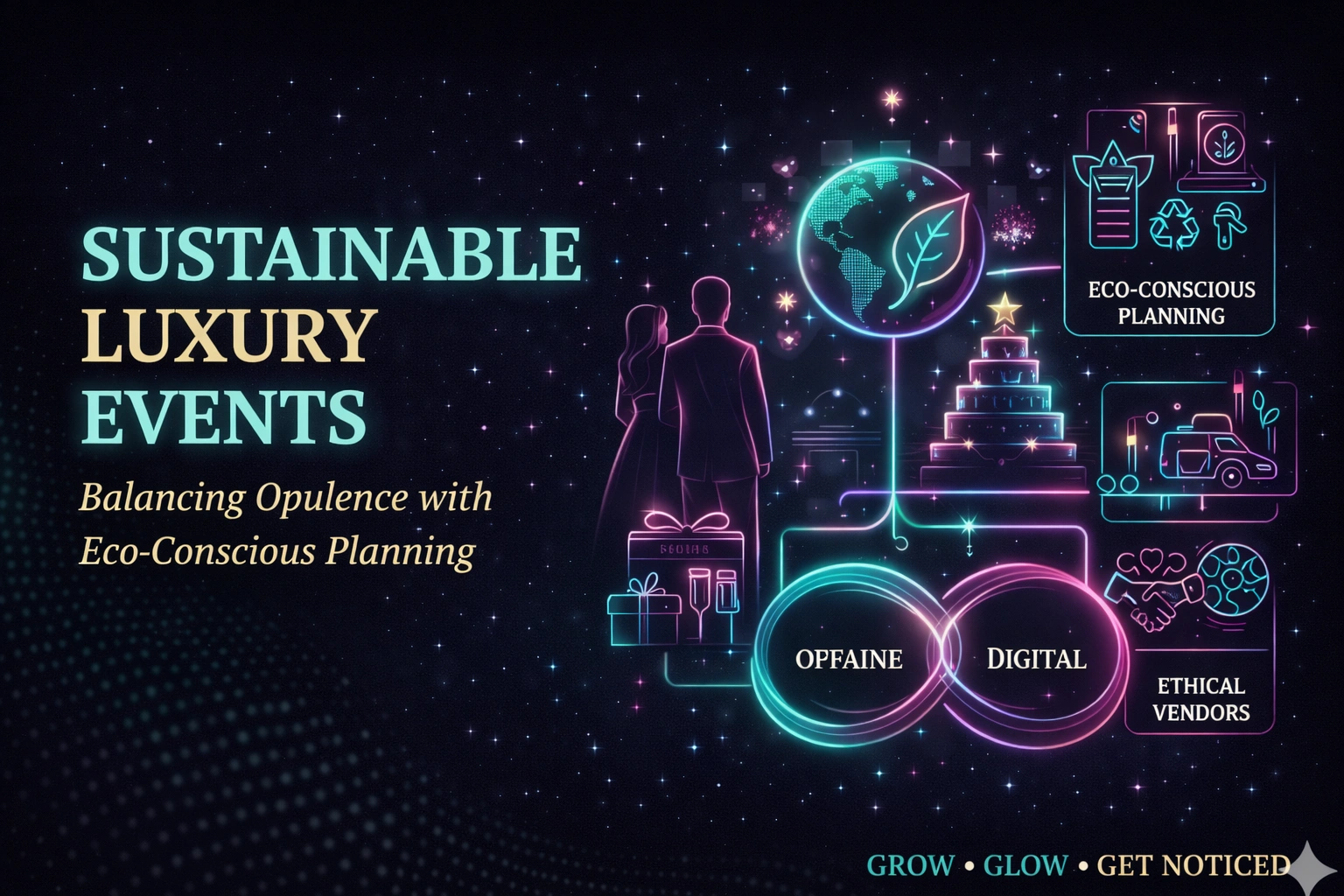
Sustainable Luxury Events (Balancing Opulence with Eco-Conscious Planning)
In 2026, the meaning of luxury is no longer defined by excess alone. The modern definition of luxury has evolved into something more refined, intentional, and responsible. Clients who invest in high-end weddings, private celebrations, and corporate events are increasingly aware of the environmental and social impact of their choices. This shift has led to the emergence of sustainable luxury events, where opulence is not reduced but reimagined through thoughtful planning and conscious design.
This transformation is not about replacing grandeur with simplicity. It is about redefining how grandeur is expressed. Instead of relying on scale, waste, and overproduction, luxury events today emphasize craftsmanship, quality, and meaningful experiences. Sustainability becomes a layer that enhances the event’s narrative, adding depth and relevance without compromising elegance.
Designing such events requires a shift in mindset. Every decision, from concept development to execution, must consider both aesthetic impact and environmental responsibility. Materials, logistics, energy use, and guest experience must all align with sustainability goals while maintaining the level of refinement expected in luxury environments.
Sustainable luxury is not about doing less.
It is about doing better.
The Evolution of Luxury in the Context of Sustainability
Luxury has always been associated with exclusivity, craftsmanship, and attention to detail. However, in the past, it was often expressed through abundance—large-scale décor, imported materials, and extensive resource use. While these elements created visual impact, they also contributed to significant environmental waste.
Today, luxury audiences are redefining value. They are no longer impressed solely by scale. They are drawn to experiences that feel intentional, authentic, and aligned with modern values. Sustainability has become a marker of sophistication, reflecting awareness and responsibility.
This shift is particularly evident in event planning. Clients are increasingly asking how events can be designed with minimal environmental impact while maintaining high standards of aesthetics. This has led to new approaches in design, sourcing, and execution.
Luxury now lies in the details. The quality of materials, the precision of execution, and the coherence of the experience define the event more than sheer volume. Sustainability enhances this by adding a layer of purpose.
The evolution of luxury is not a trend.
It is a transformation.
Concept Development: Embedding Sustainability into the Narrative
The foundation of any luxury event is its concept. In sustainable event design, this concept must incorporate environmental responsibility from the beginning. Sustainability should not be added later as an adjustment. It must be integrated into the core narrative.
Concept development begins with understanding the client’s vision and values. This includes their preferences, cultural influences, and expectations. Sustainability can be introduced as part of this conversation, shaping the direction of the event.
Themes inspired by nature, heritage, or minimalism often align naturally with sustainable principles. However, sustainability can be integrated into any concept with thoughtful design. For example, a contemporary luxury theme can emphasize clean lines and efficient use of materials, while a traditional theme can incorporate locally sourced elements.
The narrative must remain cohesive. Sustainability should enhance the story rather than disrupt it. Guests should experience the theme seamlessly, with sustainability integrated subtly into the design.
Concept development also involves practical considerations. Budget, venue, and logistics must be aligned with sustainability goals. This requires collaboration between creative and operational teams.
A well-developed concept ensures that sustainability is not visible as a constraint.
It becomes part of the experience.
Material Selection: Redefining Aesthetic Value
Materials play a central role in both the visual and environmental impact of an event. In sustainable luxury events, material selection requires careful consideration of sourcing, durability, and reusability.
Luxury does not require excess. It requires quality. High-quality materials that can be reused or repurposed provide both aesthetic and environmental value. This includes fabrics, structures, and decorative elements.
Floral design offers significant opportunities for sustainability. Instead of importing exotic flowers, designers can use locally sourced and seasonal blooms. This reduces environmental impact while creating unique and contextually relevant designs. Alternatives such as potted plants or dried arrangements can add texture and longevity.
Décor elements can also be designed for reuse. Modular installations, adaptable structures, and versatile materials allow elements to be repurposed for future events. This reduces waste and enhances efficiency.
Table settings, stationery, and gifting materials can be selected with sustainability in mind. Recyclable or biodegradable options ensure that these elements do not contribute to waste.
Material selection is not about limitation.
It is about intention.
Energy and Resource Management
Energy consumption is a significant factor in event sustainability. Lighting, sound systems, and production equipment all contribute to the overall impact. Managing these resources effectively is essential for creating a sustainable event.
Energy-efficient lighting systems can reduce consumption while enhancing ambiance. LED lighting, for example, provides flexibility and efficiency without compromising design. Strategic placement of lighting ensures that the desired effect is achieved with minimal resources.
Renewable energy sources, where available, can further reduce impact. Venues that support sustainable practices provide additional advantages.
Water usage is another consideration. Efficient systems and mindful planning can reduce waste without affecting guest experience.
Food and beverage management also play a role. Sourcing ingredients locally, reducing waste, and planning portions carefully contribute to sustainability. Luxury catering can incorporate these practices while maintaining quality and presentation.
Resource management requires planning and coordination. Each element must be evaluated to ensure efficiency.
Sustainability in this context is not visible.
But it is impactful.
Logistics and Supply Chain Optimization
Logistics are often overlooked in event design, but they have a significant impact on sustainability. Transportation of materials, vendors, and guests contributes to environmental impact.
Optimizing logistics involves reducing unnecessary movement. Selecting local vendors, sourcing materials locally, and coordinating transportation efficiently can significantly reduce emissions.
Venue selection also plays a role. Choosing locations that align with sustainability goals reduces the need for additional resources. Venues with built-in infrastructure and sustainable practices provide advantages.
Supply chain transparency is another important factor. Understanding where materials come from and how they are produced ensures that sustainability is maintained throughout the process.
Logistics are not just operational.
They are strategic.
Guest Experience: Maintaining Luxury Without Compromise
One of the most critical aspects of sustainable luxury events is ensuring that the guest experience remains exceptional. Sustainability must enhance the experience rather than detract from it.
Guests should feel the refinement, elegance, and attention to detail that define luxury events. Sustainability should be integrated subtly, without overwhelming the experience.
Personalization enhances guest experience. Thoughtful details, such as curated gifts or unique interactions, can reflect both luxury and sustainability. For example, personalized items made from sustainable materials add value and meaning.
Communication with guests must be balanced. Informing them about sustainable practices can create awareness, but it must be done in a refined and unobtrusive manner.
The objective is to create an experience that feels seamless and sophisticated.
Sustainability should be felt.
Not announced.
Innovation and Technology in Sustainable Event Design
Technology plays a growing role in sustainable luxury events. Digital invitations, virtual components, and advanced production techniques reduce the need for physical resources.
Projection mapping, immersive lighting, and digital installations can create impactful visuals with minimal material use. These technologies allow for creative expression while reducing waste.
Data and analytics can also support sustainability. Tracking resource usage and optimizing processes ensures continuous improvement.
However, technology must be used thoughtfully. It should enhance the experience without overshadowing the concept.
Innovation supports sustainability.
But it must align with design.
Balancing Opulence and Responsibility
The central challenge of sustainable luxury events is balancing opulence with responsibility. This requires a shift in perspective. Opulence is no longer defined by excess but by refinement and intention.
Designers must focus on creating impact through thoughtful choices. High-quality elements, precise execution, and cohesive design create a sense of luxury without relying on scale.
Responsibility enhances opulence by adding meaning. Guests appreciate experiences that reflect both beauty and awareness.
Balance is achieved through alignment.
Every decision must support both objectives.
Challenges in Sustainable Luxury Event Planning
Sustainable luxury events present several challenges. One of the most common is perception. Some clients may associate sustainability with compromise. Demonstrating how it enhances the experience is essential.
Cost is another factor. Sustainable materials and practices can be more expensive, but they often provide long-term value.
Availability of resources can also be a challenge. Sourcing high-quality sustainable materials may require additional effort.
Coordination is critical. Ensuring that all elements align with sustainability goals requires careful planning.
These challenges can be addressed through expertise and strategic planning.
Frequently Asked Questions (FAQs)
What are sustainable luxury events?
Ans: They are events that combine premium experiences with environmentally responsible practices.
Can luxury and sustainability coexist?
Ans: Yes, through thoughtful design and strategic planning.
What materials are used in sustainable events?
Ans: Reusable, recyclable, and responsibly sourced materials.
Does sustainability affect aesthetics?
Ans: No, it enhances design through intention and quality.
Are sustainable events more expensive?
Ans: They can be, but they offer long-term value and impact.
Conclusion: The Future of Luxury is Responsible
Sustainable luxury events represent the future of high-end experiences. They demonstrate that elegance, exclusivity, and environmental responsibility can coexist.
By integrating sustainability into every stage of planning and execution, event designers can create experiences that are both impactful and meaningful. These events not only meet the expectations of modern audiences but also contribute to a more responsible industry.
Because in 2026, luxury is not defined by how much is used.
It is defined by how thoughtfully it is created.
Plan Your Sustainable Luxury Event
If you are designing a premium event, integrating sustainability requires both creative vision and strategic execution.
From concept development and material selection to logistics and guest experience, our team ensures that your event achieves both elegance and responsibility.
📩 hello@dtsworld.in 📞 +91 80000 06021 📍 Andheri East, Mumbai
👉 Plan Your Sustainable Luxury Event