
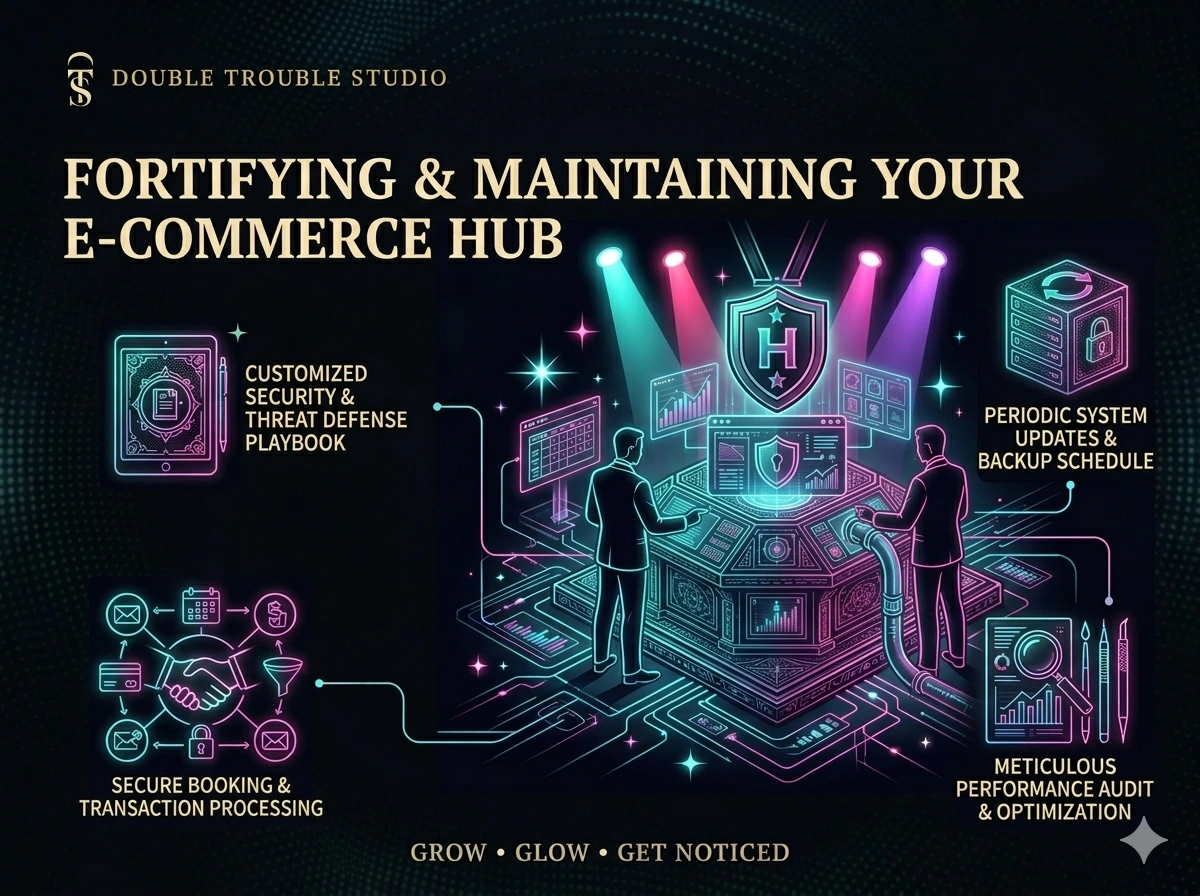
Website Security & Maintenance for E-commerce / Booking Sites
In high-value digital ecosystems, a website is not just a platform. It is an operational backbone. For e-commerce and booking-based businesses, it handles transactions, stores sensitive user data, and directly influences revenue.
In 2026, as digital interactions become more sophisticated, so do the risks. Security breaches, downtime, slow performance, or system failures are not just technical issues. They are business risks that can impact trust, reputation, and financial outcomes instantly.
For luxury brands and premium service providers, the stakes are even higher. High-value customers expect seamless, secure, and uninterrupted experiences. Any disruption, however minor, can weaken confidence.
Because in premium digital environments, trust is not assumed.
It is continuously reinforced.
The Role of Security in Brand Trust
Website security is often treated as a technical layer, but in reality, it is a perception layer. Users may not always see security systems, but they feel their impact through confidence and ease of interaction.
Secure payment gateways, encrypted data handling, and protected login systems create a sense of reliability. On the other hand, even a small security warning or failed transaction can create doubt.
In e-commerce and booking platforms, where financial transactions are involved, this trust becomes critical. Users are sharing personal and payment information, and they expect absolute protection.
Security, therefore, is not just about preventing threats.
It is about maintaining credibility.
Common Threats in Modern Websites
The digital landscape in 2026 presents a wide range of security challenges. Websites are exposed to threats such as data breaches, malware injections, phishing attempts, and distributed denial-of-service attacks.
These threats are not limited to large organizations. Smaller platforms are often targeted due to weaker security frameworks. Booking and e-commerce sites, in particular, are attractive targets because of the sensitive data they handle.
Understanding these risks is the first step toward building effective protection. Without awareness, vulnerabilities remain unnoticed.
In high-value systems, ignorance is a risk.
Secure Infrastructure and Hosting
The foundation of website security begins with infrastructure. Reliable hosting environments, secure servers, and scalable architecture ensure that the website operates safely and efficiently.
Managed hosting solutions often provide built-in security features such as firewalls, monitoring systems, and automatic updates. These features reduce the risk of vulnerabilities while improving performance.
Scalability is also important. High-traffic events, sales campaigns, or booking surges can strain systems. A secure and scalable infrastructure ensures that performance remains stable under load.
In premium platforms, reliability is part of security.
Data Protection and Encryption
Data is one of the most valuable assets in digital ecosystems. Protecting it requires multiple layers of security.
Encryption ensures that data transmitted between the user and the server remains secure. SSL certificates, secure payment integrations, and protected databases are essential components.
User data must also be stored responsibly. Access controls, authentication systems, and regular audits help prevent unauthorized access.
For booking and e-commerce platforms, where personal and financial information is involved, data protection is non-negotiable.
Security is not complete without data integrity.
Payment Security and Transaction Integrity
For platforms handling transactions, payment security is a critical focus area. Users must feel confident that their financial information is protected at every stage.
Integration with trusted payment gateways ensures compliance with industry standards. Tokenization, secure authentication, and fraud detection systems further enhance protection.
Transaction integrity also includes ensuring that payments are processed accurately and without interruption. Errors or failures during payment can create frustration and reduce trust.
In high-value transactions, even small inconsistencies can have significant impact.
Regular Updates and Vulnerability Management
Websites are dynamic systems that require continuous updates. Content management systems, plugins, and integrations must be kept up to date to prevent vulnerabilities.
Outdated software is one of the most common entry points for attacks. Regular updates ensure that known vulnerabilities are addressed promptly.
Vulnerability assessments and security audits help identify potential risks before they are exploited. Proactive management reduces the likelihood of breaches.
In 2026, maintenance is not optional.
It is ongoing protection.
Backup Systems and Disaster Recovery
No system is completely immune to failure. This makes backup and recovery systems essential.
Regular backups ensure that data can be restored in case of a breach, technical failure, or accidental loss. Automated backup systems reduce dependency on manual processes.
Disaster recovery plans define how quickly and effectively the website can be restored. Downtime must be minimized to prevent loss of revenue and trust.
Preparedness ensures continuity.
Performance Monitoring and Uptime Management
Security and performance are closely linked. A slow or unstable website can indicate underlying issues that may also affect security.
Continuous monitoring allows teams to detect anomalies, track performance, and respond to issues in real time. Uptime monitoring ensures that the website remains accessible at all times.
For e-commerce and booking platforms, downtime directly impacts revenue. Even short disruptions can result in lost opportunities.
Consistency builds reliability.
User Authentication and Access Control
Managing access to the website’s backend is a critical aspect of security. Unauthorized access can lead to data breaches or system manipulation.
Strong authentication methods, including multi-factor authentication, reduce the risk of unauthorized entry. Role-based access control ensures that users only have access to what is necessary.
Limiting access reduces exposure.
Control enhances security.
Maintenance as a Continuous Process
Website maintenance extends beyond updates and monitoring. It includes performance optimization, content management, and system refinement.
Regular reviews ensure that the website remains aligned with evolving standards and user expectations. Removing outdated elements, optimizing resources, and improving functionality contribute to overall efficiency.
In premium platforms, maintenance is part of experience design.
It ensures that the website continues to perform at a high level.
Conclusion: Security as a Foundation of Growth
Website security and maintenance are not backend concerns. They are foundational elements that support trust, performance, and growth.
For e-commerce and booking platforms in India’s premium market, where user expectations are high and competition is intense, maintaining a secure and reliable website is essential. It ensures that every interaction feels safe, seamless, and consistent.
Because in digital environments, users may not see your security systems.
But they always feel their absence.
Frequently Asked Questions (FAQs)
Why is website security important for e-commerce sites?
It protects user data, ensures safe transactions, and builds trust with customers.
What are the most common security threats?
Data breaches, malware, phishing, and DDoS attacks are among the most common risks.
How often should a website be updated?
Regular updates should be performed as soon as new versions or security patches are released.
What is the role of backups?
Backups ensure that data can be restored in case of failure or security incidents.
Does maintenance affect performance?
Yes. Regular maintenance improves speed, stability, and overall user experience.
Design Your Website Security Strategy
If you are running an e-commerce platform, booking website, or high-value digital service, security and maintenance should be built into your system from the start.
From infrastructure setup and data protection to performance monitoring and ongoing maintenance, our team ensures that your website remains secure, reliable, and aligned with your business goals.
📩 hello@dtsworld.in 📞 +91 80000 06021 📍 Andheri East, Mumbai
👉 Design Your Website Security Strategy