Hybrid Luxury Events Explained: Offline + Digital Experience Integration
Luxury events have traditionally been associated with premium venues, personalised hospitality, refined décor, live entertainment and carefully designed guest experiences. However, the way people attend, participate in and remember events has changed significantly.
Guests may now be located across different cities, countries and time zones. Corporate decision-makers may be unable to travel for every conference. Families planning destination weddings may want relatives abroad to participate meaningfully. Luxury brands may want an exclusive physical launch while simultaneously reaching customers, media professionals and influencers through digital platforms.
This shift has created a new category of event experience: the hybrid luxury event.
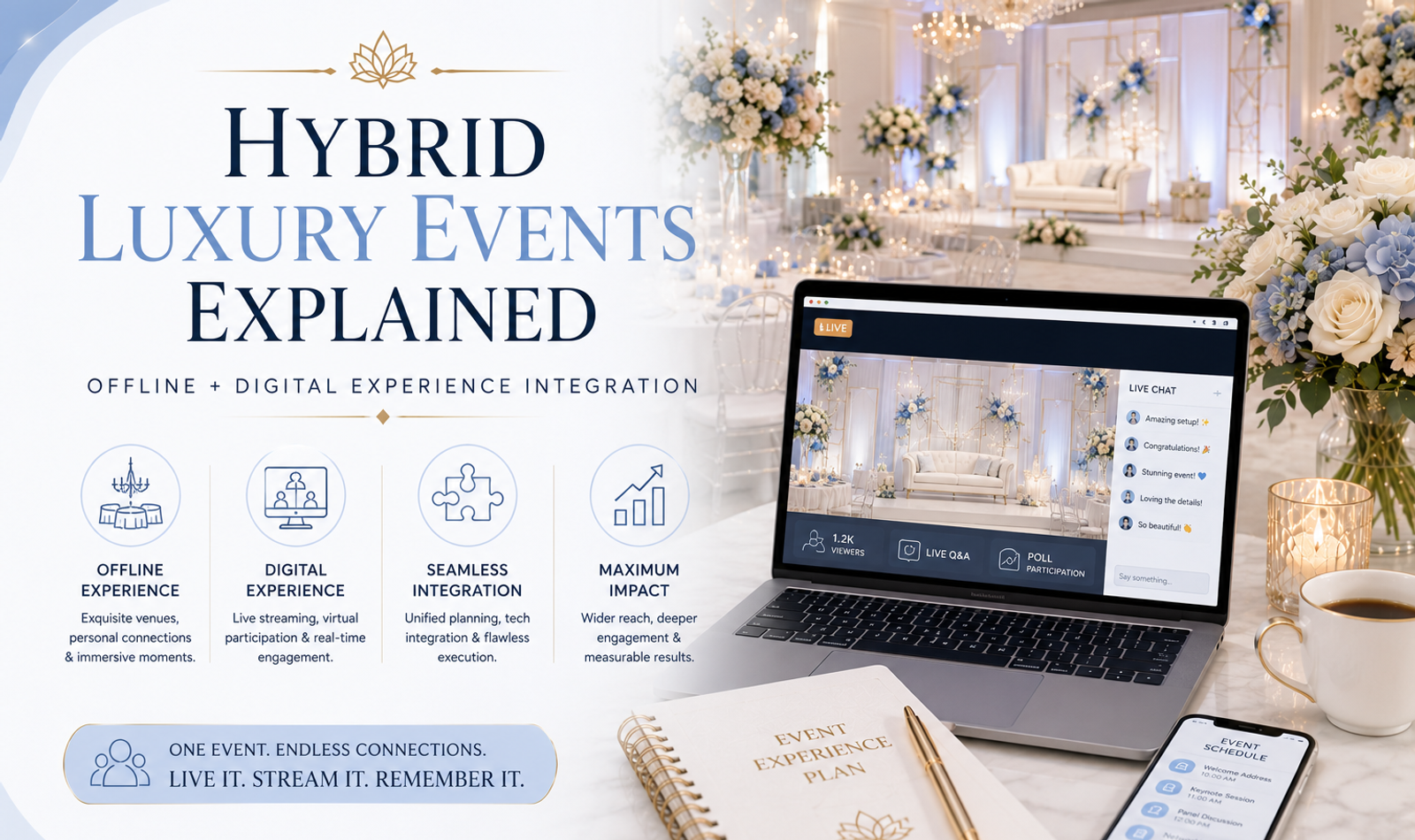
A hybrid luxury event combines an in-person gathering with a professionally designed digital experience. It is not simply a physical event with a camera placed in front of the stage. The offline and online audiences must both receive valuable, engaging and emotionally connected experiences.
The physical audience may enjoy premium hospitality, personal networking, live performances and immersive environments. The digital audience may receive interactive content, customised viewing options, virtual networking, live participation and exclusive behind-the-scenes access.
When these two environments are designed as one connected experience, a hybrid event can increase reach, improve accessibility, strengthen brand communication and generate long-term digital value.
However, hybrid events are also more complex than standard physical or virtual events. They require event planning and production, content creators, technology partners, hospitality professionals and audience managers to coordinate in real time.
This guide explains how hybrid luxury events work, how offline and digital experiences can be integrated and how brands, families and organisations can create premium events that engage audiences both inside and outside the venue.
What Is a Hybrid Luxury Event?
A hybrid luxury event is a premium event experience designed for two connected audiences: guests attending at a physical venue and participants joining through digital platforms.
The digital audience may watch a live broadcast, interact with speakers, participate in polls, enter virtual rooms, access exclusive content, connect with other guests or communicate with people at the physical venue.
The physical event may include a luxury stage, immersive décor, premium food and beverage, live entertainment, networking zones, product displays or personalised hospitality.
The digital event may include professional multi-camera streaming, branded interfaces, virtual reception areas, digital concierge support, online networking, live chat, interactive sessions and content available after the event.
The most important difference between a basic livestream and a hybrid event is participation.
A livestream mainly allows people to watch. A hybrid event allows them to participate.
Digital guests should not feel like distant observers. They should feel that the event has considered their needs, attention span, time zone, technology and expectations.
Similarly, the physical event should not be weakened by constant digital interruptions. Cameras, screens and virtual interactions must be integrated naturally into the environment.
Luxury hybrid event planning therefore requires one central strategy that connects the physical venue, digital platform, content, communication and audience journey.
Why Hybrid Events Are Becoming Important
Hybrid events provide flexibility in a world where audiences are increasingly distributed. A company may have employees, investors, partners and customers in multiple regions. A wedding may involve family members living abroad. A luxury brand may want both exclusivity and international visibility.
A physical event has natural limits. Venue capacity, travel costs, geographical distance, visa requirements, scheduling conflicts and health considerations can prevent important guests from attending.
Digital participation removes many of these barriers.
At the same time, fully virtual events cannot always reproduce the emotional impact, social energy and sensory experience of a physical gathering. Guests may miss personal conversations, environmental details, live entertainment and the feeling of being part of a shared moment.
Hybrid events combine the advantages of both formats.
The physical venue creates emotional depth, prestige and human connection. The digital layer creates accessibility, reach, content value and measurable engagement.
For brands, hybrid events can expand visibility without increasing venue capacity. For companies, they can connect global teams while preserving an important in-person experience. For luxury weddings, they can include relatives who are unable to travel. For conferences, they can attract international speakers and participants without requiring everyone to be in one location.
The hybrid model also extends the life of an event. Recorded sessions, interviews, performances, presentations and behind-the-scenes content can be repurposed for marketing, internal communication and social media.
Hybrid Events Are Not Livestreams
One of the most common mistakes in hybrid event planning is treating the digital experience as a secondary livestream.
A camera is placed at the back of the room, the stage feed is sent online and remote guests are expected to watch for several hours. This approach may technically provide access, but it rarely creates meaningful engagement.
The digital audience experiences an event differently from the physical audience.
People at the venue can move around, speak to other guests, observe décor, enjoy food and respond to the atmosphere. Digital guests are looking at a screen. Their experience depends on camera direction, audio quality, pacing, content structure and interactive opportunities.
A hybrid event must therefore be designed almost like a live television production combined with an interactive digital platform.
The digital audience may need shorter content segments, dedicated hosts, exclusive interviews, multiple viewing options and regular opportunities to respond.
The physical audience may watch one stage continuously, while the digital audience could move between the main stage, backstage interviews, networking rooms and product demonstrations.
A successful hybrid event does not copy the physical experience online. It creates a complementary digital experience around the same central story.
The Role of Luxury in Hybrid Event Design
Luxury in a hybrid event is not defined only by expensive technology or a premium venue. It is created through attention, comfort, personalisation, consistency and service quality.
The physical guest should experience smooth arrival, thoughtful hospitality, comfortable seating, refined surroundings and well-managed programming.
The digital guest should experience easy registration, clear instructions, reliable streaming, attractive interfaces, responsive support and content that feels created specifically for them.
Technical problems, confusing navigation, poor audio and delayed responses can immediately reduce the perception of luxury.
A premium hybrid event should feel effortless even though it may involve complex systems behind the scenes.
The luxury standard must therefore extend across every digital touchpoint, including registration experience, event website, reminder communication, streaming interface, digital concierge, interactive tools, content quality and post-event access.
The physical and digital environments should also share one visual identity. Colours, typography, graphics, music, language and storytelling should remain consistent across invitations, venue screens, digital platforms and social media.
Types of Hybrid Luxury Events
Hybrid formats can be used across corporate, social, cultural and commercial events. The design approach will depend on the purpose of the event and the behaviour of its audience.
Hybrid Corporate Conferences
Corporate events can connect in-person executives, employees, industry experts and remote audiences across multiple locations.
The physical venue may host keynote sessions, panel discussions, networking lounges and exhibitions. Digital participants may access live sessions, ask questions, download resources and join smaller virtual meetings.
International speakers can also appear remotely through high-quality video links, reducing travel requirements while increasing the diversity of the programme.
Hybrid Brand Launches
Luxury brands can use hybrid launches to maintain the exclusivity of a physical event while reaching customers, media professionals and creators digitally.
The venue may include product displays, immersive installations and private demonstrations. The digital audience may receive close-up product films, interactive features, virtual consultations and exclusive interviews.
The event can also be supported by an integrated PR, media and marketing strategy so that the physical launch, livestream, media communication and post-event coverage work as one campaign.
A digital launch experience can also be adapted for different markets, languages and customer segments.
Hybrid Luxury Weddings
Hybrid wedding planning enables distant relatives and friends to participate in ceremonies, performances and emotional moments.
The digital experience can include personalised welcome messages, family interaction, virtual gift coordination, live translations and private online rooms for selected guests.
The objective should be to make remote participants feel emotionally involved rather than simply giving them access to a video stream.
Professional guest management can also connect physical hospitality, travel information and remote guest communication through one coordinated system.
Hybrid Awards and Gala Events
Awards ceremonies can connect nominees, winners, sponsors and audiences from different regions. Remote winners may appear on large screens, while digital viewers vote, comment or participate in live reactions.
Professional show direction is especially important because awards events depend on timing, anticipation and emotional storytelling.
Hybrid Exhibitions and Trade Events
Physical visitors can explore booths, attend demonstrations and meet representatives. Digital participants may enter virtual exhibition spaces, schedule meetings, view product films and connect with exhibitors.
The hybrid structure allows exhibitions to attract audiences beyond the physical location and continue generating engagement after the venue closes.
Hybrid Entertainment Experiences
Concerts, fashion shows, cultural festivals and performances can provide different viewing options for online audiences.
Digital viewers may receive close-up camera angles, backstage content, artist interviews and interactive moments that are unavailable to people inside the venue.
Events involving performers or public personalities may also require professional celebrity management to coordinate appearances, schedules, digital participation and content permissions.
Planning a Hybrid Event Strategy
A hybrid event should begin with a clear strategic objective. Technology should be selected only after the audience, purpose and desired outcomes have been defined.
The planning team should understand why the event needs a hybrid format. The purpose may be to increase participation, connect international guests, improve accessibility, create content, support remote teams or generate wider brand visibility.
The strategy should identify the physical audience, digital audience and areas where their needs overlap.
For example, a corporate leadership summit may have senior executives at the venue and employees joining from different offices. The executives may value direct networking, while employees may value access to leadership presentations and interactive question-and-answer sessions.
A wedding may have close family members at the venue and elderly relatives joining remotely. The digital experience should prioritise emotional visibility, clear audio and private family interaction.
The event strategy should also define the role of content. Some sessions may be suitable for both audiences, while others may need separate versions.
A detailed strategy reduces the risk of adding digital features that look impressive but do not improve the audience experience.
Understanding the Two Guest Journeys
A hybrid event has two guest journeys that must be designed separately and connected intelligently.
The physical guest journey may include invitation, travel support, venue arrival, registration, hospitality, event participation, networking and departure.
The digital guest journey may include online invitation, registration, technical guidance, login, virtual welcome, content access, interaction and on-demand viewing.
The physical journey begins with transportation, venue communication and arrival management. The digital journey begins with device compatibility, login details and platform navigation.
Both audiences should receive relevant communication before the event. Physical guests may need dress codes, parking instructions and venue details. Digital guests may need system requirements, time-zone information and technical support.
The digital experience should be tested from the perspective of someone who is not familiar with the platform. Registration and login should be simple. Important buttons and sessions should be easy to locate.
A virtual concierge or help desk can support participants who experience technical difficulties.
Luxury is often defined by how quickly problems are solved.
Creating One Unified Event Identity
The offline and online environments should feel like parts of the same event.
The digital platform should reflect the event’s visual identity through branded backgrounds, motion graphics, typography, colour palettes and content design.
The venue should include digital screens and stage graphics that use the same visual language.
Speakers appearing remotely should receive guidance on lighting, background, clothing and camera position so that their appearance matches the overall production quality.
The event soundtrack, opening films, speaker introductions and transitions should also remain consistent across both audiences.
This visual and emotional continuity strengthens recognition and prevents the digital experience from feeling like an unrelated technical extension.
A central event design guide can help production teams, graphic designers, streaming partners, stage teams and communication teams work within one approved system.
Choosing the Right Hybrid Event Technology
Technology should support the event rather than dominate it.
The right platform will depend on audience size, event duration, content format, security requirements, interaction needs and available budget.
A small hybrid wedding may require a private streaming platform, digital guest support and high-quality audio. A global conference may require multiple stages, networking rooms, multilingual access, attendee analytics and secure content distribution.
Important technology considerations include streaming stability, mobile compatibility, login security, audience capacity, interaction tools, recording options and technical support.
The platform should be tested on different devices, internet connections and operating systems.
A backup streaming method should also be available in case the primary platform experiences a failure.
Hybrid event technology may include live streaming systems, virtual event platforms, audience polling tools, live chat systems, digital networking rooms, translation software, event applications, QR-based interactions, virtual product demonstrations and audience analytics.
The planning team should avoid adding too many tools. Moving between multiple applications can confuse participants and interrupt engagement.
A premium experience should feel simple even when the technical system is advanced.
Professional Streaming and Broadcast Production
High-quality production is essential for hybrid luxury events.
Digital viewers depend entirely on what they can see and hear. Poor audio, weak lighting or static camera angles can make even an impressive physical event feel ordinary online.
A professional hybrid production may use multiple cameras to capture the stage, audience, close-ups and environmental details.
A director selects camera angles in real time and coordinates presentations, graphics, videos and remote speakers.
The production may also include a dedicated digital host who speaks directly to online participants, explains transitions and maintains engagement.
Audio should be mixed separately for the venue and digital broadcast. The sound experienced inside a ballroom is not automatically suitable for online viewers.
Remote participants should hear clear speech, music and audience reactions without distortion or delay.
The broadcast team should also prepare for unexpected situations such as speaker delays, internet interruptions or presentation failures. Backup content, holding slides and pre-recorded segments can help maintain continuity.
After the event, professionally captured footage can be transformed through video production, AI video and VFX into campaign films, highlights, social content and digital assets.
Internet and Technical Infrastructure
Reliable internet connectivity is one of the most important requirements for a hybrid event.
The venue’s standard guest Wi-Fi may not be sufficient for professional broadcasting. A dedicated wired connection with appropriate upload capacity should be arranged and tested.
Backup connectivity should also be available. This may include a secondary broadband line, bonded internet system or mobile network solution.
Power backup is equally important. Cameras, computers, encoders, screens, audio equipment and networking systems should not depend on a single power source.
Technical rehearsals should test the complete system under realistic conditions. Remote speakers should join from their actual locations and devices.
The team should test video feeds, microphones, presentations, screen sharing, translations, audience tools and recording systems.
Last-minute testing creates unnecessary risk. Hybrid event infrastructure should be finalised well before the audience arrives.
Designing Content for Both Audiences
Content is the bridge between the offline and digital experience.
Long speeches and continuous stage programming may work for an audience seated in a venue, but digital viewers may become distracted more quickly.
Hybrid content should be structured into clear segments with visual variety, audience interaction and regular transitions.
Speakers should understand that they are addressing two audiences. They may look at the physical audience while occasionally speaking directly to the camera.
Presentations should be readable on small screens. Text-heavy slides and complex diagrams may be difficult for mobile viewers.
Digital audiences can receive additional content between sessions, including interviews, highlights, polls, behind-the-scenes access and summaries.
Some sessions may be produced exclusively for online participants. A digital host could interview speakers after they leave the physical stage or provide a tour of the venue.
The content plan should consider session duration, camera movement, visual variety, audience interaction, speaker direction, digital exclusives, break programming and on-demand access.
The event should not expect online viewers to watch an unchanging stage for several hours.
Interactive Digital Guest Engagement
Audience interaction is what transforms broadcasting into a hybrid experience.
Digital participants should have meaningful opportunities to respond, ask questions, communicate and influence parts of the programme.
Live polls can collect opinions and display results on the physical stage. Questions from digital viewers can be included in panel discussions.
Remote guests may appear on venue screens during selected moments. Virtual networking rooms can connect participants based on shared interests.
For weddings, remote family members may offer blessings, participate in speeches or join dedicated video rooms.
For brand launches, digital viewers may select product features, request demonstrations or book consultations.
Interactive elements should be moderated carefully. Uncontrolled chat, delayed questions and technical confusion can interrupt the event.
A digital audience team should manage comments, select questions, respond to support requests and communicate with the show director.
The goal is to make interaction feel planned and valuable rather than random.
Connecting Physical and Digital Audiences
The strongest hybrid events create moments where both audiences recognise each other.
A live poll may combine responses from guests at the venue and online. Digital participants may appear on a large screen during a celebration.
A presenter may welcome different cities or countries and acknowledge remote groups by name.
In a corporate event, physical attendees may join digital networking rooms to speak with remote colleagues.
At a wedding, screens can display family members participating from abroad during important rituals.
These moments create a sense of shared presence.
However, they should not happen continuously. Too much focus on screens can reduce the physical audience’s connection to the venue.
The event plan should identify specific moments where integration adds emotional or strategic value.
Virtual Hospitality and Digital Concierge Services
Hospitality is an essential part of luxury events, and it should also extend to remote guests.
Digital hospitality begins with clear communication. Guests should know how to register, when to join, what device to use and where to request support.
A virtual concierge may assist with login problems, session navigation, language options and technical troubleshooting.
Important guests may receive personalised support before the event, including individual test calls.
For premium corporate events, digital participants may receive curated gift boxes, tasting kits, product samples or event materials at their homes.
A virtual wine tasting, culinary experience or product demonstration becomes more engaging when participants receive physical items before the event.
For weddings, remote family members may receive invitation hampers, ceremonial items or personalised gifts so that they feel connected to the celebration.
This combination of physical delivery and digital participation can create a strong emotional bridge.
Hybrid Event Stage and Venue Design
A hybrid event stage must work for the physical audience, cameras and remote speakers.
Large decorative elements should not block camera angles or screens. Reflective materials should be tested because they may create glare.
Stage lighting must support both in-person viewing and video quality. Strong backlighting or coloured lighting can make speakers difficult to see online.
Screens may display presentations, remote speakers, audience responses or digital guests. Their size and position should remain comfortable for people in the venue.
Cameras should be integrated discreetly into the space. Equipment should not create obstacles or dominate the event environment.
The venue may also require separate areas for broadcast control, remote speaker coordination, recording and technical support.
Luxury event design should hide technical complexity wherever possible while giving teams sufficient access to operate safely.
Hybrid Networking and Relationship Building
Networking is one of the most difficult parts of hybrid event design.
Physical attendees can meet naturally during breaks, meals and sessions. Digital participants need structured ways to connect.
Virtual networking can include scheduled meetings, topic-based rooms, profile matching and moderated discussions.
Participants may be invited to complete profiles before the event so that the platform can recommend relevant contacts.
Small group sessions are generally more effective than large unmoderated video rooms.
A host or facilitator can introduce participants, guide conversation and ensure that remote attendees are included.
Hybrid networking can also connect physical and digital guests. Venue attendees may enter quiet booths for virtual meetings with remote participants.
For luxury brands, virtual consultations can connect customers with product experts. For conferences, online participants can schedule meetings with speakers or exhibitors.
The networking experience should be easy to navigate and aligned with the event’s purpose.
Hybrid Event Personalisation
Personalisation can significantly improve the digital experience.
Participants may receive different content recommendations based on their location, language, industry, role or interests.
A senior investor, employee, media representative and customer may not need the same event journey.
Registration forms can collect relevant preferences without becoming intrusive.
The platform may then recommend sessions, networking opportunities or product demonstrations.
Personalised communication can include the guest’s name, selected agenda, time-zone reminders and relevant links.
For luxury weddings, remote guests may receive access to specific ceremonies, private family rooms or translated content.
Personalisation should make the experience easier and more relevant. It should not create unnecessary complexity or privacy concerns.
Multilingual Hybrid Events
Hybrid events can connect international audiences, but language differences must be considered early.
Live interpretation, subtitles and translated digital interfaces can improve accessibility.
Remote speakers may also need language support before and during their sessions.
For corporate conferences, translated session recordings can extend content value after the event.
For weddings, digital relatives may benefit from subtitles or a host who explains rituals and important moments.
Translation should be integrated into the platform and production plan. Adding it at the last moment may create delays, technical issues and inconsistent quality.
Accessibility in Hybrid Event Planning
Hybrid events can improve access for people who cannot travel, but digital access alone does not automatically make an event inclusive.
The planning team should consider captions, sign-language interpretation, screen readability, audio clarity and platform compatibility.
Physical venues should also support guests with mobility, visual or hearing requirements.
Digital content should be easy to navigate using common devices. Recorded sessions may include subtitles and written summaries.
Accessibility should be treated as part of premium service rather than a separate obligation.
A luxury event anticipates different guest needs and reduces unnecessary barriers.
Security and Privacy
Hybrid events may involve confidential presentations, private family moments, customer information or restricted content.
Security requirements should be defined according to the event type.
A private wedding may use password-protected access and approved guest lists. A corporate summit may require individual logins, encrypted streaming and restrictions on content downloads.
The planning team should understand how participant data will be collected, stored and used.
Speakers and attendees should know when sessions are being recorded.
Access links should not be shared publicly unless the event is intended for open distribution.
A technical security plan can include registration verification, platform permissions, content moderation, backup controls and response procedures.
Hybrid Event Rehearsals
A hybrid event requires more rehearsal than a conventional event because physical and digital systems must operate together.
Speakers should rehearse with microphones, screens, cameras and remote participants.
The show director should test every transition between live speakers, videos, presentations and digital feeds.
Remote speakers should understand when they will appear, where to look and how to respond if their connection becomes unstable.
The digital host should rehearse audience engagement, announcements and emergency filler content.
Technical teams should also test what happens when something fails.
A rehearsal is not complete until the event has tested backup internet, backup presentations, replacement microphones and alternative speaker connections.
Managing Hybrid Event Timelines
Hybrid events involve additional planning stages related to platform setup, digital communication, content production, speaker testing and technical rehearsals.
The digital platform should be selected early enough to allow branding, configuration and user testing.
Speakers should submit presentations and recorded content before the event.
Remote guests should receive login instructions several days in advance, not immediately before the programme.
Important guests may be offered technical assistance before the event.
A detailed event timeline should include both venue activities and digital actions.
While the physical team manages arrivals, seating and stage readiness, the digital team may manage login volumes, virtual waiting rooms and audience questions.
These activities must be coordinated through one central show plan.
Digital Invitations and Registration
The invitation is the first expression of the hybrid experience.
Guests should understand whether they are invited physically, digitally or given both options.
The registration process may allow participants to choose their attendance format.
Physical guests may provide travel, dietary and accommodation information. Digital guests may select language preferences, sessions and time-zone options.
Confirmation emails should contain only the information relevant to each audience.
A premium registration process should be visually consistent, mobile-friendly and easy to complete.
Automated reminders can reduce confusion, but communication should remain personal and controlled.
Social Media and Content Integration
Hybrid events create significant content opportunities because the event is already being filmed and distributed digitally.
Short clips, interviews, speaker insights, performance highlights and audience reactions can be published during and after the event.
A social media team can coordinate with the broadcast team to identify strong moments quickly.
Event hashtags, digital photo experiences and audience-generated content can connect participants across locations.
However, not every part of a private or luxury event should be published publicly. Content permissions and privacy boundaries must be established before the event.
Brands should develop a post-event digital marketing and content plan instead of allowing valuable footage to remain unused.
Post-Event Digital Experience
The hybrid experience does not need to end when the venue closes.
Recorded sessions can be organised into an on-demand library. Participants may receive highlights, presentation resources, contact opportunities and personalised recommendations.
Corporate events can use post-event surveys to understand content value, technical quality and audience satisfaction.
Brands may follow up with product information, consultation links or exclusive content.
Wedding families may share edited ceremony films, digital albums or private messages with remote guests.
Post-event communication should arrive quickly while the experience is still fresh.
A well-organised digital archive also increases the long-term value of the event investment.
Measuring Hybrid Event Performance
Hybrid events generate more measurable information than traditional physical events.
Digital platforms can record registrations, live attendance, session views, engagement time, poll responses, downloads and networking activity.
Physical event performance can include attendance, guest movement, session participation and hospitality feedback.
These two sets of information should be reviewed together.
High registration numbers do not automatically indicate success. The team should understand how many people attended, how long they stayed and what actions they completed.
For brand events, performance may include product enquiries, media mentions, social engagement and leads.
For internal events, it may include employee participation, session completion and feedback.
For weddings, success may be evaluated through family participation, streaming quality and emotional engagement.
Hybrid Event Budget Planning
Hybrid events often require additional investment in technology, production and digital support.
Important cost categories may include cameras, audio systems, lighting, internet connectivity, streaming platforms, graphic design, digital hosts, technical staff and content editing.
The event may also require virtual concierge services, remote speaker kits, translation and post-event content production.
Budgeting should begin with audience needs rather than selecting the most expensive technology.
A smaller event may achieve excellent results with a focused platform and strong production quality.
A large conference may need a more advanced system, but each feature should have a clear purpose.
Contingency funds should be reserved for additional equipment, internet solutions and technical replacements.
Common Hybrid Event Mistakes
The first major mistake is treating the digital audience as secondary.
Remote guests notice when speakers ignore the camera, questions are not answered and breaks contain no content.
Another mistake is using poor audio. Digital participants may tolerate a basic background, but unclear speech quickly causes disengagement.
Overcomplicated platforms can also create problems. Too many features, rooms and login steps may reduce participation.
Some events focus heavily on technology while neglecting content. Advanced tools cannot compensate for long speeches, weak storytelling and poor pacing.
Other common mistakes include insufficient rehearsals, no internet backup, unreadable presentations, delayed communication and inadequate digital support.
A hybrid event should also avoid forcing every physical activity into the digital format. Some experiences work better when redesigned specifically for remote participants.
Best Practices for Luxury Hybrid Events
A strong hybrid event begins with one creative and strategic vision.
The offline and digital experiences should be designed together rather than by separate teams working independently.
Professional audio and stable connectivity should receive priority because they directly affect digital participation.
Content should be planned for camera viewing, shorter attention spans and interactive engagement.
Digital guests should receive dedicated communication, support and exclusive value.
The event should create selected moments where physical and remote audiences interact.
Every critical technical system should have a backup.
Finally, the team should measure both audience experiences and use the findings to improve future events.
Frequently Asked Questions
What is a hybrid luxury event?
A hybrid luxury event combines a premium physical gathering with a professionally designed digital experience. Guests can attend at the venue or participate online through streaming, interaction, networking and exclusive digital content.
How is a hybrid event different from a livestream?
A livestream mainly allows viewers to watch. A hybrid event allows remote participants to interact, ask questions, access content, connect with guests and become part of the programme.
Can weddings be organised as hybrid events?
Yes. Hybrid weddings can connect relatives and friends who cannot travel. Remote guests may watch ceremonies, interact with family members, join speeches and receive personalised digital hospitality.
What technology is required for a hybrid event?
Requirements may include professional cameras, microphones, lighting, streaming software, a virtual event platform, dedicated internet, audience engagement tools and backup systems.
How can online guests remain engaged?
Online engagement can be improved through dedicated hosts, polls, questions, virtual networking, shorter content segments, exclusive interviews and behind-the-scenes access.
Are hybrid events more expensive?
Hybrid events may require additional spending on production, technology and digital support. However, they can also increase audience reach, content value and long-term return on investment.
How many cameras are required for a hybrid event?
The number depends on the venue, event size and content. Multiple cameras generally provide a more engaging digital experience by capturing speakers, close-ups, audience reactions and environmental views.
Can a hybrid event have international guests?
Yes. Hybrid events are highly suitable for international participation. Time zones, languages, subtitles, speaker testing and digital support should be considered during planning.
How is a hybrid event measured?
Performance can be measured through registrations, live attendance, viewing duration, interactions, session participation, leads, audience feedback and post-event content views.
Why is professional audio important?
Digital guests depend on clear audio to understand and enjoy the event. Poor sound quality can cause viewers to leave even when the visuals and venue are impressive.
Can hybrid events be private?
Yes. Private events can use secure registration, password-protected platforms, verified guest lists and controlled recording permissions.
What is virtual hospitality?
Virtual hospitality includes personalised digital communication, technical assistance, online concierge support, mailed event kits and thoughtful services for remote participants.
Conclusion
Hybrid luxury events represent a powerful evolution in event planning. They allow brands, companies, families and institutions to combine the emotional impact of physical gatherings with the accessibility and reach of digital participation.
However, a successful hybrid event requires more than adding a livestream to an existing programme.
The offline and digital experiences must be planned as two connected guest journeys. Both audiences require clear communication, engaging content, reliable technology, thoughtful hospitality and meaningful participation.
The physical environment creates energy, prestige and human connection. The digital environment extends access, interaction, measurement and content value.
When these elements are integrated strategically, remote guests no longer feel like observers and physical guests do not feel distracted by technology.
The experience becomes one connected event delivered through different formats.
Luxury in hybrid event planning is ultimately defined by care. It is visible in the clarity of the registration process, the quality of the audio, the speed of technical support, the personalisation of content and the smoothness of every transition.
With the right strategy, production systems and creative direction, hybrid luxury events can create valuable experiences that reach beyond venue walls and remain relevant long after the final session ends.
Plan Your Hybrid Luxury Event
A successful hybrid event requires event strategy, creative direction, venue production, digital streaming, audience engagement, guest management, celebrity coordination, hospitality, content production and on-ground execution to work as one connected system.
Whether you are planning a hybrid corporate event, international conference, luxury wedding, product launch or multi-location brand experience, explore event and wedding management services for complete planning and execution.
Hybrid experiences can also be supported through PR and media marketing, digital marketing and web development and AI video and VFX production to extend the event beyond the venue and create long-term digital value.
📩 info@dtsworld.in 📞 +91 80000 06021 📍 Andheri West, Mumbai
Need this for your brand?
Let DTS build your next campaign.
From PR, celebrity management and events to websites, social media, SEO and AI video production — Double Trouble Studio helps brands grow with strategy and execution.
Discuss Your Requirement →