How to Plan a Luxury Corporate Event in India: Complete Guide
Planning a luxury corporate event in India requires much more than booking a premium venue, adding elaborate décor and hiring entertainment.
The strongest events are built around strategy.
A luxury corporate event should communicate the brand’s positioning, create meaningful engagement, offer smooth hospitality, support media and content opportunities, and leave guests with a clear memory of the experience.
For premium brands, every detail matters.
Guests notice how easy it is to confirm attendance.
They notice how they are received.
They notice whether the valet is organised, whether the registration desk creates a queue, whether the stage begins on time, whether speakers are prepared, whether the food service feels effortless and whether the event seems thoughtfully designed around them.
That is why luxury corporate event planning should be approached as a complete guest-experience system rather than a collection of vendors.
Whether the event is a leadership summit in Mumbai, a client dinner in Delhi, a product launch in Bengaluru, a corporate retreat in Goa or an awards night in Jaipur, the goal is the same:
Create a business experience that feels seamless, intentional and memorable.
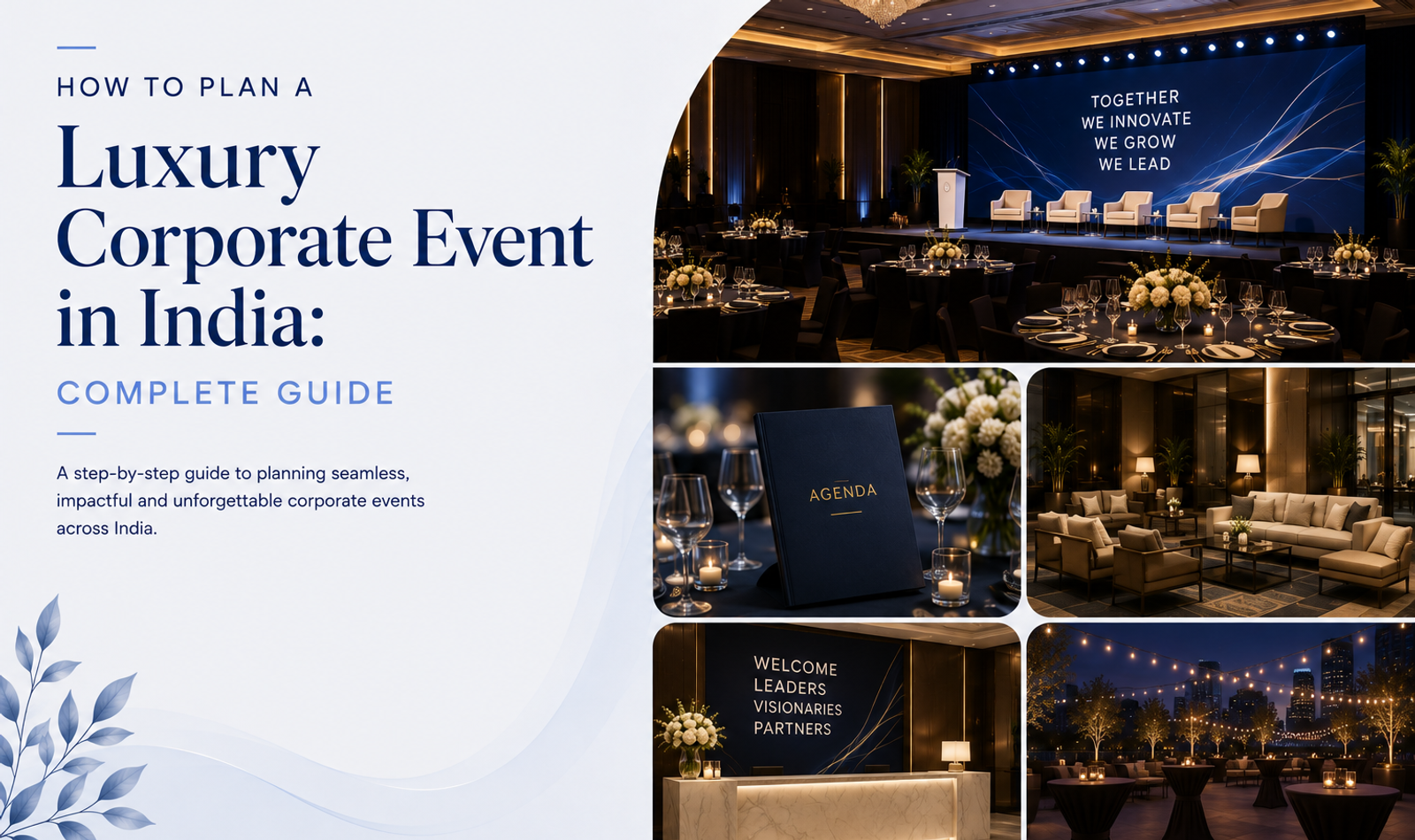
This guide explains how to plan a luxury corporate event in India from concept and budgeting to venue selection, guest management, celebrity coordination, production, PR, content and post-event measurement.
What Is a Luxury Corporate Event?
A luxury corporate event is a business event that combines a defined commercial or organisational objective with premium hospitality, strong production, sophisticated design and carefully planned guest management.
It may include:
- Product launches
- Leadership summits
- Corporate galas
- Awards nights
- Partner meets
- Dealer meets
- Investor events
- Client appreciation evenings
- Executive retreats
- Networking events
- Media launches
- Employee celebrations
- Brand experiences
- Conferences
- Private corporate dinners
- Incentive programmes
Luxury does not mean adding more to every part of the event.
It means making every part work better.
The right guests receive the right communication.
The venue supports the format.
VIPs are recognised immediately.
Technical systems work without interruption.
Food service feels natural.
Entertainment suits the audience.
Branding is visible without becoming overwhelming.
That combination creates a genuinely premium experience.
Why Luxury Corporate Events Matter
Corporate events create a type of brand interaction that digital communication cannot fully replace.
A website can explain a company.
An advertising campaign can build awareness.
Social media can create reach.
But an event allows customers, partners, employees, media, investors and senior stakeholders to experience the organisation directly.
That experience can influence trust and perception significantly.
Luxury corporate events may help a brand:
Build relationships with important customers.
Reward employees and leadership teams.
Introduce a new product or service.
Communicate a new company direction.
Support market entry.
Generate media attention.
Create content.
Strengthen brand positioning.
Host investors or strategic partners.
Create commercial conversations.
Increase leadership visibility.
The event should therefore begin with the business objective rather than the visual theme.
1. Define the Event Objective
Before choosing the venue, entertainment or décor, define what the event must achieve.
Ask:
What should be different after this event?
If the event is designed for employees, the priority may be recognition, participation and culture.
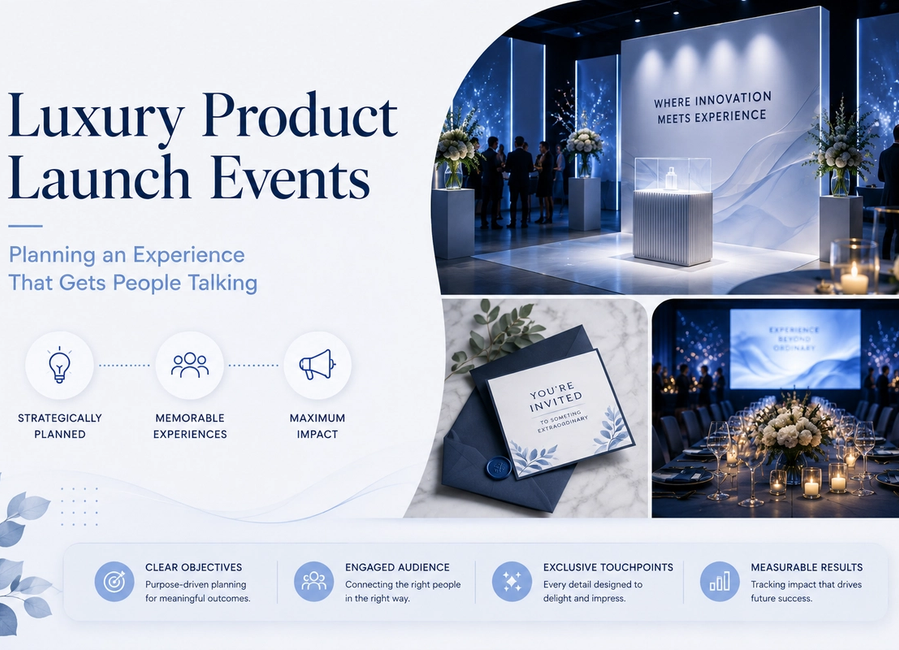
If it is a product launch, the product should become the centre of the experience.
If the event is designed for clients, networking and hospitality may matter more than stage programming.
If the objective is media visibility, the event needs a strong story, spokesperson access, press-ready assets and an integrated event PR strategy.
Avoid vague objectives such as:
“We want a premium corporate event.”
Instead, define something measurable.
For example:
“We want to host our top 150 business partners, introduce our new service direction and generate qualified conversations with senior leadership.”
This gives the planning team a clear foundation.
2. Understand the Guest Profile
Luxury event planning begins with knowing exactly who will attend.
Guests may include:
Senior executives
Board members
Employees
Investors
Dealers
Distributors
Government representatives
Celebrities
Influencers
Journalists
Business partners
Premium customers
International delegates
Sponsors
Different audiences require different experiences.
A CXO networking evening should not feel like an employee annual day.
An investor meeting should not feel like an influencer launch.
A dealer conference should not follow the same format as a luxury client dinner.
Understanding the guest profile helps determine the venue, entertainment, hospitality, dress code, food, security, timing and communication style.
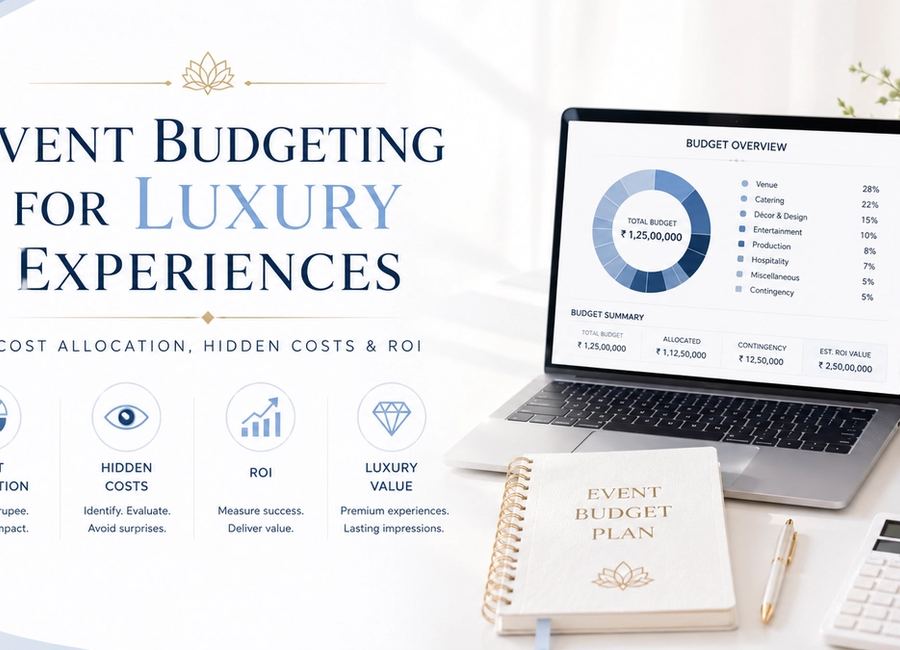
3. Build a Realistic Budget
Luxury events require careful financial planning.
One of the most common mistakes is spending heavily on décor while under-budgeting production, hospitality, logistics or technical backup.
The budget may include:
Venue
Stage and production
Audio
Lighting
LED screens
Décor
Artists
Celebrity appearances
Food and beverages
Guest management
Invitations
Transportation
Accommodation
Security
Photography
Videography
Content production
Technology
PR and media
Permissions
Staffing
Vendor logistics
Contingency
A contingency allocation is essential because corporate events often involve last-minute changes.
A structured event budgeting framework can help brands allocate spending according to guest impact rather than visual excess.
4. Select the Right City
India offers very different event environments across cities.
Mumbai is particularly strong for media, entertainment, finance, fashion, premium brand launches and corporate events.
Delhi NCR works well for government-linked events, automotive brands, corporate summits and large-format business gatherings.
Bengaluru is strong for technology, innovation and startup audiences.
Goa is ideal for leadership retreats, incentive programmes and destination off-sites.
Jaipur and Udaipur work well for heritage-led corporate experiences.
Hyderabad, Pune, Chandigarh and Ahmedabad also offer strong options depending on audience and business need.
Choose the city based on:
Guest accessibility
Airport connectivity
Brand relevance
Audience location
Venue availability
Event purpose
Do not choose the city only because it looks attractive in photographs.
5. Choose the Right Venue
Venue selection strongly shapes the event experience.
A hotel ballroom may work perfectly for an awards night but feel predictable for a disruptive product launch.
A heritage venue may create extraordinary visual impact but introduce restrictions around access, production and sound.
An outdoor venue may be beautiful but requires strong weather planning.
Evaluate:
Capacity
Location
Parking
Valet movement
Airport access
Guest arrival zone
Backstage areas
Green rooms
Loading access
Power capacity
Ceiling height
Stage possibilities
Acoustics
Alcohol permissions
Kitchen capability
Closing times
Accessibility
Branding opportunities
Rain backup
Security
A venue should support the concept rather than forcing the concept to adapt to the venue.
For premium events, venue selection and negotiation should be treated as a strategic decision.
6. Design the Guest Journey
Luxury begins before the guest reaches the venue.
Think of the complete journey:
Invitation → RSVP → Reminder → Arrival → Valet → Welcome → Registration → Main Experience → Networking → Food → Entertainment → Departure → Follow-Up
Every stage should feel connected.
A beautifully designed invitation means little if the guest then waits 25 minutes at registration.
A personal VIP invitation loses value if nobody recognises the person at arrival.
Map every touchpoint.
Then identify where friction may occur.
Remove that friction.
This is one of the strongest principles of premium hospitality.
A well-planned luxury guest journey helps create consistency from invitation to departure.
7. Create Premium Invitations and RSVP Systems
The invitation establishes expectations.
For a luxury corporate event, it should communicate:
Purpose
Date
Time
Venue
Dress code
RSVP details
Arrival instructions
Contact information where necessary
The format may include:
Personalised digital invitations
Motion invitations
Physical invitation boxes
Private RSVP pages
WhatsApp confirmations
Avoid overcrowding the invitation with logistics.
Move detailed information into confirmation messages.
The RSVP system should track:
Attendance
Plus-ones
Dietary requirements
VIP status
Transportation needs
Accommodation needs
Special assistance
Structured event RSVP management can reduce last-minute confusion significantly.
8. Plan VIP and Celebrity Management Separately
VIP and celebrity movement requires dedicated planning.
Senior executives, celebrities, government guests and important clients may require:
Private arrivals
Dedicated hosts
Specific vehicle coordination
Security
Green rooms
Media timing
Stage timings
Photography planning
Special hospitality
Private holding areas
Controlled departure
If celebrities are involved, the team should also confirm:
Contractual deliverables
Appearance duration
Stage activity
Brand interaction
Media commitments
Social-media deliverables
Photography permissions
Security expectations
Professional celebrity management becomes especially important when brand commitments, PR and event logistics are connected.
9. Create a Strong Event Concept
A luxury corporate event needs one central creative idea.
The concept should connect the brand’s business message with the physical experience.
For example:
A technology company may build around “The Next Interface.”
An automotive brand may build around speed, movement or performance.
A hospitality company may focus on modern Indian luxury.
The concept can influence:
Stage design
Invitations
Lighting
Décor
Music
Food presentation
Digital content
Entertainment
Installations
Visual identity
A strong concept makes the event feel intentional rather than assembled from unrelated premium elements.
10. Keep Branding Sophisticated
Luxury branding at events requires restraint.
Logos do not need to appear everywhere.
Branding can be introduced through:
Entrance architecture
LED screens
Projection
Typography
Table details
Menus
Uniforms
Stage graphics
Installations
Photo moments
Colour palette
Gifting
Digital screens
The objective is to make guests feel immersed in the brand’s world rather than surrounded by advertising.
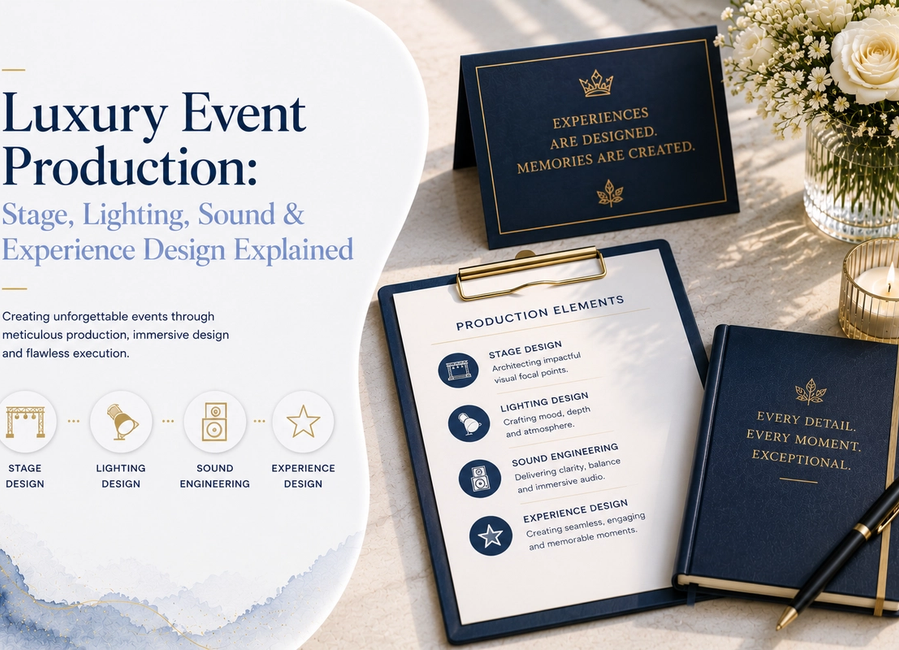
11. Invest in Production
Poor production can weaken even the most expensive event.
Technical planning may include:
Stage
Audio
Lighting
LED
Projection
Microphones
Playback
Presentations
Teleprompters
Show calling
Live streaming
Broadcast feeds
Power backup
Special effects
Every critical system should have a backup.
Technical rehearsals should happen before guests arrive.
Senior speakers should also receive microphone and stage briefings where possible.
12. Build a Detailed Run of Show
A luxury event should never rely on memory or informal coordination.
The run of show should include:
Guest arrival
Registration
Networking
VIP movement
Opening sequence
Host introduction
Leadership speeches
Presentations
Awards
Product reveal
Entertainment
Dinner
Media interactions
Closing remarks
Guest departure
Each transition should have a responsible owner.
A polished event often looks effortless because the team behind it is operating from an extremely detailed plan.
13. Curate Entertainment Carefully
Entertainment should support the audience and brand.
Options may include:
Live musicians
DJs
Celebrity performers
Comedians
Mentalists
Dance performances
Cultural acts
Immersive performances
Interactive technology
International acts
A leadership dinner may benefit from sophisticated music.
A younger employee event may require a DJ or popular performer.
A product launch may use entertainment as part of the reveal itself.
Entertainment is most effective when it strengthens the narrative rather than becoming an unrelated attraction.
14. Make F&B Part of the Experience
Food and beverage is one of the most remembered elements of corporate hospitality.
Consider:
Guest profile
Service style
Event timing
Networking format
Dietary requirements
International guests
Alcohol service
Presentation
Plan for:
Vegetarian
Vegan
Jain
Allergies
International preferences
Non-alcoholic options
Late-night requirements
Luxury F&B is not only about expensive ingredients.
It is about choice, speed, presentation and service quality.
15. Design Networking Intentionally
Networking should not be completely accidental.
Create:
Lounge zones
Cocktail tables
Quiet conversation areas
Curated introductions
Hosted networking
Guest-list intelligence
For senior events, the hosting team should understand which guests would benefit from meeting one another.
This creates business value beyond entertainment.
16. Integrate PR Early
PR should be part of the event plan when the event contains a real media story.
Questions to define include:
What is newsworthy?
Who should attend from the media?
Who is authorised to speak?
Which photographs need to be distributed?
What should remain confidential?
Will interviews be available?
Is there an embargo?
Will a press release be issued?
Product launches, partnerships, expansions, research, celebrity collaborations and leadership announcements can all support media angles.
For larger brand moments, premium media pitching and press relationships should begin well before event day.
17. Build Social Media Into the Event
Social media should be planned before the event.
Before the Event
Teasers
Countdowns
Speaker reveals
Venue reveals
Behind-the-scenes content
During the Event
Guest arrivals
Leadership quotes
Product moments
Performances
Short interviews
Stories
After the Event
Recap films
Official photographs
Speaker clips
Media coverage
Guest reactions
Behind-the-scenes edits
Case studies
One corporate event can generate weeks of content when capture is planned correctly.
18. Plan Photography and Video With a Shot List
Do not ask the content team simply to “cover everything.”
Create a detailed list.
Include:
Venue exterior
Empty setup
Décor details
Brand installations
Guest arrivals
VIP moments
Leadership
Networking
Stage wides
Audience reactions
Awards
Food
Entertainment
Sponsor visibility
Media interactions
Group shots
Departure
Video should include both horizontal and vertical formats when required.
For brands that want to extend the event into campaigns, reels and digital assets, AI video and VFX services can support post-event storytelling.
19. Use Technology Only Where It Adds Value
Technology should reduce friction or increase engagement.
Possible applications include:
QR registration
RFID
NFC access
Event apps
Digital invitations
Interactive screens
Live polling
Projection mapping
AI experiences
Augmented reality
Live streaming
Networking tools
Real-time content displays
Do not add technology simply because it appears futuristic.
If it creates queues or confusion, it is reducing the quality of the experience.
20. Plan Security and Privacy
Luxury corporate events may involve confidential information, senior executives, high-profile guests and celebrities.
Security planning should include:
Entry control
Guest verification
VIP movement
Emergency exits
Medical support
Media access
Private areas
Vehicle management
Photography restrictions
Crowd management
Confidential announcements
Security should be strong without making the guest experience uncomfortable.
21. Prepare for Crisis Scenarios
Luxury event planning also means preparing for what should never happen.
Build backup plans for:
Rain
Power failure
Artist delay
Speaker cancellation
Technical failure
Internet failure
Medical emergencies
Food shortages
Traffic delays
Security issues
Flight delays
Each major risk should have an owner.
For high-profile events, a dedicated crisis PR playbook can help teams respond if an operational issue becomes public.
22. Conduct Rehearsals
Rehearse:
Videos
Presentations
Microphones
Award sequences
Product reveals
Host scripts
Lighting cues
Walk-on music
Leadership speeches
Entertainment
A rehearsal identifies technical and timing problems while there is still time to fix them.
23. Build a Clear Event-Day Command Structure
The team should know exactly who makes the final decision.
The structure may include:
Event director
Client lead
Production head
Show caller
Stage manager
Guest-management lead
VIP lead
Artist-management lead
Security lead
PR lead
Content lead
F&B lead
Vendor coordinators
Communication should flow through defined channels.
Operational discipline is one of the biggest differences between an event that looks expensive and one that actually feels premium.
24. Personalise the Guest Experience
Personalisation can elevate a corporate event significantly.
Examples include:
Named invitations
Dedicated VIP hosts
Custom welcome notes
Personalised itineraries
Guest-specific gifts
Dietary preferences
Curated networking
Named seating
Hotel amenities
Private transport arrangements
Personalisation tells the guest they were expected, not simply counted.
For premium audiences, guest personalisation strategies can create a much stronger emotional impression.
25. Choose Corporate Gifting Carefully
Corporate gifting should feel relevant and thoughtful.
Consider:
Luxury stationery
Custom-designed objects
Indian craftsmanship
Premium wellness products
Technology accessories
Limited-edition collaborations
Locally sourced products
Personalised gifts
Packaging is equally important.
The gift should extend the brand experience beyond the venue.
26. Plan Guest Departure
Departure is one of the most overlooked stages.
Poor valet flow or confused transport can damage an otherwise excellent experience.
Plan:
Valet
Drivers
Shuttles
VIP cars
Airport transfers
Departure hosts
Gift distribution
Rain support
Luxury hospitality continues until the guest leaves comfortably.
27. Follow Up After the Event
The event should continue creating value after the venue closes.
Within the following days, consider:
Thank-you messages
Photo galleries
Recap videos
Media follow-up
Lead follow-up
Sponsor reporting
Partner acknowledgement
Employee communication
Website case studies
Press coverage
Social media content
Feedback surveys
A structured post-event guest follow-up process helps convert a successful evening into longer-term relationships.
28. Measure Event ROI
Luxury does not remove the need for measurement.
KPIs may include:
Attendance
VIP attendance
Guest satisfaction
Qualified leads
Sales conversations
Partner engagement
Employee feedback
Media coverage
Content engagement
Social reach
Website traffic
Branded search
Sponsor visibility
Follow-up meetings
Business influenced
Different events require different metrics.
A product launch and an employee celebration should not be evaluated in the same way.
29. Avoid Common Luxury Corporate Event Mistakes
One major mistake is confusing luxury with excess.
Too much décor, programming or branding can make the experience feel cluttered.
Another mistake is selecting a venue before defining the objective.
Guest management is also frequently underestimated.
A beautiful stage cannot compensate for long queues or poor seating.
Another common mistake is adding PR and content at the final stage.
By then, valuable opportunities have already been missed.
Too many decision-makers can also slow execution.
The best events balance aesthetics with hospitality, structure and purpose.
30. Follow a Practical Planning Timeline
12–16 Weeks Before
Define objective, audience, budget, city, venue and broad concept.
8–12 Weeks Before
Confirm production, vendors, entertainment, hospitality and guest strategy.
6–8 Weeks Before
Develop invitations, branding, content and PR.
4–6 Weeks Before
Begin invitations and RSVP tracking. Confirm speakers and VIPs.
2–4 Weeks Before
Finalise production, seating, F&B, security and transport.
Final Week
Conduct vendor checks, content approvals, confirmations and rehearsals.
Event Day
Execute through one command structure.
1–7 Days After
Complete follow-up, PR amplification, content publishing and reporting.
Large events, international delegates and celebrity-driven events may require more time.
Frequently Asked Questions
How do you plan a luxury corporate event in India?
Start with the objective, audience and budget. Then choose the city and venue, build the guest journey, plan hospitality, production, entertainment, F&B, VIP management, PR, content and contingency systems.
How much does a luxury corporate event cost in India?
There is no fixed cost. Pricing depends on the city, venue, guest count, production, entertainment, celebrities, food, accommodation, transport and customisation.
Which cities are best for luxury corporate events in India?
Mumbai, Delhi NCR, Bengaluru, Goa, Jaipur, Udaipur, Hyderabad, Pune and several other major Indian cities can support premium corporate events.
How early should planning begin?
A significant event should ideally begin three to four months in advance. Destination events, large productions and celebrity events may require longer.
What makes a corporate event feel luxurious?
Smooth hospitality, sophisticated design, thoughtful personalisation, strong production, good food, appropriate entertainment and frictionless logistics.
Should PR be included?
Yes, when there is a real newsworthy angle such as a launch, expansion, partnership, celebrity collaboration or leadership announcement.
How important is guest management?
Guest management is critical because invitations, RSVPs, arrivals, registration, seating, VIP movement and departure all shape the guest experience.
Should celebrities be included?
Only when the celebrity supports the objective, audience and brand position.
How can corporate events generate content?
Plan photography and videography before the event and capture setup, speakers, leadership, reactions, entertainment, brand moments and interviews.
How do you measure success?
Measure the event against its original objective using attendance quality, satisfaction, leads, media coverage, social engagement, partner outcomes and business opportunities.
Conclusion
Planning a luxury corporate event in India requires more than choosing a premium venue and attractive décor.
The strongest events begin with strategy.
They understand why the event exists, who needs to attend and what those guests should think, feel or do afterwards.
From there, every element should support the same objective: venue, hospitality, guest management, branding, production, entertainment, food, VIP management, PR, content and follow-up.
Luxury is created when these elements feel connected.
Guests should not see the complexity behind the event.
They should experience smooth arrivals, thoughtful hospitality, strong programming, excellent production and effortless service.
That is the difference between an expensive event and a genuinely premium one.
For brands planning product launches, leadership summits, awards nights, partner meets, corporate celebrations or destination events, the goal should not simply be to organise something impressive.
The goal should be to create a business experience people remember—and one that continues creating value after the final guest leaves.
📩 info@dtsworld.in 📞 +91 80000 06021 📍 Andheri (West), Mumbai
Need this for your brand?
Let DTS build your next campaign.
From PR, celebrity management and events to websites, social media, SEO and AI video production — Double Trouble Studio helps brands grow with strategy and execution.
Discuss Your Requirement →