Public relations and digital marketing are often managed as two separate functions.
The PR team focuses on media coverage, announcements, reputation, spokespersons and public visibility. The digital team focuses on social content, search, paid advertising, website traffic, lead generation and conversions.
Both teams may be working for the same brand, but they frequently use different calendars, messages, agencies, reports and definitions of success.
This separation creates missed opportunities.
A strong media feature may receive attention for a few days but generate limited long-term business value because the brand does not amplify it, optimise the website or retarget interested audiences.
A paid advertising campaign may generate traffic but struggle to convert because customers have not encountered enough trusted proof, expert commentary or independent media validation.
A founder may receive an important interview, but the social media team may publish unrelated promotional content instead of extending the conversation.
The brand may invest in search advertising for its name without asking what originally caused customers to search for it.
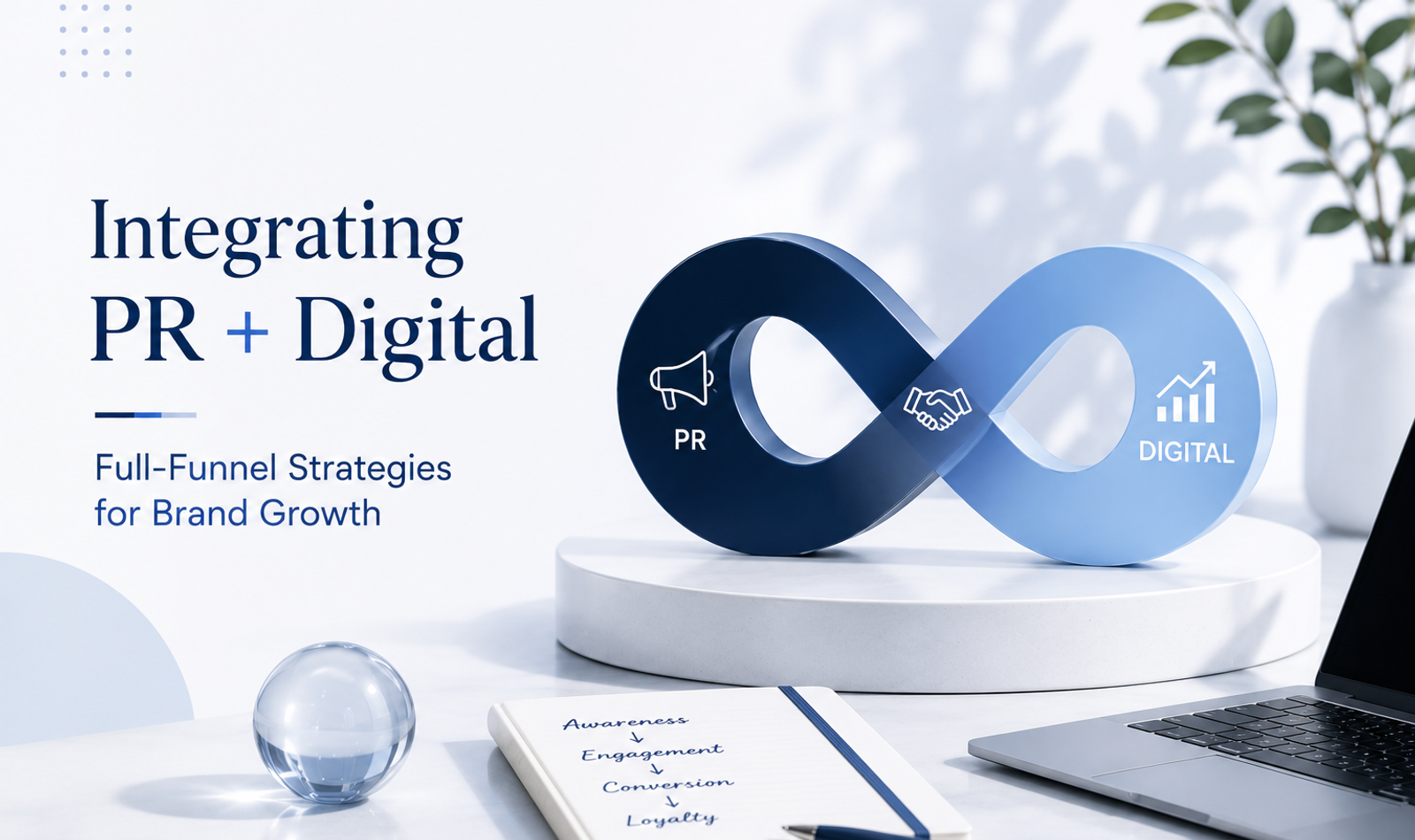
Integrating PR and digital marketing solves these problems by connecting credibility, visibility, engagement and conversion within one strategy.
Public relations creates authority, news value and third-party validation.
Owned content explains the brand’s point of view in greater depth.
Social media distributes the story and creates repeated audience interaction.
Search captures active interest.
Paid advertising extends the reach of strong communication and guides suitable audiences towards the next action.
The website turns attention into understanding, trust, enquiries and sales.
Customer relationship management systems then connect those enquiries with qualification, pipeline and revenue.
This integrated model is especially important for luxury brands, professional services, events, hospitality, real estate, technology and other high-consideration categories.
Customers in these categories rarely make decisions after one advertisement or one article.
They research the brand, compare alternatives, read reviews, visit social profiles, examine previous work and look for trusted evidence.
The full-funnel strategy should support this complete journey.
The goal is not to force every communication activity to produce an immediate sale.
It is to understand the role each activity plays and how the channels work together to create measurable brand growth.
What Does Integrating PR and Digital Marketing Mean?
Integrating PR and digital marketing means planning earned media, owned content, social communication, search, paid promotion and conversion activity around shared objectives and one consistent brand narrative.
It does not simply mean posting press coverage on Instagram.
True integration begins before the campaign launches.
The teams agree on the business objective, target audience, key message, content assets, customer journey, distribution plan and measurement system.
A product launch, for example, may begin with a clear public relations narrative.
The story may explain the customer problem, the development behind the product and its wider category relevance.
The PR team pitches the story to appropriate media and prepares the founder or specialist for interviews.
The content team develops a detailed website article, case study, video and frequently asked questions.
The social team adapts the narrative into platform-specific content.
The search team prepares relevant landing pages and keyword coverage.
The paid-media team amplifies the strongest assets and retargets high-intent visitors.
The sales team receives campaign context and knows how to classify new enquiries.
Each function supports the same commercial and communication objective.
Why PR and Digital Marketing Are Stronger Together
PR and digital channels solve different parts of the brand-growth challenge.
Public relations can create credibility because the brand is being discussed within an independent editorial or expert context.
Digital marketing can distribute that credibility repeatedly and guide audiences towards measurable actions.
PR can create attention around an announcement.
Digital channels can maintain momentum after the news cycle ends.
Search data can reveal what customers want to know.
PR teams can use those insights to create more relevant stories and thought leadership.
Paid campaigns can test which messages attract qualified audiences.
Those findings can improve media pitches, executive communication and editorial content.
The integration should work in both directions.
PR should strengthen digital performance, and digital intelligence should improve PR strategy.
The Problem With Siloed Marketing
Siloed marketing often creates duplicated work and inconsistent customer experiences.
The PR team may describe the company as a premium strategic partner, while the advertising team uses aggressive discount messaging.
The founder may discuss innovation in media interviews, while the website provides little evidence of the innovation.
The social media calendar may focus on trending entertainment content during a serious corporate announcement.
The search team may discover high customer interest in one topic, but that information may never reach the communications team.
Reporting becomes fragmented as well.
PR reports media articles, potential reach and sentiment.
Digital teams report clicks, impressions and form submissions.
Sales reports meetings and revenue.
No one explains how the activities contributed to one customer journey.
This makes it difficult for leadership to understand the complete value of communication.
Begin With a Shared Business Objective
Integration starts with one clearly defined business objective.
The objective may be to enter a new market, introduce a service, increase premium bookings, generate qualified B2B opportunities or strengthen trust in a changing category.
The objective should identify the audience, intended result and timeframe.
“Get more visibility” is too broad.
A stronger objective might be to increase awareness and qualified enquiries among luxury hospitality decision-makers in Mumbai, Delhi and Bengaluru over six months.
Another may be to position a technology founder as a credible expert while generating demonstration requests from mid-sized businesses.
Once the business objective is clear, PR and digital teams can define their respective contributions.
PR may build authority and media visibility.
Content may educate the audience.
Social media may build familiarity.
Paid campaigns may increase relevant reach.
Search may capture active demand.
The website and sales process may convert interest into commercial opportunities.
Define the Target Audience Together
PR and digital teams should not develop separate audience definitions.
The integrated plan should identify who the brand needs to influence and what matters to them.
For a luxury event company, the audience may include affluent families, corporate decision-makers, wedding planners, hospitality partners and premium vendors.
For a technology service, the audience may include founders, marketing leaders, operations heads, procurement teams and technical evaluators.
Each group may enter the funnel differently.
A founder may discover the brand through a business publication. A marketing manager may encounter a LinkedIn post. A customer may search for the service directly on Google.
The team should understand the different information needs and decision roles within the audience.
Map the Customer Journey
A full-funnel strategy requires a realistic customer journey.
The journey may begin with broad awareness.
The audience becomes familiar with the brand through media coverage, creator content, events, social media or advertising.
During consideration, people explore the website, case studies, reviews, leadership content and service information.
During conversion, they may request a consultation, check availability, download a proposal, book an appointment or complete a purchase.
After conversion, the brand may use customer communication, loyalty content and advocacy programmes to support retention and referrals.
The journey is rarely linear.
A customer may move between media coverage, search, social content and direct conversations several times.
The strategy should provide useful information at every stage rather than depending on one channel to complete the entire process.
Build a Full-Funnel Communication Framework
A practical integrated funnel can be organised into awareness, interest, consideration, conversion, retention and advocacy.
At the awareness stage, the objective is to introduce the brand, issue or opportunity.
PR, editorial features, social video, thought leadership, creator collaborations and awareness advertising can support this stage.
At the interest stage, the audience begins exploring the subject.
Educational content, media interviews, newsletters, guides and social explainers can provide more depth.
During consideration, the audience compares providers and evaluates trust.
Case studies, reviews, testimonials, detailed service pages, webinars and retargeting become important.
At conversion, the brand should provide a clear, low-friction next step.
Consultation forms, direct booking, calls, proposals and tracked lead systems support action.
Retention focuses on customer experience, value communication and repeat engagement.
Advocacy encourages satisfied customers, partners and employees to share credible experiences.
Use One Central Brand Narrative
Every channel should support one clear brand narrative.
The language and format may change, but the meaning should remain aligned.
A press article may present the brand through an industry trend.
A LinkedIn post may express the founder’s point of view.
An Instagram Reel may show the customer experience visually.
A Google advertisement may focus on the service and location.
A landing page may explain the process, evidence and next step.
These communications should feel like different chapters of the same story.
When the brand changes personality across channels, customers may question its credibility.
A luxury brand cannot present restraint and sophistication in editorial media while using desperate promotional messaging in digital advertising.
Create Integrated Campaign Pillars
Campaign pillars are the recurring themes used across PR and digital activity.
A hospitality brand may use destination, design, culinary experience and personalised service.
A digital agency may use brand strategy, creative production, technology and measurable growth.
An event company may use guest experience, operational precision, design and cultural relevance.
Each pillar should support media stories, social content, website material and paid campaigns.
The objective is not to repeat the same asset everywhere.
The brand should express each pillar through different forms of evidence and storytelling.
Earned Media at the Awareness Stage
Earned media can introduce a brand through a trusted publication, journalist, industry platform or independent commentator.
The coverage may involve a launch, founder profile, trend feature, case study, research finding or expert quotation.
The strongest earned stories provide wider relevance beyond the company itself.
A brand should not pursue media only for the publication logo.
The story should support the full-funnel objective.
A feature about changing luxury travel behaviour can position a hospitality company within an important conversation.
A founder interview about digital trust can support a website-development or branding business.
A regional growth story can support expansion into a new market.
The PR team should know what the desired next step will be after audiences encounter the coverage.
Extend the Life of Media Coverage
A media feature should not disappear after one social post.
The brand can create a structured amplification plan.
A founder can publish a LinkedIn reflection expanding on the interview.
The company can create a website newsroom entry or insight article related to the subject.
Short quotations can become social graphics where usage is permitted.
A video can explain the key idea discussed in the feature.
Paid campaigns can amplify the founder’s related organic content or direct relevant audiences towards a supporting landing page.
Sales teams can share the coverage during suitable customer conversations.
The goal is not to repeat the same article indefinitely.
It is to use the editorial moment to create several useful touchpoints.
Use Media Coverage as Social Proof
Independent media coverage can reduce perceived risk.
A customer may not make a decision because of one article, but respected coverage can strengthen the overall trust environment.
Media logos, quotations and links may be used on websites and sales material where permitted.
The brand should describe coverage accurately.
A brief mention should not be presented as a detailed endorsement.
Sponsored articles should not be represented as independent earned media.
Trust depends on transparency.
Use Digital Data to Improve PR Pitches
Search, website and social data can reveal which topics attract customer attention.
The PR team can review common search queries, high-performing articles, customer questions and social conversations.
These insights can identify relevant media angles.
If searches for destination-wedding guest logistics are increasing, an event company may develop expert commentary or original data around the subject.
If customers repeatedly ask about artificial intelligence in video production, a creative agency may create a media story explaining how brand production is changing.
Digital data does not replace editorial judgement.
It provides evidence that the subject matters to a real audience.
Use Social Listening for Story Development
Social listening can help teams understand emerging conversations, concerns and language.
The team can monitor customer questions, competitor discussion, category criticism and cultural developments.
These insights may support media pitches, leadership content and crisis prevention.
The brand should not chase every trend.
The conversation must connect with its expertise and audience.
A useful story is one in which the company can contribute credible evidence or experience.
Build Owned Content Around PR Themes
Owned content gives the brand space to explain ideas in greater detail than most media coverage allows.
A PR announcement can be supported by a detailed website article, case study, report, video or guide.
This content helps interested audiences continue their research.
It also gives search engines and digital platforms a relevant destination.
The owned asset should not simply copy the press release.
It should answer customer questions, provide useful evidence and explain the practical implications.
For example, a media story about changing event expectations can be supported by a complete guide to guest experience planning.
Use Content Clusters
A content cluster organises several related assets around one strategic topic.
A central guide may explain the main subject.
Supporting articles can address contracts, costs, case studies, common mistakes and measurement.
Videos, social posts and email content can explore individual questions.
PR stories can connect the topic with current developments.
This approach builds depth and improves the brand’s ability to serve audiences at different stages.
It also strengthens organic search because the website provides comprehensive, connected information.
Integrate PR and SEO
PR and search optimisation support one another when managed carefully.
Media coverage can increase brand awareness, referral traffic and branded search.
Relevant editorial links may strengthen online authority when publications choose to include them.
Search research can identify the questions customers ask, helping PR teams build more useful stories.
The website should contain accurate pages for the brand, leaders, services, locations and important campaigns.
When a media feature creates interest, audiences should be able to find complete information quickly.
The brand should not treat link acquisition as the primary purpose of media relations.
Editorial value and audience relevance should remain central.
Optimise for Branded Search
PR activity often causes people to search for the brand rather than click a direct link.
The company should prepare for this behaviour.
Search results should clearly identify the official website, social profiles, recent coverage and relevant service pages.
Page titles and descriptions should communicate the brand’s position accurately.
The website should load quickly and work well on mobile devices.
Paid brand-search campaigns may help protect visibility during major launches, particularly when competitors or marketplaces appear around the same search.
Branded search growth can also provide evidence of increased audience interest.
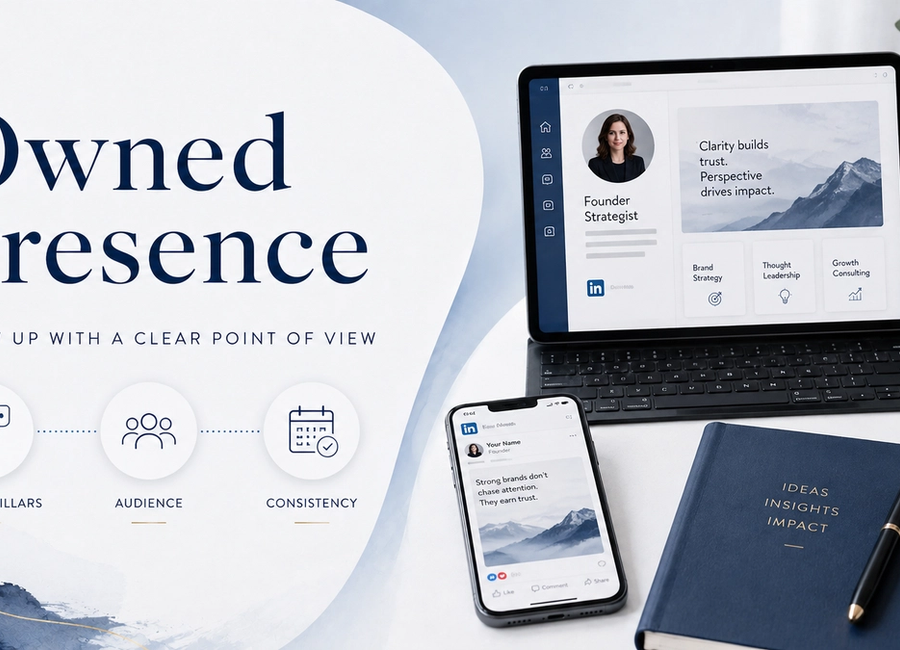
Optimise Leadership Visibility
Founders and executives are frequently central to PR.
Their digital presence should support the public narrative.
A leadership page can include an accurate biography, expertise, interviews, speaking topics and selected media coverage.
LinkedIn profiles should reflect the same current role and point of view.
When audiences search for the leader after an article or event, they should encounter consistent information.
Outdated biographies and conflicting job titles weaken trust.
Use Social Media as a Distribution and Engagement Layer
Social media should not operate as a separate entertainment calendar during important PR campaigns.
The social plan should extend the core narrative through formats suitable for each platform.
Instagram may use visual storytelling, Reels, carousels and behind-the-scenes content.
LinkedIn may focus on leadership, business insight, research and professional case studies.
YouTube may provide interviews, customer stories, event films and detailed explanations.
Short-form platforms can communicate concise ideas and cultural relevance.
Each platform should contribute to the customer journey rather than simply repeat one press release.
Adapt Rather Than Copy
A media feature should not be copied word for word into every social caption.
The brand can identify several useful ideas from the coverage.
One post may focus on the founder’s perspective.
Another may explain the customer problem.
A Reel may show the process behind the development.
A carousel may summarise useful insights.
A Story may direct interested viewers towards the complete article.
This creates a richer campaign and respects the original publication’s content ownership.
Use Leaders as Digital Communicators
Leadership communication can strengthen the connection between PR and digital channels.
A founder’s personal post may feel more direct and credible than a formal corporate announcement.
The leader can explain why an initiative matters, what they learned and how it connects with the company’s direction.
This content should sound like the individual rather than a press release.
The communications team can support structure, evidence and risk review.
The leader should still maintain an authentic voice.
Amplify Thought Leadership
Strong organic leadership content can be amplified through paid formats where appropriate.
LinkedIn Thought Leader Ads allow companies to promote eligible posts from members, helping strong executive or employee content reach a wider professional audience.
The original post should already provide useful insight.
Paid amplification cannot turn a weak generic statement into meaningful thought leadership.
The team should select posts connected with the full-funnel objective and track the resulting audience response.
Use Creator and Partner Content
Creators, experts, customers and partners can expand the campaign narrative.
A creator may demonstrate an experience.
A KOL may provide category authority.
A customer may provide a case study.
A partner may offer additional expertise or distribution.
The relationship, content rights and disclosure requirements should be defined clearly.
On Meta platforms, suitable creator or partner content can be amplified through Partnership Ads when the necessary permission is provided.
This allows authentic third-party communication to support paid performance.
Integrate Influencer Marketing With PR
Influencer campaigns and media relations should not operate independently when they support the same launch.
The PR team may provide creators with accurate background information and approved access.
Creator content can provide customer-facing experience and visual storytelling.
Media coverage can provide editorial authority.
The brand can then use both forms of proof across social, website and advertising activity.
Earned journalism and paid creator content should still be identified accurately.
They serve different trust roles and should not be presented as equivalent.
Use Paid Media to Extend Strong PR
Paid advertising can extend the life and reach of strong PR themes.
The brand may promote a founder’s related post, a case study, a research report or a campaign video.
It should not necessarily send paid traffic directly to a publication page because the brand may have limited control over the user journey and measurement.
A supporting owned landing page can explain the story, include the media mention and provide a clear next action.
The most suitable route depends on the campaign objective and publication permissions.
Build Awareness Audiences
At the top of the funnel, paid campaigns can introduce the brand to relevant but unfamiliar audiences.
Meta, YouTube and LinkedIn may be used to distribute visual stories, thought leadership and customer insights.
The objective should be relevant reach and attention rather than cheap impressions alone.
The brand can evaluate video completion, quality engagement, brand search and website exploration.
The creative should communicate the main narrative clearly enough that audiences remember the brand rather than only the celebrity, publication or visual.
Build Retargeting Audiences
People who interact with PR-related content can be guided towards deeper information.
Website visitors, video viewers, social engagers and report readers may form retargeting audiences where permitted.
The next content should reflect their likely level of interest.
Someone who watched a short awareness video may receive a detailed case study.
A visitor to a service page may receive a consultation invitation.
A person who downloaded a report may receive a webinar or leadership interview.
Retargeting should feel helpful rather than repetitive.
Use Search to Capture PR-Created Demand
PR often creates demand that appears later through search.
People may encounter a feature, remember the company name and search for it hours or days later.
Google Search campaigns can protect visibility for branded queries and capture relevant service interest.
The search team should monitor changes in brand, founder, product and campaign searches after significant PR activity.
Non-brand keyword campaigns can also capture category demand connected with the story.
Advertisements and landing pages should remain consistent with the public narrative.
Use Paid Search for High-Intent Customers
Search activity becomes especially valuable near conversion.
A customer searching for a specific service, destination, agency or solution may be ready to compare providers.
PR coverage can strengthen the brand’s credibility when the customer arrives on the website.
The landing page should include relevant proof, case studies and a clear action.
The advertising team should avoid sending every keyword to the homepage.
Each search intention should lead to the most relevant content.
Use LinkedIn for Professional Funnels
LinkedIn can connect thought leadership with lead generation.
A brand may publish executive insight, amplify selected posts, distribute reports through Document Ads and collect enquiries through Lead Gen Forms.
The funnel can begin with a professional issue rather than an immediate sales offer.
A corporate event company may publish a guide to managing multi-city guest logistics.
A technology business may explain a new regulatory or operational challenge.
An agency may share a framework for evaluating marketing performance.
Interested audiences can then move towards a webinar, report, consultation or demonstration.
Use Document Ads and Lead Forms Carefully
Documents, reports and guides can support consideration and lead generation.
The content should offer genuine practical value.
A basic brochure should not be presented as an industry report.
The brand can choose whether the content remains freely available or requires lead information.
Gating may increase lead capture but reduce total readership.
The decision should reflect the value of the content and campaign objective.
Lead forms should request only the information required for qualification and follow-up.
Create Conversion-Focused Landing Pages
Integrated campaigns require landing pages that continue the narrative.
The page should confirm that the visitor has reached the correct destination.
It should explain the problem, solution, evidence and next step.
Media features, testimonials, case studies, data and leadership credibility can support trust.
The page should not become a collection of unrelated logos.
Every proof element should help the customer evaluate the specific offer.
The form or booking process should remain clear and functional on mobile devices.
Match Landing Pages to Audience Stage
An awareness audience may need an educational article or video.
A consideration audience may need a case study, comparison or detailed guide.
A high-intent audience may need pricing context, availability, consultation or booking access.
Sending every person directly to a sales form can produce weak conversion because many visitors are not ready.
The full-funnel strategy should create several destinations for different levels of readiness.
Use Media Proof Responsibly
A landing page may mention genuine media features to support trust.
The brand should link to the original article where appropriate and respect logo and quotation usage rules.
It should not imply that a publication formally recommends the brand unless the coverage actually does so.
Paid features should be identified accurately.
Responsible use of media proof protects credibility.
Prepare the Sales Team
Marketing integration fails when sales teams do not understand the campaign.
The sales team should know which story, report, event or advertisement generated the lead.
They should understand the customer’s likely interest and the promise made by the campaign.
A lead from a luxury-event case study requires a different conversation from a person who downloaded a general PR guide.
The team should receive talking points, qualification criteria and relevant supporting assets.
Fast, informed follow-up improves conversion and provides better campaign feedback.
Build Lead-Qualification Rules
PR and digital campaigns can generate curiosity as well as commercial demand.
The business should define what makes an enquiry qualified.
Criteria may include location, budget, authority, need, timeline and company size.
Marketing and sales teams should agree on these definitions.
A high volume of low-quality forms should not be reported as campaign success.
The strategy should optimise towards customers who can realistically progress.
Connect CRM Data With Campaigns
The customer relationship management system should preserve the original source and campaign information.
Leads should be tracked through contact, qualification, meeting, proposal, opportunity and closed revenue.
This allows the business to see which PR themes, media features, social assets and paid campaigns influenced commercially valuable outcomes.
The data may not provide perfect attribution, but it creates a stronger view than platform metrics alone.
Use Email to Nurture Interest
Email can connect awareness and conversion for customers with longer decision cycles.
People who download a report, attend an event or request information may receive a structured sequence of useful content.
The sequence can include case studies, expert insights, media interviews, FAQs and consultation invitations.
It should not become a series of repetitive sales messages.
The content should help the customer evaluate the category and build confidence in the brand.
Integrate Events Into the Funnel
Events can generate media stories, social content, professional relationships and commercial leads.
The event should be designed with these outcomes in mind.
A thought-leadership event may provide expert interviews, research findings and customer conversations.
A luxury launch may provide design, cultural and experience-led stories.
Registration and guest data should be managed responsibly.
Post-event communication can include highlights, reports, photographs, media coverage and next-step offers.
The event should become a source of sustained content rather than one isolated evening.
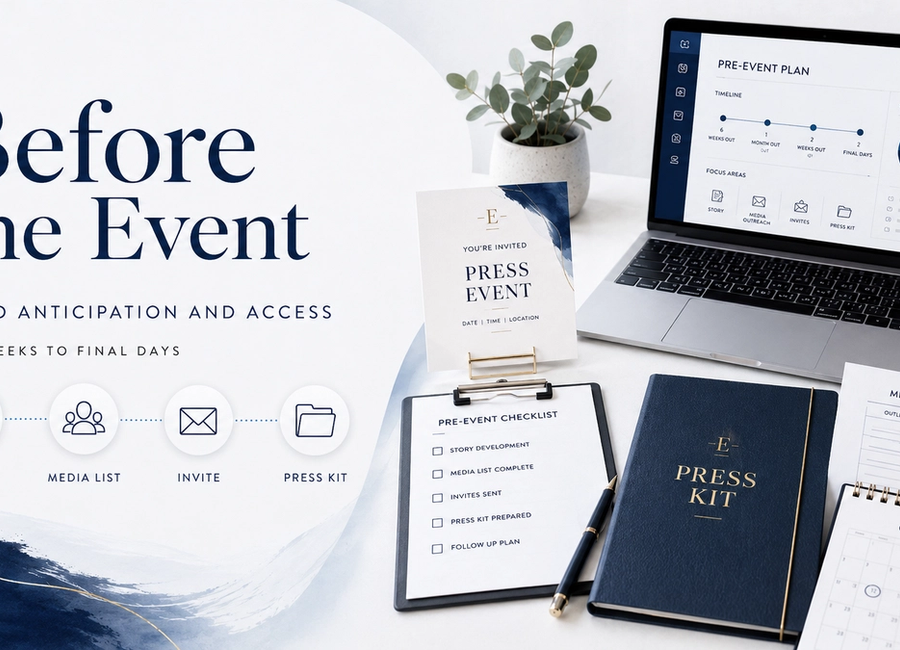
Use PR Before the Event
Pre-event PR can establish relevance and attract appropriate guests or media.
The story may focus on the issue, talent, partnership, destination or innovation represented by the event.
Digital campaigns can then promote registration or interest among suitable audiences.
Social content can introduce speakers, themes and behind-the-scenes preparation.
Search and landing pages should provide accurate details.
The pre-event campaign should avoid promising access, celebrities or experiences that have not been contractually confirmed.
Use Real-Time Event Content
During the event, the brand can publish approved updates, quotations, photographs and short videos.
The content team should understand guest privacy, celebrity permissions and sponsor obligations.
Real-time communication should not interfere with event operations.
The strongest content captures meaningful moments rather than attempting to publish every activity.
Media and creator teams should have access rules and clear contacts.
Use Post-Event Content
Post-event content can extend the value for several weeks or months.
The brand may publish a recap, key insights, interviews, case studies and customer outcomes.
Media coverage can be shared responsibly.
Paid campaigns can promote the most useful content towards relevant audiences.
Sales teams can follow up with qualified guests and registrants.
The event becomes part of the larger brand narrative and demand-generation system.
Integrate Crisis Communication
PR and digital integration is equally important during a crisis.
The PR team may prepare the official statement and media response.
The digital team must pause inappropriate campaigns, update websites and monitor social discussion.
Customer-service teams need approved information.
Search results may begin displaying criticism or misinformation.
Leadership communication and stakeholder emails must remain consistent with public messaging.
A crisis exposes weaknesses quickly when teams operate in separate silos.
Build a Shared Editorial Calendar
A shared calendar should include media outreach, announcements, social campaigns, paid activity, website content, events and email.
This allows teams to coordinate timing and assets.
A media announcement may require supporting website pages before the embargo lifts.
Paid campaigns may begin after sufficient earned or owned proof is available.
Social content can build anticipation without revealing confidential information.
The calendar should identify owners, approvals, target audiences and measurement points.
Use Campaign Briefs Across Teams
One integrated campaign brief can align agencies and internal departments.
The brief should include the objective, audience, narrative, proof, offers, key dates, risks, channels and measurement.
Each team can then develop specialist work within the same framework.
The PR agency does not need to manage paid-media settings.
The digital agency does not need to write every press statement.
They do need to understand how their work supports the same journey.
Establish One Approval System
Fragmented approvals create inconsistent messaging and delays.
The brand should identify who approves factual claims, legal matters, creative content and major commercial decisions.
Feedback should be consolidated.
The PR team should not receive one message from leadership while the social team receives another.
Version control is especially important during launches and crises.
One current set of facts and assets should guide all communication.
Create an Asset Ecosystem
An integrated campaign should produce assets that can be adapted across channels.
A research report may generate a press pitch, executive article, social carousel, video, webinar and lead-generation document.
A customer case study may generate a media angle, sales presentation, website story and paid advertisement.
A founder interview may generate short clips, quotations and follow-up commentary.
Usage rights should be considered during production.
The brand should know which assets can be edited, advertised, syndicated or reused.
Use Research as a Full-Funnel Asset
Original research can be particularly effective because it creates editorial value and customer education.
The research may reveal category trends, customer behaviour or business challenges.
PR teams can pitch the findings to journalists.
Leaders can discuss them through interviews and social posts.
The website can host the complete report.
LinkedIn Document Ads and Lead Gen Forms can support distribution and lead capture.
Webinars can explain the findings.
Sales teams can use the research in customer discussions.
The methodology should be transparent and credible.
Use Case Studies Across the Funnel
Case studies connect credibility with commercial relevance.
A media pitch may focus on the wider trend demonstrated by the customer result.
The website can publish the complete challenge, approach and outcome.
Social media can share selected insights and visuals.
Paid campaigns can target audiences with similar needs.
Sales teams can use the case study during evaluation.
Customer permission and confidentiality should be managed carefully.
The brand should not exaggerate outcomes or present one result as universal proof.
Integrate Regional PR With Local Digital Campaigns
Regional media can support market entry, city launches and local trust.
The digital team can reinforce regional coverage through geo-targeted social and search campaigns.
Landing pages can include city-specific information, local proof and contact details.
Regional-language content may improve accessibility and relevance.
The brand should not simply insert a city name into generic national communication.
The story, offer and evidence should reflect the local market.
Integrate Celebrity and Influencer Campaigns
Celebrity and influencer partnerships can support awareness, PR and paid performance.
The brand may announce a suitable partnership through media, publish creator content and amplify approved assets through advertising.
Search campaigns can capture increased brand interest.
Landing pages can explain the product or experience connected with the personality.
The campaign should ensure that the celebrity does not overshadow the brand.
Audience research should test whether people remember the correct association and message.
Contracts must address deliverables, content rights, paid amplification and disclosure.
Use Partnerships for Authority
Industry bodies, cultural organisations, experts and institutions can strengthen both PR and digital campaigns.
A partnership may provide research, event access, specialist credibility or community relevance.
The collaboration should produce a real outcome rather than only a logo exchange.
Joint reports, events, interviews and educational content can support the funnel.
Roles, approvals, data use and content rights should be documented.
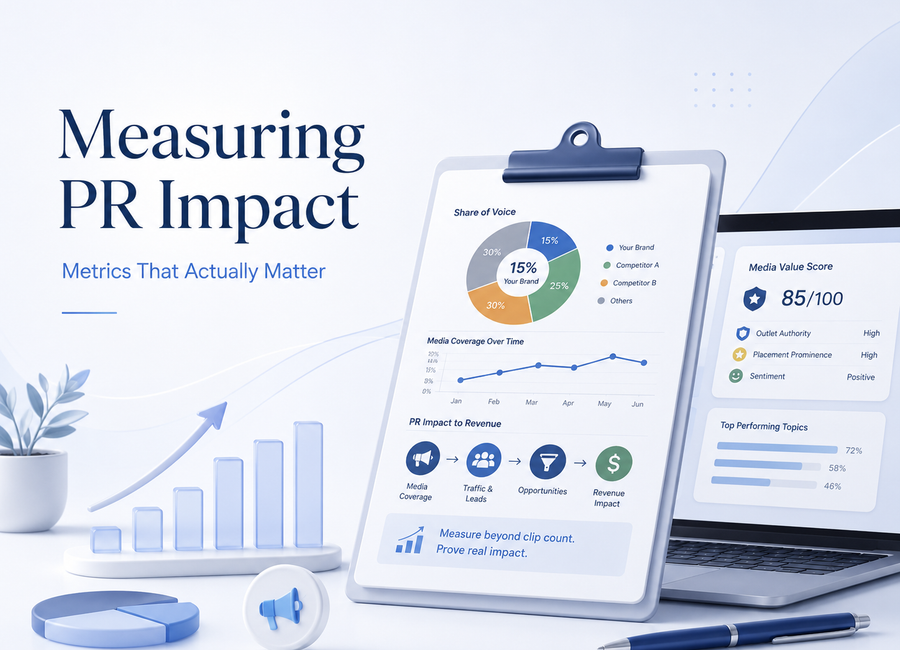
Measure Outputs, Outcomes and Impact
Integrated measurement should distinguish between what the campaign produced and what changed because of it.
Outputs may include media articles, videos, social posts, events, website pages and advertisements.
Audience responses may include attention, recall, engagement, understanding and sentiment.
Outcomes may include search activity, website behaviour, enquiries, bookings and qualified leads.
Organisational impact may include revenue, customer acquisition, reputation, partnerships or market growth.
This structure prevents teams from treating content volume as business impact.
Define Key Events
The brand should identify the website and app actions that matter commercially.
These may include purchases, bookings, consultation requests, calls, brochure downloads and completed registrations.
Supporting actions may include viewing an important case study, checking availability or beginning a form.
Primary and secondary actions should remain separate.
A general page view should not be valued like a confirmed booking.
Clear measurement definitions improve reporting and campaign optimisation.
Build a Shared Dashboard
A shared dashboard should combine PR, digital and sales information.
It may include media quality, message inclusion, social performance, branded search, website traffic, key events, leads, qualification and revenue.
The dashboard should follow the customer journey rather than dividing the report into isolated agency sections.
Leadership should be able to see how awareness and authority contributed to commercial activity.
The report should also explain data limitations and external factors.
Measure Media Quality
Media measurement should consider publication relevance, prominence, message accuracy, audience fit and referral behaviour.
The number of articles alone does not show value.
One detailed feature in a trusted industry publication may influence more qualified customers than several copied announcements.
Paid and earned coverage should be reported separately.
Advertising value estimates should not be presented as direct revenue.
Measure Message Pull-Through
Message pull-through examines whether media and audiences understood the intended narrative.
An article may mention the company but focus mainly on a celebrity or event.
A social campaign may receive engagement while people misunderstand the service.
The team should analyse which messages appear in coverage, comments, search terms and customer enquiries.
This reveals whether visibility is building the correct brand association.
Measure Branded Search
Branded search can show growing audience interest after PR, social or event activity.
The team can monitor searches for the company, founders, products and campaigns.
Changes should be compared with a suitable baseline.
Other activity, seasonality and public events may influence search behaviour.
Branded search supports the measurement story but should not be attributed automatically to one channel.
Measure Referral Traffic
Media, social, email and partner links can generate measurable website visits.
The brand should use suitable tagging and maintain clean campaign naming.
Referral reporting should include engagement, key actions and conversions rather than sessions alone.
Some media influence will not appear through direct referral because audiences may search or visit later.
Referral data is one part of the complete customer journey.
Measure Lead Quality
Integrated campaigns should report total and qualified enquiries separately.
A qualified lead meets the agreed commercial criteria.
The criteria may include budget, geography, need, authority, company size and timeline.
Sales feedback is essential.
A media campaign may produce fewer enquiries but greater trust among decision-makers.
A paid campaign may produce higher volume but lower qualification.
The strategy should evaluate the complete mix.
Measure Pipeline and Revenue
For high-value services and B2B brands, leads may take months to convert.
The CRM should track campaign sources through meetings, proposals, opportunities and revenue.
The report should include pipeline value and closed business where reliable.
It should avoid claiming that every customer exposed to PR converted because of PR alone.
Integrated campaigns involve several touchpoints.
The objective is to identify contribution rather than create unsupported certainty.
Understand Attribution
Attribution assigns credit to channels involved in conversion.
A customer may discover the brand through an article, engage with a LinkedIn post, search on Google and submit a form through a retargeting advertisement.
Last-click reporting may assign the conversion only to the final advertisement.
This can undervalue PR and earlier digital communication.
At the same time, assigning every later sale to the original media feature would overstate PR.
The brand should review conversion paths, assisted interactions, customer surveys and sales feedback.
Attribution is an analytical model, not a perfect record of human decision-making.
Use Customer Surveys
Post-enquiry or post-purchase surveys can ask how customers first heard about the brand and what influenced their decision.
These questions may reveal media, social, search, events, referrals and advertising that analytics missed.
The survey should allow more than one influence where relevant.
Customer memory is not perfectly accurate, but the information can strengthen the broader measurement picture.
Measure Brand Lift
Larger campaigns may use research to evaluate awareness, recall, trust and consideration.
The brand can compare exposed and unexposed audiences or conduct pre- and post-campaign studies.
Questions should test whether people remember the brand and intended message.
A campaign can become highly visible while audiences remember only the celebrity, event or publication.
Accurate attribution to the brand matters.
Measure Incremental Impact
Incrementality asks what happened because of the integrated campaign that would not otherwise have happened.
The business may compare locations, time periods, audiences or budget levels.
It should consider seasonality, sales activity, pricing and market changes.
Perfect experiments are not always possible, but reasonable comparison groups improve confidence.
Avoid Double Counting
One customer journey can create several metrics.
A media article generates awareness, a social post generates engagement, a website visit generates a lead and the sales team closes the customer.
These are stages of one journey.
They should not be added together as separate financial returns.
The same person may also appear in several platform reach totals.
Reports should explain overlap and keep financial return separate from estimated communication value.
Optimise the Full System
Optimisation should not focus only on advertisement settings.
If media coverage creates traffic but visitors leave immediately, the landing page may need improvement.
If social content generates engagement but no brand search, attribution may be weak.
If leads are relevant but sales response is slow, the operational process needs attention.
If journalists ignore the pitch, the story may lack news value or evidence.
Integrated optimisation examines the complete system.
Use Early Data to Improve Campaigns
Campaigns should be adjusted while active.
Search data may reveal new customer questions.
Social comments may identify objections.
Media feedback may show which angles are most relevant.
Website behaviour may reveal that customers need more evidence before enquiring.
The team can create additional content, revise landing pages and adapt paid targeting.
Integration allows learning from one channel to improve the others.
Common PR and Digital Integration Mistakes
One common mistake is using PR only to obtain media logos without connecting coverage to a customer journey.
Another is sending paid traffic to a weak website with little independent proof.
Brands may publish different messages through PR, social and advertising.
Campaign calendars may be controlled by separate teams that rarely communicate.
Digital data may never reach the PR team, while media insights may never influence advertising.
Another mistake is measuring PR only through potential reach and digital marketing only through cheap leads.
Brands may also expect one media feature to create immediate sales without supporting distribution or conversion systems.
Some businesses amplify every article without checking whether the coverage communicates the correct message.
Others collect leads but fail to prepare sales teams.
A further mistake is claiming full revenue credit for one channel despite a multi-touch customer journey.
These problems reduce both efficiency and trust.
A Practical Integrated PR and Digital Workflow
The process begins with one business objective and one target-audience definition.
The team maps the complete customer journey from awareness to advocacy.
A central narrative and three or four campaign pillars are established.
The PR team identifies news hooks, media angles, spokespersons and third-party proof.
The content team creates website articles, case studies, videos and conversion assets.
The SEO team prepares relevant pages and monitors search demand.
The social team adapts the narrative into platform-specific content.
The paid-media team develops awareness, consideration, retargeting and conversion campaigns.
The website and landing pages provide consistent messages, evidence and clear actions.
Sales teams receive campaign information and lead-qualification rules.
One editorial calendar coordinates announcements, media, content, social, email, advertising and events.
Shared campaign naming and tracking are implemented.
Media, social, website, lead and sales data are combined within one dashboard.
The team reviews performance regularly and uses learning from each channel to improve the complete system.
After the campaign, reporting distinguishes outputs, audience response, outcomes and organisational impact.
A Sample Integrated Launch Funnel
A premium hospitality brand preparing to launch a new destination property may begin with audience and market research.
The PR story might focus on how the property interprets regional architecture and changing expectations of luxury travel.
Selected media receive the story, visual assets and access to the design or leadership team.
The website publishes a detailed property page, destination guide, design story and booking information.
Instagram and YouTube introduce the property through cinematic experience content and behind-the-scenes development.
The founder or creative director publishes professional insight through LinkedIn.
Paid social campaigns reach premium travellers and relevant event audiences.
Google Search captures people looking for the destination, luxury accommodation and wedding venues.
Visitors who explore rooms, dining or wedding information are retargeted with relevant content.
Email sequences support early enquiries and booking consideration.
The reservation and sales systems preserve campaign sources.
The final report connects media visibility, search growth, website behaviour, enquiries, bookings and revenue.
This is a full-funnel campaign because each channel contributes to a defined customer journey.
Integrating PR and Digital for Luxury Brands
Luxury brands should protect consistency and perceived value across the funnel.
Earned media can provide cultural and editorial authority.
Visual content can communicate craftsmanship, design and experience.
Search can capture high-intent customers.
Retargeting can support longer consideration periods.
Landing pages should maintain premium presentation while remaining functional and clear.
The brand should avoid using refined PR messaging beside constant discount advertising.
Commercial urgency can still be communicated through genuine availability, private access or limited capacity.
The complete experience should justify the brand promise.
Integrating PR and Digital for Events
Events provide multiple communication opportunities before, during and after the experience.
Pre-event PR can introduce the theme, talent, destination or cultural relevance.
Digital advertising can support registrations, invitations and audience awareness.
Social content can show preparation, speakers and partnerships.
During the event, approved real-time content can build conversation.
After the event, media coverage, highlights, insights and case studies can support future enquiries.
The event website and CRM should capture relevant guest and lead information responsibly.
Measurement can include visibility, attendance, content performance, qualified conversations, sponsor value and future bookings.
Integrating PR and Digital for B2B Brands
B2B decisions often require authority, education and repeated contact.
PR can position leaders as credible experts and create visibility within business or trade media.
Owned reports, case studies and webinars can educate decision-makers.
LinkedIn can distribute thought leadership and reach relevant professional audiences.
Google Search can capture active solution research.
Retargeting can keep the brand visible during the evaluation period.
Lead forms and landing pages can generate meetings or demonstrations.
CRM reporting can connect the communication programme with account engagement, pipeline and revenue.
Integrating PR and Digital for Regional Growth
When a company enters a new city or state, regional PR can establish local relevance.
The media story may involve investment, employment, partnerships, culture or customer demand.
Geo-targeted digital campaigns can reach the local audience.
Regional-language content may support trust and accessibility.
Search pages should include accurate city-specific services and information.
Local events, creators and industry groups can strengthen the launch.
The strategy should demonstrate genuine local understanding rather than reusing one national campaign unchanged.
Frequently Asked Questions
Q1. What does integrating PR and digital marketing actually mean?
It means aligning earned media (PR), owned content, social media, search, paid campaigns, and sales activity around one unified strategy. Instead of working in silos, all channels support the same narrative, audience journey, and business objective.
Q2. Why is integration important for luxury brands and high-consideration businesses?
Because customers in these categories rarely convert after a single touchpoint. They need repeated exposure through media credibility, social proof, website content, reviews, and search validation before making decisions. Integration ensures each stage reinforces the next.
Q3. How do PR and digital marketing complement each other?
PR builds trust and authority through third-party validation. Digital marketing amplifies that trust, targets relevant audiences, tracks behaviour, and converts attention into enquiries, bookings, or sales. PR creates belief; digital converts that belief into action.
Q4. What is the biggest problem when PR and digital teams work separately?
They often create inconsistent messaging, fragmented reporting, and lost opportunities. For example, a media feature may generate interest, but without digital amplification or retargeting, that interest does not translate into measurable business results.
Q5. How does integration improve the customer journey?
It ensures customers receive consistent information at every stage—awareness (media and social), consideration (case studies and website content), and conversion (search, landing pages, and CRM follow-up). This reduces confusion and increases trust.
Q6. Can PR directly contribute to sales?
Yes, but usually indirectly. PR builds credibility and awareness that influence later search behaviour, website visits, and sales conversations. Its impact is strongest when combined with digital tracking, retargeting, and conversion-focused content.
Conclusion
Integrating PR and digital marketing transforms communication from isolated activities into a connected growth system.
Instead of treating media coverage, social media, search, advertising, and sales as separate functions, integration aligns them around one customer journey—from awareness to conversion and beyond.
PR creates authority through independent validation. Digital channels extend that authority, shape engagement, and guide audiences toward measurable actions. When both work together, the brand does not just gain visibility—it builds structured demand.
The key shift is mindset: from “publishing content across channels” to “designing a unified narrative that moves people from trust to action.”
For luxury brands, events, hospitality, real estate, and high-value services, this integration is not optional—it is essential for turning reputation into revenue.
Build an Integrated PR + Digital Growth System
At Double Trouble Studio, we design full-funnel communication ecosystems that connect PR visibility with digital performance—ensuring every media feature, campaign, and content asset contributes to measurable business growth.
📩 info@dtsworld.in 📞 +91 80000 06021 📍Andheri (West), Mumbai
Need this for your brand?
Let DTS build your next campaign.
From PR, celebrity management and events to websites, social media, SEO and AI video production — Double Trouble Studio helps brands grow with strategy and execution.
Discuss Your Requirement →