Most events generate a burst of Instagram stories and a handful of LinkedIn posts from attendees — and almost no actual media coverage. That's usually not because the event wasn't newsworthy, but because PR for the event was treated as an afterthought: a press invite sent out a few days before, a photographer hired on the day, and no real plan for what happens once the event ends.
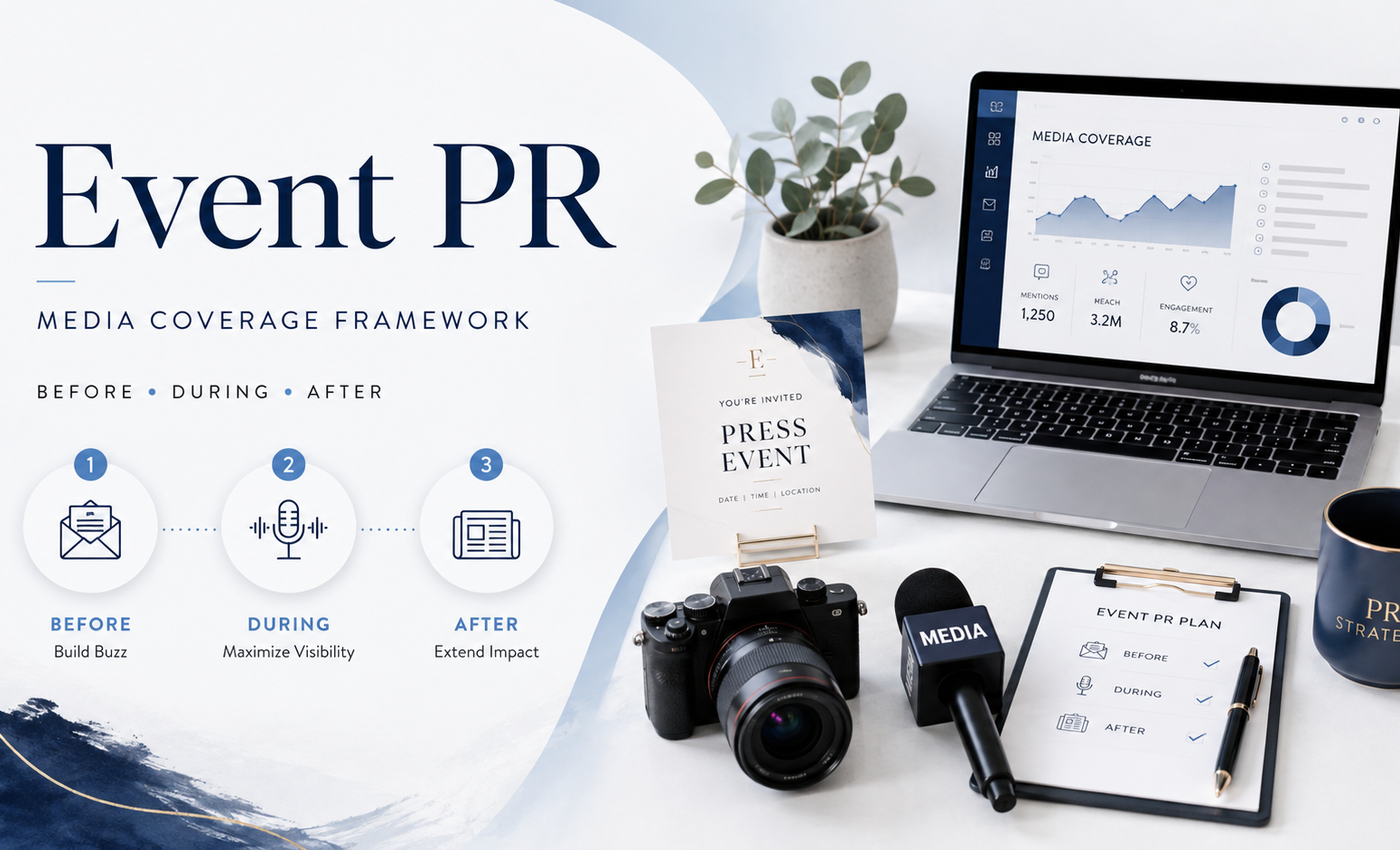
Media coverage for an event isn't something that happens automatically because journalists were invited. It has to be actively built in three distinct windows — before the event, during it, and after it — each with a different job to do. Skip any one of them, and the coverage that results is usually thinner than the event deserved.
This guide breaks down exactly what to do in each window, with realistic timelines and deliverables, so the next event doesn't end with a folder of photos and no press mentions to show for it.
Why Most Events Underperform on Media Coverage
The invite goes out too late. Journalists plan their calendars in advance, especially for anything requiring travel or a dedicated time slot. An invite sent five days before the event competes with everything else already booked into that journalist's week — and usually loses.
There's no story beyond "we're hosting an event." An event by itself isn't news. What makes it newsworthy is what's happening at it — a launch, a notable speaker, new data being revealed, an industry-first format. Without a clear answer to "why should a journalist care," even a well-organized event gets ignored by the media.
Nothing is prepared for journalists who can't attend. Not every relevant journalist will be able to show up in person. Without a plan for remote coverage — assets, quotes, and follow-up sent after the event — that entire segment of potential coverage is left on the table.
There's no follow-up after the event ends. The most common mistake: treating the event date as the finish line. The days immediately after an event are often when the best, most considered coverage gets written — but only if journalists are given what they need to write it.
Phase 1: Before the Event — Building Anticipation and Access
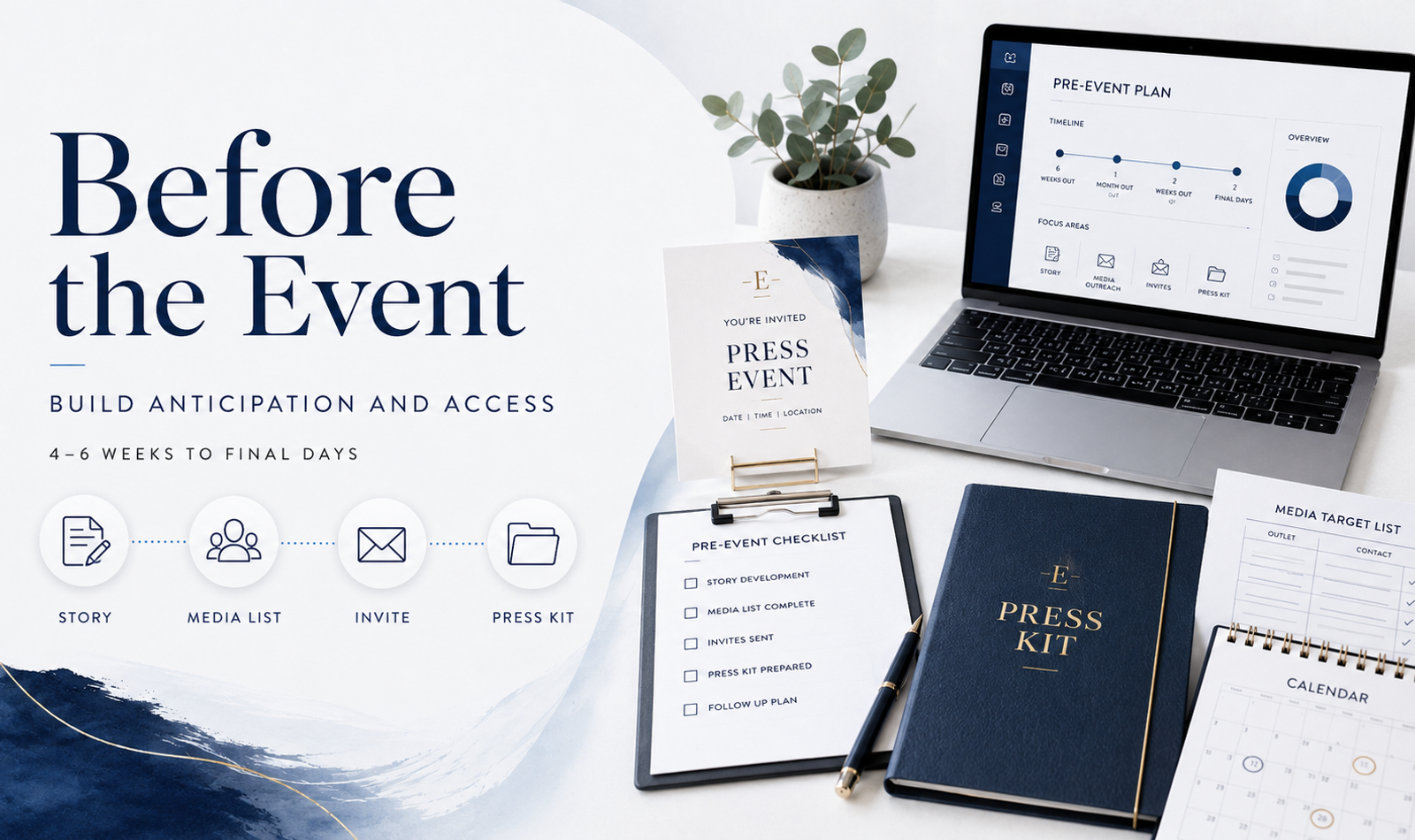
4–6 Weeks Out: Define the Story
Before any journalist is contacted, get specific about what the actual news hook is. "We're hosting a summit" is not a story. "For the first time, three competing brands in [category] are sharing a stage to discuss [specific issue]" is closer to one.
Key deliverables:
A one-line answer to "why does this event matter, beyond the fact that it's happening"
Identification of 2–3 angles: the headline speaker or announcement, an interesting format or first, and any data or research being revealed
A shortlist of any exclusive access that could be offered to a priority journalist (an early interview with a keynote speaker, first look at data before it's presented, etc.)
3–4 Weeks Out: Build and Segment the Media List
Key deliverables:
A media list of 30–60 journalists, segmented into: must-attend priority targets, secondary invites, and remote/desk coverage targets who likely won't attend but might cover it from assets
Confirmation of any media partners or outlets the event is officially working with
A short outreach plan tailored to each segment — priority targets get a personal call or early heads-up; the broader list gets a formal invite
2–3 Weeks Out: Send Save-the-Dates to Priority Media
Priority journalists — the ones whose attendance or coverage matters most — should get outreach well ahead of the formal press invite, ideally with a personal note explaining why this specific event is relevant to their beat.
Key deliverables:
Personalized save-the-date outreach to priority journalists
Offer of any exclusive access (pre-event interview, early briefing) to the highest-priority targets
Confirmation of RSVP and any logistics needs (travel, accreditation)
1–2 Weeks Out: Formal Press Invite and Asset Preparation
Key deliverables:
Formal press invite sent to the full media list, with clear event details, RSVP process, and press-day logistics
A press kit prepared in advance: background information, speaker bios and photos, company/event backgrounder, and any embargoed materials
Confirmation of on-ground logistics for media: a dedicated press area, WiFi access, designated point of contact, and interview scheduling if speakers will be available
Final Days: Confirmations and Day-Of Planning
Key deliverables:
Final RSVP confirmations and a day-of media schedule (who's attending, what interviews are booked, when)
A day-of run sheet shared with the on-ground team so nothing about media handling is improvised
Preparation of a "remote press kit" — a version of the press materials and any embargoed news to send to journalists who can't attend in person
Phase 2: During the Event — On-Ground Execution
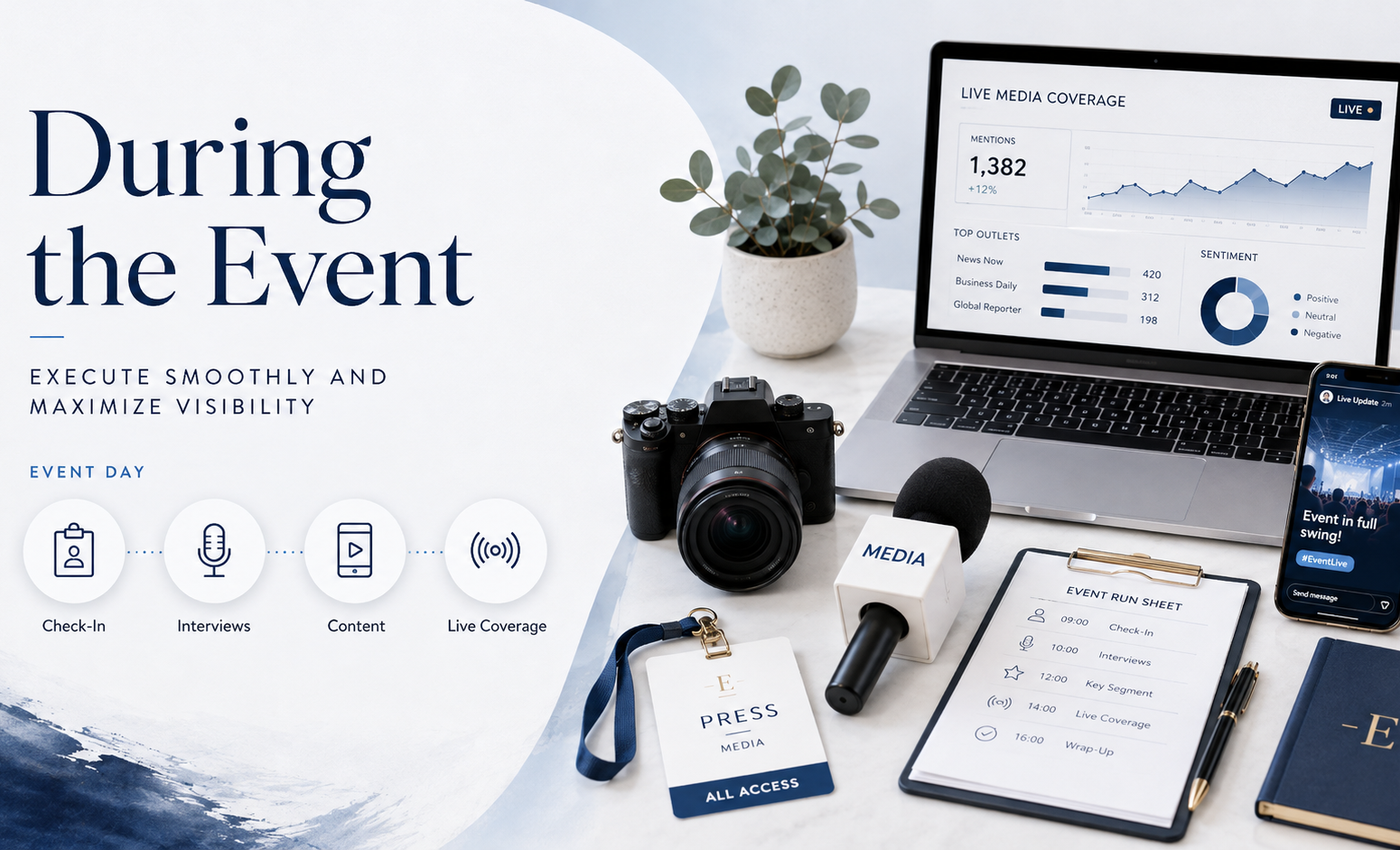
This is the shortest phase but the one that determines whether the pre-event groundwork actually converts into coverage.
Media Check-In and Access
Key deliverables:
A clearly signed press check-in point, ideally staffed by someone specifically responsible for media (not multitasked with general event operations)
Quick, friction-free accreditation so journalists aren't spending their limited time on logistics instead of covering the event
Facilitating Interviews and Access
Key deliverables:
Pre-scheduled interview slots for priority journalists with speakers or spokespeople, kept to time so journalists aren't left waiting
A designated quiet space for interviews, away from event noise
A point of contact who can flag last-minute interview requests from journalists who show unexpected interest on the day
Real-Time Content Capture
Key deliverables:
Professional photography and, where relevant, short video capturing key moments — not just wide shots of the room, but moments that would work as standalone visuals in a published article
Live capture of any notable quotes or announcements, useful both for immediate social amplification and for the post-event press materials
Real-time monitoring of any social or press mentions as they happen, so the team can amplify or respond quickly
Managing the Unexpected
Have a simple plan for handling a journalist who shows up unannounced, a speaker running late and needing interview slots rescheduled, or a technical issue affecting press access. None of this is unusual at events — the difference between a smooth day and a chaotic one is usually just having thought through the likely scenarios in advance.
Phase 3: After the Event — Where Most of the Real Coverage Comes From
This is the shortest phase but the one that determines whether the pre-event groundwork actually converts into coverage.
Media Check-In and Access
Key deliverables:
A clearly signed press check-in point, ideally staffed by someone specifically responsible for media (not multitasked with general event operations)
Quick, friction-free accreditation so journalists aren't spending their limited time on logistics instead of covering the event
Facilitating Interviews and Access
Key deliverables:
Pre-scheduled interview slots for priority journalists with speakers or spokespeople, kept to time so journalists aren't left waiting
A designated quiet space for interviews, away from event noise
A point of contact who can flag last-minute interview requests from journalists who show unexpected interest on the day
Real-Time Content Capture
Key deliverables:
Professional photography and, where relevant, short video capturing key moments — not just wide shots of the room, but moments that would work as standalone visuals in a published article
Live capture of any notable quotes or announcements, useful both for immediate social amplification and for the post-event press materials
Real-time monitoring of any social or press mentions as they happen, so the team can amplify or respond quickly
Managing the Unexpected
Have a simple plan for handling a journalist who shows up unannounced, a speaker running late and needing interview slots rescheduled, or a technical issue affecting press access. None of this is unusual at events — the difference between a smooth day and a chaotic one is usually just having thought through the likely scenarios in advance.
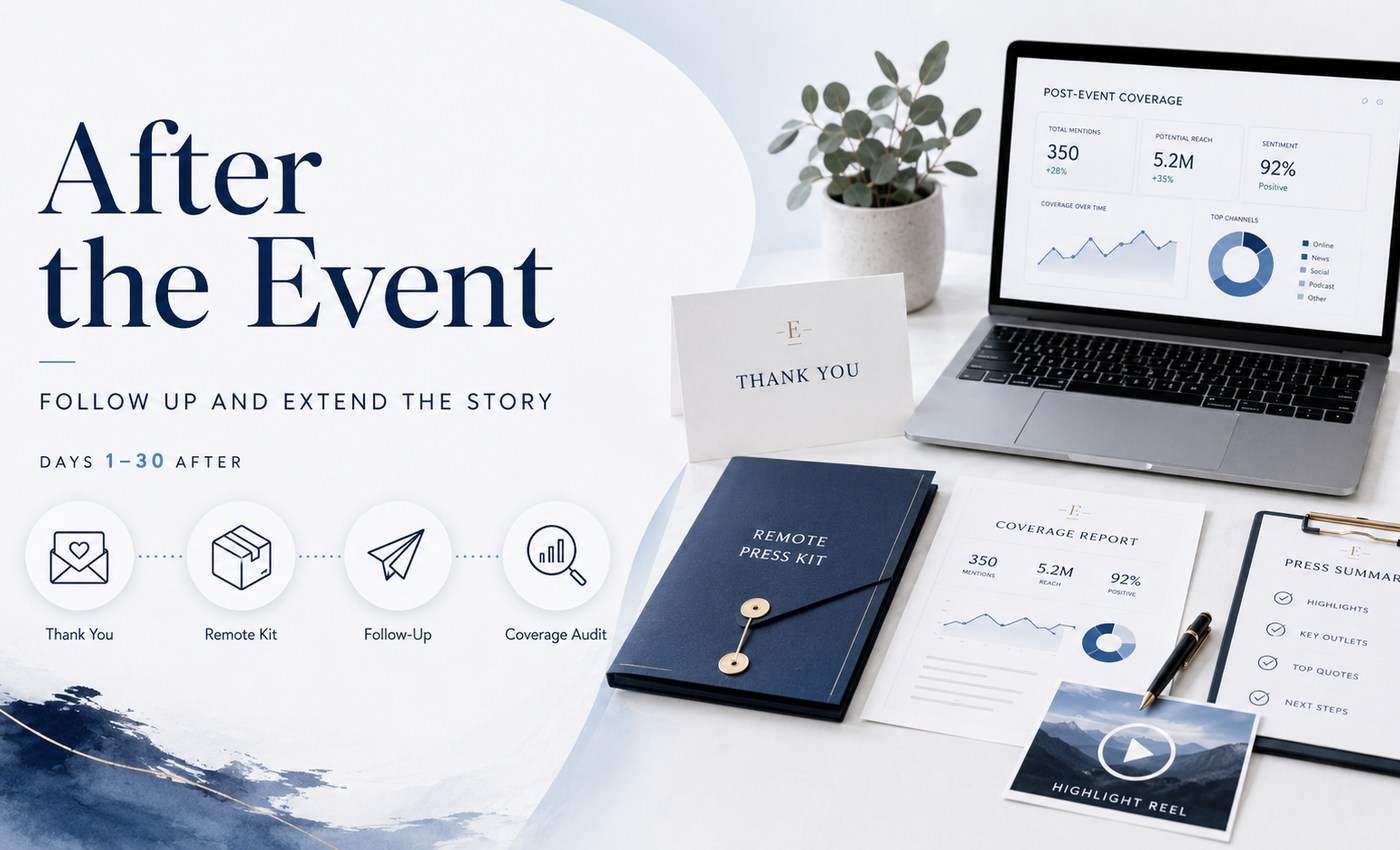
Phase 3: After the Event — Where Most of the Real Coverage Comes FromDays 1–3: Immediate Follow-Up
Key deliverables:
A thank-you note to all attending journalists, with a direct offer to send any additional material, quotes, or images they need
The remote press kit sent to journalists who couldn't attend, including key announcements, quotes, and high-resolution images
Any embargoed information released, if applicable
Why it matters: Many journalists who attended won't publish immediately — they're often filing from a backlog of other event coverage. A prompt, easy-to-use follow-up package increases the odds their piece actually gets written and gets the details right.
Days 4–10: Second-Wave Outreach
Key deliverables:
Follow-up outreach to journalists who expressed interest but hadn't confirmed a piece yet, referencing any coverage that's already been published as social proof
A summary release or wrap-up story sent to journalists who weren't able to attend, positioning it as "here's what happened and why it matters" rather than a dry recap
Outreach to any journalists who covered similar past events in the category but weren't on the original invite list — worth a shot even after the fact if genuinely relevant
Days 11–30: Extending the Story
Key deliverables:
Identification of any secondary story angles that emerged from the event itself — a surprising audience question, an unexpected outcome, a data point revealed on stage — that could support a follow-up pitch
A wrap-up asset (highlight reel, key takeaways summary, or photo gallery) that gives the event a longer digital life beyond the day itself
A coverage audit: compiling every mention secured, assessing reach and tone, and noting which journalists engaged well for future event invitations
A Sample Event PR Timeline at a Glance
Timing
Focus
4–6 weeks before
Define the story and news angle
3–4 weeks before
Build and segment the media list
2–3 weeks before
Save-the-dates to priority journalists
1–2 weeks before
Formal invite and press kit preparation
Final days before
Confirmations and day-of run sheet
Event day
On-ground access, interviews, content capture
Days 1–3 after
Immediate thank-you and remote press kit
Days 4–10 after
Second-wave outreach and follow-up pitching
Days 11–30 after
Extended story angles and coverage audit
Common Questions About Event PR
How far in advance should media be invited to an event?
Priority journalists should ideally get a personal heads-up 2–3 weeks out, with the formal press invite going to the broader list 1–2 weeks before. Anything sent inside a week significantly limits which journalists can realistically rearrange their schedule to attend.
What if journalists can't attend in person?
This is common, especially for journalists based in a different city or covering multiple events in a week. A well-prepared remote press kit — background, quotes, high-resolution images, and key announcements — sent promptly after the event lets desk-based journalists still cover it credibly without having been there.
Should influencers be part of an event PR plan, or is that separate?
They're generally worth treating as a separate track from press. Influencer content serves a different purpose (reach and social proof) than earned media coverage (credibility and third-party validation), and the outreach, briefing, and expectations for each differ enough that combining them into one undifferentiated list usually weakens both.
What's the biggest reason events fail to generate coverage despite a good turnout?
No follow-up after the event. Attendance doesn't guarantee a published piece — many journalists need a nudge, additional material, or a reminder days later to actually turn their notes into a story. Skipping post-event outreach is the single most common reason a well-attended event still results in thin coverage.
The Bottom Line
Event PR isn't a single press release or a media invite list — it's a sequence that starts weeks before the event with a genuine story worth covering, continues through smooth on-ground execution that respects journalists' time, and only really pays off in the days and weeks after the event, when the right follow-up turns interest into published coverage.
The events that generate strong media results treat the actual event day as the middle of the process, not the end of it.
Planning an event and want help building a media strategy around it? Reach out to talk through what a realistic PR plan looks like for your event.
Need this for your brand?
Let DTS build your next campaign.
From PR, celebrity management and events to websites, social media, SEO and AI video production — Double Trouble Studio helps brands grow with strategy and execution.
Discuss Your Requirement →