Luxury brands are built through carefully managed perceptions of quality, service, exclusivity, craftsmanship, taste and trust.
Customers do not purchase only a product or service. They purchase confidence in the experience surrounding it.
A luxury hotel promises attention, privacy and freedom from inconvenience. A premium fashion house promises design integrity, material quality and cultural relevance. A high-end jewellery brand promises authenticity, emotional significance and lasting value.
This creates powerful brand equity, but it also creates greater vulnerability when the experience fails to match the promise.
A service complaint at an ordinary business may be treated as an inconvenience. The same failure at a premium property, private event, luxury retail store or high-value appointment may be interpreted as evidence that the brand does not deserve its positioning.
The gap between expectation and reality becomes the crisis.
A customer may publish a video describing poor treatment. A celebrity partner may become involved in controversy. A product claim may be challenged. An employee may share internal concerns. A leaked guest list, delayed refund or insensitive campaign may attract rapid criticism.
Once public attention begins, the situation can develop across several channels at the same time.
Customers ask questions on social media. Journalists request statements. Partners seek clarification. Employees receive messages from friends and clients. Search results begin reflecting the controversy.
The brand may feel pressure to respond immediately, even when the facts remain incomplete.
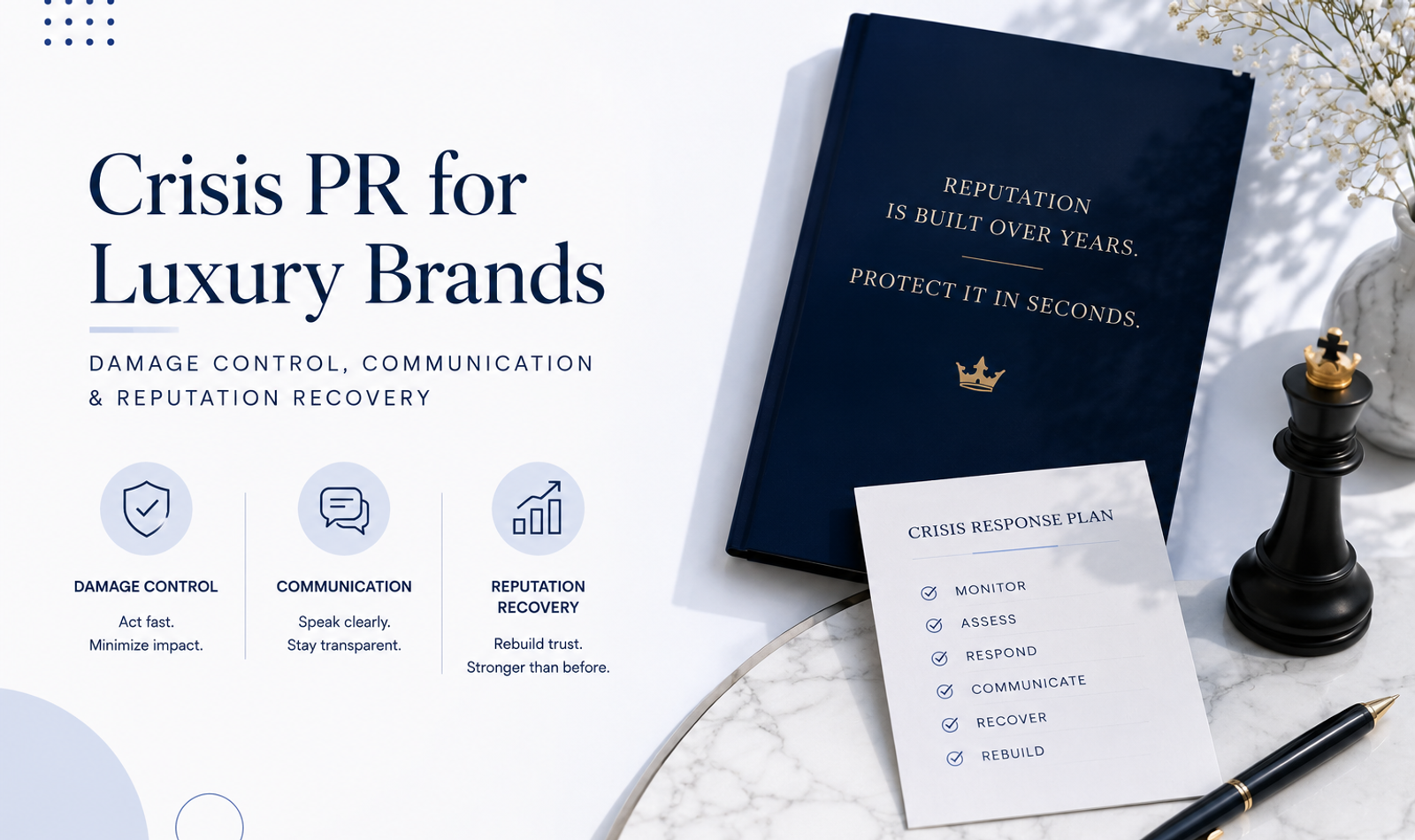
Crisis public relations provides the structure required to manage this pressure responsibly.
It helps the organisation identify what happened, protect affected people, coordinate internal decisions and communicate through one factual direction.
Crisis PR is not the art of making criticism disappear.
It is the discipline of reducing harm, correcting misinformation, demonstrating accountability and creating the conditions for trust to recover.
A polished statement cannot protect a brand when the underlying problem continues.
The strongest response combines communication with operational action.
If customers were harmed, they need direct support. If a product failed, it needs review. If an employee acted improperly, the organisation needs an appropriate internal process. If the brand made a misleading claim, the claim must be corrected.
Communication explains these actions.
It should not replace them.
PR Damage Control: The First 24 Hours
When a problem starts to spread, the first day decides how much damage it does. Use this checklist:
- Verify the facts. Find out what happened, who is affected and what is still unknown. Do not guess in public.
- Pause scheduled posts and ads. Stop anything that could look careless or tone-deaf while the issue is live.
- Name one spokesperson. Only one trained person speaks for the brand. Everyone else refers questions to them.
- Prepare a holding statement. A short, honest first message that says you are aware, you are looking into it and when you will update.
- Brief your staff. Tell employees, store teams and customer service what to say and what not to say.
- Contact affected customers directly. Reach the people who were affected before they read about it elsewhere.
- Keep a record. Note every fact, decision, message and media query with the time, so the response stays consistent.
Each of these steps is explained in more detail in the sections below.
What Is Crisis PR for Luxury Brands?
Crisis PR for luxury brands is the preparation, decision-making and communication process used when an issue threatens customer trust, public reputation, operations, revenue or stakeholder relationships.
It connects public relations with leadership, legal advisers, customer service, operations, digital teams, human resources, security and commercial partners.
A crisis may begin through a product complaint, public allegation, campaign backlash, executive conduct, data concern, service failure or partner controversy.
The communication challenge develops because different stakeholders need different information.
Customers may need refunds, replacements or reassurance.
Employees need accurate internal direction.
Journalists need verified facts and an authorised spokesperson.
Retail and hospitality teams need guidance for customer conversations.
Partners and investors need to understand the business impact.
The crisis plan ensures that these groups receive coordinated information rather than conflicting opinions.
Why Luxury Reputation Is Unusually Sensitive
Luxury positioning increases expectations.
A premium price implies greater care, expertise, quality and control.
When customers pay more, they generally expect fewer mistakes and a more thoughtful recovery when mistakes do occur.
Luxury also operates through symbolism.
The product may represent status, identity, celebration, heritage or personal achievement.
A negative experience can therefore feel more emotionally significant than an ordinary commercial disappointment.
Luxury brands may also work with influential customers, celebrities, collectors, media professionals and high-profile partners.
A private complaint can become public quickly.
The audience may assume that the visible incident reflects how the organisation treats other customers.
This is why operational detail matters so strongly in luxury reputation.
The Difference Between an Issue and a Crisis
Not every negative comment is a crisis.
An issue may involve one service complaint, delayed delivery or incorrect social-media response that can be managed through normal customer-service systems.
A crisis is more serious.
It threatens people, trust, revenue, operations or important stakeholder relationships.
The classification should consider potential harm rather than online volume alone.
One credible allegation involving customer safety, discrimination, fraud or privacy may require greater escalation than hundreds of comments criticising a campaign aesthetic.
The organisation should identify whether the issue is isolated, repeated, visible, credible and likely to spread.
It should also consider whether authorities, journalists, partners or high-value customers are becoming involved.
Common Crisis Scenarios for Luxury Brands
Luxury brands can face several categories of crisis.
Product crises may involve defects, authenticity concerns, contamination, ingredient questions, quality failures or misleading performance claims.
Service crises may involve poor customer treatment, booking failures, delayed delivery, inaccessible appointments, privacy violations or unresolved refunds.
Campaign crises may involve offensive creative work, cultural insensitivity, inappropriate representation, hidden sponsorship or misleading sustainability claims.
Leadership crises may involve executive conduct, public statements, legal disputes or internal allegations.
Partner crises may involve celebrities, influencers, suppliers, designers, franchisees or retailers whose behaviour affects the brand.
Digital crises may involve account hacking, impersonation, fake offers, customer-data exposure, manipulated media or fraudulent websites.
Operational crises may involve store incidents, manufacturing problems, labour concerns, supply-chain disruption or event failures.
The crisis playbook should reflect the risks most relevant to the category.
Reputation Damage Often Begins Before the Public Backlash
A public crisis may appear sudden, but the underlying problem often existed earlier.
Customer complaints may have been ignored.
Employees may have raised concerns.
A vendor may have repeatedly failed to meet standards.
The marketing team may have warned that a campaign could be misunderstood.
Refunds may have remained unresolved for weeks.
The visible backlash is sometimes the moment when an internal weakness becomes impossible to ignore.
Crisis prevention therefore requires listening systems, not only response templates.
The brand should identify repeated complaints, operational gaps and stakeholder concerns before they develop into a larger public narrative.
Prepare Before a Crisis Happens
Build a Crisis-Ready Culture
A crisis plan is valuable only when the organisation is willing to use it.
Luxury brands should create a culture in which employees can escalate concerns without fear.
Leaders should receive uncomfortable information rather than only positive summaries.
Customer-service teams should know when a complaint requires senior attention.
Digital teams should have authority to pause inappropriate scheduled content.
The PR team should have direct access to the people who know the operational facts.
A crisis-ready culture treats reputation as a shared organisational responsibility.
It does not expect the communications team to repair problems created elsewhere without support.
Create a Luxury Brand Risk Register
A risk register identifies credible scenarios, warning signs, potential impact and current controls.
A luxury fashion brand may include supplier misconduct, product quality, cultural appropriation, counterfeiting and celebrity-partner controversy.
A hotel may include guest privacy, food concerns, booking failures, staff behaviour and security incidents.
A jewellery brand may include authenticity disputes, delivery problems, sourcing claims and customer-data risks.
A premium event company may include celebrity cancellation, crowd issues, guest complaints, vendor failure and leaked private information.
Each risk should have an operational owner and communication owner.
The register should be reviewed regularly as the brand expands, enters new markets and works with new partners.
Classify Crisis Severity
A tiered severity system helps teams respond proportionately.
A low-level issue may involve a contained customer complaint or incorrect post.
A moderate issue may involve several customers, local media interest or increasing online discussion.
A major crisis may involve widespread service failure, serious public allegations, product withdrawal, partner controversy or a highly visible customer dispute.
A critical crisis may involve danger to life, criminal allegations, major data exposure or an event threatening continued business operations.
Each level should activate defined people, approvals and communication channels.
The classification may change as facts develop.
Establish Crisis Activation Triggers
Employees should know when normal customer service is no longer enough.
Possible triggers include:
- Safety concerns
- Police or regulator involvement
- Major media enquiries
- Repeated customer complaints
- Viral video evidence
- Celebrity or influencer criticism
- Serious discrimination allegations
- Data or privacy exposure
- Product withdrawal
- Large-scale refunds
- Executive misconduct
- Significant partner concern
The organisation should not wait for a hashtag to trend before activating the crisis team.
A credible problem should be investigated early.
Build a Cross-Functional Crisis Team
The crisis team should include the functions required to make decisions.
Typical participants may include senior leadership, public relations, legal counsel, operations, customer service, digital communication, human resources and security.
Product, medical, technical or supply-chain specialists may join according to the issue.
The team should remain small enough to act quickly.
Every member should understand their role.
One person gathers facts. Another manages affected customers. Legal advisers assess obligations. The communications lead prepares messages.
Senior leadership approves major business actions.
Appoint a Crisis Leader
One person should coordinate the complete response.
The crisis leader maintains the overall situation view and ensures that teams are working from the same facts.
They should have authority to call senior leadership, pause campaigns and activate external advisers.
The lead should also maintain an incident log recording key decisions, actions and public statements.
Without central coordination, separate teams may promise different outcomes or communicate contradictory information.
Establish One Authorised Spokesperson
Luxury brands often have several visible leaders, designers and public representatives.
During a crisis, not all of them should comment independently.
One authorised spokesperson should handle major public communication.
A backup spokesperson should also be prepared.
The selected person should understand the incident, the organisation and the concerns of affected stakeholders.
They should be capable of communicating with empathy while avoiding speculation.
The spokesperson does not need to answer every question immediately.
They need to distinguish what is confirmed, what remains under review and when further information will be available.
Prepare a Crisis Contact Directory
The directory should include senior leaders, legal advisers, PR representatives, insurers, operational heads, customer-service leaders, technology partners, security teams and relevant external specialists.
It should also include key retailer, celebrity, influencer, supplier and investor contacts where appropriate.
Contact information should be updated regularly.
A crisis may occur during evenings, holidays or international travel.
The team should know how to reach authorised decision-makers quickly.
Develop Scenario Playbooks
A general plan provides the structure.
Scenario playbooks provide more detailed steps.
A product-quality playbook may cover investigation, sales suspension, customer notification, retailer communication and media response.
A celebrity-partner playbook may cover contract review, campaign pause, content removal, internal briefing and public positioning.
A service-failure playbook may cover customer support, refunds, investigation and public acknowledgement.
A data-incident playbook may cover technical containment, legal review, affected-customer communication and fraud warnings.
The playbook should guide action without becoming so rigid that the team cannot adapt.
Prepare Holding Statements
A holding statement is a brief initial response used when the organisation needs to acknowledge the issue before the complete facts are available.
It should confirm awareness, show concern and explain the immediate action.
It should not deny responsibility before investigation.
It should not use empty phrases such as taking the matter seriously without describing what is actually being done.
A suitable holding statement may explain that the brand is reviewing the incident, contacting affected customers and gathering verified information.
The brand should provide a later update when it promises one.
Prepare Stakeholder Message Templates
Different stakeholders require different information.
Customers may need practical support and timelines.
Employees need facts, internal instructions and escalation contacts.
Retail partners need guidance on sales, returns and customer questions.
Influencers and ambassadors need instructions about scheduled content.
Investors may require information about operational and financial impact.
Media need verified facts and access to the spokesperson.
Templates can speed up communication, but they must be adapted to the actual incident.
Train Customer-Facing Teams
Sales associates, hotel staff, concierge teams, customer-service representatives and social-media managers are often the first people customers contact.
They need simple, current information.
They should know what has been confirmed, what support is available and which cases require escalation.
They should not speculate or blame other departments.
They should also avoid using legal or defensive language that intensifies the situation.
Luxury service recovery depends heavily on the quality of direct human interaction.
Train Spokespeople Before a Crisis
Media preparation should not begin after journalists start calling.
Spokespeople should practise responding to difficult questions.
They should understand how to explain uncertainty, correct misinformation and acknowledge customer impact.
Training should cover interviews, press statements, social video and internal meetings.
The spokesperson should avoid memorising long scripts.
They should understand the central facts, principles and actions well enough to communicate naturally.
Conduct Crisis Simulations
A simulation tests whether the plan works under pressure.
The organisation can create a realistic scenario involving a customer video, media enquiry, partner concern and internal information gap.
The team should practise activating contacts, verifying facts, pausing content and issuing an initial response.
The simulation may reveal slow approvals, unclear authority or missing contact information.
The playbook should be updated according to these findings.
Monitor Reputation Continuously
Monitoring should begin before the crisis.
The team should track the brand name, product names, founders, ambassadors, campaigns and common misspellings.
Customer reviews, social comments, media coverage and direct service complaints should be included.
Automated tools can identify changes in volume and sentiment.
Human review is still required to understand context, sarcasm, local language and credibility.
A strong monitoring system helps the brand identify warning signs early.
Establish a Reputation Baseline
The organisation should understand its normal level of positive, neutral and negative discussion.
It should know which complaints occur regularly and which issues are unusual.
This baseline helps the team evaluate the real effect of a crisis.
Without it, every negative mention may appear equally significant.
The baseline can include search behaviour, customer satisfaction, review patterns, media tone and partner feedback.
First Response: Contain the Damage
The First Priority Is Damage Control
Damage control begins by preventing further harm.
The brand may need to pause product sales, stop a campaign, remove unsafe content, close a location, contact affected customers or suspend a partner relationship.
Communication should support these actions.
The public statement should not become the main activity while the underlying problem remains active.
Luxury brands sometimes hesitate to pause a launch because of production investment, celebrity schedules or commercial pressure.
Continuing a harmful campaign can create far greater long-term cost.
Verify the Facts
The crisis team should identify the original source of the issue.
It should review customer records, contracts, video, internal communication, product data and witness accounts where relevant.
The team should separate confirmed facts from assumptions.
A short social-media clip may not show the complete incident.
An internal explanation may also be incomplete or biased.
Verification should be rapid but careful.
When information remains uncertain, the brand should say that the review is continuing.
Contact Affected Customers Directly
People directly affected by the incident should not learn important information through a public statement.
The brand should contact them where possible.
Support may include refunds, replacement, transport, medical assistance, privacy protection, accommodation, expedited service or a senior review.
The remedy should match the seriousness of the failure.
A generic discount code may be inappropriate after a major premium-service breakdown.
Direct support demonstrates responsibility more effectively than public language alone.
Preserve Relevant Evidence
The organisation should preserve relevant documents, messages, videos, access records, customer details and operational information.
Employees should not delete material simply because it appears damaging.
Evidence may be required for investigation, legal review, insurance or customer resolution.
Access should remain controlled and privacy-conscious.
One secure incident record should contain verified information and key decisions.
Pause Scheduled Content
Luxury brands often have carefully planned campaign calendars.
Automated posts, influencer content, celebratory emails and advertisements may continue during a crisis unless someone stops them.
The digital team should review what is scheduled.
Content that appears insensitive or contradictory should be paused.
Not every minor complaint requires a complete marketing shutdown.
The decision should reflect the severity and visibility of the issue.
Brief Employees Early
Employees should receive accurate information before rumours become the primary internal source.
The briefing should explain what happened, what the organisation is doing and where questions should be directed.
Employees should understand who is authorised to speak publicly.
The company should also allow staff to raise concerns and provide information.
Internal communication should not be treated only as a method of controlling employees.
It should support clarity, welfare and operational consistency.
Notify Important Partners
Retailers, distributors, investors, ambassadors, suppliers and event partners should not discover major developments through social media.
The crisis team should identify which stakeholders need direct briefings.
The message should explain the confirmed situation, operational action and expected communication.
Partners may need instructions about products, customer requests or scheduled campaign content.
Early partner communication reduces confusion and uncontrolled public comments.
Decide Whether a Public Statement Is Necessary
Some issues can be resolved directly with the affected customer.
A public statement becomes more important when the issue is visible, affects many people, creates safety concerns or attracts media attention.
The team should consider whether silence may appear evasive.
It should also consider whether a public response might amplify a small unverified claim.
The decision should be based on harm, credibility, reach and stakeholder need.
Issue a Holding Statement When Appropriate
The first public response does not need to contain every answer.
It should be useful and honest.
The brand may acknowledge awareness, express concern and explain that it is contacting affected people or conducting a review.
It should avoid claiming that an isolated incident does not represent the brand before knowing whether similar complaints exist.
The tone should remain human.
Highly polished luxury language can feel inappropriate when people are angry or distressed.
Holding Statement Example
Sample only. Change the details to fit the real situation, and have it approved by your legal and leadership team before sharing.
“We are aware of [the issue] and we are taking it seriously. Our team is looking into what happened and we are in touch with the people affected. We will share an update by [time or date]. If you have been affected, please contact us at [contact details].”
A good holding statement is short, calm and honest. It does not blame anyone, does not guess the cause and does not promise what the brand cannot yet deliver.
Communicate Through One Official Source
During a major crisis, the organisation should direct audiences towards one authoritative information source.
This may be an official website update, verified social account, email page or newsroom.
Updates should be time-stamped.
Old information should be corrected or clearly marked.
One source reduces conflicting statements and helps search engines, customers and journalists locate verified information.
How to Communicate and Apologise
Use Empathy Without Becoming Vague
Empathy means recognising the experience of affected people.
The brand should avoid phrases that minimise the situation.
Saying that the company regrets any inconvenience may feel dismissive when customers experienced humiliation, financial loss or serious disruption.
The response should acknowledge the specific impact where facts allow.
Empathy becomes credible when connected with action.
The organisation should explain how it is supporting people and correcting the problem.
Avoid Defensive Luxury Language
Luxury brands may be tempted to protect prestige by using distant, highly controlled language.
This can make the response feel uncaring.
Phrases about uncompromising standards and heritage provide little value when customers need a practical solution.
The brand should communicate clearly and directly.
Prestige is protected through responsibility, not through avoiding ordinary human language.
Decide Whether to Apologise
An apology is appropriate when the organisation caused harm, failed to deliver an important promise or responded poorly.
A meaningful apology identifies the failure and affected people.
It should not focus only on the fact that audiences reacted negatively.
The brand should explain what it is doing next.
An apology should not include promises the organisation cannot fulfil.
Legal review may be necessary, but excessive legal caution can produce language that feels empty.
Do Not Use a Conditional Apology
Statements such as apologising if anyone felt offended often avoid responsibility.
They suggest the problem exists only in the audience’s reaction.
When the brand’s action was inappropriate, the apology should acknowledge it directly.
When facts remain disputed, the organisation can express concern and explain the investigation without making unsupported admissions.
Clarity is better than artificial certainty.
Explain Corrective Action
Audiences need to know what will change.
Corrective action may involve refunds, product review, employee training, policy changes, campaign removal, partner suspension or stronger customer-service systems.
The action should match the cause.
The brand should avoid vague promises to do better.
Specific action demonstrates that the organisation has understood the problem.
Common Luxury Brand Crises and How to Respond
This guide covers brand-level crises. For problems that happen at a live event, read our crisis PR playbook for luxury events. For controversies involving a celebrity partner, read our guide to celebrity crisis management.
Manage Social-Media Backlash
The social team should use an approved moderation policy.
Legitimate criticism should not be removed simply because it is negative.
Threats, hate speech, personal data, spam and impersonation may require removal or escalation.
The brand should answer recurring practical questions publicly.
Individual cases can then move into direct support.
Copying the same generic response under every comment may make the organisation appear automated and disconnected.
Avoid Public Arguments
A brand should not argue emotionally with customers, creators or journalists.
Even when a claim appears unfair, the response should remain factual and respectful.
The organisation can correct specific inaccuracies.
It should not reveal private customer details to defend itself.
Threatening legal action publicly without careful review can escalate attention.
Public communication should aim to clarify, assist and reduce harm.
Respond to Viral Customer Complaints
A viral complaint should be assessed according to substance, not only reach.
The team should contact the customer privately while acknowledging the public concern where necessary.
The brand should review the complete experience and available evidence.
If the complaint is accurate, it should correct the failure.
If important details are inaccurate, the public clarification should remain concise and privacy-conscious.
The organisation should avoid offering special treatment only because the customer has a large audience.
Manage Influencer Criticism
An influencer may criticise the brand after a paid campaign, gifted experience or ordinary purchase.
The team should review the contractual and customer context.
If a commercial relationship existed, disclosure, deliverables and rights may also require review.
The brand should not pressure the creator to remove a genuine complaint.
If facts are wrong, it can provide a correction.
The substance of the complaint matters more than the creator’s follower count.
A strong luxury influencer marketing strategy should therefore consider reputation risk and brand alignment before partnerships begin.
Manage Celebrity-Partner Controversy
Celebrity partnerships create shared reputation exposure.
The brand should verify the facts and review contractual rights.
Scheduled campaign content may need to be paused.
The organisation should consider the seriousness of the conduct, audience expectations and connection with brand values.
Immediate termination is not always the correct response.
Continued silence is not always appropriate either.
The decision should be consistent, evidence-based and proportionate.
The public statement should avoid sensationalising the individual’s situation.
For luxury brands using high-profile talent, professional celebrity management should include reputation considerations alongside campaign reach and visibility.
Manage Leadership Controversy
When a founder or executive is central to the brand, personal conduct can become an organisational crisis.
The company should not assume that the leader can speak without preparation because they normally represent the brand.
Independent review may be necessary.
Internal stakeholders and employees often require information before external audiences.
The response should distinguish personal allegations from company operations while addressing any genuine organisational connection.
Leadership accountability may be essential for reputation recovery.
Respond to Product-Quality Complaints
The brand should determine whether the complaint is isolated or indicates a wider problem.
Relevant sales may need to be paused.
Retail and customer-service teams should receive instructions.
Affected customers may require replacement, refund or safety guidance.
The company should avoid dismissing the issue before investigation.
When a recall or withdrawal becomes necessary, communication should prioritise clear customer action.
Respond to Authenticity and Counterfeit Concerns
Luxury brands depend heavily on authenticity.
Customers may encounter counterfeit products, fake websites, fraudulent offers or impersonating accounts.
The brand should maintain official verification channels.
Public alerts should explain how customers can identify authorised sellers and where they can report suspected fraud.
The company should avoid accusing individual customers of knowingly purchasing counterfeit goods.
Supportive communication can protect customers while reinforcing trust.
Respond to Sustainability Backlash
Luxury brands increasingly communicate environmental and social commitments.
These claims may be challenged by customers, employees or journalists.
The response should provide evidence rather than broad purpose language.
The company should distinguish current achievements, limitations and future goals.
When a claim was inaccurate or overstated, it should be corrected.
Defending an unsupported sustainability message can create greater reputational damage than acknowledging the gap.
Respond to Cultural Insensitivity
A campaign may be criticised for stereotyping, appropriation, exclusion or disrespectful representation.
The brand should listen to the specific criticism before issuing a defensive explanation of intent.
Intent does not erase impact.
Relevant creative work may need to be paused or removed.
The organisation should consult appropriate internal and external expertise.
An apology should explain what was wrong and what will change within the review process.
Respond to Employee Misconduct
Customer-facing employee conduct can become a brand crisis.
The company should support affected customers and investigate fairly.
It should avoid declaring guilt or innocence before reviewing evidence.
The public statement can explain that the matter is being addressed through established procedures.
The organisation should protect legitimate employee rights while maintaining customer safety and trust.
A single disciplinary action may not solve a deeper training or culture problem.
Respond to Data and Privacy Concerns
Luxury customers often expect discretion.
A privacy incident may involve customer details, guest lists, payment data, purchase history or location information.
The technical team should contain the issue.
Affected customers may require direct notification and practical guidance.
The public message should explain what information may be involved, what has been secured and what customers should do.
The brand should not minimise the incident as a technical inconvenience before understanding its impact.
Data Leak or Privacy Crisis: What to Check in India
If customer or guest data is leaked, lost or misused, the response is not only a PR matter. In India, the Digital Personal Data Protection Act, 2023 sets out duties for organisations that handle digital personal data. Under the Act, if there is a personal data breach, the organisation must inform the Data Protection Board of India and each affected person, in the form and manner set out in the rules.
The detailed process is in the Digital Personal Data Protection Rules, 2025. Check your duties under the Act and the Rules with your legal team as soon as a breach is suspected, and make sure your public statements match what you are legally required to tell people.
- Bring in legal and IT security teams from the first hour.
- Find out what data was affected and whose.
- Tell affected people clearly what happened and what they should do.
- Do not downplay the issue or share technical guesses in public.
Respond to Fake Content and Impersonation
Synthetic or manipulated content can make it appear that a founder, celebrity partner or executive said something they did not say.
Fraudulent accounts may imitate the brand and promote fake offers.
The organisation should preserve evidence, alert platforms and direct audiences towards official channels.
Where customer safety or fraud is involved, a prompt public clarification may be necessary.
The team should avoid repeating manipulated content unnecessarily, as this may increase its distribution.
Media, Search and Internal Communication
Manage Media Enquiries
All serious media enquiries should reach the authorised communications team.
The spokesperson should provide confirmed facts, actions and next steps.
They should not speculate about motive, liability or information outside their knowledge.
A record of media questions and responses should be maintained.
Repeated questions may reveal information gaps that should be addressed through an updated public statement.
Maintaining strong media relationships and editorial positioning before a crisis can also help ensure journalists know where to seek verified information.
Avoid Saying “No Comment” Without Explanation
A complete refusal to communicate may appear evasive.
When legal, privacy or investigative considerations prevent detailed answers, the spokesperson can explain that limitation.
They may confirm that the matter is under review, that affected people are receiving support and that additional information will be provided when appropriate.
This communicates responsibility without compromising the process.
Correct Misinformation Selectively
Not every false comment deserves a response.
The brand should prioritise misinformation affecting safety, customer decisions or the central public narrative.
Corrections should be factual and concise.
The organisation should avoid repeating every false claim in full.
One clearly accessible official statement may be more effective than arguing across many individual posts.
Control Search Reputation During a Crisis
Public controversy can quickly influence search results.
The brand should ensure that official information is indexed and easy to find.
Its newsroom, customer-support pages and social profiles should remain accurate.
The company should not attempt to hide truthful criticism through misleading search tactics.
It should publish useful, factual information and demonstrate corrective action.
Search reputation improves over time when reliable sources and genuine operational improvements replace speculation.
A deliberate SEO strategy for luxury brands can help ensure authoritative brand information remains discoverable during both normal operations and reputation-sensitive periods.
Protect Customer Privacy During Public Response
A customer may share only part of a dispute publicly.
The brand may possess additional private information.
It should not reveal payment records, personal messages, addresses or service details simply to win the public argument.
The organisation can explain that it is unable to discuss private account information while confirming that direct contact is taking place.
Protecting privacy is part of luxury service, even during disagreement.
Do Not Manufacture Positive Distraction
Some brands respond to criticism by immediately publishing awards, celebrity content or charitable activity.
This may appear manipulative when the original problem remains unresolved.
Positive communication has a role during recovery, but it should not replace accountability.
The brand should first address affected stakeholders and demonstrate correction.
Normal storytelling can resume gradually.
Manage Internal Rumours
Employees may receive incomplete information through media and social platforms.
Leadership should provide regular internal updates.
The communication should explain what employees can say, what remains confidential and where concerns should be raised.
Staff should not be treated as potential leaks rather than stakeholders.
They may have valuable information about the cause and customer impact.
Support Employees During the Crisis
Customer-service and digital teams may receive abuse, threats and high workloads.
The organisation should provide leadership support, escalation systems and reasonable shifts.
Employees directly involved may also experience distress.
A luxury brand cannot claim empathy publicly while ignoring the well-being of its own teams.
Maintain an Incident Timeline
The organisation should record when the issue began, when leaders were informed, what decisions were made and what messages were issued.
Each entry should include the responsible person.
The timeline supports consistency, legal review and post-crisis learning.
It also reveals where delays occurred.
Update Communication as the Situation Develops
One initial statement is rarely enough for a major crisis.
The brand should provide updates when meaningful new information becomes available.
It does not need to publish every internal development.
Updates should answer stakeholder questions and explain current action.
When previous information changes, the organisation should correct it clearly.
Recovery: Rebuilding Trust
Move From Containment to Recovery
Containment focuses on stopping harm, verifying facts and stabilising operations.
Recovery focuses on remedies, trust and long-term change.
The transition should occur only after affected customers have received support and the immediate risk is controlled.
The organisation may still face criticism during recovery.
It should not interpret reduced media attention as complete reputation restoration.
Conduct a Root-Cause Review
The post-crisis investigation should examine why the incident occurred.
The cause may involve policy, training, vendor selection, leadership decisions, customer-service systems or organisational culture.
The review should not focus only on identifying one person to blame.
System weaknesses often contribute to failure.
The organisation should document corrective actions and assign responsible owners.
Complete Promised Remedies
Customers and stakeholders remember whether the brand delivered what it promised.
Refunds, replacements, policy changes and investigations should be completed within realistic timelines.
The organisation should not announce corrective action and then stop communicating.
Where a process takes longer, affected stakeholders should receive updates.
Communicate Meaningful Change
Reputation recovery requires visible evidence of improvement.
The company may explain revised processes, stronger training, independent review, supplier changes or new customer protections.
The message should avoid claiming that the problem can never happen again.
Instead, it should explain how risk has been reduced and accountability strengthened.
Rebuild Trust Through Consistent Experience
Trust is not restored by one apology.
It is rebuilt through repeated delivery.
Customer service, product quality, employee behaviour and public communication must become consistent with the brand promise.
The organisation should monitor whether old complaints continue.
A luxury brand may need to demonstrate improved service privately before promoting the change publicly.
Resume Marketing Carefully
Routine promotion should return gradually.
The first campaigns after a serious crisis should be reviewed for tone.
Aggressive celebration or exclusivity messaging may appear inappropriate when affected customers are still waiting for remedies.
The organisation can resume brand communication while continuing promised updates.
Recovery does not require permanent silence.
It requires judgement.
Re-engage Customers
The brand may need to rebuild direct customer confidence.
This can involve personal outreach, service guarantees, private consultations, improved support and customer listening.
The objective should not be to persuade people to forget.
It should be to demonstrate that the relationship is worth rebuilding.
Some customers may not return.
The organisation should respect that outcome while improving future experience.
Rebuild Media Relationships
Journalists may remain interested after the immediate story fades.
The communications team should continue providing factual updates where appropriate.
It should not pressure journalists to publish positive recovery articles.
Meaningful operational change, leadership accountability and independent evidence may create legitimate follow-up stories.
Trust with media is rebuilt through accuracy and reliability.
An effective brand narrative strategy can help ensure that long-term communication after recovery remains credible and consistent with the organisation’s actual changes.
Reassure Partners and Investors
Partners may worry about commercial, legal and reputation exposure.
The organisation should provide structured briefings on investigation, correction and future safeguards.
The information should match public statements while including necessary operational detail.
The brand should avoid promising that no future risk exists.
Partners need evidence that the issue is being managed competently.
Review Celebrity and Influencer Relationships
After a crisis, the brand should examine whether partners were briefed appropriately and whether contracts provided sufficient protection.
Ambassadors may need updated talking points.
Scheduled content should be reviewed.
The organisation should not ask influencers to defend it publicly unless this is appropriate, truthful and contractually understood.
Forced support can appear inauthentic and create further criticism.
Measure the Response and Learn From It
Measurement should begin with the original risk and objectives.
The team should track response speed, message consistency, misinformation, stakeholder understanding and operational outcomes.
It should also examine customer behaviour, cancellations, refunds, partner confidence and employee feedback.
The purpose is not to prove that the PR team succeeded.
It is to understand what happened and improve organisational readiness.
Measure Media Narratives
The brand should review how reputable media described the incident.
Did coverage include the company’s response?
Were important facts misunderstood?
Did the spokesperson communicate clearly?
Did the central narrative change as corrective action developed?
The goal is not to demand favourable coverage.
It is to understand whether accurate information reached the public.
Measure Message Pull-Through
Message pull-through shows whether stakeholders understood the intended facts and actions.
Audiences may know that the brand apologised but not understand the remedy.
They may remember the founder’s statement but not know how affected customers were supported.
The team should review media, social conversation, customer questions and partner feedback.
Measure Sentiment With Human Review
Automated sentiment systems can provide useful directional information.
They may misinterpret sarcasm, mixed languages and cultural context.
The team should review representative conversations manually.
It should identify the issues driving criticism.
Some audiences may remain negative about the original incident while responding positively to the recovery.
These differences matter.
Measure Customer Behaviour
The organisation can review cancellations, returns, repeat purchases, appointment requests, store visits and customer-support volume.
Changes should be compared with the normal baseline.
Seasonality, pricing and other campaigns should also be considered.
Customer behaviour may reveal long-term damage or recovery more clearly than social engagement.
Measure Search Behaviour
The brand can monitor searches connected with the company and crisis.
It should observe whether negative terms decline and normal product or service interest returns.
Search recovery may take time.
Publishing useful official information and demonstrating real change supports this process more effectively than attempting to suppress legitimate content.
Measure Trust Recovery
Trust can be evaluated through customer research, employee feedback, partner conversations, review quality and repeat business.
Different audiences may recover at different speeds.
Customers directly affected may need more evidence than the general public.
The organisation should not rely only on broad brand-awareness studies.
Measure Commercial Impact
The crisis may affect revenue, customer acquisition, partnership opportunities and operating cost.
Refunds, product withdrawals, legal expenses, media support and additional customer service should be recorded.
Commercial measurement should not reduce every reputation outcome to one number.
It should show how the incident affected the business and how recovery activity contributed to stabilisation.
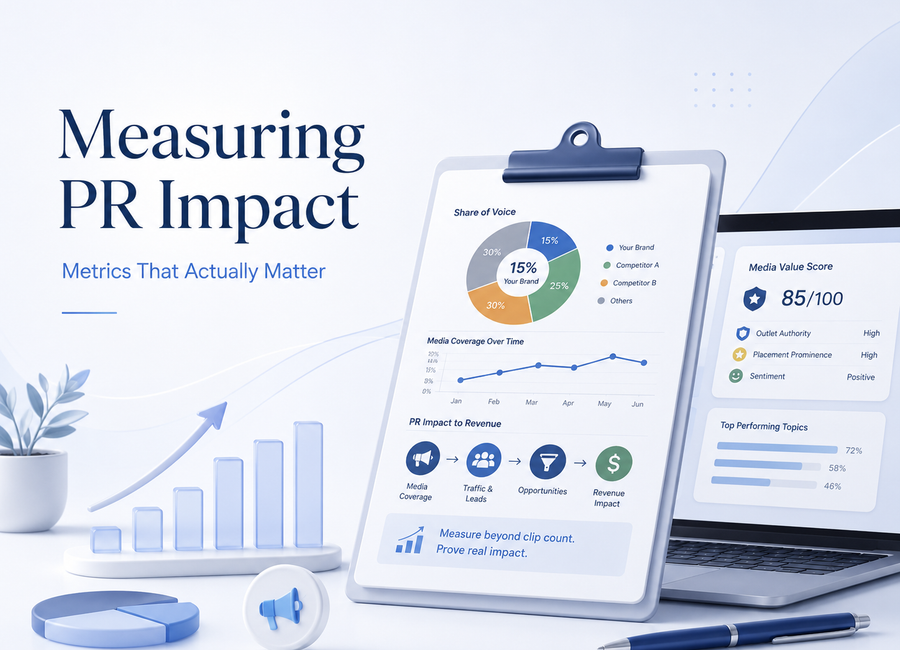
For a broader measurement system, a structured PR ROI framework can connect communication activity with visibility, leads and meaningful commercial outcomes.
Conduct a Formal Debrief
The crisis team should review detection, escalation, operations, customer support, statements, approvals, media handling and recovery.
The discussion should be honest and constructive.
The team should identify what worked, what failed and which changes are required.
Each action should have an owner and deadline.
A debrief without implementation does not improve readiness.
Update the Crisis Playbook
The brand should revise contacts, authority levels, templates, monitoring and training according to the incident.
If approvals were too slow, authority may need to be delegated.
If customer-service data was incomplete, systems may need improvement.
If partner contracts lacked crisis provisions, future agreements should be updated.
The playbook should evolve as the brand learns.
Common Luxury Crisis PR Mistakes
One common mistake is waiting for the issue to become viral before investigating it.
Another is allowing leadership, agencies and customer-service teams to issue different explanations.
Brands may publish a polished statement while affected customers remain unsupported.
Some organisations deny responsibility too early.
Others apologise vaguely without explaining what they did wrong.
Scheduled luxury campaigns may continue during a serious incident.
Companies may delete legitimate criticism, threaten customers or expose private information.
Influencers may be pressured to defend the brand.
Partners may receive no direct briefing.
After attention declines, the business may return to normal activity without completing promised changes.
These mistakes expand the gap between the public message and organisational reality.
A Practical Luxury Brand Crisis PR Process
The process begins before the crisis through risk identification, monitoring and training.
The organisation creates a risk register covering product, service, leadership, partner, digital and reputation scenarios.
A cross-functional team is appointed with one crisis leader and authorised spokesperson.
Contact directories, severity levels, holding statements and stakeholder templates are prepared.
Frontline teams understand escalation rules.
When an incident occurs, the organisation protects affected people and stops further harm.
The crisis team gathers verified facts and preserves evidence.
Scheduled content is reviewed and paused where appropriate.
Affected customers receive direct contact and practical support.
Employees, partners and leadership receive aligned briefings.
A holding statement is issued when public acknowledgement is necessary before the review is complete.
One official information source is maintained.
Media enquiries are handled through the authorised team.
The brand responds to legitimate criticism, corrects material misinformation and avoids public arguments.
When fault is established, the organisation apologises clearly and explains corrective action.
Remedies are completed.
The company conducts a root-cause investigation and implements operational improvements.
Recovery communication demonstrates progress without manufacturing positive distraction.
Media, customer, search, employee, partner and commercial outcomes are measured.
The crisis team conducts a formal debrief and updates the playbook.
For luxury brands, this process should form part of a wider integrated PR and digital strategy so reputation management, media relations, search visibility and customer communication work together.
When to Hire a Crisis PR Agency
Not every complaint needs an agency. Get outside help when:
- The issue is spreading on social media or in the news faster than your team can respond.
- Journalists, partners or investors are asking questions you are not ready to answer.
- The crisis involves legal, safety, data or leadership issues.
- Your team has no tested crisis plan or trained spokesperson.
- You want an outside, calm view because the team is too close to the problem.
In the first week, a good crisis PR agency helps you confirm the facts, agree on key messages, prepare statements and media answers, train the spokesperson, monitor coverage and social conversation, and plan the next updates. It should also work closely with your legal team, not around it.
How DTS Handles Crisis Communication
Double Trouble Studio offers crisis PR and reputation management for luxury and premium brands. We help prepare crisis plans and holding statements before they are needed, manage media questions and social response during a crisis, and plan the recovery after it. If you are looking for a PR agency in Mumbai, our team is based in the city.
Frequently Asked Questions (FAQ)
What is PR damage control?
PR damage control is the fast work a brand does to stop a problem from getting worse in public. It means checking the facts, pausing planned posts, choosing one spokesperson, sharing a short, honest statement, helping affected customers and fixing the real cause. The goal is to protect trust, not to hide the problem.
What should a luxury brand do first in a crisis?
First, get the facts right and stop anything that adds fuel, such as scheduled posts or ads. Then name one spokesperson, brief staff, and contact the people directly affected. Only after that, share a short holding statement that says what you know, what you are doing and when you will update.
What is a holding statement?
A holding statement is a short first message a brand shares while it is still checking the facts. It says the brand is aware of the issue, takes it seriously, is looking into it and will share an update soon. It should be calm, honest and free of blame or guesses.
Should a brand apologise during a PR crisis?
If the brand made a mistake, a clear and sincere apology usually helps rebuild trust. Say what went wrong, who it affected and what you are doing to fix it. Avoid conditional lines like "if anyone was offended". If facts are still unclear, share a holding statement first.
How long does it take to recover from a PR crisis?
There is no fixed time. Recovery depends on how serious the issue was, how fast and honestly the brand responded, and whether it fixed the real cause. Track media tone, social sentiment, branded searches, enquiries and sales against your normal levels to see when trust is coming back.
Conclusion
Crisis PR in luxury branding is not about controlling perception—it is about restoring trust through action, clarity, and accountability.
Because luxury brands operate on heightened expectations, even small failures can escalate into major reputational risks. The real test is not whether a crisis occurs, but how responsibly and transparently the brand responds when it does.
Strong crisis management brings together operational correction, aligned leadership, and clear communication. When these elements work together, a brand can move beyond damage control and begin rebuilding credibility in a meaningful way.
Ultimately, luxury reputation is not protected by statements—it is rebuilt through consistent proof that the promise has been understood, corrected, and strengthened.
When Reputation Is on the Line, Strategy Becomes Everything
If your brand operates in the luxury or premium space, crisis communication cannot be reactive—it must be engineered with precision, speed, and clarity.
We help brands build crisis-ready communication systems that combine PR strategy and reputation management, structured response frameworks and digital visibility. From prevention planning to real-time crisis handling, the objective is to ensure your brand is prepared when it matters most.
Let’s build a reputation system that protects your brand before, during, and after a crisis.
Connect with us to design your PR strategy in Mumbai today.
📩 info@dtsworld.in 📞 +91 80000 06021 📍 Andheri (West), Mumbai
Related reading: Event crisis management playbook · Celebrity crisis management.
Facing a reputation issue, or want a crisis plan ready before you need it? Talk to the DTS PR team today.
Need this for your brand?
Let DTS build your next campaign.
From PR, celebrity management and events to websites, social media, SEO and AI video production — Double Trouble Studio helps brands grow with strategy and execution.
Discuss Your Requirement →