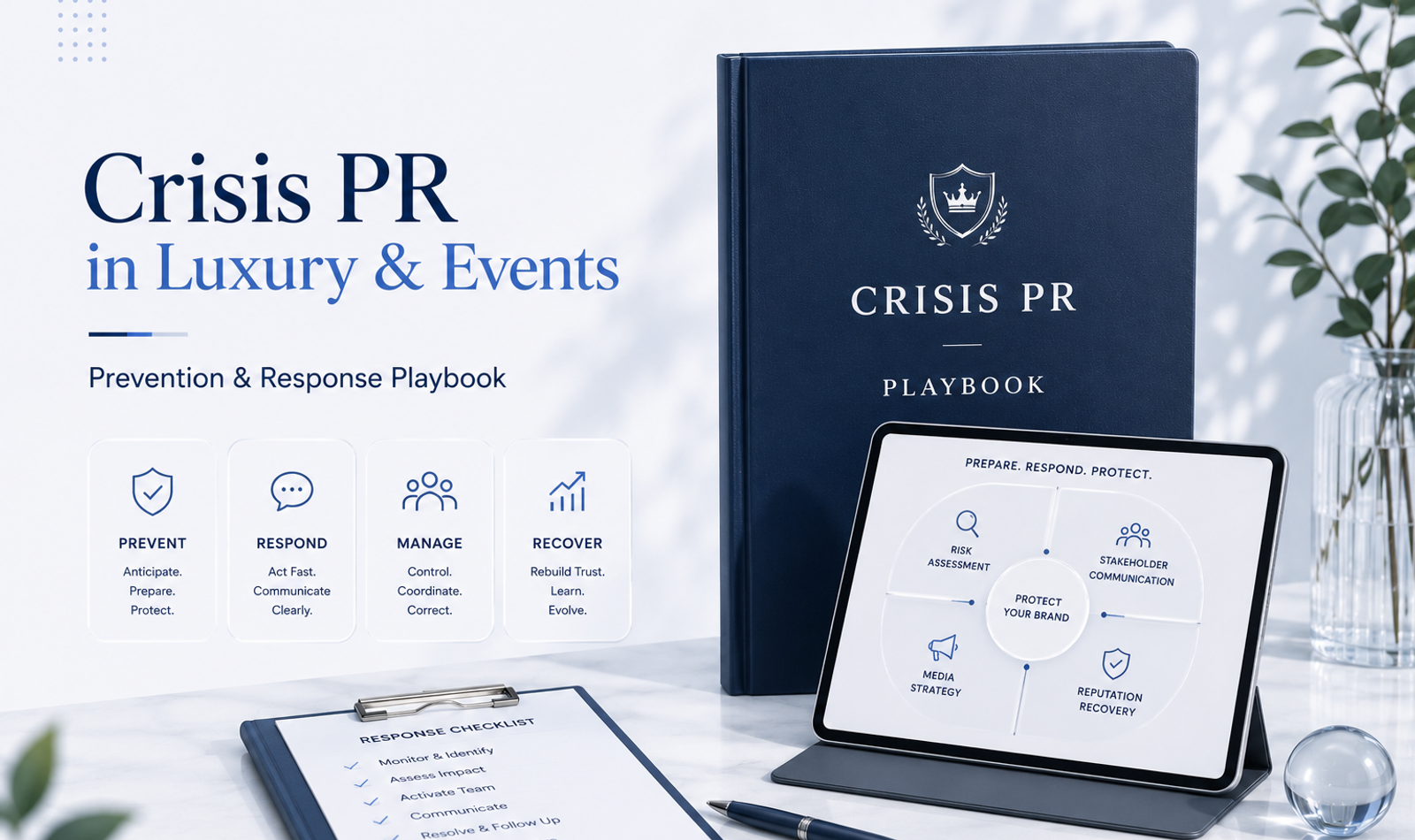
Luxury brands and high-profile events are built around trust, precision and carefully managed experiences.
Customers expect every detail to feel considered. Guests expect smooth service, safe environments and respectful treatment. Sponsors expect professional execution, while media and stakeholders expect accurate communication.
This creates significant reputation value, but it also creates greater sensitivity when something goes wrong.
A delayed event, overcrowded entrance, service failure, celebrity cancellation, guest injury, product complaint or insensitive campaign can quickly become more than an operational problem.
It can become a public narrative about the brand’s competence, values and credibility.
Luxury businesses are particularly exposed because their promises are often based on exclusivity, personal attention, quality and control. This is why luxury brand positioning must be supported by operational consistency as well as strong communication.
When the actual experience contradicts those promises, disappointment can be stronger than it would be with an ordinary mass-market service.
Guests may share photographs and videos in real time. Journalists may contact organisers before the team has confirmed the facts. Sponsors may ask whether their branding will appear beside negative coverage.
Employees may receive questions from customers, friends and professional contacts. Influencers and celebrities may publish their own accounts of the incident.
The organisation may feel pressure to respond immediately, even when the situation remains unclear.
Crisis public relations provides the systems required to manage this pressure.
It does not begin with writing an apology after criticism appears.
It begins with identifying risk, assigning authority, preparing communication channels, protecting guest information and building an operational response structure before the event or campaign launches.
When an incident occurs, the first priority is protecting people and controlling further harm.
Communication should support this operational response.
The brand must verify the available facts, identify affected stakeholders, pause inappropriate promotional activity and explain what it is doing.
The objective is not to create the appearance of control while the operational problem continues.
It is to combine action, empathy and accurate communication.
A successful crisis response may not prevent all criticism.
It should reduce confusion, protect affected people, preserve evidence, support recovery and demonstrate that the organisation is capable of acting responsibly under pressure.
What Is Crisis PR?
Crisis PR is the preparation and communication process used when an issue threatens people, trust, operations, revenue or organisational reputation.
It connects PR, media and marketing with leadership, legal review, guest services, security, operations, digital teams and customer support.
A crisis may begin as a physical incident, service failure, complaint, allegation, digital attack or public misunderstanding.
The communication challenge develops because different audiences want information quickly.
Guests may want to know whether they are safe.
Customers may want refunds or practical support.
Media may want verified facts and a spokesperson.
Sponsors may want to understand whether the incident affects their association.
Employees may need instructions about what they can say.
Authorities may require records and cooperation.
Crisis PR ensures that these groups receive coordinated information rather than speculation or conflicting statements.
Crisis PR Is Not Reputation Manipulation
Crisis communication should not be used to hide harm, silence legitimate criticism or create a misleading version of events.
Public relations cannot replace accountability.
When a guest has been injured, the priority is medical support and safety.
When a company has made an inaccurate claim, the priority is correction.
When an event has failed to deliver an essential service, the organisation should address the affected customers rather than publishing unrelated positive content.
The communications team helps the organisation explain what happened, what is known, what remains under review and what actions are being taken.
The response should be based on evidence and genuine operational decisions.
Attempting to control the story without correcting the underlying problem usually increases long-term reputation damage.
Why Luxury Brands Face Distinct Crisis Risks
Luxury brands sell more than products or services.
They sell confidence, access, status, emotional significance, personalisation and freedom from inconvenience.
A customer paying a premium expects the experience to be more reliable and carefully managed.
This creates a narrower tolerance for visible failure.
A delayed airport pickup at a budget property may be viewed as an inconvenience.
The same failure during a premium destination wedding or private luxury experience may be interpreted as evidence that the organiser cannot deliver the promised level of service.
Luxury customers may also expect privacy and discretion.
A leaked guest list, publicly shared room number or unauthorised backstage photograph can create significant concern even when no physical harm occurs.
Luxury reputation therefore depends heavily on operational discipline.
The crisis plan should cover privacy, access, hospitality, identity use and customer treatment in addition to traditional media risk.
Why Events Create Rapid Crisis Escalation
Events combine people, movement, technology, hospitality, schedules, vendors and public visibility within a limited period.
Several risks can develop simultaneously.
A transport delay can create crowding at the entrance. Crowd frustration can produce conflict with security. Videos of the conflict may appear online before senior organisers know what happened.
A technical failure can delay the programme and affect artist schedules.
A celebrity may leave at the contracted time while guests believe the appearance was unexpectedly shortened.
Weather may disrupt an outdoor experience.
Food, alcohol, temporary structures, electrical systems and live production create additional operational concerns.
This is why professional events and wedding management requires contingency planning alongside design, production and hospitality.
The event cannot simply pause every activity while leadership discusses the response.
Teams need clear authority and prepared procedures.
Understand the Difference Between an Issue and a Crisis
Not every complaint or negative comment is a crisis.
An issue may be limited, manageable through normal customer service and unlikely to produce significant wider harm.
A crisis creates or may create serious consequences for people, operations, trust, finances or public reputation.
One guest criticising a menu choice may be a service issue.
Several guests reporting illness after an event may be a potential crisis requiring medical, legal and operational escalation.
A delayed performance may be managed through programme communication.
A crowd surge or security confrontation may require immediate crisis activation.
The team should classify the situation according to potential harm rather than social-media volume alone.
A small but credible safety complaint may require more serious action than a large number of general negative reactions.
Common Crisis Categories in Luxury and Events
Luxury and event organisations should identify the risks most relevant to their work.
Safety crises may involve injuries, crowd movement, fire, structural concerns, food incidents or transport accidents.
Service crises may involve major delays, unavailable rooms, missing guest arrangements, failed hospitality or inaccessible experiences.
Talent-related crises may involve celebrity cancellation, artist delays, backstage conflict or inappropriate public conduct. Brands working with high-profile personalities should therefore integrate crisis planning into their wider celebrity management process.
Digital crises may involve account hacking, leaked guest data, impersonation, deepfakes or false announcements.
Communication crises may involve misleading claims, hidden sponsorship, insensitive creative work or incorrect public statements.
Legal and regulatory crises may involve permissions, licences, product claims, alcohol service, employment issues or data protection.
Environmental crises may involve extreme weather, pollution, waste or damage to a sensitive location.
Reputation crises may also begin with employee behaviour, vendor misconduct or a public complaint handled badly.
Create a Crisis Risk Register
A crisis risk register lists credible scenarios, their likelihood, potential impact and current controls.
The register should be practical rather than theoretical.
An event company may identify overcrowded arrivals, artist cancellation, technical failure, severe weather, medical emergencies, alcohol-related incidents, power loss and unauthorised guest access.
A luxury hotel may identify food safety, guest privacy, booking failures, staff misconduct, influencer complaints and property-security incidents.
A premium product brand may identify safety complaints, misleading advertising, counterfeit goods, supply-chain issues and celebrity-partnership controversy.
Each risk should have an operational owner and a communication owner.
The register should also identify warning signs, response procedures and escalation thresholds.
Prioritise Risks by Impact
Not every risk requires the same planning investment.
The organisation should consider possible harm to life, health, privacy, reputation, revenue and legal compliance.
A low-likelihood event with severe potential consequences may still require detailed preparation.
For example, a major fire may be unlikely, but emergency communication and evacuation procedures remain essential.
A common minor complaint may require a standard response template rather than crisis-team activation.
Prioritisation helps the organisation focus resources while maintaining proportionate readiness.
Build a Cross-Functional Crisis Team
Crisis communication should not be controlled by the PR team alone.
The response team may include senior leadership, operations, security, legal counsel, guest relations, digital communication, customer support and the event or property manager.
Medical, technical or human-resources specialists may join according to the incident.
The team should remain small enough to make decisions quickly.
Each member should understand their responsibility.
One person may coordinate facts. Another manages operations. Legal counsel evaluates risk. The communications lead prepares stakeholder messages.
The senior decision-maker authorises major actions.
The team structure should be documented before a crisis occurs.
Appoint a Crisis Lead
One person should coordinate the overall response.
This does not mean that the person handles every operational task.
The lead maintains the complete view of the incident, confirms decisions and ensures that different departments do not work from conflicting assumptions.
They should have enough authority to pause campaigns, call senior leadership and activate external support.
The crisis lead should also ensure that a written record is maintained.
Decisions made under pressure can later become difficult to reconstruct.
Establish a Clear Chain of Command
The plan should identify who has authority over safety, guest movement, public communication, refunds, event changes and media statements.
Security should control immediate safety decisions.
The event director may control the programme.
The communications lead controls approved external messaging.
The authorised executive may approve major public statements and financial remedies.
Sponsors, celebrity managers and vendors should not issue instructions outside their areas.
A clear chain of command prevents several people from promising different solutions.
Create a Crisis Contact Directory
The directory should include current contact details for senior leadership, security, venue management, medical services, legal advisers, public relations, insurers, authorities, major vendors, sponsors and talent representatives.
It should include after-hours information because crises may occur during evenings, weekends and live events.
The document should be protected but accessible to authorised team members.
Contact details should be reviewed before every major event and at regular intervals for ongoing luxury operations.
Define Severity Levels
A tiered system helps teams respond proportionately.
A low-level incident may involve a contained service complaint, incorrect social post or minor delay.
A moderate incident may involve growing guest dissatisfaction, a disputed claim, a local media enquiry or disruption affecting several customers.
A high-level crisis may involve injury, significant cancellation, large-scale service failure, widespread backlash or credible allegations of serious misconduct.
A critical crisis may involve danger to life, criminal activity, mass-casualty risk, major data exposure or an incident threatening continued operations.
Each level should activate defined people, approvals and communication channels.
The classification can change as new information becomes available.
Create Activation Criteria
Employees should know when an issue moves beyond normal customer service.
Activation criteria may include medical treatment, police or authority involvement, evacuation, serious guest allegations, widespread disruption, media enquiries from several outlets, trending negative content or executive attention.
The criteria should not depend only on follower count or online volume.
A credible allegation from one affected guest may require escalation even before the public becomes aware.
Develop Scenario-Based Playbooks
A general crisis plan provides the structure, while scenario playbooks provide practical steps for specific incidents.
A celebrity cancellation playbook may cover representative verification, programme changes, sponsor communication, refunds and public announcements.
A guest-injury playbook may cover medical response, privacy, family communication, evidence preservation and media handling.
A severe-weather playbook may cover monitoring, evacuation, postponement and transport.
A data-leak playbook may involve technical containment, legal review, affected-person notification and password guidance.
The playbook should remain flexible because no situation will follow the document perfectly.
Build Prevention Into Event Planning
The best crisis communication begins with preventing the incident.
Event planners should review venue capacity, entry design, emergency routes, security staffing, weather, transport, vendor reliability and technical backups.
Contracts should define responsibilities clearly.
Guest data should be protected.
Spokespeople and escalation contacts should be briefed.
The event team should know which risks require an immediate pause or evacuation.
For major premium events, these safeguards should form part of the wider luxury corporate event planning process rather than being added shortly before event day.
A well-written statement cannot recover the time lost when basic operational safeguards were ignored.
Conduct a Physical Venue Risk Review
A venue recce should include security, production, guest services, transport and crisis communication representatives.
The team should examine arrivals, queues, vehicle areas, emergency exits, stages, backstage zones, food service, temporary structures and media areas.
Communication access should also be checked.
Mobile networks may fail when large crowds gather.
Radio systems, public-address equipment and backup power should be tested.
The team should identify where the crisis command point will operate.
Plan Crowd Communication
Crowds become more difficult to manage when people lack information.
Guests may leave their places, approach staff repeatedly or create rumours when they do not understand delays.
The event should identify how operational updates will be communicated.
This may involve the host, public-address system, screens, event applications, SMS, email or trained guest-relations teams.
Information should be accurate and useful.
Repeatedly telling guests that an event will begin shortly when there is no confirmed timing damages trust.
Protect Emergency Exits and Access
The event should ensure that stages, vehicles, decorations and guest queues do not block emergency routes.
Medical and emergency vehicles require clear access.
The communications team should know the approved emergency instructions.
These messages should prioritise direct action rather than brand language.
During an evacuation, guests need to know where to move and what to avoid.
Promotional tone is inappropriate.
Prepare for Weather Risk
Outdoor luxury events are particularly sensitive to weather.
The team should monitor official forecasts and local conditions.
The plan should define thresholds for delaying, moving or cancelling activities.
Covered alternatives, guest transport, electrical safety and shelter capacity should be considered.
The organiser should decide in advance who has authority to stop the event.
Commercial pressure should not override safety.
Guest communication should explain practical next steps rather than simply describing the weather as unexpected.
Prepare for Technical Failure
Technical problems can affect programmes, broadcasts and guest perception.
Backup microphones, power, playback systems and communications equipment should be available where proportionate.
The event host should have prepared holding content.
The crisis team should know when a delay becomes significant enough to require a public update.
A short technical issue may not require a formal statement.
A long failure affecting ticket value, sponsor commitments or livestreaming may require a wider response.
Prepare for Celebrity or Artist Disruption
The agreement should address cancellation, delay, illness and reduced appearance duration.
The event team should have flexible programme elements that can be moved while waiting for verified information.
The organiser should not announce a replacement before confirmation.
It should also avoid publicly blaming the celebrity before reviewing the facts and contract.
Professional celebrity and guest management becomes particularly important when arrival schedules, security, backstage access and media commitments must be reorganised quickly.
Guests need to know how the disruption affects the schedule, tickets, refunds or future dates.
The communication should focus on practical impact rather than contractual conflict.
Prepare for Guest Privacy Risk
Luxury events often involve celebrities, business leaders, families and high-profile private guests.
Guest lists, contact details, hotel rooms and travel schedules should be restricted.
Staff and vendors should not publish backstage or real-time location content without permission.
The crisis plan should address leaked information, unauthorised photographs and impersonation.
Privacy incidents can create significant reputation damage even when the event itself runs smoothly.
Prepare for Influencer and Social-Media Risk
Influencers may attend events as contracted creators, media guests, speakers or ordinary attendees.
Their role should be understood before arrival.
Posting expectations, access, disclosure and usage rights should be defined where a commercial relationship exists.
A creator may publish criticism when the experience does not match what was promised.
The brand should respond to the substance rather than focusing only on the person’s reach.
Deleting or attacking the post may create additional attention.
Influencer partnerships should therefore be managed as part of a wider influencer marketing strategy for luxury brands, with clear expectations around brand fit, disclosure, content and experience.
Build a Reputation Baseline
The organisation should understand its normal reputation before a crisis.
This may include customer sentiment, common complaints, media coverage, search behaviour and stakeholder trust.
A baseline helps the team identify unusual changes.
It also allows more accurate post-crisis measurement.
Without a baseline, every increase in negative discussion may appear equally severe.
The organisation should identify which concerns already existed before the incident.
Establish Social and Media Monitoring
Monitoring should cover the brand name, event name, senior leaders, venue, celebrities, campaign hashtags and common misspellings.
The team should also track customer-support channels and private stakeholder feedback.
Automated systems can identify volume and emerging themes.
Human review is still required to understand sarcasm, regional languages, video context and factual credibility.
Monitoring should begin before the event or campaign launches.
This allows the team to identify false announcements, ticketing complaints and access confusion early.
Identify Warning Signals
Early warning signals may include repeated complaints about the same operational problem, sudden negative sentiment, journalist enquiries, employee concerns, sponsor questions or a video gaining rapid distribution.
A single credible safety report should be investigated immediately.
The team should avoid waiting for the problem to trend before acting.
Crisis prevention often depends on recognising patterns while they remain manageable.
Prepare Holding Statements
A holding statement is a short initial response used while facts are still being confirmed.
It may acknowledge awareness, express concern for affected people and explain what the organisation is doing.
The statement should not claim that everything is under control when this is not known.
It should not include speculation or blame.
Templates can be prepared for safety incidents, cancellations, data concerns, operational disruption and allegations.
However, every statement must be adapted to the actual situation.
Generic language without visible action can appear dismissive.
Prepare Stakeholder Templates
Different audiences need different information.
Guests may need schedules, safety instructions, refunds or transport details.
Employees need facts, escalation instructions and approved response guidance.
Sponsors need to understand operational impact and media exposure.
Talent representatives need information about safety, programme changes and content.
Media need verified facts and access to the authorised spokesperson.
Preparing message structures in advance reduces delay.
The content should still be updated according to the specific incident.
Train Spokespeople
A crisis spokesperson should be calm, accurate and capable of communicating concern without speculation.
The person should understand the organisation and have access to current facts.
They should know which matters remain under investigation.
Media preparation should include difficult questions, bridging techniques and concise explanations.
The spokesperson should not hide behind corporate language.
They should also avoid making promises the organisation has not approved or cannot fulfil.
One primary spokesperson should be appointed, with a trained backup.
Train Frontline Teams
Guests usually approach security, reception, hospitality and customer-service teams before contacting senior management.
These employees need simple instructions.
They should know what has been confirmed, where to direct affected guests and which questions require escalation.
They should not speculate or provide personal opinions.
Frontline teams should also know that empathy does not require admitting unsupported legal responsibility.
They can acknowledge distress, provide assistance and explain the next practical step.
Conduct Crisis Simulations
A written plan may appear effective until the team tries to use it under pressure.
Simulations test communication channels, approvals and decision authority.
The organisation can run tabletop exercises based on a realistic scenario.
For example, a celebrity does not arrive, guests begin posting complaints and a journalist requests a statement.
Another exercise may involve severe weather and partial evacuation.
The team should review where information slowed, where responsibilities overlapped and whether decision-makers were available.
The plan should be updated after each exercise.
The First Minutes of a Crisis
The first action should be to protect people and stop additional harm.
Security, medical, operational or technical teams may need to act immediately.
The crisis lead should be informed as soon as possible.
The team then begins gathering verified information.
The time, location, people involved, current status and actions already taken should be recorded.
The communications team should not delay urgent operational action while drafting a statement.
Verify the Facts
Crisis decisions should not be based only on one social-media post or second-hand message.
The team should identify the original source and speak with responsible operational personnel.
Video should be reviewed in full where available.
The team should distinguish confirmed information from claims under review.
It should also avoid assuming that an edited video shows the complete incident.
Verification must be rapid, but speed does not justify invention.
When facts remain incomplete, the organisation can state this clearly.
Protect Affected People
The organisation should prioritise people directly affected by the incident.
Medical care, transport, accommodation, privacy, refunds or family communication may be required.
A public statement should not be released before basic assistance is offered where circumstances permit.
Affected people should not learn important information about their situation through social media.
The communications team should coordinate with guest relations and legal advisers while respecting privacy.
Preserve Evidence
Photographs, videos, access logs, contracts, schedules, witness details and internal messages may become important.
The team should preserve relevant records before they are deleted or altered.
This does not mean collecting information without appropriate privacy controls.
Evidence should be handled through authorised processes.
The organisation should instruct employees not to delete crisis-related material simply because it appears embarrassing.
Pause Scheduled Promotion
Automated posts, celebration content and advertisements may continue publishing during an incident.
The digital team should review and pause content that could appear insensitive.
This may include event highlights, luxury claims, promotional emails and influencer posts.
Not every campaign must stop for every minor issue.
The decision should reflect crisis severity and public visibility.
Pausing content provides time to assess the situation without creating an avoidable contradiction.
Activate the Crisis Team
The crisis lead should inform the relevant team members according to the severity level.
The initial briefing should separate facts, assumptions and unknowns.
The team should identify immediate actions, stakeholders and communication needs.
One shared incident log should record decisions and updates.
Large general messaging groups should be avoided because they increase leaks and confusion.
Decide Whether Public Communication Is Required
Some incidents can be managed directly with affected guests.
A public response becomes more important when the issue is already visible, creates wider safety concerns, attracts media attention or affects many customers.
The organisation should consider what silence may communicate.
However, responding publicly to every isolated criticism can amplify it.
The decision should consider harm, reach, credibility and stakeholder need.
Issue a Holding Statement When Necessary
A holding statement should be released through the channel where affected audiences are likely to see it.
The statement may appear on the event account, website, email, media response or venue channel.
It should explain that the organisation is aware of the situation and is taking specific action.
When people have been affected, the tone should demonstrate concern.
The statement should not become the final response if further information is promised.
The organisation should provide a meaningful update when facts are confirmed.
Use One Authoritative Information Source
During major disruption, the organisation should direct stakeholders to one official update location.
This may be an event webpage, verified social account, email system or official messaging channel.
Information should be time-stamped.
Old instructions should be replaced or clearly marked as outdated.
A single source reduces rumours and prevents different departments from publishing conflicting schedules.
Communicate With Guests First
Guests directly affected by changes need practical information before broad promotional audiences.
They may need to know whether the event continues, where to go, how to access transport or whether tickets remain valid.
Communication should use the channels through which guests registered.
Email alone may not be sufficient during a live event.
SMS, announcements, screens and trained staff may be necessary.
The message should use clear language and avoid unnecessary corporate detail.
Communicate With Sponsors and Partners
Sponsors should not discover major changes through public posts.
The crisis team should provide a factual briefing covering the incident, operational action and expected communication.
The brand should not promise that the sponsor will remain absent from all negative coverage.
It can explain how branding, spokesperson activity and scheduled posts are being managed.
Partners may also need instructions about whether they should pause their own content.
Communicate With Talent Representatives
Celebrities, artists, speakers and influencers may face safety, scheduling and reputation concerns.
Their representatives should receive verified operational information.
The organiser should avoid giving different updates to the manager, security officer and publicist.
One talent-coordination lead should communicate with the authorised representative.
The representative should know whether the programme, arrival route, media activity or content plan has changed.
Coordinate With Authorities
Police, fire services, medical teams, venue authorities or regulators may become involved.
The organisation should cooperate through designated contacts.
Public statements should not interfere with official investigations.
The brand should understand which information authorities will communicate and which remains the organiser’s responsibility.
Contradictory statements can damage trust and create legal difficulty.
Manage Media Enquiries
All significant media enquiries should be directed to the authorised communications team.
A short approved response should be available quickly.
The spokesperson should state confirmed facts, actions and next steps.
They should not speculate about cause, blame or liability.
The organisation should keep a record of questions and responses.
Repeated media questions can reveal information gaps that should be addressed in public updates.
Strong existing media relationships and pitching processes can also make it easier to provide journalists with verified information during sensitive situations.
Avoid “No Comment” Without Context
A complete refusal to communicate may create the impression that the organisation is hiding information.
When legal or privacy considerations prevent detailed comment, the spokesperson can explain this limitation.
They may state that the matter is under investigation, that affected guests are being supported and that further information will be shared when appropriate.
This provides context without compromising the review.
Respond With Empathy
Empathy should recognise the experience of affected people.
It should not be limited to saying that the brand regrets any inconvenience when the issue is serious.
The organisation can acknowledge distress, disappointment or disruption directly.
Empathy is strongest when connected with action.
Providing refunds, medical support, rescheduling, accommodation or direct assistance demonstrates concern more effectively than emotional language alone.
Avoid Premature Blame
During the early stages, the brand may want to blame a vendor, artist, venue or individual employee.
This can create a second crisis.
The organisation remains responsible for how it manages the event or customer relationship, even when another party contributed.
Contractual responsibility can be investigated privately.
Public communication should focus on verified facts, affected people and corrective action.
If another party acted independently, the organisation can explain the relationship accurately without inflammatory language.
Correct False Information
Rumours may spread during a crisis.
The organisation should correct significant misinformation that could affect safety, customer decisions or reputation.
The correction should be concise and supported.
It should avoid repeating every false detail unnecessarily.
When fake accounts or manipulated media are involved, the brand should direct audiences to verified channels and report the content through relevant platforms.
Manage Social-Media Backlash
The social team should use a clear moderation policy.
Threats, hate speech, personal data, spam and impersonation may be removed or escalated.
Legitimate criticism should not be deleted merely because it is negative.
The brand should respond to recurring practical questions and move individual cases into direct support where necessary.
Copying the same defensive response under every comment can appear impersonal.
The team should update approved responses as new facts become available.
Avoid Arguing With Guests
Public arguments rarely improve the brand’s position.
Even when a complaint appears unfair, the social team should remain factual and respectful.
The organisation can correct specific inaccuracies without insulting the customer.
It can invite the person to share booking or incident details privately.
The team should not threaten legal action casually or reveal private customer information to defend itself.
Manage Influencer Criticism
An influencer’s complaint may attract rapid attention, but the response should not be based only on their follower count.
The brand should investigate the experience as it would with another credible customer.
If the complaint is accurate, the organisation should address the failure.
If it contains significant inaccuracies, the response can clarify the facts.
The brand should avoid pressuring a creator to delete genuine criticism in exchange for support.
Decide Whether to Apologise
An apology is appropriate when the organisation has caused harm, failed to deliver an important promise or handled a situation poorly.
The apology should identify the issue rather than express regret only that people were upset.
It should explain the corrective action.
The organisation should not make unsupported admissions before facts are known.
Legal advice can help structure language, but excessive legal defensiveness can make the response appear uncaring.
Design Customer Remedies
Communication should explain what affected customers can do next.
Remedies may include refunds, rebooking, replacement services, transport, accommodation, medical support or direct review.
The process should be simple.
A brand should not publish a public apology while requiring customers to complete a confusing recovery process.
Frontline teams need authority and instructions to deliver the approved remedy.
Respond to Event Cancellation
Cancellation communication should explain the event status, reason where appropriate, ticket validity, refund process and expected timeline.
The organiser should avoid vague language that creates uncertainty about whether guests should travel.
Sponsors, vendors and talent should be informed before or alongside the public announcement according to the urgency.
The brand should also monitor fake rescheduling information and fraudulent refund links.
Respond to a Safety Incident
Safety communication should prioritise affected people and official instructions.
The brand should not release names or personal details without appropriate authority and consent.
The statement can confirm that emergency procedures were activated and that the organisation is cooperating with relevant authorities.
Speculation about cause should be avoided.
Future promotional activity should remain paused while the situation is active.
Respond to Food or Hospitality Complaints
Several similar illness reports require immediate operational and medical assessment.
The organiser should preserve food-service records, vendor information and guest reports.
Affected people should receive practical support.
Public communication should state what is being reviewed and which steps have been taken.
The organisation should not dismiss complaints as unrelated before investigation.
Respond to Celebrity Cancellation
The organiser should verify the reason with the authorised representative.
The public update should explain how the programme, tickets or guest experience will be affected.
Where a replacement or new date is confirmed, accurate details should be provided.
The statement should not turn a contractual disagreement into public entertainment.
Blaming the celebrity prematurely may damage future relationships and expose the organiser to additional criticism.
Respond to Service Failure
Luxury service failures may involve transport, accommodation, guest access, seating or promised experiences.
The organisation should identify which guests were affected and contact them directly.
A personalised response may be more appropriate than one broad public statement.
When the failure becomes widely visible, the brand can acknowledge it and explain the remedy.
The response should reflect the premium promise.
A generic voucher may not be sufficient for a serious high-value failure.
Respond to Data or Privacy Incidents
The technical team should contain the incident while legal and communications teams assess notification responsibilities.
Affected guests may need to change passwords, monitor accounts or avoid fraudulent messages.
The brand should explain what information may have been exposed, what has been secured and what customers should do.
It should not minimise the issue by calling it a minor technical matter before understanding the impact.
Communicate Internally
Employees need an accurate briefing.
They should know what happened, what action is being taken and where to direct questions.
The organisation should instruct employees not to speak to media or publish speculation.
This should not prevent staff from raising internal concerns.
Employees may also require emotional and practical support after a serious event.
Internal communication should occur before major decisions become public whenever circumstances allow.
Support Frontline Staff
Customer-service and social-media teams often receive the greatest volume of anger.
They need approved information, escalation routes and realistic workload support.
Leaders should not leave junior staff to manage a crisis alone.
Shifts, breaks and mental well-being should be considered during sustained incidents.
The quality of frontline response strongly influences customer perception.
Maintain an Incident Log
The incident log should record verified facts, decisions, public statements, stakeholder updates and operational actions.
Each entry should include time and responsible person.
The log helps maintain consistency across shifts and teams.
It also supports post-crisis review and any legal or insurance process.
The record should distinguish confirmed information from assumptions.
Update Communication as Facts Change
A crisis statement should not remain static while the situation changes.
The organisation should issue updates when meaningful new information is available.
It does not need to publish every minor internal development.
Updates should answer practical stakeholder questions and correct previous uncertainty.
When earlier information changes, the brand should acknowledge the correction clearly.
Move From Immediate Response to Recovery
The immediate phase focuses on safety, facts and operational stability.
The recovery phase focuses on remedies, trust and long-term improvement.
The brand should avoid returning instantly to normal promotional content.
It should consider whether affected guests and employees have received follow-up.
Sponsors and partners may need a detailed review.
The organisation should decide when and how routine communication can resume.
Conduct a Post-Crisis Investigation
The investigation should examine the cause, contributing factors and response performance.
It may involve operations, legal counsel, external experts, security and venue representatives.
The organisation should identify whether warning signs existed.
The review should not focus only on which individual made the final mistake.
Systems, staffing, contracts and decision structures may have contributed.
Communicate Corrective Action
When the crisis involved a real failure, audiences need to understand what will change.
Corrective action may involve staff training, vendor replacement, revised capacity, stronger access control, improved data systems or new approval procedures.
The brand should avoid promising permanent prevention when no organisation can guarantee that an incident will never recur.
It can explain specific improvements and how they will be monitored.
Rebuild Trust Through Evidence
Trust is not restored by publishing several positive stories immediately after a crisis.
It is rebuilt through consistent delivery.
The organisation should demonstrate that remedies were completed and operational improvements are active.
Independent inspection, specialist review or transparent reporting may strengthen credibility in serious cases.
Future communication should remain aligned with the lessons learned.
A strong brand narrative and story-led PR strategy can support long-term reputation recovery, but only when the narrative is backed by visible corrective action.
Resume Marketing Carefully
Routine marketing may resume when the active risk has passed and affected stakeholders have been addressed.
The first posts should be reviewed for tone.
An immediate return to celebratory luxury imagery may appear insensitive after a serious incident.
The organisation can gradually return to normal communication while maintaining any promised updates.
Measure Crisis Impact
The brand should measure the crisis across several dimensions.
Communication indicators may include media volume, message accuracy, misinformation and spokesperson visibility.
Audience indicators may include sentiment, trust, customer questions and stakeholder understanding.
Operational indicators may include cancellations, refunds, attendance changes and service disruption.
Business indicators may include revenue, enquiries, partner retention and customer return.
Employee and sponsor feedback may reveal effects not visible publicly.
Do Not Rely Only on Sentiment Scores
Automated sentiment analysis can misinterpret sarcasm, mixed language and cultural context.
Human review should examine representative samples.
The team should identify which themes are driving criticism.
Guests may criticise the original incident but support the brand’s response.
Others may support the event while objecting to how affected customers were treated.
These distinctions guide recovery decisions.
Measure Response Speed and Accuracy
The organisation can review how quickly the crisis team was activated, how long fact verification took and when stakeholders received their first useful update.
Speed should be evaluated with accuracy.
A fast but incorrect statement may create more damage than a slightly later verified response.
The post-crisis review should identify where approvals or information channels caused unnecessary delay.
Measure Trust Recovery
Trust can be assessed through customer research, partner discussions, employee feedback, repeat bookings, enquiries and review patterns.
The organisation should compare performance with its pre-crisis baseline.
Recovery may occur at different speeds across stakeholder groups.
Guests directly affected may require more time and evidence than the general public.
Review Media Narratives
The team should examine how coverage described the incident and response.
Did articles include the organisation’s corrective action?
Did misinformation remain uncorrected?
Did the brand’s spokesperson appear credible?
The objective is not to demand positive coverage.
It is to understand whether accurate information reached the public.
Conduct a Formal Debrief
The crisis team should meet after the active phase.
The review should cover detection, escalation, operations, guest support, statements, approvals, media, social response and recovery.
The discussion should be honest but constructive.
The team should identify changes with clear owners and completion dates.
A debrief without operational follow-through provides limited value.
Update the Crisis Playbook
Contact lists, templates, authority levels and scenario plans should be updated based on the experience.
If the crisis exposed a missing vendor clause, future contracts should address it.
If the approval process was too slow, authority may need to be delegated.
If guest communication failed because mobile networks were unavailable, another channel should be prepared.
The playbook should evolve with the organisation.
Common Crisis PR Mistakes
One common mistake is creating a crisis plan but failing to train the people expected to use it.
Another is allowing several executives, agencies and event teams to publish different information.
Some organisations wait for a problem to trend before investigating credible early warnings.
Others issue an overly confident statement before facts are verified.
Brands may focus on protecting their image while affected guests still lack support.
Scheduled promotional content may continue during a serious incident.
Companies may delete legitimate criticism, argue with customers or blame vendors publicly.
A vague apology may acknowledge inconvenience without explaining action.
The organisation may promise refunds or remedies that frontline teams are not prepared to deliver.
After attention declines, leadership may return to normal operations without correcting the systems that caused the crisis.
These mistakes increase the gap between communication and reality.
A Practical Crisis PR Playbook
The process begins with a risk register covering safety, service, talent, digital, legal and reputation scenarios.
Each risk receives an operational owner, communication owner and escalation threshold.
A cross-functional crisis team is appointed with one lead and defined authority.
Contact directories, spokespersons, holding statements and stakeholder templates are prepared.
The venue and event plan are reviewed for access, capacity, emergency routes, medical support, weather, technical systems and communication channels.
Frontline teams, security and leadership receive role-specific training.
Monitoring begins before the event or campaign.
When an incident occurs, the team protects people, prevents further harm and activates the appropriate response level.
Facts are verified, evidence is preserved and scheduled content is paused where necessary.
Affected guests receive direct support and practical information.
Sponsors, partners, talent representatives, employees and authorities are briefed through controlled channels.
A holding statement is issued when public acknowledgement is necessary but the investigation remains incomplete.
One authorised spokesperson handles significant media communication.
The organisation corrects misinformation, responds respectfully to criticism and avoids premature blame.
As facts develop, public and stakeholder updates explain the current situation, remedies and next steps.
After immediate stability is restored, the organisation investigates causes and completes corrective action.
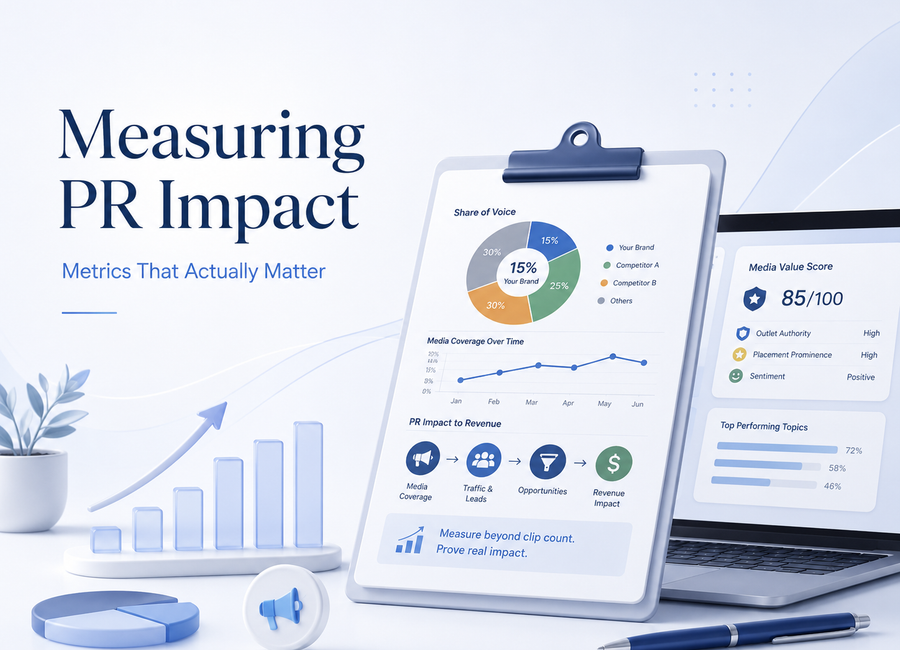
Crisis impact is measured across trust, media, operations and commercial performance. The same principle applies to broader PR ROI measurement: measurement should focus on meaningful outcomes rather than visibility alone.
The team conducts a debrief and updates the playbook before the next major event or campaign.
Frequently Asked Questions
Q1. What is crisis PR in luxury and event management?
Crisis PR is the structured process of managing communication and response when an incident threatens safety, trust, operations or reputation. It connects leadership, operations, legal and communication teams to ensure accurate, coordinated messaging.
Q2. Why are luxury brands more vulnerable during a crisis?
Luxury brands operate on expectations of exclusivity, control, privacy and precision. When an experience fails to meet these expectations, the disappointment and public backlash are often stronger than in mass-market services.
Q3. What should be the first priority during a crisis?
The first priority is always protecting people and preventing further harm. Communication comes after immediate operational response and verification of facts.
Q4. What is a holding statement?
A holding statement is a short initial public response used when facts are still being verified. It acknowledges awareness of the issue, expresses concern and explains immediate actions without speculation.
Q5. How should success be measured after a crisis?
Success is measured through recovery of trust, accuracy of communication, resolution of customer impact, media narrative correction, operational improvements and long-term business recovery—not just sentiment or visibility.
Conclusion
Crisis PR for luxury brands and high-profile events is not a reactive communication function. It is a structured system that integrates risk planning, operational readiness, stakeholder coordination and controlled messaging.
The effectiveness of a crisis response depends less on the wording of a public statement and more on how quickly and responsibly the organisation acts to protect people, verify facts and deliver meaningful support to those affected.
Luxury environments amplify both success and failure. Because expectations are higher, even small disruptions can escalate into reputational challenges if they are not handled with clarity and discipline.
Strong crisis management is built on preparation: defined roles, escalation structures, scenario planning and trained teams. During an incident, it relies on speed combined with accuracy, empathy backed by action and communication aligned with operational reality.
Brands that manage crises well do not eliminate criticism entirely. Instead, they reduce confusion, protect trust and demonstrate accountability under pressure.
Over time, the real strength of crisis PR is not in controlling narratives, but in proving that the organisation can respond responsibly when its promises are tested in real conditions.
Build Crisis-Ready Luxury Experiences That Protect Your Brand Reputation
Build a stronger reputation strategy by combining crisis preparation with professional PR, media and marketing, structured event management and consistent brand communication.
📩 info@dtsworld.in 📞 +91 80000 06021 📍 Andheri (West), Mumbai
Related reading: Crisis PR for luxury brands.
Need this for your brand?
Let DTS build your next campaign.
From PR, celebrity management and events to websites, social media, SEO and AI video production — Double Trouble Studio helps brands grow with strategy and execution.
Discuss Your Requirement →