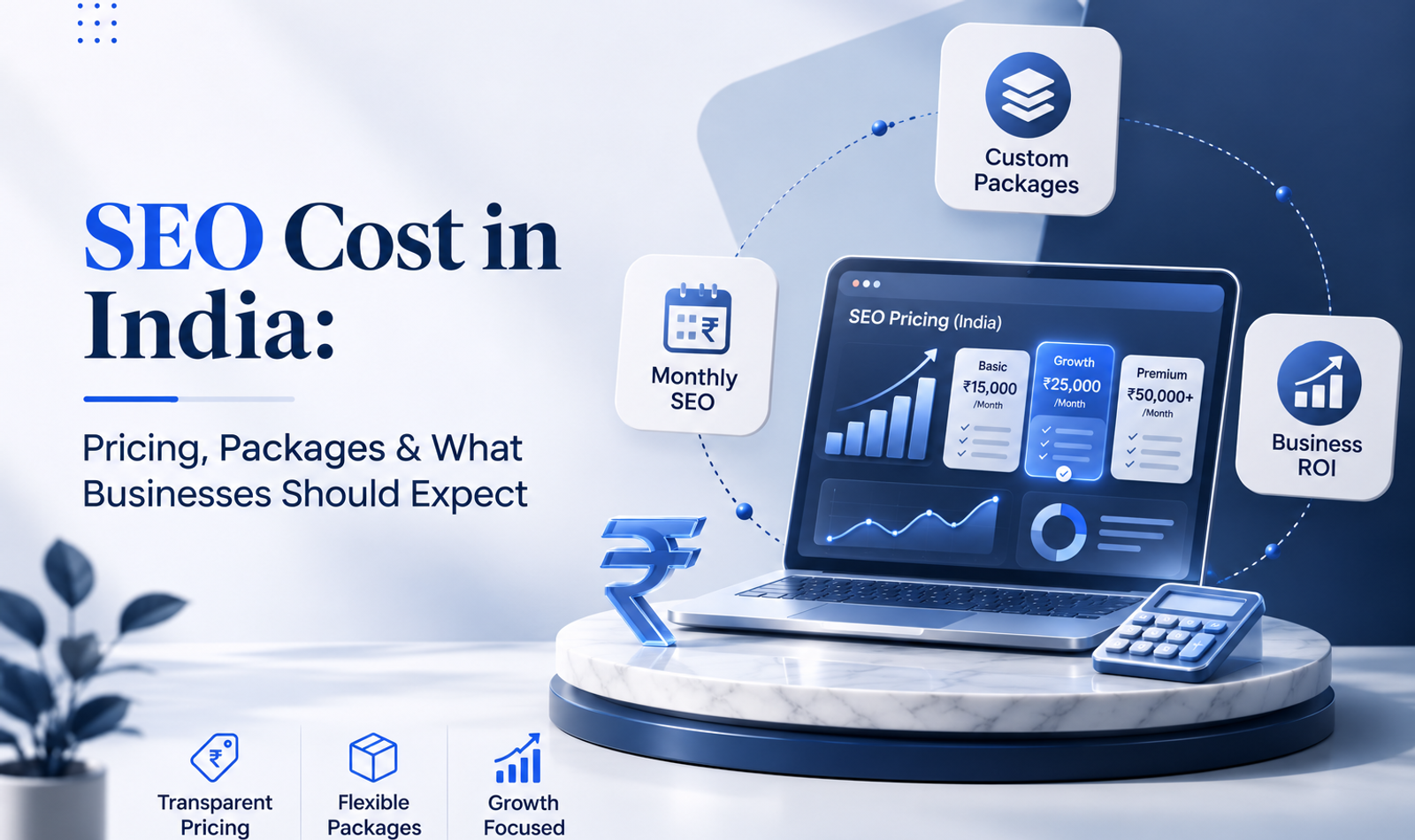
SEO Cost in India: Pricing, Packages & What Businesses Should Expect
Search Engine Optimization (SEO) has become an important digital marketing investment for Indian businesses looking to improve Google rankings, attract potential customers, and generate sustainable website traffic. However, one of the most common questions business owners ask before hiring an SEO agency is: How much does SEO cost in India?
In 2026, SEO services in India can cost approximately ₹8,000 to ₹1,50,000 or more per month, depending on the business size, industry competition, website condition, geographical targeting, and services included in the campaign. Small businesses with limited local competition may require relatively modest monthly budgets, while national brands, e-commerce websites, and enterprises often need more comprehensive SEO strategies.
Understanding SEO pricing is important because not every SEO package offers the same level of service. Some agencies focus primarily on keyword optimization and reporting, while others provide technical SEO, content strategy, website improvements, link acquisition, and ongoing performance analysis.
For businesses unfamiliar with the process, understanding what SEO is and how search engine optimization works can help explain why SEO requires ongoing investment rather than a one-time payment.
This guide explains SEO costs in India, common pricing models, different monthly packages, the factors influencing agency fees, and how businesses can select an SEO investment that aligns with their growth objectives.
How Much Does SEO Cost in India in 2026?
The cost of SEO services in India varies considerably because businesses have different goals, competitive environments, and website requirements. A local restaurant targeting customers within a single neighbourhood requires a different optimization strategy from an e-commerce company competing nationally across thousands of product-related searches.
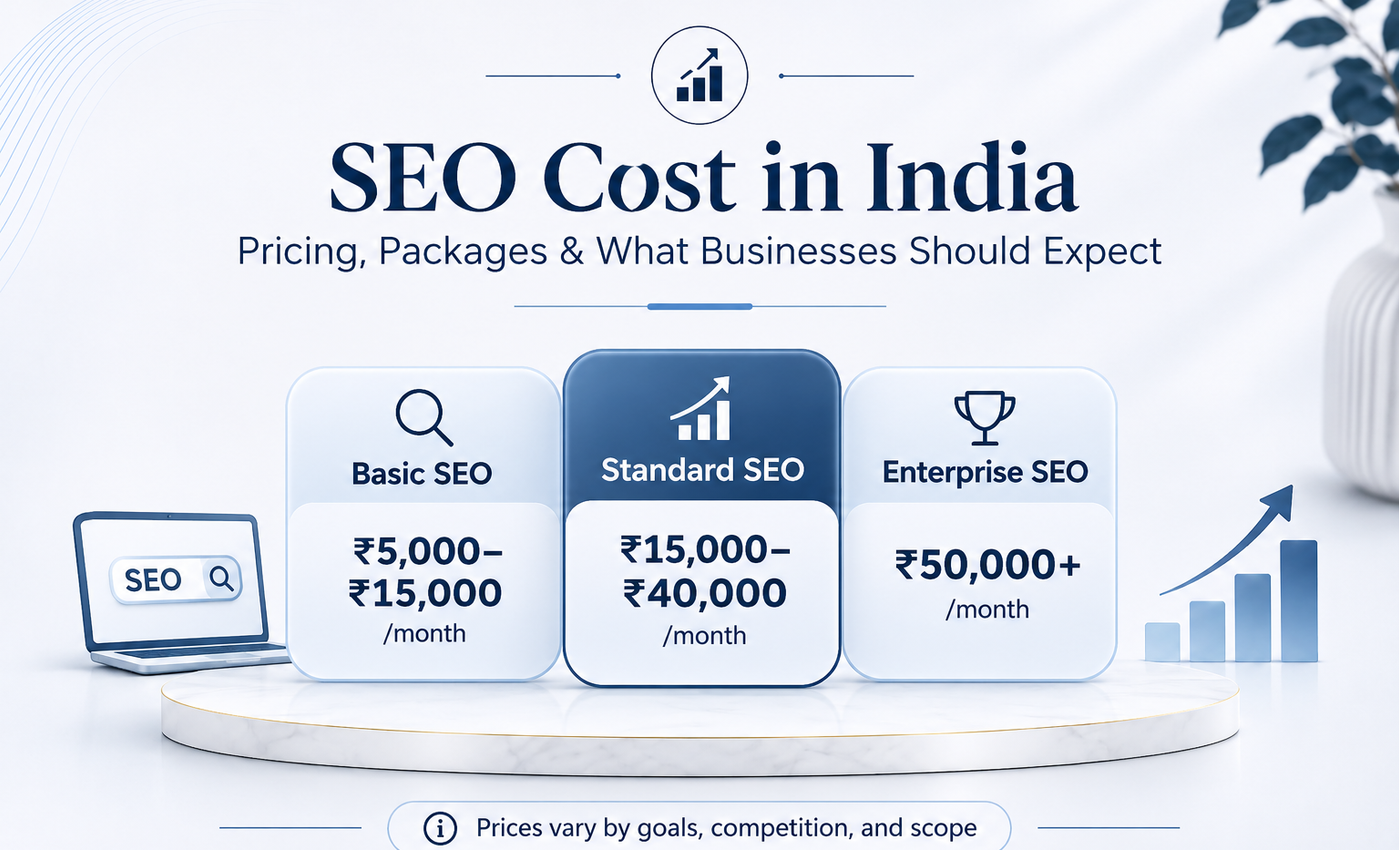
Based on indicative Indian market pricing, entry-level SEO packages may begin around ₹8,000 to ₹15,000 per month. Small-business campaigns commonly fall between ₹15,000 and ₹35,000 per month, while growth-oriented campaigns can range from ₹35,000 to ₹75,000 monthly.
Businesses operating in highly competitive industries, targeting multiple cities, or managing large websites may need to invest ₹75,000 to ₹1,50,000 or more per month. Enterprise SEO programs can exceed these amounts substantially.
These figures represent approximate market ranges rather than fixed industry rates or guaranteed quotations.
SEO Pricing in India: Estimated Monthly Packages
SEO Package
Estimated Monthly Cost
Suitable For
Basic SEO
₹8,000–₹15,000
Very small websites and limited local campaigns
Small Business SEO
₹15,000–₹35,000
Local businesses and growing service providers
Growth SEO
₹35,000–₹75,000
Established businesses and competitive markets
Advanced SEO
₹75,000–₹1,50,000
National brands and larger websites
Enterprise SEO
₹1,50,000+
Large e-commerce, multi-location, and enterprise websites
Actual prices depend on the scope of work, provider expertise, content requirements, and technical complexity. Agencies may charge separately for content production, major website changes, specialist tools, or other services.
The most important consideration is not simply choosing the lowest-priced package. Businesses should evaluate the work included, the experience of the provider, and whether the proposed strategy supports meaningful commercial goals.
Understanding Different SEO Pricing Models in India
SEO companies generally use several pricing models depending on the type of project and level of ongoing involvement.
Monthly SEO Retainer
A monthly retainer is a common pricing model for businesses that require continuous search engine optimization.
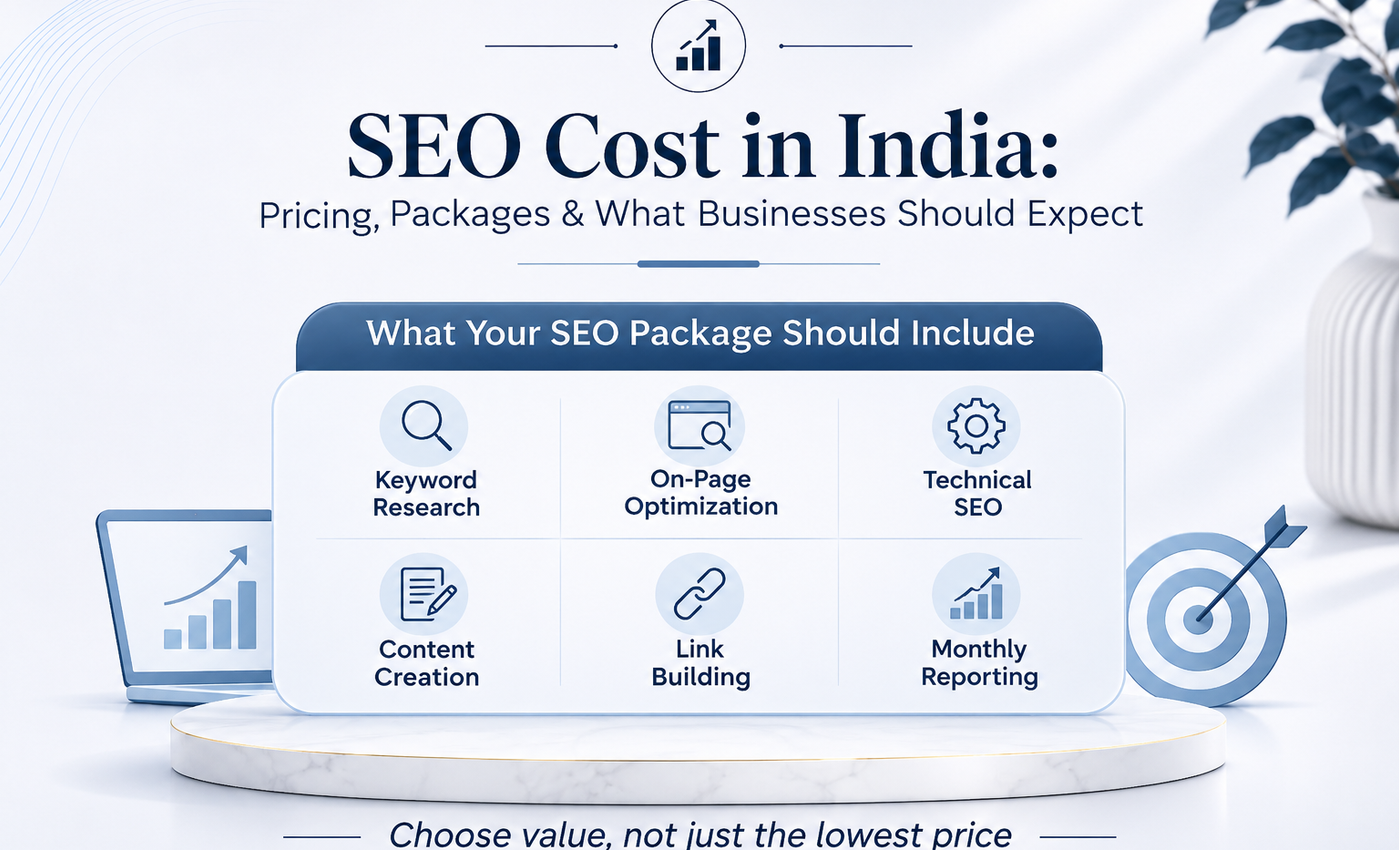
Under this arrangement, the business pays an agreed monthly amount for a defined set of services. These may include keyword research, technical monitoring, content optimization, internal linking, competitor analysis, and monthly performance reporting.
Monthly retainers are suitable for businesses seeking sustained organic growth because SEO requires ongoing adjustments and performance evaluation.
However, businesses should review the exact deliverables included in the retainer. A monthly fee should not be interpreted as a guarantee of ranking improvements or specific traffic increases.
One-Time SEO Projects
Some businesses require specific SEO improvements rather than a complete monthly campaign.
A one-time project may involve a technical website audit, SEO migration support, website structure improvements, or optimization of a particular group of landing pages.
For illustration, a limited technical audit may cost several thousand rupees, while a complex audit or large-scale migration can cost substantially more.
The final project fee depends on the number of pages, technical complexity, analysis required, and implementation responsibilities.
One-time projects can resolve important problems, but businesses may still need ongoing SEO support after the initial improvements are completed.
Hourly SEO Consulting
Independent SEO consultants may charge hourly rates for audits, technical investigations, strategy sessions, or specialist advice.
Hourly arrangements can be useful when a business already has an internal marketing or development team capable of implementing the recommendations.
Before hiring a consultant, businesses should clarify the hourly rate, expected number of hours, deliverables, and whether implementation is included.
Performance-Based SEO Pricing
Some providers offer pricing arrangements linked to rankings, qualified leads, or other agreed performance indicators.
Although these models may appear attractive, businesses should carefully review how success is measured.
Search rankings are influenced by multiple factors and cannot be guaranteed. Performance-based contracts should therefore use transparent definitions, realistic commercial goals, and clear attribution methods.
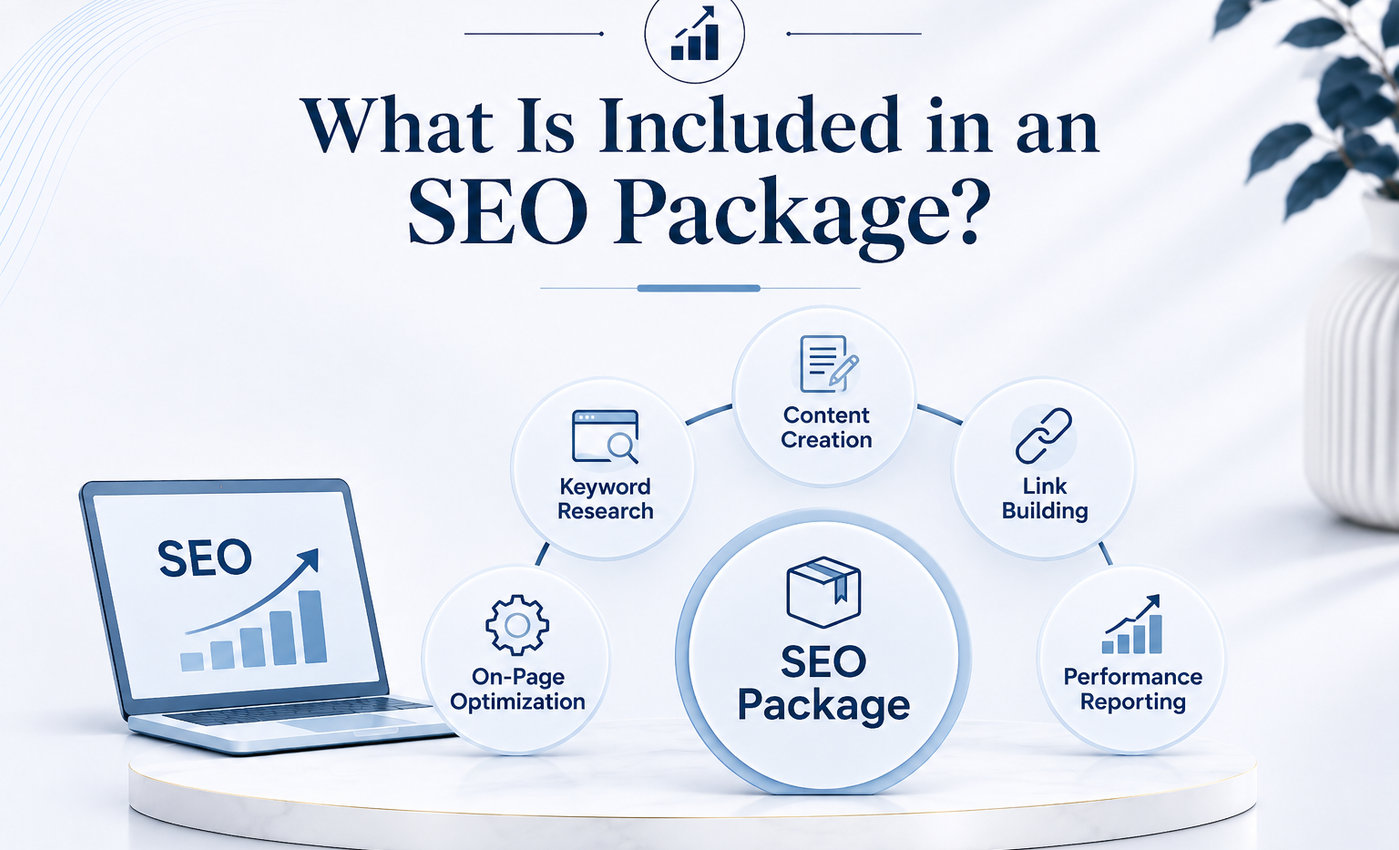
What Is Included in an SEO Package?
A professional SEO package should provide a structured approach to improving website visibility rather than focusing only on a predetermined number of keywords.
1. Website SEO Audit
An SEO audit evaluates the website's existing search performance and identifies issues that may prevent it from performing effectively.
This includes examining crawling, indexing, URL structure, canonical tags, metadata, internal links, and website accessibility.
The audit creates a foundation for prioritizing improvements according to their potential impact and implementation requirements.
2. Keyword Research and Search Intent Analysis
Keyword research identifies the searches potential customers use when looking for relevant products, services, and information.
Effective research considers search intent, keyword relevance, competition, and potential commercial value.
Rather than targeting only high-volume keywords, businesses should prioritize search terms that match customer needs and support measurable outcomes.
A structured SEO keyword research strategy for generating business helps explain how businesses can identify opportunities that align with their goals.
3. Technical SEO Optimization
Technical SEO focuses on helping search engines discover, crawl, render, and index website content correctly.
It may include addressing broken links, duplicate content, indexing problems, redirects, XML sitemaps, canonical tags, and website performance issues.
A comprehensive technical SEO optimization strategy is especially important for websites experiencing crawling errors, indexing problems, or structural limitations.
4. On-Page SEO
On-page optimization improves individual pages so they communicate their purpose clearly to users and search engines.
This includes refining page titles, headings, meta descriptions, content structure, image alt text, and internal links.
Effective on-page SEO practices for better rankings can help strengthen the relevance and usability of important landing pages.
5. SEO Content Strategy
Content development is an important part of many SEO campaigns.
Businesses may require service-page improvements, informational articles, buying guides, FAQs, or industry-specific resources.
Content should answer genuine user questions and support relevant search intent rather than simply repeat keywords.
Building an organized SEO content strategy with topic clusters can help businesses connect related resources and develop broader coverage around important subjects.
6. Link Building and Off-Page SEO
Off-page SEO involves activities that strengthen a website's visibility and reputation beyond its own pages.
Relevant editorial backlinks, industry references, and credible brand mentions can contribute to a stronger online presence.
However, buying manipulative links or using automated link schemes can create search risks.
Businesses should understand how a sustainable link-building strategy for SEO differs from low-quality backlink packages.
7. Monthly Reporting and Performance Analysis
A reliable SEO provider should explain what work has been completed, what results have changed, and what improvements are planned next.
Reporting should include relevant search impressions, organic clicks, indexing performance, keyword visibility, conversions, and qualified enquiries where tracking is available.
Businesses should also expect clear explanations of results rather than reports containing only large volumes of technical data.
Local SEO Cost in India
Local SEO focuses on improving visibility for businesses serving customers in specific geographical areas.
This can include clinics, restaurants, salons, professional service providers, retail stores, and businesses operating within defined service areas.
Local SEO packages in India may cost approximately ₹8,000 to ₹30,000 per month for relatively limited campaigns. More competitive or multi-location campaigns can require higher budgets.
The scope may include Google Business Profile optimization, local keyword research, accurate business information, location-page optimization, review management guidance, and local visibility reporting.
A business targeting customers within a single neighbourhood will generally require a different level of work from a company serving multiple metropolitan areas.
For example, businesses operating in competitive urban markets can benefit from understanding how local SEO for Mumbai businesses supports geographical visibility and customer discovery.
Local SEO pricing should reflect the actual work required, the competitive landscape, and the number of genuine business locations or service areas.
E-Commerce SEO Cost in India
E-commerce websites often require more extensive SEO work because they contain product listings, category pages, filters, and complex navigation structures.
Depending on website size and competition, e-commerce SEO services in India may cost approximately ₹35,000 to ₹1,50,000 or more per month. Large online stores may require significantly higher investments.
E-commerce SEO involves more than optimizing product descriptions.
It may require improving category-page relevance, managing duplicate URLs, reviewing faceted navigation, implementing structured data, optimizing product information, and resolving indexing inefficiencies.
For large product catalogues, technical issues can affect thousands of URLs, increasing the time and expertise required for effective optimization.
Businesses should ensure that their SEO package includes both technical website improvements and commercial performance tracking, particularly organic product discovery, transactions, and revenue.
What Factors Affect SEO Pricing in India?
Industry Competition
Competitive industries typically require more extensive research, content development, and optimization.
Businesses competing for broad commercial searches may need larger budgets than companies operating within specialized niches.
Website Size and Complexity
A website containing ten service pages requires a different level of work from an e-commerce platform with thousands of products.
Larger websites may need more technical analysis, content management, internal linking improvements, and ongoing monitoring.
Target Locations
A local campaign targeting one city may cost less than an SEO strategy covering several cities, national audiences, or international markets.
However, geographical expansion should involve genuinely useful, location-specific content rather than creating numerous repetitive pages.
Content Requirements
Businesses with limited existing content may need additional investment in service pages, articles, informational resources, or product descriptions.
Content production costs vary according to research requirements, subject expertise, editing, and the number of pages involved.
Technical Website Condition
Websites with major technical issues may require substantial work before content improvements can produce meaningful results.
Website migrations, rendering problems, indexing errors, and complex architecture may also increase SEO costs.
Agency Expertise and Resources
An experienced SEO team may charge more because its work can involve technical specialists, content strategists, analysts, and developers.
However, a higher fee alone does not establish quality. Businesses should evaluate experience, transparent deliverables, communication, and the relevance of the proposed strategy.
Cheap SEO vs Professional SEO: What Is the Difference?
Low-cost SEO packages can appeal to startups and small businesses operating with limited marketing budgets.
However, businesses should distinguish between affordable services with a clearly limited scope and unusually cheap packages promising unrealistic outcomes.
A legitimate entry-level SEO package might focus on a few important website pages, basic technical improvements, Google Business Profile optimization, and monthly reporting.
In contrast, a provider promising hundreds of backlinks, dozens of articles, and guaranteed first-page rankings for a very small monthly fee may be offering work that lacks quality or uses risky techniques.
Professional SEO should prioritize relevance, technical accuracy, content usefulness, and measurable business outcomes.
Businesses should ask how the provider plans to improve performance, which activities are included in the price, and how results will be evaluated.
The objective is to find an appropriate balance between affordability, realistic scope, and execution quality.
SEO vs Google Ads: Which Is More Cost-Effective?
SEO and Google Ads are different customer acquisition approaches, and their costs should be evaluated according to business objectives.
Google Ads can provide paid search visibility relatively quickly, but businesses pay for campaign delivery, and costs depend on bidding competition, targeting, and campaign performance.
SEO generally requires a longer initial investment in technical improvements, content development, and optimization.
However, valuable organic pages may continue attracting visitors over time without a payment for every search click.
The most cost-effective option depends on customer acquisition costs, conversion rates, campaign timelines, and long-term business goals.
For many businesses, combining SEO with paid advertising provides a balanced approach to short-term demand generation and longer-term organic growth.
Understanding SEO vs Google Ads and which is better for your business can help decision-makers compare the two approaches more effectively.
How Much Should a Small Business Spend on SEO?
A small business should determine its SEO budget based on its financial capacity, market competition, website condition, and expected commercial value from organic search.
A monthly budget of approximately ₹15,000 to ₹35,000 may be a reasonable planning range for some small-business campaigns in India.
However, businesses with limited competition and simple websites may require less, while companies competing in demanding metropolitan markets may need more.
The priority should be selecting a package that includes the most important work rather than paying for unnecessary deliverables.
For example, a local service provider may benefit more from optimizing core service pages and its Google Business Profile than from publishing numerous unrelated blog posts.
A business should also consider the value of its average customer, the number of leads needed to recover its marketing investment, and whether it can maintain the budget over an appropriate period.
SEO should be evaluated as a business investment, not simply as a recurring marketing expense.
How to Calculate SEO Return on Investment
SEO return on investment measures the financial value generated from organic search relative to the cost of SEO activities.
A simplified revenue-based formula is:
SEO ROI (%) = [(Revenue Attributed to SEO − SEO Investment) ÷ SEO Investment] × 100
Consider a business investing ₹25,000 per month in SEO for twelve months.
Its total investment would be ₹3,00,000.
If the business generates ₹5,00,000 in revenue attributable to organic search during that period, the simplified calculation would be:
SEO ROI = [(₹5,00,000 − ₹3,00,000) ÷ ₹3,00,000] × 100
SEO ROI = 66.7%
This is an illustrative example, not a forecast or guaranteed result.
The calculation uses revenue and does not account for the costs of fulfilling sales. For a more meaningful financial assessment, businesses should consider attributable gross profit or contribution margin, complete SEO costs, and appropriate customer attribution.
Businesses should also monitor organic conversions, qualified enquiries, customer acquisition costs, and long-term customer value.
What Hidden Costs Should Businesses Consider?
The monthly SEO retainer may not cover every activity needed to improve a website.
Some agencies charge separately for website development, substantial technical fixes, content writing, premium tools, digital PR campaigns, or major website migrations.
Businesses should clarify whether the proposal includes implementation or only recommendations.
For example, an agency may identify website speed issues, but resolving them could require additional developer involvement.
Similarly, a content strategy may identify the need for new landing pages, while design and development costs may be billed separately.
Conversion optimization may also require additional work. Attracting organic visitors provides limited commercial value if important landing pages are confusing or fail to encourage relevant customer actions.
Understanding landing page design and conversion best practices can help businesses evaluate whether their website is equipped to convert increased search traffic into enquiries or sales.
Before agreeing to an SEO package, businesses should request a clear breakdown of included services, excluded services, possible additional expenses, and approval requirements.
How to Choose the Right SEO Agency in India
Choosing an SEO agency should involve evaluating the provider's strategy, technical knowledge, transparency, and understanding of business objectives.
An agency should be able to explain how it plans to identify opportunities, improve website performance, optimize relevant content, and track progress.
Businesses should ask what deliverables will be completed each month, how technical problems will be handled, whether content development is included, and how performance will be reported.
It is also important to clarify who owns the website, analytics accounts, Search Console property, Google Business Profile, and any content created during the engagement.
Businesses should retain appropriate access to their own digital assets.
Agencies promising guaranteed Google rankings or immediate organic revenue should be evaluated carefully. Search results are influenced by competition, user intent, search engine systems, and website quality, and no provider can guarantee specific organic positions.
A suitable agency should offer a realistic strategy aligned with the business's goals, resources, and competitive environment.
How Double Trouble Studio Approaches SEO
At Double Trouble Studio, effective SEO begins with understanding the business, its audience, website performance, and long-term digital objectives.
A structured SEO strategy may involve technical website analysis, keyword research, content optimization, internal linking, and ongoing performance evaluation.
The objective is to improve relevant organic search visibility while supporting meaningful business outcomes such as qualified website visits and customer enquiries.
Instead of treating SEO as a collection of isolated activities, businesses benefit from connecting search optimization with website usability, content quality, and conversion performance.
Organizations looking to strengthen their organic search presence can explore Double Trouble Studio's SEO services to learn how a structured approach to optimization can support their digital growth objectives.
Frequently Asked Questions (FAQs)
1. How much does SEO cost per month in India?
SEO services in India may cost approximately ₹8,000 to ₹1,50,000 or more per month in 2026. Basic local campaigns typically cost less than comprehensive national, e-commerce, or enterprise SEO programs. Actual prices depend on competition, website size, service scope, and provider expertise.
2. What is the average SEO cost for a small business in India?
Many small businesses can consider an initial planning budget of approximately ₹15,000 to ₹35,000 per month for ongoing SEO. However, requirements vary depending on the industry, existing website condition, and geographical competition.
3. Is ₹10,000 per month enough for SEO?
A ₹10,000 monthly budget may support limited SEO activities for a small website, such as basic on-page improvements, local optimization, or monitoring. It is unlikely to cover extensive technical work, regular high-quality content production, and competitive national SEO simultaneously.
4. Why do SEO agencies charge different prices?
SEO pricing varies because agencies differ in expertise, staffing, deliverables, technical responsibilities, content requirements, and target markets. A large e-commerce campaign usually requires more resources than a small local SEO project.
5. What should be included in a monthly SEO package?
A suitable package should define keyword research, relevant technical SEO activities, on-page optimization, content work, internal linking, performance monitoring, and reporting. The exact deliverables should reflect the business's needs and agreed budget.
6. Is SEO cheaper than Google Ads?
SEO and Google Ads have different cost structures. SEO requires investment in optimization and content, while Google Ads involves paid media expenditure. SEO can provide long-term organic traffic opportunities, but neither method is always cheaper or more profitable for every business.
7. How much does local SEO cost in India?
Local SEO may cost approximately ₹8,000 to ₹30,000 per month for relatively limited campaigns. More competitive local markets, multiple business locations, or extensive service-area strategies can require higher budgets.
8. How much does e-commerce SEO cost in India?
E-commerce SEO may cost approximately ₹35,000 to ₹1,50,000 or more per month, depending on catalogue size, technical complexity, competition, and growth objectives. Enterprise e-commerce websites can require significantly larger investments.
9. How long should businesses invest in SEO before evaluating results?
Businesses should monitor progress from the beginning, but meaningful organic growth may take several months. Many campaigns are evaluated over 6 to 12 months or longer, with regular reviews of technical improvements, search visibility, traffic, and conversions.
10. Can SEO agencies guarantee first-page Google rankings?
No legitimate SEO provider can guarantee specific organic search rankings. Search results depend on many factors outside an agency's direct control. Businesses should prioritize transparent strategies and measurable outcomes rather than guaranteed ranking promises.
11. Are SEO packages worth the investment?
SEO packages can be valuable when the work targets relevant search opportunities, improves website quality, and generates commercially meaningful results. Businesses should evaluate the quality of deliverables, customer acquisition performance, and long-term financial returns rather than relying only on ranking reports.
12. How do I choose the right SEO package for my business?
Start by assessing your website's condition, target audience, competitive market, and available budget. Compare packages based on technical work, content strategy, implementation responsibilities, reporting, and measurable business objectives. Choose a provider that clearly explains what is included and what results can realistically be expected.
Conclusion: What Should Businesses Expect to Pay for SEO in India?
The cost of SEO in India depends on business size, industry competition, website complexity, and the level of optimization required.
In 2026, basic SEO packages may begin around ₹8,000 to ₹15,000 per month, while small and growing businesses often consider budgets between ₹15,000 and ₹75,000 monthly. Advanced SEO campaigns, national targeting, and enterprise websites may require ₹75,000 to ₹1,50,000 or more.
However, choosing the right SEO package is not simply about finding the lowest monthly price.
Businesses should focus on understanding the work being delivered, the quality of the strategy, the experience of the provider, and the potential contribution of organic search to long-term business growth.
A well-planned SEO investment should improve technical website quality, strengthen relevant search visibility, attract qualified traffic, and create opportunities for sustainable customer acquisition.
The right SEO budget is the one that supports meaningful business objectives through a realistic and measurable strategy.
At Double Trouble Studio, we believe that sustainable search visibility begins with clear planning, strong technical foundations, and consistent optimization.
Ready to strengthen your organic search presence? Explore a structured SEO approach designed around your website's requirements, competitive environment, and long-term growth goals.
📩 info@dtsworld.in📞 +91 80000 06021📍 Andheri West, Mumbai
Need this for your brand?
Let DTS build your next campaign.
From PR, celebrity management and events to websites, social media, SEO and AI video production — Double Trouble Studio helps brands grow with strategy and execution.
Discuss Your Requirement →