Theming & Design Trends for Luxury Events 2026–2027
Luxury event design is entering a more intelligent, personal and experience-led phase. Visual grandeur remains important, but the definition of a premium event is shifting away from decorative excess and towards spaces that communicate a story, respond to the venue and make guests feel emotionally connected.
The leading luxury event design trends for 2026–2027 combine craftsmanship, technology, sustainability, cultural identity and highly considered hospitality. Events are being designed as complete environments rather than collections of stages, flowers, tables and photo opportunities.
For weddings, this means creating celebrations that reflect the couple’s story, family heritage and destination. For corporate events, it means transforming business messages into physical experiences that guests can enter, understand and remember.
The strongest trend is not one particular colour, flower or structure. It is the movement towards intentional design in which every detail has a purpose, every space supports guest behaviour and every visual element belongs to one coherent narrative.
This guide explores the most important theming and design directions influencing luxury weddings, corporate gatherings, brand launches, private celebrations and destination events in 2026 and likely to continue developing through 2027.
Quick Answer
The leading luxury event design trends for 2026–2027 include narrative-led themes, refined minimalism, culturally rooted craftsmanship, sculptural floral architecture, immersive lighting, personalised guest zones, sustainable modular installations and technology that remains visually discreet.
Luxury clients are increasingly moving away from copied themes and decorative clutter. They want events that feel original, comfortable, emotionally meaningful and connected to their personal identity, brand values or destination.
The most successful events will combine memorable visual design with practical guest movement, hospitality, accessibility and content creation. Design must not only appear impressive in photographs; it must improve how the event feels in person.
Luxury Event Design Trends 2026–2027 at a Glance
Design Trend
Core Design Language
Best Suited For
Primary Guest Impact
Narrative-led theming
Story, sequence and meaning
Weddings and brand events
Emotional connection
Refined minimalism
Clean forms and restraint
Luxury dinners and launches
Calm sophistication
Curated maximalism
Layered colour and detail
Sangeets and celebrations
Visual energy
Cultural craftsmanship
Regional art and materials
Indian and destination weddings
Authentic identity
Botanical architecture
Sculptural florals and greenery
Weddings and gala events
Natural immersion
Experiential lighting
Dynamic and atmospheric light
Receptions and corporate events
Mood transformation
Personalised environments
Guest-specific zones and details
Private and VIP events
Individual recognition
Modular sustainability
Reusable structures and materials
Brand and multi-day events
Responsible luxury
Invisible technology
Integrated screens and interaction
Conferences and launches
Seamless engagement
Multi-sensory design
Sound, scent, texture and taste
Luxury hospitality events
Deeper memory
These directions should not be applied as fixed templates. Each trend must be adapted to the host, audience, venue, culture and purpose of the event.
What Defines Luxury Event Design in 2026?
Luxury event design in 2026 is defined by intention rather than quantity. A large floral installation may be appropriate when it supports the story and architecture, but scale alone no longer guarantees sophistication.
Guests increasingly recognise the difference between a designed experience and an expensive collection of unrelated objects. They notice how comfortably they can move, whether lighting supports conversation and whether the environment feels personal.
Modern luxury also values discretion. Technology, service stations, technical equipment and operational systems should support the experience without dominating the visual environment.
A premium event should feel coherent from the invitation to the final departure. The entrance, tables, stage, entertainment, food presentation and guest communication should all express the same creative direction.
From Decorative Themes to Narrative Worlds
Traditional event themes often begin with a visual label such as royal, floral, vintage or tropical. Narrative-led design begins with a deeper question: what story should the guest understand and feel?
A wedding narrative may follow the couple’s shared journey, family heritage or relationship with a destination. A corporate event may communicate transformation, innovation, trust or a new brand chapter.
The design then develops through a sequence of environments. The invitation introduces the narrative, the entrance creates anticipation and the central experience reveals its strongest visual and emotional moment.
This approach produces more original events because the design is based on a specific story rather than a widely used style reference. It also helps every vendor understand why particular materials, colours and interactions have been selected.
Trend One: Story-Led Event Theming
Story-led theming will remain one of the most important luxury event design trends through 2027. Clients increasingly want an experience that could only belong to them.
For weddings, the story may use meaningful cities, family traditions, shared interests or personal memories. These references can appear through artwork, menus, music, signage, guest gifts and spatial design without becoming overly literal.
For brands, the narrative may translate a product benefit or campaign idea into an environment. A technology company could build a responsive journey around possibility, while a hospitality brand may create a sequence based on local discovery.
The story should guide the experience without requiring a long explanation. Guests should be able to feel the idea through the atmosphere, movement and details.
Trend Two: Refined Minimalism and Quiet Luxury
Minimal luxury is becoming warmer, more tactile and more human. Instead of empty white spaces, designers are using controlled palettes, sculptural forms, premium materials and carefully placed visual statements.
A refined minimalist event may feature one major floral installation, beautifully proportioned furniture, soft architectural lighting and generous negative space. Each element receives more attention because the environment is not overloaded.
This direction is particularly suitable for private dinners, luxury product launches, intimate weddings and high-value corporate gatherings. It allows the host, product or architecture to remain central.
Minimalism also requires exceptional execution. Poor materials, exposed cables or inconsistent furniture become more noticeable when fewer decorative elements are present.
Trend Three: Curated Maximalism
Minimalism is not replacing expressive celebration entirely. Curated maximalism is also becoming influential, particularly for Indian weddings, fashion events, music-led experiences and festive social occasions.
The difference between curated maximalism and clutter is control. Colours, patterns, flowers, textiles and objects may be layered generously, but they still follow one clear visual system.
A maximalist sangeet may combine jewel-toned drapery, patterned flooring, reflective structures and energetic lighting. The design can feel theatrical without becoming visually confusing.
The strongest maximalist environments balance intense focal areas with quieter guest zones. This gives the eye and body places to rest while preserving the event’s celebratory energy.
Trend Four: Cultural Craftsmanship as Modern Luxury
Indian craft is moving from decorative reference to central design language. Luxury events are increasingly using regional techniques, artisan-made objects and culturally specific materials in contemporary ways.
Phulkari, block printing, weaving, metalwork, miniature painting, ceramics and hand embroidery can inspire spatial installations, table details, stationery and gifting. The objective should be respectful collaboration rather than superficial imitation.
Craft-led design creates authenticity because it connects the event to people, places and techniques. It can also support more meaningful storytelling for destination weddings and culturally rooted celebrations.
The styling should remain edited. Combining several unrelated craft traditions without context can weaken the result and turn culture into visual decoration.
Regional Craft Design Checklist
• Local artisan partnerships
• Verified cultural references
• Contemporary applications
• Accurate attribution
• Responsible sourcing
• Consistent visual language
The contribution of artists and craft communities should be recognised appropriately. Cultural storytelling becomes stronger when the process is as thoughtful as the final appearance.
Trend Five: Destination-Responsive Design
Luxury destination events are moving away from importing the same ballroom aesthetic into every city. Design is increasingly being developed around local architecture, landscape, climate, materials and culture.
A Rajasthan wedding may use stone colours, courtyards, textiles and local craftsmanship rather than covering a heritage venue with unrelated decoration. A Goa celebration may focus on tropical vegetation, coastal light and relaxed hospitality instead of obvious beach symbols.
An Alibaug event can respond to gardens, open skies and natural textures, while a Mumbai ballroom may use architectural lighting, polished forms and urban visual language.
Destination-responsive design usually feels more sophisticated because it allows the venue to remain visible. It also reduces the amount of temporary decoration required to create atmosphere.
Trend Six: Sculptural Floral Architecture
Flowers are becoming architectural rather than merely decorative. Designers are using botanicals to shape entrances, ceilings, pathways, stages and dining environments.
Sculptural floral design may include asymmetric forms, suspended botanical clouds, growing garden effects and installations that follow the building’s structure. The arrangement is developed according to space and movement rather than placed as a standard backdrop.
Mixed botanical compositions are also becoming more common. Flowers may be combined with branches, grasses, foliage, fruit, seeds, stone, metal or fabric to create greater texture and depth.
Large installations should still be evaluated for sustainability, guest sightlines and structural safety. The goal is not to use the maximum number of flowers but to create the strongest spatial effect.
Trend Seven: Living Landscapes and Indoor Gardens
Nature-led design is developing beyond floral centrepieces. Luxury events are creating complete garden environments through planted pathways, trees, moss, stone, water and layered greenery.
This approach is particularly effective in ballrooms and convention spaces that need greater softness and atmosphere. It can transform a neutral venue into an immersive landscape.
The design should consider lighting, temperature, irrigation and safe guest movement. Real plants may require different installation and maintenance planning from cut flowers or artificial materials.
Living landscapes also work well for wellness events, sustainable brand launches and daytime weddings. They create a sense of calm while providing strong visual depth.
Trend Eight: Experiential Lighting
Lighting is becoming one of the most important creative materials in luxury event design. It can transform the same venue several times without rebuilding the physical décor.
Designers are using layered architectural lighting, projection, controlled movement, shadows and programmable colour transitions. The lighting changes according to arrival, dining, performance and celebration.
For weddings, warm lighting can create intimacy during ceremonies before moving into richer colour and movement for entertainment. For brand events, light can guide attention towards products, speakers and interactive installations.
Lighting must still support guests and photography. An event should not sacrifice visibility, skin tones or comfort simply to create dramatic visual effects.
Lighting Design Checklist
• Architectural lighting
• Guest visibility
• Photography requirements
• Programme transitions
• Emergency illumination
• Power backup
The lighting designer should work with the décor, production and content teams. Separate planning can create conflicting colour temperatures and inconsistent visuals.
Trend Nine: Multi-Sensory Event Design
Luxury events are increasingly being designed for more than visual impact. Sound, scent, texture, temperature and taste are being used to strengthen memory and atmosphere.
A destination dinner may use local music, natural materials, regional flavours and a subtle location-inspired scent. A beauty launch may connect product ingredients with fragrance, lighting and tactile installations.
The sensory elements should remain coordinated. Strong fragrance near food or excessive sound in conversation areas can reduce guest comfort.
Multi-sensory design works best when each element supports the same story. Random sensory stimulation may create novelty, but it rarely creates meaningful luxury.
Trend Ten: Personalised Guest Environments
Personalisation is moving beyond printed names and monograms. Events are beginning to design different experiences according to guest groups, preferences and relationship value.
A wedding may include family lounges, children’s activities, accessible seating and personalised welcome details. A corporate summit may offer different content paths, networking zones and hospitality experiences.
VIP personalisation should remain discreet. Publicly ranking guests through visibly different treatment can damage the atmosphere.
The objective is to make people feel understood without making the event feel divided. Thoughtful personalisation reduces friction and allows different guests to experience the event comfortably.
Trend Eleven: Micro-Environments Inside Large Venues
Large ballrooms and convention spaces are increasingly being divided into smaller emotional zones. This helps create intimacy, movement and variety without reducing overall capacity.
An event may include a central stage, conversation lounges, a quiet bar, an interactive installation and a private hospitality area. Each zone supports a different guest behaviour.
Furniture, lighting and flooring can define these environments without using permanent walls. This maintains visual connection while giving guests meaningful choice.
Micro-environments are especially valuable during long weddings and corporate programmes. Guests can change pace without leaving the event entirely.
Trend Twelve: Lounge-Led Social Design
Formal seating remains necessary for many ceremonies and dining formats, but lounge-led layouts are becoming more influential. Sofas, conversational seating and flexible clusters encourage interaction and comfort.
The furniture should be selected according to guest age, attire and event duration. Extremely low seating may photograph well but become uncomfortable for elderly guests or formal clothing.
Mixed seating can create a more natural social atmosphere. Dining tables, high tables, lounges and standing areas may be combined according to the programme.
The design must still preserve clear circulation. Furniture should support interaction without creating obstacles for guests and service teams.
Trend Thirteen: Invisible Event Technology
Technology will continue shaping luxury events, but its visual integration will become more discreet. Guests want convenience and interaction without entering an environment that feels like an equipment exhibition.
Screens may be integrated into architectural structures, mirrors, tables or scenic surfaces. Registration technology, RFID credentials and digital signage can also be designed within the visual identity.
Interactive media may respond to movement, sound or guest input. However, the experience should remain intuitive and offer a human alternative when required.
The most successful technology becomes almost invisible. Guests remember what it allowed them to do rather than the device itself.
Trend Fourteen: AI-Assisted Event Design
Artificial intelligence is becoming a practical tool for event designers and planners. It can support early visualisation, layout alternatives, content concepts, guest communication and operational analysis.
AI-generated mood explorations can help teams compare directions before detailed design work begins. However, these images should not be treated as construction-ready plans.
Professional designers must still interpret scale, materials, engineering, safety, cost and venue restrictions. A visually impressive AI image may include structures that cannot be built responsibly.
AI works best as a creative and planning assistant. Human direction, cultural understanding and technical experience remain essential to producing a luxury event.
Professional AI video and VFX services can also support visualisation, event films, digital environments and promotional content.
Trend Fifteen: Editorially Designed Events
Events are increasingly being designed with content production in mind. The objective is no longer to create one photo wall but to build several naturally photogenic moments throughout the guest journey.
An editorially designed event considers camera angles, lighting, background depth and movement. Guests can create strong content without waiting in a formal photo queue.
The approach may include layered entrances, sculptural bars, dramatic corridors and beautifully lit tables. These moments should still support the live experience rather than exist only for social media.
Content teams should be involved during design planning. Their requirements affect lighting, access, timing and visual composition.
Trend Sixteen: Cinematic Entrances
Entrances are becoming narrative transitions rather than isolated gates. They prepare guests emotionally for the experience ahead.
A cinematic arrival may use sound, controlled light, scent, movement and gradually revealed architecture. The main event space is not visible immediately, allowing anticipation to develop.
The entrance should still remain operational. Registration, security, valet movement and accessibility must work behind the visual experience.
The most effective entrance expresses the event theme without revealing every element at once. It creates curiosity and encourages guests to continue exploring.
Trend Seventeen: Transformative Day-to-Night Design
Multi-day and long-duration events need environments that can change with the programme. A static design may feel less engaging after several hours.
Lighting, movable panels, screens, table details and entertainment can transform a space from ceremony to dinner and celebration. The venue may appear calm and natural during the day before becoming richer and more theatrical at night.
This approach can reduce the need for several completely separate setups. It also creates stronger emotional progression.
The transformation should be rehearsed carefully. Guest movement, vendor access and timing must be controlled so the change feels intentional rather than disruptive.
Trend Eighteen: Sustainable and Modular Luxury
Sustainability is moving from a communication statement to a practical design requirement. Clients and brands increasingly want to understand what happens to structures, flowers, furniture and materials after the event.
Modular systems allow scenic elements to be reused, reconfigured and stored. Standardised internal structures can receive different finishes without being discarded after one event.
Local sourcing can reduce freight and support destination relevance. Potted plants, rental furniture and reusable tableware may also reduce unnecessary waste.
Sustainable design should not look temporary or unfinished. Responsible planning can still produce a highly refined and luxurious result.
Sustainable Design Checklist
• Reusable structures
• Rental furniture
• Local sourcing
• Material recovery
• Floral repurposing
• Waste separation
• Responsible gifting
• Transport efficiency
Environmental claims should reflect actual decisions. Sustainability should not be used as decorative language when the production process remains wasteful.
Trend Nineteen: Material-Led Theming
Materials are taking a more important role in event storytelling. Wood, metal, stone, glass, textiles, paper and reflective surfaces can create atmosphere before additional decoration is added.
Tactile materials help minimalist events feel warm and premium. Hand-finished surfaces, woven elements and natural imperfections can provide depth without visual clutter.
Reflective metals and translucent materials are also being used for futuristic launches and contemporary receptions. Their appearance changes according to lighting and guest movement.
The selected materials should work with the venue and climate. Outdoor humidity, wind and rain can affect finishes that perform well indoors.
Materials Expected to Influence 2026–2027
• Brushed metals
• Textured stone
• Handwoven fabrics
• Translucent panels
• Coloured glass
• Natural timber
• Sculpted paper
• Reflective surfaces
The material palette should remain focused. Too many competing finishes can weaken the event’s design identity.
Trend Twenty: Modern Tablescape Storytelling
Luxury tablescapes are becoming more layered and expressive, but height and decoration are being balanced with guest conversation.
Custom linens, sculptural tableware, personal menus, candle compositions and tactile place details can make dining feel like a complete experience. Tables are becoming stages for hospitality rather than simply surfaces for flowers.
Long communal tables are also being used to create connection, particularly during destination dinners and private celebrations. Round tables remain useful for formal seating but may receive less conventional centre compositions.
The tablescape should reflect the menu and service style. Large decorative elements should not obstruct food presentation or communication between guests.
Trend Twenty-One: Food Presentation as Event Design
Food and beverage presentation is becoming part of the visual concept. Bars, live counters, dessert rooms and chef stations are being styled as intentional environments.
The design may use materials, lighting and signage that connect directly with the event identity. A culinary experience can also become a storytelling moment through regional ingredients and preparation.
The visual concept should never reduce service efficiency. Beautiful counters that create long queues or restrict staff movement weaken the guest experience.
Décor and catering teams should therefore plan together. Food safety, temperature, replenishment and waste management must remain central.
Trend Twenty-Two: Wellness and Sensory Comfort
Guest comfort is becoming a visible design priority. Luxury is being expressed through seating quality, temperature, acoustic control, fresh air and opportunities to pause.
Long celebrations may include quiet lounges, recovery areas, hydration points and comfortable spaces for elderly guests. Corporate events may introduce natural light, wellness breaks and reduced sensory overload.
Comfort-focused design does not reduce glamour. It ensures that guests can remain present and engaged for longer.
The event should be tested from the perspective of different age groups and physical needs. A visually impressive environment may still fail when basic comfort has been ignored.
Trend Twenty-Three: Inclusive and Accessible Design
Accessibility is becoming an essential part of professional event design. It should be considered during layout development rather than added after the venue is already arranged.
Pathways, ramps, seating, washrooms, signage and stage access should support guests with different mobility and sensory needs. Lighting and typography should also remain clear enough for practical communication.
Inclusive design can be elegant and integrated. Accessible routes do not need to appear separate from the main guest experience.
Planners should also consider elders, children and guests wearing formal clothing. Accessibility often improves comfort for a much wider group than expected.
Trend Twenty-Four: Intimate Luxury and Controlled Scale
Premium events are increasingly focusing on the quality of interaction rather than the largest possible guest count. Smaller guest lists allow more personalised hospitality, distinctive venues and greater design attention.
An intimate wedding may invest in custom dining, refined entertainment and meaningful guest details. A brand may host a series of small experiences instead of one crowded launch.
Controlled scale also makes unusual venues more practical. Private homes, galleries, restaurants and heritage spaces can offer greater exclusivity than standard ballrooms.
Intimate does not mean visually simple. It means that design investment is concentrated around a carefully selected audience.
Trend Twenty-Five: Private Cultural Venues
Luxury brands and private hosts are becoming more interested in spaces with history, identity and restricted access. These may include galleries, restored buildings, private residences, museums and cultural institutions.
The attraction comes from authenticity and exclusivity. Guests experience a location they may not normally be able to enter.
These venues often have strict rules relating to structures, sound, food, capacity and photography. The design must respect the property rather than attempt to transform it aggressively.
Venue storytelling should become part of the event. The architecture and history can provide more value than additional decorative scale.
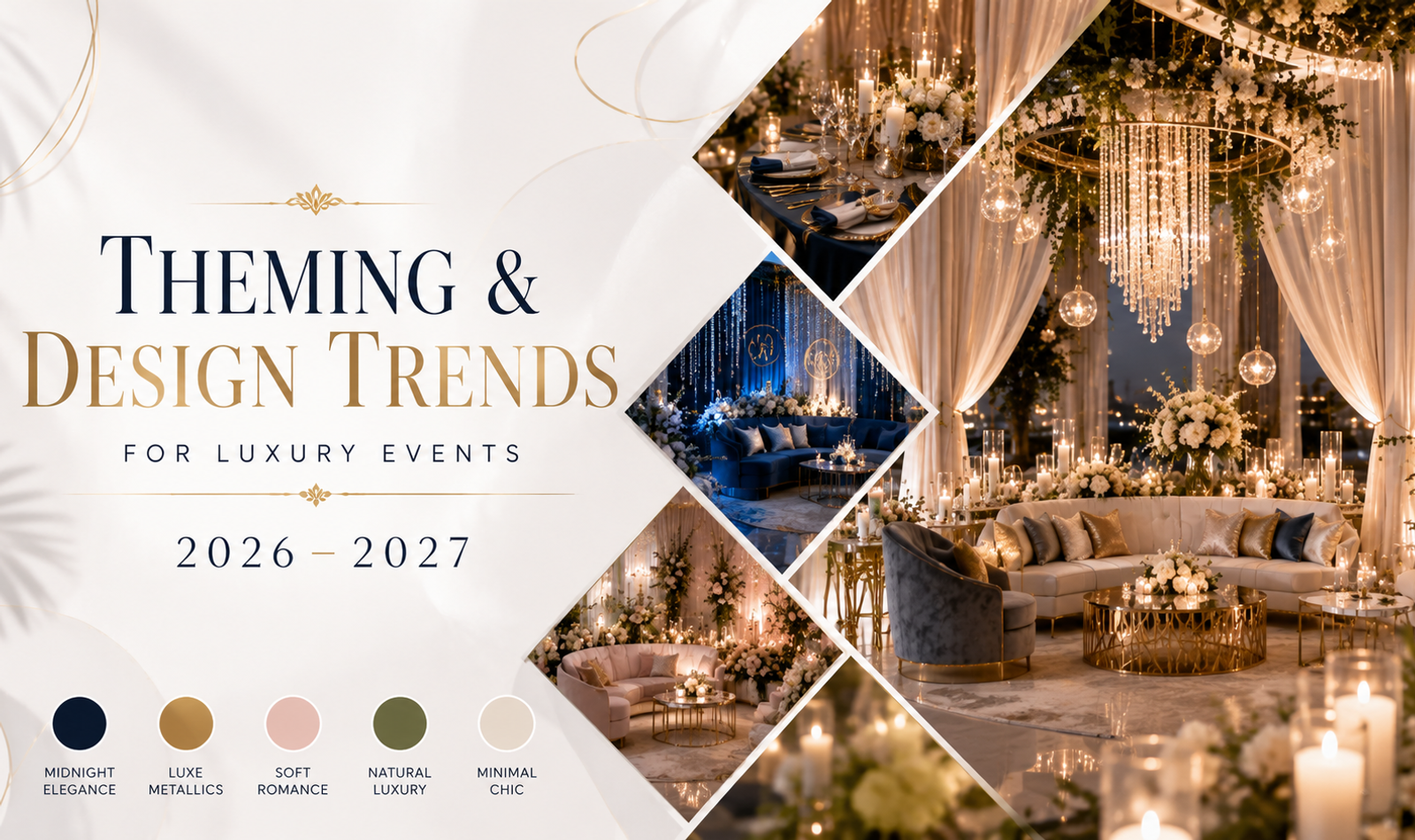
Colour Trends for Luxury Events 2026–2027
Colour direction is becoming more flexible and emotionally driven. Events are using palettes that respond to the destination, time of day and intended mood rather than following one universal trend colour.
Soft mineral tones, champagne, clay, sand, sage and stone support refined daytime events. Deep emerald, burgundy, midnight blue, plum and bronze remain powerful for evening celebrations.
Digital and futuristic events may use silver, ice blue, ultraviolet accents and controlled iridescence. These palettes work best when balanced with neutral materials.
Monochromatic environments are also becoming more sophisticated. A single colour family can be developed through several materials, transparencies and lighting levels.
Key Colour Directions
• Mineral neutrals
• Champagne tones
• Botanical greens
• Earth and clay
• Deep jewel colours
• Metallic silver
• Translucent pastels
• Monochrome layering
Colour should be tested under the actual venue lighting. Screens, photography and artificial light can change how a palette appears.
Luxury Wedding Design Trends 2026–2027
Luxury weddings are becoming more personal, culturally layered and guest-focused. Couples increasingly want each function to express a different chapter while remaining connected through one overall identity.
Ceremonies may use natural architecture, intimate seating and meaningful family details. Sangeets and receptions can become more theatrical through lighting, performance and spatial transformation.
Wedding décor is also becoming less dependent on one central stage. Entrances, dining, bars, guest lounges and pathways are receiving equal creative attention.
The strongest wedding themes will avoid copying celebrity weddings literally. They will use inspiration to create an experience grounded in the couple’s own story.
For larger celebrations, a structured luxury wedding planning timeline helps align design, hospitality, vendors and execution.
Indian Wedding Theme Directions
Indian weddings provide opportunities to combine regional craftsmanship with modern spatial design. Traditional references can be used through materials, symbols, music and hospitality rather than obvious decorative repetition.
A Punjab-inspired event may use contemporary phulkari interpretations, fields, folk music and generous dining. A Rajasthan celebration may draw from courtyards, stone, miniature art and local textiles.
A South Indian wedding may highlight temple architecture, brass, jasmine, banana fibre and classical sound through a refined design system. A modern Mumbai wedding may respond to art, cinema, urban architecture or the sea.
The theme should respect culture while remaining specific to the family. Authenticity becomes more valuable than using several traditions without meaningful connection.
Corporate Event Design Trends 2026–2027
Corporate events are moving away from static stages and extended presentation formats. Brands want spaces that encourage interaction, content creation, product discovery and meaningful conversation.
The event design should translate the brand message into physical behaviour. If the message is collaboration, the layout should support discussion. If the message is innovation, the guest journey should include discovery and interaction.
Brand identity can appear through materials, spatial forms, light and hospitality rather than placing the logo on every surface. This creates a more sophisticated and memorable environment.
Corporate event design should also support measurable objectives. Registration, networking, content and product interactions can be integrated without making the event feel excessively data-driven.
Luxury Product Launch Design
A product launch should place the product within a clear story rather than surround it with unrelated spectacle. Guests should understand what makes the product relevant and how it fits into their lives.
Lighting, scale, material and movement can guide attention towards the reveal. Interactive demonstrations may allow guests to experience features directly.
The launch should include areas for media, creators, clients and private conversations. Each group may require different access and information.
A successful launch produces both live engagement and strong content. The experience should remain visually recognisable after photographs and videos leave the venue.
Destination Wedding Design in India
Destination wedding design should begin with the place. The venue, landscape, culture, climate and local hospitality should shape the visual strategy.
Rajasthan remains suitable for heritage, ceremonial and craft-led experiences. Goa supports relaxed coastal luxury, while Kerala offers natural materials, water, greenery and culturally rich hospitality.
Himachal Pradesh and other mountain destinations can support intimate, landscape-led weddings, but weather and transport require stronger planning. Hyderabad, Delhi NCR and Mumbai provide luxury hotels, production infrastructure and stronger city connectivity.
The best destination design does not hide the location. It reveals why the couple selected it.
For venue and destination planning, brands and families can explore premium wedding venue selection and negotiation.
Luxury Event Design in Mumbai
Mumbai luxury events must balance creativity with traffic, venue restrictions, weather and limited setup schedules. A visually ambitious design must remain practical within the city’s operating conditions.
South Mumbai heritage hotels can support refined, architectural and formal themes. Bandra Kurla Complex and Lower Parel may suit contemporary corporate events, conventions and high-production launches.
Juhu, Andheri and airport-adjacent hotels can provide convenience for travelling guests and entertainment-led celebrations. Alibaug offers a more relaxed landscape but requires transport, accommodation and weather planning.
Mumbai design should also consider monsoon conditions. Covered arrival routes, humidity-resistant materials and complete indoor backups are essential during uncertain periods.
Professional event and wedding planning in Mumbai can connect design ambition with venue realities, logistics and execution requirements.
How to Select the Right Luxury Event Theme
The theme should begin with the event objective and host identity. A trend should only be used when it strengthens the story rather than because it is currently popular.
The planning team should evaluate the venue, guest profile, season, programme and budget. A sculptural outdoor concept may not suit a ballroom with short setup access.
The theme should also be tested across the complete guest journey. It must work for invitations, arrival, stage, dining, entertainment and departure.
A strong theme can be explained in one clear paragraph. If it requires several unrelated mood boards, the direction may not be sufficiently focused.
Theme Selection Checklist
• Host identity
• Event objective
• Guest profile
• Venue architecture
• Cultural relevance
• Seasonal conditions
• Production feasibility
• Budget priorities
The selected theme should feel original but still understandable. Guests should not require a presentation to recognise its emotional direction.
Balancing Trends with Timeless Design
Trends can make an event feel current, but excessive dependence on them can cause the design to age quickly. Timeless events use trends selectively within a strong personal concept.
The host may use current materials, lighting and layouts while maintaining a classic colour palette or culturally meaningful structure. This creates freshness without making the event feel temporary.
Photography should also be considered. Extreme effects may create immediate social-media attention but look less refined in long-term family archives or brand communication.
The design team should ask whether the event will still feel relevant several years later. Luxury usually benefits from editing rather than following every available trend.
Creating a Cohesive Multi-Event Design
Multi-day weddings and conferences often require several distinct event environments. The challenge is to create variety without making each function feel unrelated.
A master identity can connect the functions through typography, materials, symbols or storytelling. Each event can then use a different colour, mood or level of formality.
For example, a welcome dinner may feel relaxed and local, the ceremony natural and emotional, and the reception cinematic. The events remain connected because they share the same underlying narrative.
The design team should plan all functions together before finalising any one of them. This prevents repetition and improves budget allocation.
Managing the Luxury Event Design Budget
A design budget should be divided across the complete guest journey rather than concentrated only on the stage. Entrance, seating, dining, lighting and hospitality all influence perception.
The planning team should identify a small number of high-impact areas. Investment can then be concentrated around elements that define the experience.
Existing venue architecture should be used intelligently. Covering a beautiful space with temporary structures increases cost without necessarily improving the result.
Reusable scenic elements can also move between functions. A structure may be refinished, relit or reconfigured to create a different environment.
Design Budget Priorities
• Signature installation
• Guest arrival
• Lighting quality
• Seating comfort
• Table experience
• Content moments
• Technical integration
• Weather protection
Budget control should not be confused with reducing every quotation. It means directing investment towards the details guests will genuinely experience.
Integrating Décor, Production and Hospitality
Luxury event design fails when vendors work separately. Décor may block speakers, lighting may distort florals and hospitality counters may appear as last-minute additions.
The planner should conduct combined reviews with décor, production, catering, security and guest-management teams. Every department uses the same physical space.
Service routes, technical control, fire access and guest movement must be protected. A visual concept should never compromise safety or hospitality.
Integration also improves the final appearance. Bars, registration desks and food counters can become part of the event design rather than necessary objects placed after décor installation.
Strong vendor management and supplier coordination helps connect creative departments through one execution plan.
Designing for Guest Flow
Guest flow should influence the layout from the beginning. Entrances, registration, seating, food, washrooms and departures need clear and comfortable routes.
The design can guide movement through lighting, flooring, furniture and focal points. Excessive signage may become unnecessary when the spatial direction is intuitive.
Congestion often develops near bars, food counters, photo areas and narrow transitions. These areas should receive enough space and staffing.
Guest-flow planning is part of luxury because it removes uncertainty. People should move through the event naturally without repeatedly asking for directions.
A detailed on-site guest flow and seating plan can help align registration, access, seating and hospitality.
Designing for Photography and Video
Photography should be considered across the entire venue rather than limited to one photo backdrop. Lighting, background depth and guest movement affect every captured moment.
Stages should provide strong sightlines from several positions. Dining areas should remain visually rich without preventing photographers from moving safely.
The content team should receive the programme and design plans in advance. This allows them to prepare equipment and identify key moments.
However, the event should not be designed only for cameras. Guests should experience comfort and emotion even when no photograph is being taken.
Designing for Privacy
Luxury events may include guests who do not want their attendance, image or location shared publicly. Design and operations should support this preference.
Private arrival routes, restricted lounges and controlled photography zones may be required. Content teams should receive clear permission instructions.
Digital installations should not collect guest information without an understandable purpose and appropriate notice. Interactive design must respect privacy as well as creativity.
Discretion is becoming an important luxury signal. Guests should feel recognised without feeling constantly monitored.
Guest information should also be managed according to appropriate event guest data privacy practices.
What Is Moving Out of Luxury Event Design?
Copying online references without adaptation is becoming less acceptable. Clients increasingly recognise when several events use the same entrance, stage and floral composition.
Generic flower walls are also losing impact unless they are transformed through material, movement or storytelling. Large logos placed on every surface can make a premium event feel overly promotional.
Technology used only for novelty can also reduce sophistication. Guests may ignore complicated interactive displays that do not provide meaningful value.
Other declining approaches include excessive decorative clutter, uncomfortable furniture, fake sustainability claims and themes that ignore the venue or destination.
Approaches Losing Relevance
• Copy-paste themes
• Generic flower walls
• Excessive branding
• Random LED effects
• Uncomfortable seating
• Decorative overcrowding
• Unnecessary technology
• Superficial sustainability
These elements are not automatically unusable. They require stronger purpose and more original execution to remain relevant.
Predicting Luxury Event Design in 2027
The direction towards 2027 is likely to deepen the changes already visible in 2026. Personalisation, circular production, local storytelling and intelligent technology are expected to become more integrated.
AI may support faster design development, guest communication and operational planning. However, truly premium events will distinguish themselves through human judgement, craftsmanship and cultural understanding.
Venues may become more flexible and experience-led, with demand increasing for unusual locations, private cultural spaces and nature-connected properties. Events may also become smaller, more frequent and more specifically curated.
The strongest luxury events will combine technological intelligence with emotional warmth. The future is unlikely to be purely digital or purely traditional; it will blend both according to the needs of the guest.
The DREAM Luxury Event Design Framework
The DREAM framework can help organisers turn design trends into a coherent and practical event strategy.
D — Define the Story
Clarify the event purpose, host identity, audience and emotional objective. Every visual decision should support this foundation.
R — Respond to the Place
Study the venue, destination, climate and architecture. Use the location as part of the design rather than treating it as an empty shell.
E — Engineer the Experience
Plan guest movement, seating, lighting, food, entertainment and transitions as one connected journey.
A — Apply Trends Selectively
Use current colours, materials and technology only when they strengthen the narrative. Avoid combining trends without a clear reason.
M — Measure the Impact
Evaluate guest comfort, interaction, content performance, sustainability and operational success after the event.
The framework ensures that creative ambition remains connected to guest experience and event execution.
Complete Luxury Event Design Checklist
Before finalising a luxury event design, the planning team should review the complete creative and operational system.
• Clear event narrative
• Approved colour palette
• Venue measurements
• Guest-flow plan
• Lighting strategy
• Furniture layouts
• Floral quantities
• Material selection
• Technology integration
• Catering placement
• Accessibility review
• Weather alternative
• Content viewpoints
• Sustainability plan
• Setup schedule
• Final rehearsal
Every checklist item should have a responsible owner and approval deadline. A design is only complete when it can be executed safely and consistently.
Frequently Asked Questions
What are the biggest luxury event design trends for 2026?
The leading trends include story-led theming, refined minimalism, cultural craftsmanship, sculptural florals, immersive lighting, personalised guest spaces and modular sustainable décor.
Technology is becoming more integrated and less visually dominant. Guest comfort and emotional connection are also becoming central design priorities.
Which luxury event trends will continue into 2027?
Personalisation, responsible material use, destination-responsive design and intelligent technology are likely to continue developing through 2027.
Events are also expected to become more experiential and culturally specific. Human connection will remain important even as AI and interactive systems become more advanced.
What is narrative-led event design?
Narrative-led design builds the event around a story or central idea. The invitation, arrival, décor, entertainment, food and guest experience all communicate different parts of that idea.
It creates greater originality because the design is based on the host or brand rather than a generic theme.
Is minimalism still popular for luxury events?
Yes, but luxury minimalism is becoming warmer and more tactile. Designers are using premium materials, sculptural forms, soft lighting and carefully controlled visual statements.
The focus is on quality, proportion and detail rather than empty or cold spaces.
Is maximalist event design returning?
Curated maximalism is becoming popular for celebrations that require colour, energy and theatrical impact. The approach uses several visual layers within one controlled palette and narrative.
It is particularly suitable for Indian weddings, sangeets, fashion events and entertainment-led experiences.
What colours are trending for luxury events in 2026–2027?
Mineral neutrals, champagne, botanical greens, clay, burgundy, emerald and midnight blue are important directions. Silver, ice blue and controlled iridescence are influencing futuristic events.
The correct palette should still respond to the venue, lighting and event identity rather than following a trend without context.
How is AI being used in event design?
AI can support mood exploration, early visualisation, layout alternatives, content creation and operational planning. It can make the early design process faster.
Professional designers must still evaluate engineering, safety, materials, cost and cultural relevance. AI-generated images should not be treated as final construction plans.
What is sustainable luxury event design?
Sustainable luxury design reduces waste through reusable structures, rental furniture, local sourcing, material recovery and responsible floral planning.
The objective is to maintain a refined appearance while improving how event materials are sourced, used and managed after the event.
How can Indian craft be used in modern event design?
Regional textiles, weaving, metalwork, painting and ceramics can be applied through installations, stationery, table details and guest gifts.
The design should involve accurate cultural understanding, artisan recognition and a consistent contemporary application.
What is immersive event design?
Immersive event design surrounds guests with a coordinated environment using space, light, sound, texture, scent and interaction.
It should deepen the event story rather than overwhelm guests with unrelated effects.
How do you choose a luxury wedding theme?
Begin with the couple’s story, cultural priorities, venue, destination and desired guest experience. Then select colours, materials and design elements that express those ideas.
The theme should work across every function and remain practical within the available budget and setup conditions.
How can luxury events feel personal?
Personalisation can appear through guest communication, hospitality, seating, menus, music, gifting and different experience zones.
The objective is to recognise guest needs without making the event feel visibly divided or overly monitored.
What luxury event décor is becoming outdated?
Copied online themes, generic flower walls, excessive logos, random LED effects and decorative clutter are losing impact.
These elements may still work when they are reinterpreted through a specific story and high-quality execution.
How important is lighting in luxury event design?
Lighting defines atmosphere, visibility, photography and programme transitions. It can transform a venue without requiring large physical changes.
The lighting plan should be developed with décor, production and content teams from the beginning.
How can destination events use local design?
Destination events can use local architecture, materials, craft, food, music and landscape as part of the experience.
The strongest design reveals the character of the destination rather than covering it with a standard theme.
Does Double Trouble Studio provide luxury event design and theming?
Double Trouble Studio supports luxury weddings, corporate events, private gatherings, hospitality launches and celebrity-attended experiences with complete theming, creative strategy and design coordination.
The scope can include concept development, venue planning, décor, production, guest experience, entertainment, content and on-ground execution.
How Double Trouble Studio Designs Luxury Event Experiences
Double Trouble Studio approaches theming as a complete experience rather than a collection of decorative installations. We begin with the host, brand, audience, venue and emotional objective.
Our work can include creative direction, narrative development, visual identity, spatial planning, décor, floral design coordination, production, lighting and guest touchpoints. Every department is connected through one central concept.
For Mumbai events, we also consider traffic, venue access, monsoon conditions and setup restrictions. For destination weddings and events across India, we connect the design with local architecture, culture, hospitality and landscape.
The objective is to create an event that looks distinctive, feels comfortable and remains memorable beyond photographs. Every design should belong specifically to the people, place and purpose behind it.
Conclusion
Theming and design trends for luxury events in 2026–2027 are moving towards greater intention, personalisation and cultural intelligence. Visual scale remains valuable, but it must support an authentic story and a carefully designed guest journey.
Refined minimalism and curated maximalism can both succeed when they are executed with discipline. Sustainable materials, sculptural florals, immersive lighting and invisible technology are expanding the creative possibilities available to planners.
The strongest events will not use every trend at once. They will select the ideas that align with the host, audience, destination and purpose.
When storytelling, hospitality and execution work together, event design becomes more than decoration. It becomes a complete environment that guests can enter, feel and remember.
Design Your Luxury Event with Double Trouble Studio
A luxury event should feel original, immersive and deeply connected to its purpose. Double Trouble Studio creates complete event themes and design strategies for weddings, corporate gatherings, private celebrations, brand launches and celebrity-attended experiences.
Our approach can include concept development, creative direction, venue planning, décor, production, lighting, entertainment, guest experience and on-ground execution in Mumbai and across India.
Connect with Double Trouble Studio to create an event environment that combines contemporary design trends with timeless storytelling and professional execution.
📩 info@dtsworld.in 📞 +91 80000 06021📍 Andheri West, Mumbai
Need this for your brand?
Let DTS build your next campaign.
From PR, celebrity management and events to websites, social media, SEO and AI video production — Double Trouble Studio helps brands grow with strategy and execution.
Discuss Your Requirement →