What Is SEO? A Beginner's Guide to Search Engine Optimization
Have you ever wondered why certain websites appear at the top of Google search results while others remain difficult to find? The answer often involves Search Engine Optimization (SEO), a digital marketing practice that helps websites become more visible when people search for relevant information, products, or services.
Whether you run a small business, an e-commerce store, a startup, or an established company, SEO can play an important role in helping potential customers discover your website.
Every day, people use search engines to compare services, research products, find nearby businesses, and make purchasing decisions. If your website does not appear for searches relevant to your business, you may be missing opportunities to reach potential customers.
This beginner-friendly guide explains what SEO is, how search engines work, the different types of SEO, why it matters for businesses, and how to start improving your website's organic visibility.
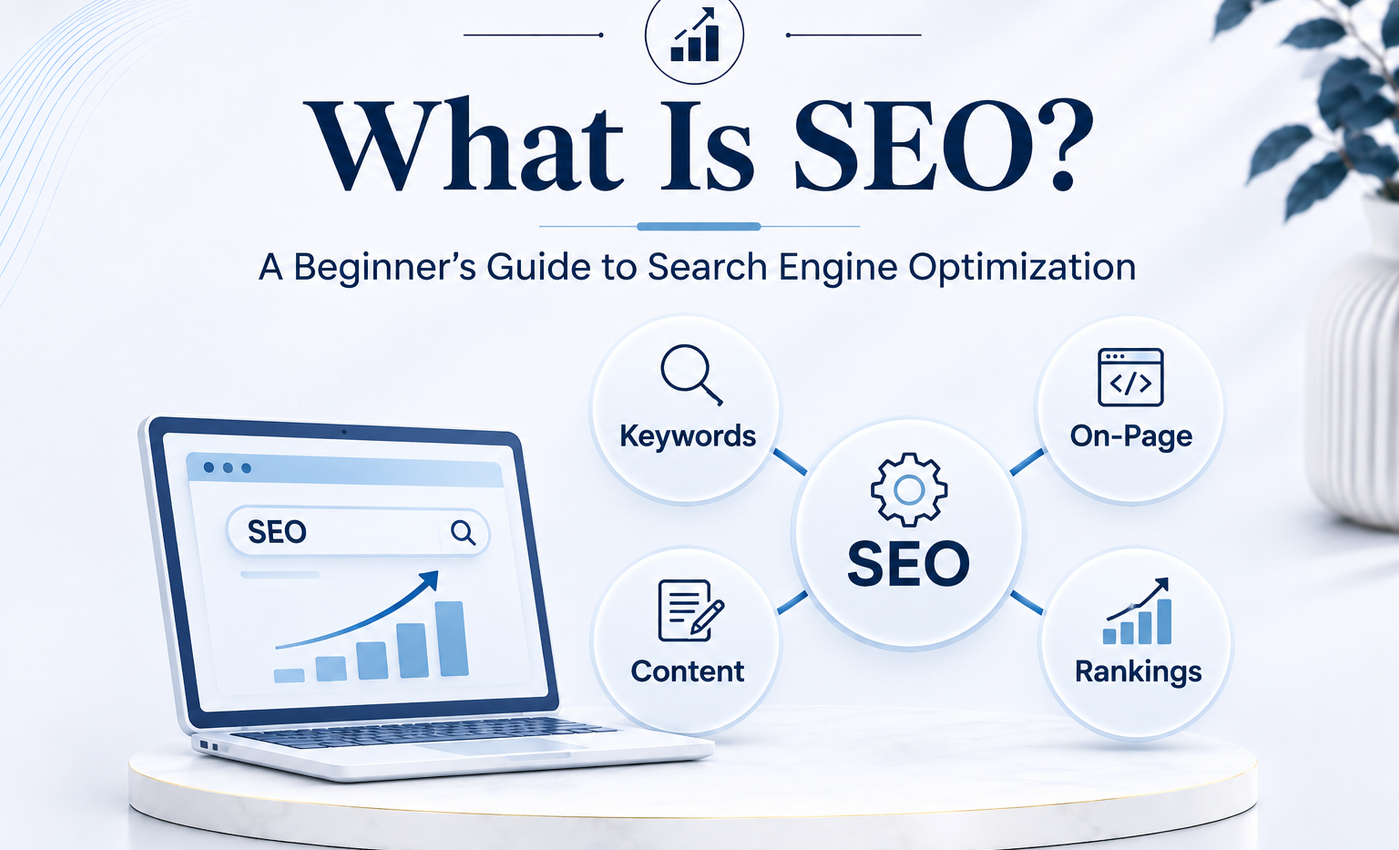
What Is SEO?
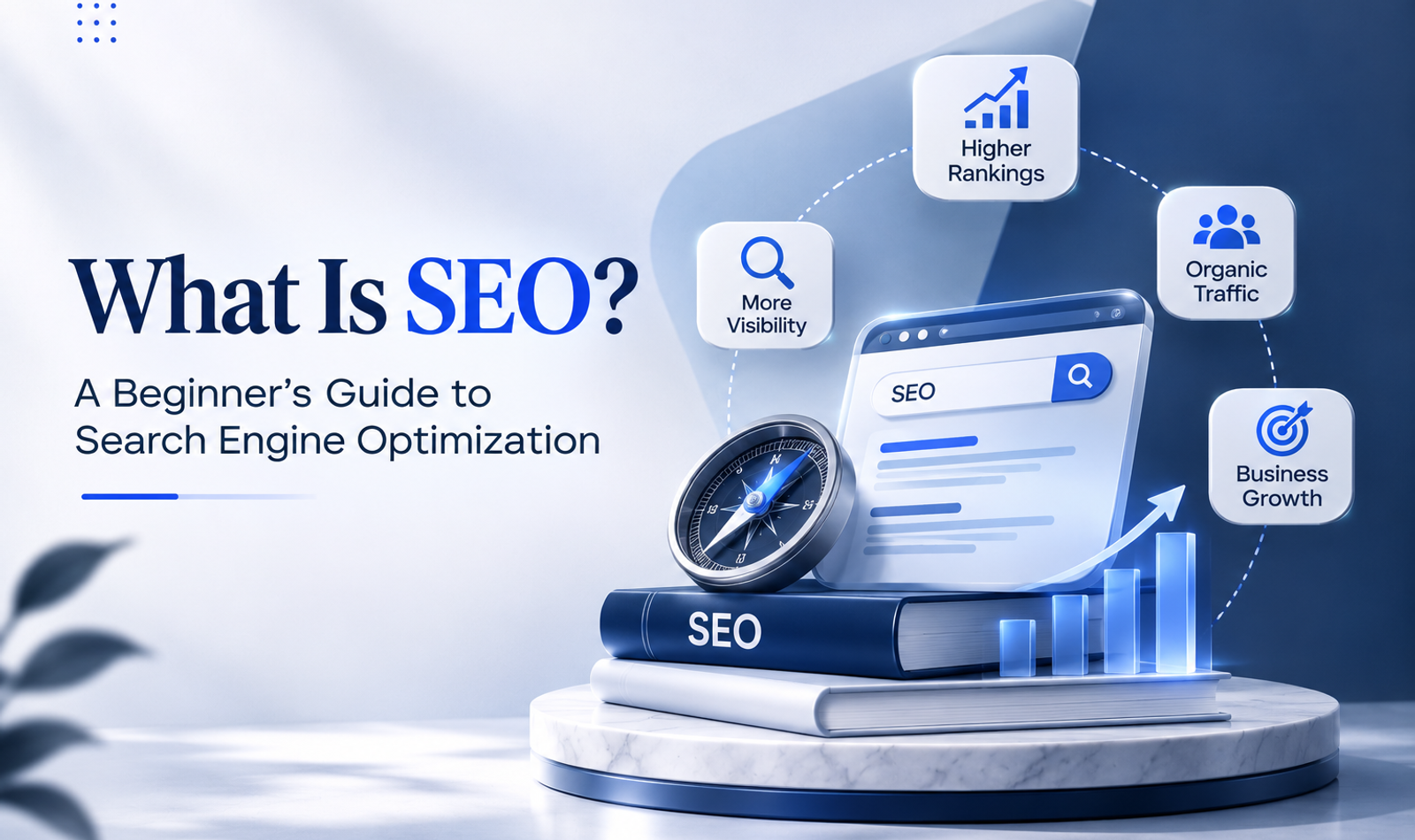
SEO stands for Search Engine Optimization. It is the process of improving a website's content, structure, technical accessibility, and overall usefulness to increase its visibility in unpaid search engine results.
When someone searches Google for a product, service, or question, the search engine attempts to display results that are relevant and helpful to that query.
SEO helps search engines discover and understand your website while improving the experience of visitors who use it.
For example, imagine that you own a bakery in Mumbai. When someone searches for "custom birthday cakes in Mumbai," you would want your website to appear among relevant search results.
By optimizing your website for suitable keywords, providing useful product information, improving website navigation, and maintaining accurate business details, you can strengthen its ability to compete for these searches.
SEO is not about manipulating search engines or repeating keywords excessively. It focuses on creating a technically accessible, useful, and trustworthy website that satisfies real user needs.
Businesses that want professional support can explore Double Trouble Studio's search engine optimization services to understand how a structured SEO approach can support long-term organic visibility.
How Does SEO Work?
Search engines use automated systems to discover web pages, process their content, and determine which results may be most useful for a particular search.
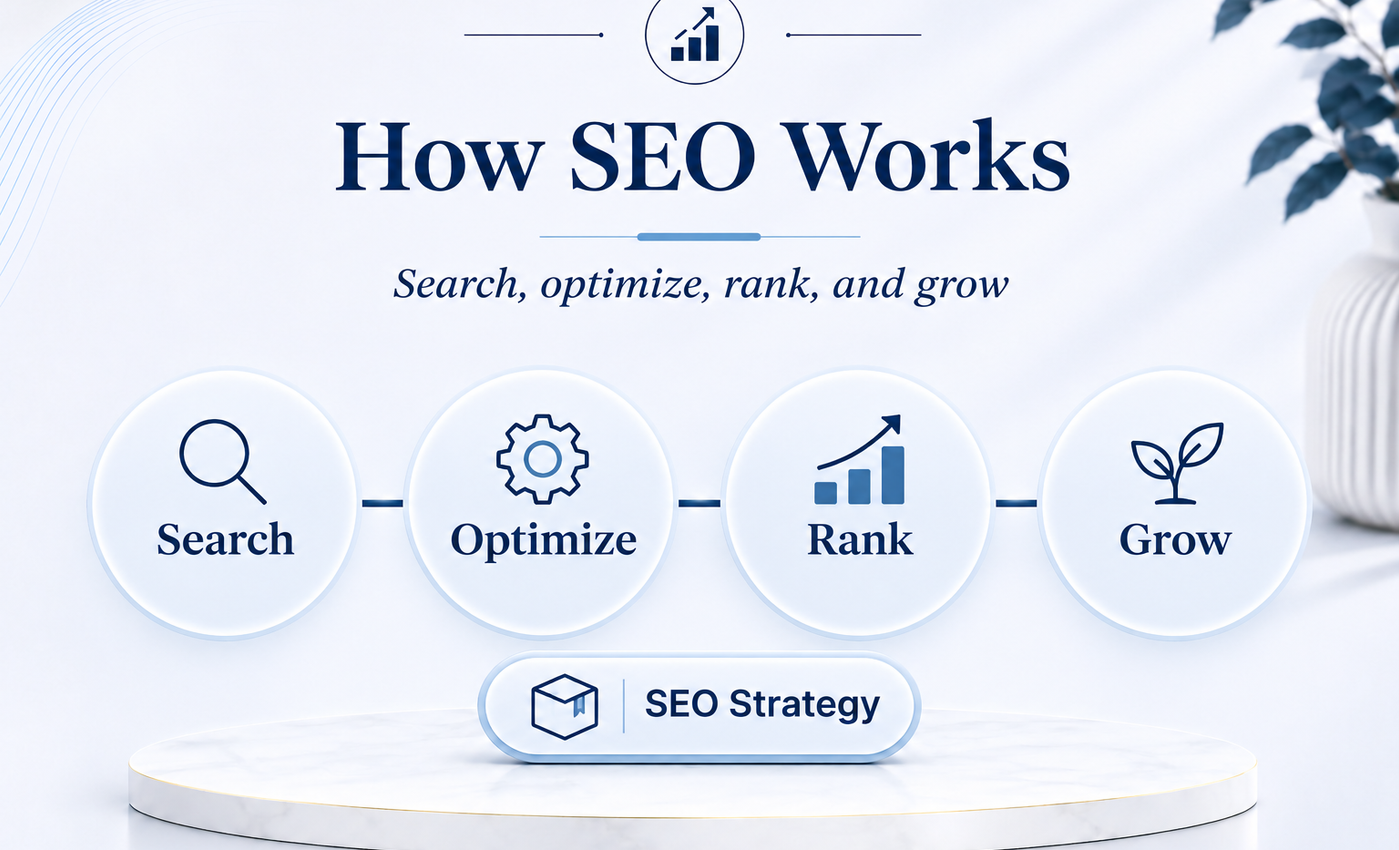
Although Google's ranking systems are complex and continuously evolving, beginners can understand the process through three main stages: crawling, indexing, and ranking.
1. Crawling: Discovering Website Pages
Crawling is the process through which search engines discover web pages using automated programs often called crawlers or bots.
These crawlers follow links, revisit known URLs, and discover new or updated content.
For example, when you publish a new article and link to it from an existing page, search engine crawlers may discover the new article through that internal link.
A clear website structure, accessible navigation, and useful internal linking can make important pages easier to discover.
However, crawling a page does not automatically mean it will appear in search results.
2. Indexing: Understanding and Storing Content
After discovering a page, a search engine may process its text, images, metadata, and other available information to understand what the page contains.
If the page is eligible and considered suitable, it may be included in the search engine's index.
Not every crawled page is indexed. Duplicate content, technical restrictions, inaccessible pages, and other quality or relevance issues can affect indexing decisions.
Businesses should ensure that important website pages are accessible and do not contain unintended indexing restrictions.
3. Ranking: Selecting Relevant Search Results
When a user performs a search, Google's systems evaluate indexed content and select results based on factors such as query relevance, usefulness, content quality, usability, and context.
For example, a user searching "best wedding planners in Mumbai" expects results relevant to wedding planning services, not general information about event photography.
A website that clearly describes its services and provides genuinely useful information may have a stronger foundation for competing in those results.
Understanding crawling, indexing, and ranking is the first step toward developing an effective SEO strategy.
Why Is SEO Important for Businesses?
SEO helps businesses improve their organic visibility and connect with people who are actively searching for relevant information.
Unlike advertising that interrupts users during other activities, organic search often reaches people who have already expressed interest through their searches.
Increased Website Visibility
A well-optimized website has more opportunities to appear in relevant search results.
Greater visibility can introduce your business to potential customers who may not already know your brand.
Relevant Organic Traffic
SEO focuses on attracting visitors through unpaid search engine results.
When your content matches the intent behind a search, visitors are more likely to find the information or services they need.
Long-Term Marketing Value
Useful website content may continue attracting organic visitors after publication, provided it remains relevant and competitive.
However, rankings are not permanent, and ongoing optimization may be necessary.
Improved Website Experience
Effective SEO frequently involves improving navigation, content organization, accessibility, and technical performance.
These improvements can benefit website visitors as well as search engines.
Potential for Lead Generation
Businesses can use SEO to attract people researching services, comparing providers, or preparing to make purchasing decisions.
By combining search visibility with useful landing pages and clear calls to action, companies can create opportunities for qualified enquiries and sales.
What Are the Different Types of SEO?
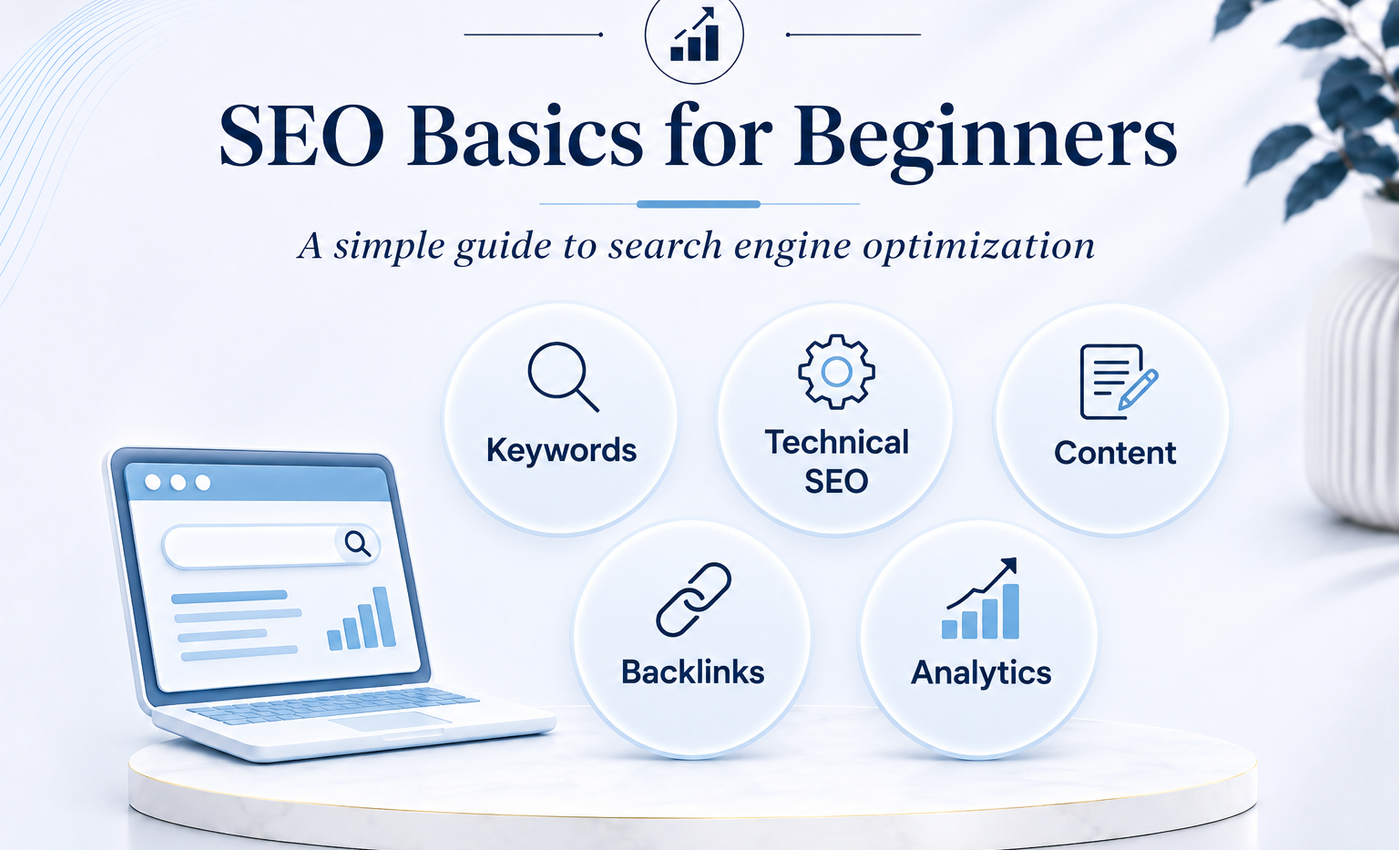
Search engine optimization includes several interconnected activities. The main categories are on-page SEO, off-page SEO, technical SEO, and local SEO.
1. On-Page SEO
On-page SEO focuses on improving the elements of individual website pages.
This includes page titles, headings, written content, keyword relevance, URLs, internal links, image descriptions, and other elements that help communicate the page's purpose.
For example, a business offering website development services should create a dedicated page explaining its services, benefits, process, and relevant customer needs.
The page should use clear headings, descriptive language, and relevant keywords naturally.
Effective on-page optimization also considers search intent. A user looking for a beginner's explanation requires different content from someone comparing service providers.
Following an on-page SEO checklist for higher rankings helps businesses identify important improvements without relying on keyword stuffing or repetitive content.
2. Off-Page SEO
Off-page SEO involves activities outside your website that can help strengthen its online reputation, discoverability, and credibility.
One important aspect is earning backlinks from relevant external websites.
A backlink is a hyperlink from another website to yours.
For example, if a reputable industry publication references your original research and links to your website, that link can help users discover your content and may support its relevance in search systems.
However, not all backlinks provide equal value. Links obtained through manipulative schemes can violate search engine spam policies.
A sustainable approach should prioritize useful content, genuine industry relationships, and editorially earned references.
Businesses can learn more about link building and effective backlink strategies when planning off-page optimization activities.
3. Technical SEO
Technical SEO focuses on the underlying website structure and technical conditions that affect how search engines access and process content.
Important technical considerations include crawlability, indexing, redirects, canonical URLs, XML sitemaps, mobile accessibility, and website performance.
For example, a valuable service page may struggle to appear in search results if it contains an unintended noindex directive or cannot be accessed by search engine crawlers.
Technical SEO also involves managing duplicate URLs and ensuring that important pages are connected through a logical website architecture.
An effective technical SEO website optimization strategy helps businesses identify problems that may prevent otherwise useful content from receiving organic visibility.
4. Local SEO
Local SEO helps businesses improve visibility for searches connected to specific geographical areas.
It is particularly relevant for restaurants, clinics, salons, retail businesses, and service providers targeting customers within particular cities or neighbourhoods.
For example, someone searching "SEO agency in Mumbai" or "dentist near me" is looking for geographically relevant services.
Local optimization may include maintaining an accurate Google Business Profile, using relevant location information, improving service pages, and managing legitimate customer reviews.
Businesses operating in competitive metropolitan markets can explore local SEO strategies for Mumbai businesses to understand how location relevance supports customer discovery.
What Are SEO Keywords?
SEO keywords are the words and phrases people enter into search engines when looking for information, products, or services.
For example, someone searching "what is SEO" is likely seeking an explanation, while a person searching "SEO services in Mumbai" may be evaluating agencies.
Both searches relate to SEO, but the users have different intentions.
Understanding this distinction helps businesses create content that addresses the needs of specific audiences.
Keywords are often grouped into several categories.
Informational keywords are used when people want to learn something. Examples include "how does SEO work" and "what is technical SEO."
Commercial keywords are used when people are researching or comparing options, such as "best SEO agency in India."
Transactional keywords indicate a stronger intention to take an action, such as purchasing a product or requesting a service quotation.
Navigational keywords are used when someone wants to reach a particular brand or website.
Businesses should research keywords based on relevance, search intent, competition, and commercial value rather than focusing exclusively on search volume.
A structured SEO keyword research guide can help beginners understand how to select keywords that attract relevant audiences and support business objectives.
What Is the Difference Between On-Page SEO and Technical SEO?
On-page SEO and technical SEO are closely related, but they focus on different aspects of website optimization.
On-page SEO primarily improves the relevance, usefulness, and presentation of page content.
Technical SEO addresses the infrastructure that allows search engines to discover, process, and access that content.
For example, writing a clear product description is an on-page optimization activity. Ensuring that the product page is crawlable and has the correct canonical configuration is a technical SEO activity.
Both are necessary for a comprehensive SEO strategy.
A website may contain excellent content but struggle to gain search visibility because of technical problems. Conversely, a technically healthy website may perform poorly if its pages lack relevant and useful information.
How to Start SEO for Your Website: A Beginner's Guide
Beginners can approach SEO through a structured process rather than attempting to optimize everything at once.
Step 1: Understand Your Audience
Start by identifying who your customers are, what they need, and which questions they ask before making a decision.
A professional service business may need to target customers comparing providers, while an online retailer may focus on product-specific searches.
Understanding customer intent makes it easier to develop relevant website content.
Step 2: Perform Keyword Research
Identify keywords related to your business, services, and customer needs.
Include informational topics as well as commercial searches that may lead to enquiries or purchases.
Avoid choosing keywords solely because they have high search volume.
Step 3: Improve Existing Website Pages
Review important landing pages to ensure they clearly describe their purpose.
Use relevant page titles, helpful headings, readable paragraphs, descriptive URLs, and meaningful internal links.
Avoid unnecessary keyword repetition.
Step 4: Create Useful Content
Develop articles, FAQs, guides, and service information that directly answer genuine customer questions.
For example, an SEO agency might publish resources about keyword research, technical optimization, website rankings, pricing, and organic traffic.
A strong content program should connect related resources rather than publish isolated articles without a broader strategy.
Using an SEO content strategy built around topic clusters can help organize these subjects into useful, connected content.
Step 5: Improve Website Technical Health
Check that important pages are accessible, indexable, and connected through clear navigation.
Review broken links, redirects, canonical configurations, mobile usability, and website performance.
Google Search Console can help identify several search indexing and performance issues.
Step 6: Build Relevant Website References
Earn credible references through useful resources, industry relationships, and legitimate editorial coverage.
Avoid purchasing low-quality backlinks or participating in manipulative link schemes.
Step 7: Monitor and Improve Performance
Use performance data to identify which pages attract relevant search traffic and which require further improvement.
SEO is an ongoing process that benefits from regular evaluation.
How Long Does SEO Take to Work?
One of the most common misconceptions about SEO is that results should appear immediately after optimization.
In reality, meaningful search visibility often requires sustained work over several months.
Some websites may experience improvements within the first few weeks, particularly after resolving major technical problems or optimizing existing pages.
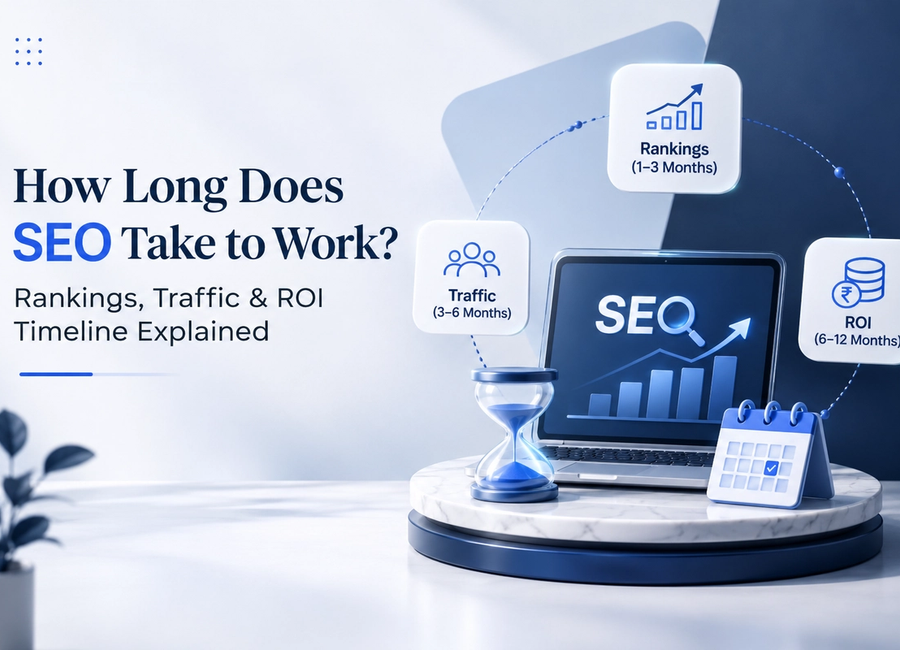
However, businesses often use a planning horizon of approximately 3 to 6 months for early measurable progress and 6 to 12 months or longer for more substantial results.
The actual timeline depends on website quality, keyword competition, existing organic visibility, and the consistency of optimization efforts.
New websites targeting highly competitive keywords may require considerably more time than established websites targeting relevant, lower-competition queries.
SEO progress should be measured through search impressions, organic clicks, qualified enquiries, conversions, and commercial outcomes rather than rankings alone.
No SEO agency can guarantee a particular ranking position or result within a fixed timeframe.
How Much Does SEO Cost?
SEO pricing varies depending on website size, competition, business objectives, and the services included in a campaign.
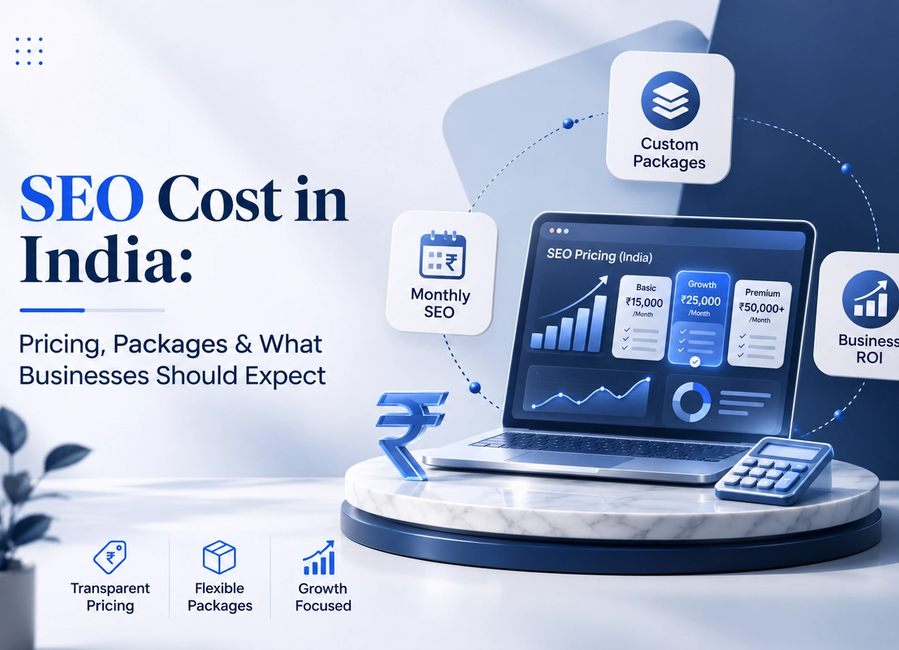
In India, relatively limited SEO packages may begin at approximately ₹8,000 to ₹15,000 per month, while broader small-business campaigns may fall in the ₹15,000 to ₹35,000 monthly range.
Competitive or technically complex campaigns may require significantly larger investments.
These figures are indicative planning estimates, not fixed industry rates or official DTS package prices.
Businesses should evaluate an SEO proposal based on its technical scope, content requirements, implementation responsibilities, reporting, and expected business value.
Understanding SEO costs and packages in India can help businesses compare pricing models and make informed budget decisions.
SEO vs Paid Advertising: What Is the Difference?
SEO and paid advertising are two different methods of attracting potential customers through search engines.
Paid search advertising allows businesses to display advertisements based on campaign targeting and bidding arrangements. Advertising can begin generating visibility shortly after a campaign is launched and approved.
SEO focuses on improving visibility in organic search results without paying the search engine for each organic click.
Although SEO generally takes longer to develop a substantial traffic presence, useful pages may continue attracting organic visitors over time.
Paid advertising can be valuable for immediate campaigns, while SEO can support longer-term organic discoverability.
For many businesses, using both approaches strategically can provide a balance between short-term lead generation and long-term marketing development.
A comparison of SEO vs Google Ads for business growth can help explain the differences in costs, timelines, and campaign objectives.
Common SEO Mistakes Beginners Should Avoid
Beginners sometimes assume that adding more keywords, publishing more articles, or building more backlinks will automatically improve search rankings.
However, effective SEO is based on relevance, usefulness, and technical quality rather than quantity alone.
A common mistake is keyword stuffing, which involves repeating target keywords excessively in an attempt to influence search rankings.
Another mistake is publishing thin or repetitive content that provides limited value to readers.
Businesses may also overlook technical problems, create multiple pages targeting the same search intent, or fail to connect related content through internal links.
Ignoring mobile usability and website accessibility can reduce the quality of the visitor experience.
Finally, focusing exclusively on ranking positions can lead businesses to overlook whether organic traffic is generating meaningful enquiries or sales.
A balanced SEO strategy should prioritize users, sound technical implementation, and measurable business outcomes.
How to Measure SEO Success
SEO performance should be monitored using tools and metrics that reflect both search visibility and business results.
Google Search Console provides information about search impressions, clicks, indexing, and website performance in Google Search.
Google Analytics 4 helps businesses understand website traffic sources, visitor engagement, and important conversion events.
Keyword tracking can show how relevant search queries change in ranking positions over time.
Conversion tracking helps determine whether organic visitors complete valuable actions such as submitting enquiry forms, making purchases, or requesting consultations.
Businesses should evaluate trends over meaningful periods and account for seasonal variations.
Ultimately, successful SEO should be measured by its contribution to relevant visibility, qualified visitors, and sustainable business growth.
Is SEO Still Important in 2026?
SEO continues to play an important role in digital marketing, even as search experiences evolve.
AI-generated search experiences, featured snippets, rich results, and local search features can change how users discover and interact with information.
This means businesses should focus on providing useful, trustworthy, and clearly structured content rather than relying exclusively on traditional ranking tactics.
Strong technical foundations, relevant expertise, clear website architecture, and helpful information remain important elements of a sustainable search strategy.
Businesses should also recognize that appearing in search results does not automatically translate into clicks or conversions.
SEO strategies should therefore consider brand credibility, website experience, and the value delivered to visitors.
Why Choose Double Trouble Studio for SEO?
Effective search engine optimization requires a combination of technical understanding, keyword research, content planning, and continuous performance analysis.
At Double Trouble Studio, SEO is approached as a structured component of digital growth rather than a one-time checklist.
The focus is on improving website accessibility, strengthening relevant search visibility, optimizing content, and connecting organic performance with meaningful business objectives.
Businesses benefit from an approach that considers both the technical requirements of search engines and the expectations of real website visitors.
Whether the goal is improving search visibility, attracting qualified website visitors, or building a stronger long-term organic presence, an organized SEO strategy provides a practical foundation for growth.
Frequently Asked Questions (FAQs)
1. What is SEO in simple words?
SEO, or Search Engine Optimization, is the process of improving a website so that search engines can discover, understand, and potentially display its pages for relevant searches. Its goal is to increase useful organic visibility and attract visitors without paying for individual organic search clicks.
2. How does SEO work on Google?
Google uses automated systems to discover, crawl, and index eligible web pages. When someone searches, Google's ranking systems select results based on relevance, usefulness, and other signals. SEO helps improve a website's technical accessibility, content relevance, and overall usefulness.
3. What are the main types of SEO?
The main types include on-page SEO, off-page SEO, technical SEO, and local SEO. On-page SEO focuses on content and page elements, off-page SEO covers external reputation and references, technical SEO addresses website accessibility and structure, and local SEO focuses on geographically relevant searches.
4. Is SEO free or paid?
Organic search clicks do not require payment to the search engine. However, effective SEO may involve costs for content creation, technical improvements, research tools, consultants, or professional agency services.
5. Can beginners learn SEO without coding?
Yes. Beginners can learn many important SEO skills without knowing how to code, including keyword research, content optimization, page titles, internal linking, and performance monitoring. Advanced technical SEO tasks may require development knowledge or specialist support.
6. How long does SEO take to show results?
Some improvements may appear within weeks, but meaningful organic growth often takes several months. A common planning estimate is 3 to 6 months for early progress and 6 to 12 months or longer for substantial results. There is no guaranteed timeline.
7. What is the difference between SEO and SEM?
SEO generally refers to improving visibility in unpaid search results. Search Engine Marketing (SEM) is sometimes used broadly to describe search marketing, but in common industry usage, it often refers specifically to paid search advertising.
8. What are backlinks in SEO?
Backlinks are links from other websites pointing to your website. Relevant, editorially earned backlinks can help users discover your content and may support organic search visibility. Link quality and relevance matter more than accumulating large quantities of low-quality links.
9. How do I know if my SEO is working?
Monitor organic search impressions, clicks, relevant keyword rankings, indexing status, qualified website traffic, and conversions. Google Search Console and Google Analytics 4 can help track progress, while sales and CRM records can provide additional commercial insight.
10. Can SEO guarantee first-page Google rankings?
No. Google rankings depend on many factors, including relevance, competition, content quality, and search engine systems. No SEO agency can guarantee that a website will appear on the first page for a specific keyword.
Conclusion: Understanding SEO Is the First Step Toward Organic Growth
Search Engine Optimization is an essential part of building a strong and discoverable online presence.
By understanding how search engines crawl, index, and rank content, businesses can make informed decisions about improving their websites and reaching relevant audiences.
Effective SEO combines useful content, keyword research, on-page optimization, technical website improvements, relevant backlinks, and continuous performance monitoring.
However, SEO is not an overnight solution. Meaningful results require realistic expectations, consistent execution, and a long-term commitment to improving website quality.
For beginners, the most important step is to focus on creating a website that is accessible, helpful, and relevant to the people it is intended to serve.
At Double Trouble Studio, we believe that sustainable organic growth begins with a strong technical foundation, purposeful content, and a clear understanding of business objectives.
Ready to make your website easier to discover? Develop a structured SEO strategy that supports your search visibility, attracts relevant visitors, and creates opportunities for long-term business growth.
📩 info@dtsworld.in📞 +91 80000 06021📍 Andheri West, Mumbai
Need this for your brand?
Let DTS build your next campaign.
From PR, celebrity management and events to websites, social media, SEO and AI video production — Double Trouble Studio helps brands grow with strategy and execution.
Discuss Your Requirement →