Celebrity Risk & Crisis Management: Handling Controversies, Backlash & Brand Protection in Modern Branding
In the contemporary branding ecosystem, celebrity collaborations have become one of the most powerful instruments for building visibility, credibility, and aspirational positioning. Whether it is luxury fashion, hospitality, automotive, or digital-first brands, the association with a public figure allows businesses to accelerate trust and command attention in highly competitive markets. However, alongside this opportunity comes a critical dimension that brands can no longer afford to ignore—risk. When a brand partners with a celebrity, it is not only leveraging influence but also inheriting the unpredictability of human behavior, public scrutiny, and digital amplification, often managed through celebrity management services. In an era where perception can shift within minutes, celebrity risk management has evolved into a strategic necessity rather than a reactive safeguard.
The challenge is not simply about avoiding controversy. It is about understanding that controversy is inevitable in high-visibility environments. The real differentiator lies in how effectively a brand anticipates, manages, and recovers from such situations. Modern audiences are highly aware, digitally active, and quick to form opinions. They expect brands to respond with clarity, responsibility, and alignment with their values. A poorly handled situation can damage trust, while a well-managed response can strengthen credibility. This makes crisis management not just a defensive function but a critical component of long-term brand strategy supported by strategic planning frameworks.
The Changing Nature of Celebrity Influence and Risk
Celebrity influence today operates within a completely different framework compared to a decade ago. Traditionally, celebrities were primarily visible through controlled media channels such as television, magazines, and curated interviews. This provided brands with a certain level of predictability and control over how narratives were shaped. However, with the rise of social media, celebrities now communicate directly with their audiences, bypassing traditional filters. This direct communication creates authenticity but also increases unpredictability.
Every post, opinion, or interaction becomes part of a public record that can be scrutinized, interpreted, and amplified. Past content can resurface at any time, and even a casual statement can trigger widespread discussion. This constant visibility means that celebrities are no longer just endorsers; they are ongoing content creators whose actions continuously influence brand perception.
For brands, this creates a dynamic environment where risk is not a one-time evaluation but a continuous factor that must be monitored and managed, often integrated with PR and digital strategy.
Understanding How Celebrity Crises Escalate
Celebrity-related crises rarely begin as major incidents. In many cases, they originate from small triggers that gain momentum through digital amplification. These triggers can include controversial statements, perceived insensitivity, legal issues, or even misinterpretations of content. What transforms these triggers into full-scale crises is the way they are perceived and discussed by audiences.
Public sentiment plays a central role in this process. Social media platforms enable collective reactions, where users engage, comment, and share content rapidly. As engagement increases, the visibility of the issue grows, attracting media attention and further amplifying the narrative. This creates a cycle where perception drives momentum, and momentum drives impact.
For brands, the challenge lies in navigating this cycle effectively. The longer a situation remains unaddressed, the stronger the narrative becomes. At the same time, responding without clarity can worsen the situation. This requires a balanced approach that prioritizes both speed and strategy, often supported by crisis management frameworks.
Building a Structured Crisis Management Framework
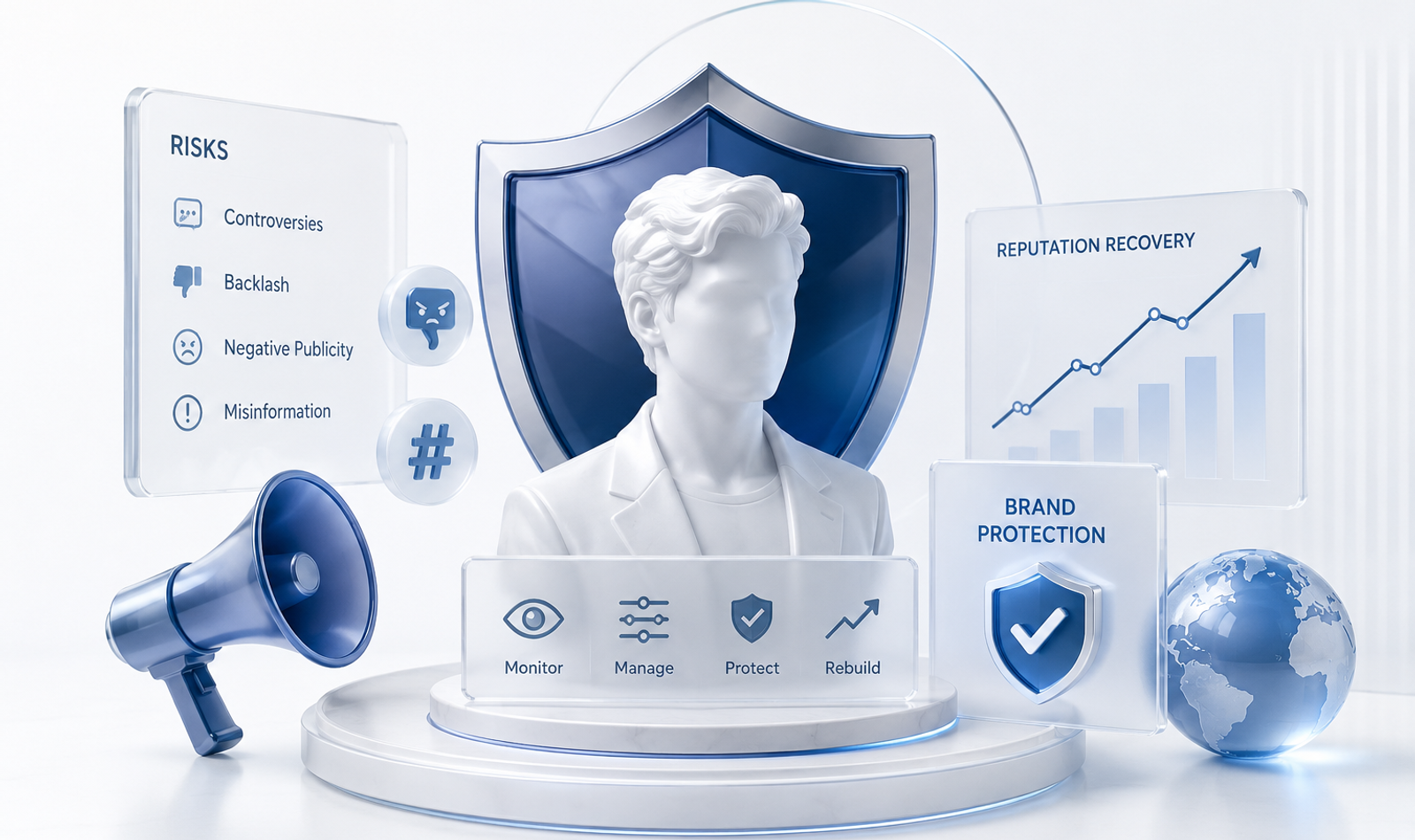
Effective celebrity crisis management is built on structure rather than improvisation. A well-defined framework ensures that brands can respond consistently and confidently, even under pressure. The first element of this framework is monitoring. Brands must continuously track digital conversations, media coverage, and audience sentiment. This allows for early detection of potential issues, enabling proactive response.
The second element is internal alignment. Before any external communication, teams must be aligned on facts, context, and strategy. This includes legal, PR, marketing, and leadership teams working together to define a unified position.
The third element is decision-making. Brands must determine their stance based on the situation, which may involve supporting the celebrity, distancing from them, or taking a neutral position. This decision must align with the brand’s values and long-term positioning.
The fourth element is communication. Messaging must be clear, concise, and consistent across all channels. The tone should reflect professionalism and control.
The final element is continuity. Crisis management does not end with a statement. It extends into how the brand behaves in the following days and weeks, often supported by brand and event execution.
Managing Social Media Backlash Effectively
Social media has become the primary platform where crises unfold and evolve. Managing backlash in this environment requires a deep understanding of how digital conversations function. Unlike traditional media, where communication is largely one-directional, social media involves continuous interaction and feedback.
Brands must adopt a selective engagement approach. Responding to every comment can escalate the situation, while ignoring key concerns can damage trust. Identifying influential voices and addressing critical narratives helps guide the conversation effectively.
Transparency plays an important role in managing backlash. Audiences appreciate honesty and accountability, but this must be balanced with strategic communication.
Proactive Risk Management and Prevention
The most effective crisis management strategy begins before a crisis occurs. Proactive risk management focuses on reducing the likelihood of issues and preparing for potential scenarios. Celebrity selection is a critical aspect of this process. Brands must evaluate not only popularity and reach but also alignment with values, consistency in behavior, and long-term reputation, as explained in celebrity selection strategy.
Contracts provide an essential layer of protection by defining expectations and responsibilities. Clear clauses related to conduct, representation, and termination ensure that brands have options in challenging situations, similar to frameworks in celebrity contract negotiation.
Scenario planning further enhances preparedness. By identifying potential risks and developing response strategies in advance, brands can reduce reaction time and improve decision-making.
Brand Protection in Luxury and Premium Segments
For luxury brands, celebrity risk carries even greater significance. Luxury branding is built on perception, exclusivity, and trust, making it highly sensitive to disruption. Even minor controversies can create doubt, as the brand image is carefully curated and maintained over time.
This requires a disciplined approach to both collaboration and crisis management. Luxury brands must ensure that every association aligns with their identity and that every response reflects their standards, often supported by celebrity management in Mumbai.
Brand protection also involves maintaining long-term consistency. Every action contributes to perception.
Crisis Communication and Media Strategy
Media plays a crucial role in shaping public perception during a crisis. Engaging with credible media platforms allows brands to present their perspective and provide accurate information. However, this engagement must be strategic and controlled.
Press statements, interviews, and digital updates must align with the overall communication strategy. Consistency across channels ensures that the message remains clear and authoritative, often guided by PR strategy frameworks.
Media strategy is not about controlling every narrative but about guiding perception.
Reputation Recovery and Long-Term Strategy
Recovery is an essential phase of crisis management that extends beyond immediate response. Rebuilding trust requires consistent effort, clear communication, and alignment across all touchpoints.
This process involves shifting the narrative from the crisis to the brand’s strengths. Positive campaigns, meaningful engagement, and consistent messaging help restore confidence.
Brands that manage recovery effectively often emerge stronger.
The Future of Celebrity Risk Management
As the branding landscape continues to evolve, celebrity risk management will become more sophisticated and data-driven. Brands are increasingly using analytics, sentiment tracking, and predictive tools to monitor risk and guide decision-making.
There is also a shift towards diversified influence, where brands collaborate with multiple personalities rather than relying on a single celebrity. This reduces dependency and distributes risk more effectively, as discussed in celebrity vs influencer marketing.
The future of branding will not eliminate risk but will manage it with precision.
Frequently Asked Questions (FAQs)
What is celebrity risk in branding?
Ans: It refers to the potential impact a celebrity’s actions or controversies can have on a brand’s reputation and perception.
Why is crisis management important for celebrity collaborations?
Ans: Because any controversy involving the celebrity can directly affect the brand’s image, making structured response strategies essential.
How can brands reduce celebrity-related risks?
Ans: Through careful selection, contractual safeguards, and proactive scenario planning.
What role does social media play in crises?
Ans: Social media accelerates the spread of information and shapes public perception in real time.
Can brands recover from celebrity controversies?
Ans: Yes, with consistent communication, strategic response, and long-term trust-building efforts.
Conclusion
Celebrity collaborations offer immense potential for growth, but they also introduce complexity and risk. In a world driven by perception and instant communication, brands must be prepared to navigate uncertainty with clarity and control. Crisis management is no longer a reactive function; it is a strategic pillar that defines how brands respond to challenges and protect their identity.
Because in modern branding, influence without structure creates vulnerability.
But influence with strategy builds long-term authority.
Build Your Celebrity Risk Strategy
If your brand is working with celebrities or operating in high-visibility environments, a structured risk management system is essential.
At Double Trouble Studio, we help brands manage celebrity collaborations with clarity, control, and long-term strategy—from risk assessment to crisis response and reputation recovery.
📩 info@dtsworld.in📞 +91 80000 06021 📍 Andheri West, Mumbai
👉 Start your strategy with confidence
Related reading: Crisis PR for luxury brands.
Need this for your brand?
Let DTS build your next campaign.
From PR, celebrity management and events to websites, social media, SEO and AI video production — Double Trouble Studio helps brands grow with strategy and execution.
Discuss Your Requirement →