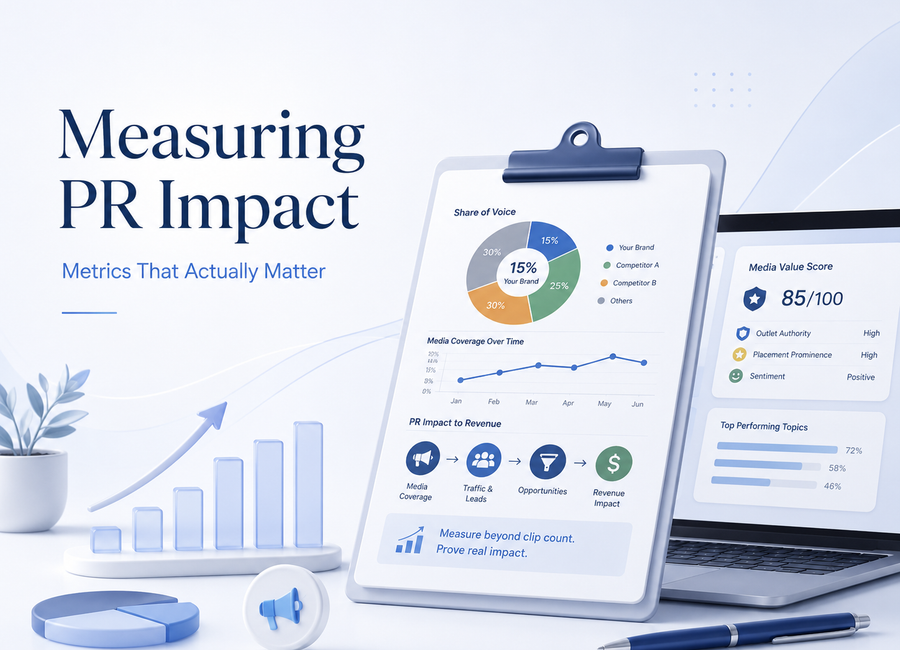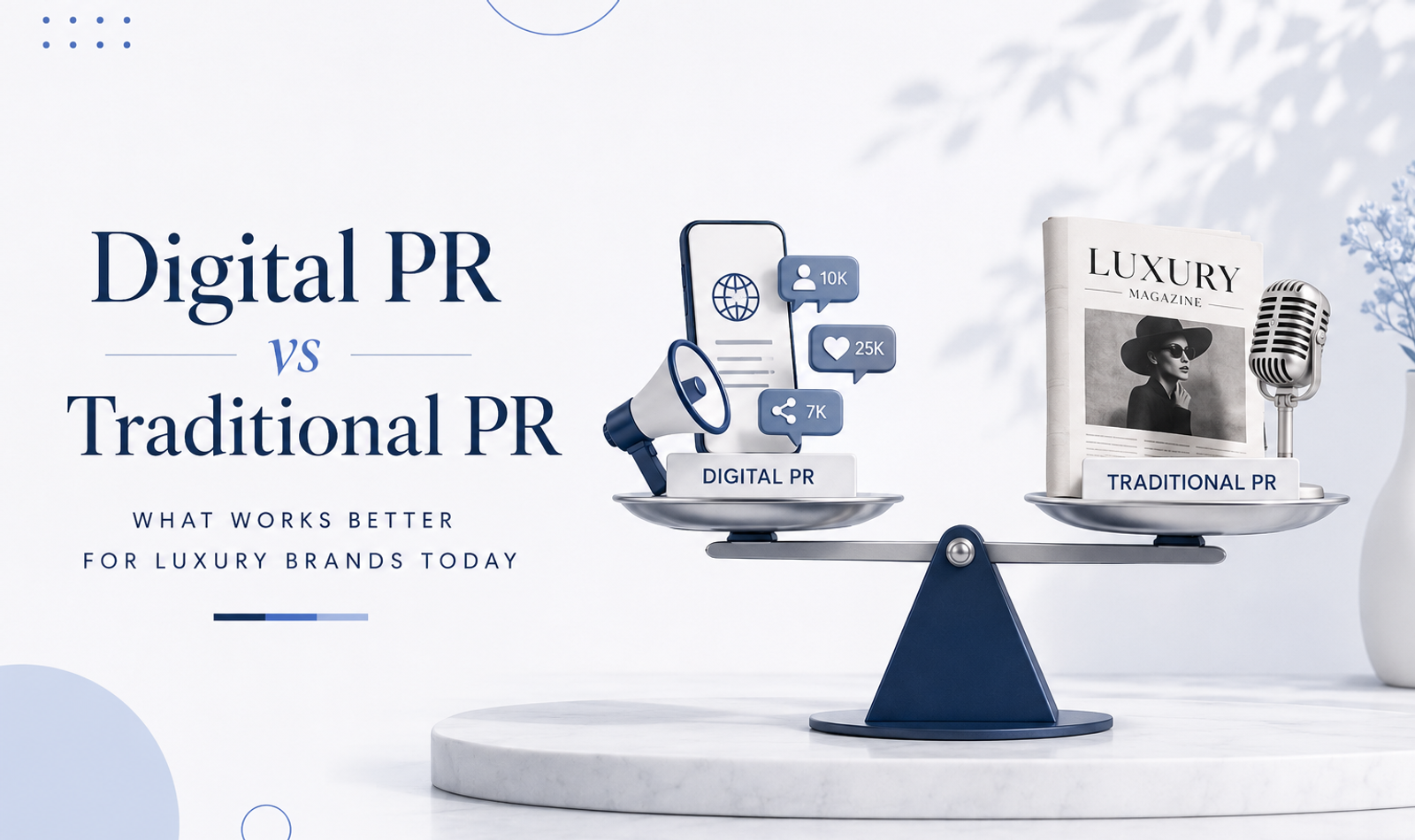
Luxury brands have traditionally built their reputations through prestigious magazines, newspaper features, private events, celebrity associations, carefully managed interviews and personal relationships with influential editors.
These channels continue to carry significant value.
A well-developed print feature can give a brand editorial authority that is difficult to recreate through ordinary advertising. A private media preview can allow journalists to experience craftsmanship, service and design directly. A relationship with a respected editor can lead to thoughtful coverage that positions the brand within a larger cultural conversation.
However, luxury audiences no longer experience brands through traditional media alone.
A customer may first discover a designer through an online feature, watch a creator style the collection on Instagram, search for the founder on Google, review the brand’s website and later book a private appointment.
A traveller may encounter a hotel through a digital publication, compare guest experiences on social platforms, search for the property and complete a direct booking after seeing a retargeting campaign.
This changing customer journey has created a continuing debate around digital PR and traditional PR.
Some brands believe digital PR has replaced conventional public relations because audiences spend more time online and campaign activity can be measured more easily.
Others continue to prioritise print publications, private events and personal editorial relationships because these channels support prestige, discretion and long-term credibility.
The more useful question is not whether digital PR or traditional PR is universally better.
The right question is which approach best supports the brand’s positioning, audience, story, customer journey and commercial objective.
For most luxury brands, the strongest answer is a carefully integrated strategy.
Traditional PR can build authority, prestige and high-value relationships.
Digital PR can improve discoverability, extend media coverage, create searchable visibility and connect communication with customer action.
The two approaches become most effective when they support the same brand narrative rather than competing for budget and attention.
What Is Traditional PR?
Traditional public relations refers to established communication practices involving print publications, newspapers, television, radio, press conferences, physical events, media previews, press kits and direct journalist relationships.
It is often associated with earned media coverage produced through editorial decisions.
A luxury fashion brand may invite selected editors and stylists to a private collection preview.
A premium hotel may host travel journalists for an immersive property experience.
A jewellery house may provide product access for an editorial shoot.
A luxury automobile brand may organise a controlled test-drive event for automotive media.
Traditional PR also includes leadership interviews, press releases, reputation management, spokesperson preparation and crisis communication.
The defining feature is not that the activity is old-fashioned.
It is that the communication relies strongly on direct media relationships, established editorial institutions and carefully managed physical or broadcast experiences.
What Is Digital PR?
Digital PR uses online publications, search visibility, social media, digital communities, creators, podcasts, newsletters, online events and data-led content to build brand awareness, authority and reputation.
It often combines public relations with content strategy, search optimisation, digital media outreach, influencer relations and online reputation management.
A digital PR campaign may involve an original research report pitched to online business and lifestyle publications.
A luxury resort may secure digital travel features that include direct links to the property website.
A designer may participate in podcasts, digital interviews and creator collaborations.
A premium service business may publish expert commentary that earns online references and increases branded search.
Digital PR can also involve amplifying earned coverage through social platforms, email, paid media and owned content.
Its value lies partly in its ability to extend the life of a story beyond the initial publication date.
Digital PR Is Not Only Social Media
Digital PR is sometimes confused with social-media management.
The two disciplines overlap, but they are not identical.
Social-media management focuses on publishing, community interaction, platform content and audience engagement through the brand’s own accounts.
Digital PR focuses more broadly on earning attention, authority and references across external digital environments.
This can include online magazines, news platforms, blogs, podcasts, newsletters, creator communities, professional networks and search results.
A digital PR campaign may use social media as a distribution channel, but its objective is generally larger than maintaining a posting calendar.
It aims to influence how the brand is understood, discussed, discovered and trusted online.
Traditional PR Is Not Outdated
Traditional PR should not be dismissed simply because digital platforms have grown.
Print publications, television interviews, high-touch press events and direct editorial relationships can still create powerful reputation value.
For luxury brands, physical presentation often matters greatly.
Journalists may need to feel the fabric, inspect the craftsmanship, experience the property, taste the menu or observe the service.
A digital press release cannot replace every form of direct experience.
Traditional media can also carry a sense of selectivity.
A detailed print feature in a respected publication may feel more considered than a brief online mention.
The limited space and editorial process can increase the perceived significance of the coverage.
The challenge is that traditional PR alone may not support the complete modern customer journey.
The Core Difference Between Digital and Traditional PR
The main difference lies in how stories are distributed, experienced, extended and measured.
Traditional PR often focuses on established media institutions and direct relationships.
Digital PR works across a wider network of online publications, search engines, creators, communities and owned platforms.
Traditional coverage may have a defined publication cycle and limited direct audience-response data.
Digital coverage can be discovered, shared, linked, searched and revisited over a longer period.
Traditional PR may provide deeper prestige and relationship value.
Digital PR may provide stronger discoverability, audience interaction and measurable customer journeys.
Neither difference automatically makes one approach superior.
The value depends on what the brand needs to achieve.
Why the Comparison Matters for Luxury Brands
Luxury brands face a specific communication challenge.
They need sufficient visibility to support growth, but uncontrolled exposure can weaken exclusivity.
They need cultural relevance, but trend-chasing can damage timeless positioning.
They need measurable marketing performance, but not every reputation outcome produces an immediate purchase.
They need digital discoverability, but the online experience must still feel selective and premium.
Traditional PR and digital PR solve different parts of this challenge.
Traditional PR can provide authority, curation, relationships and experience.
Digital PR can provide reach, discoverability, content longevity, audience data and commercial pathways.
A luxury brand should evaluate both according to how they protect and strengthen brand equity and luxury positioning.
The Role of Prestige
Traditional media has historically played a major role in defining prestige.
Appearances in respected fashion, design, travel, business and lifestyle publications can place a brand within a recognised cultural framework.
The publication’s reputation influences how the brand is perceived.
Digital platforms can also create prestige, but the context varies widely.
An in-depth digital feature from an authoritative publication may provide considerable value.
A low-quality syndicated article containing promotional copy may provide little credibility, even if it appears online under a familiar-looking publication category.
Luxury brands should evaluate editorial standards rather than assuming that print is always prestigious or that digital is always less selective.
The Role of Discoverability
Digital PR creates a major advantage in discoverability.
Online features can appear in search results when customers research the brand, founder, product or category.
A customer may encounter a media article months after it was published.
Links can direct readers towards relevant brand pages.
Social sharing can extend the story into additional communities.
Traditional print coverage may create significant impact when released, but customers may find it more difficult to access later unless the publication also publishes the feature online.
Luxury brands should consider both the immediate prestige of coverage and its long-term discoverability.
The Role of Editorial Depth
Traditional print formats can provide strong editorial depth when publications invest in long-form features, interviews, photography and design.
The physical presentation may add value to a luxury story.
Digital publications can also provide detailed reporting, interactive visuals, video, links and ongoing updates.
The quality depends on the publication and format rather than the medium alone.
A thoughtful online feature may offer greater depth than a one-paragraph print mention.
A carefully produced print profile may create greater emotional impact than a short digital announcement.
The brand should evaluate the actual editorial opportunity rather than relying on broad assumptions.
The Role of Speed
Digital PR generally operates more quickly.
Online outlets may publish timely stories, expert commentary and launch coverage within shorter cycles.
Brands can respond to developing conversations and distribute updates rapidly.
Traditional magazines often require longer planning periods.
Editorial calendars, photography, printing and distribution can mean that stories need to be pitched weeks or months in advance.
This slower process is not necessarily a weakness.
It can create more time for thoughtful production and deeper storytelling.
The correct choice depends on whether the brand needs immediacy or long-term editorial development.
The Role of Relationships
Both digital and traditional PR depend on relationships.
Traditional PR is often associated with long-standing relationships between publicists, editors, journalists, stylists, broadcasters and event organisers.
Digital PR also requires professional relationships with online editors, reporters, podcast hosts, newsletter writers, creators and community leaders.
Mass emailing is not a substitute for relationships in either model.
The difference is that digital PR often involves a larger and more fragmented media ecosystem.
The brand may need to engage with specialist newsletters, independent creators, niche websites and professional communities in addition to recognised publications.
The Role of Physical Experience
Traditional PR has a clear advantage when the product or service must be experienced directly.
Luxury depends heavily on sensory detail.
Texture, scale, atmosphere, scent, sound, taste and personal service can be difficult to communicate fully through an email or screen.
Press previews, property visits, private fittings, test drives, tastings and design workshops allow media to understand the brand through experience.
Digital PR can extend these moments through video, creator content, virtual tours and online storytelling.
However, the original physical experience may remain essential for credible reporting.
The most effective campaigns often connect a premium offline experience with strong online distribution.
The Role of Control
Neither traditional nor digital earned media gives the brand complete control over editorial coverage.
Journalists may choose their own angle, headline, quotations and context.
Digital PR can appear more controllable because the brand can publish owned content and social posts.
However, owned content is not the same as independent editorial validation.
Traditional events also provide controlled brand environments, but media remain free to report according to their own judgement.
Brands requiring guaranteed wording, placement and timing should consider advertising or sponsored content.
Paid and earned communication should remain clearly distinguished.
The Role of Audience Interaction
Digital PR allows audiences to respond immediately.
Readers can comment, share, search, visit the website and ask questions.
This provides valuable insight but also creates greater exposure to criticism and misinformation.
Traditional media communication is often more one-directional.
A print reader may discuss the feature privately without leaving visible engagement data.
This can make traditional impact more difficult to observe, but it does not mean the influence is absent.
Luxury brands should value both visible interaction and less visible reputation effects.
The Role of Measurement
Digital PR usually provides more direct measurement opportunities.
Brands can track referral traffic, search activity, social engagement, content views, downloads, enquiries and customer journeys.
Traditional PR measurement may include publication reach, circulation, prominence, message inclusion, event attendance and qualitative feedback.
However, traditional media can also influence digital behaviour.
A customer may read a magazine feature and later search for the brand online.
The final website visit may not show the print article as the source.
Measurement should therefore consider direct and indirect influence.
Advantages of Traditional PR for Luxury Brands
Traditional PR offers several important strengths.
It can create strong prestige through selective editorial environments.
It supports personal relationships with influential media professionals.
It allows products and services to be experienced physically.
It can provide high-quality photography, long-form interviews and carefully designed features.
Private media events can reflect the brand’s service standards and aesthetic world.
Traditional coverage can also reach established customers who continue to value print publications, television and recognised newspapers.
For heritage, fashion, jewellery, automobiles, hospitality, interiors and fine dining, these advantages can remain significant.
Limitations of Traditional PR
Traditional PR can involve longer lead times and limited publication space.
The brand may need to plan seasonal stories months in advance.
It may receive limited data about exactly who saw the coverage or what action they took.
Print features can be difficult to connect directly with website behaviour and revenue.
Physical media events can also require substantial investment in venues, travel, hospitality and production.
Traditional PR can become inefficient when brands chase prestigious logos without a relevant story or customer objective.
The value should be evaluated strategically rather than assumed.
Advantages of Digital PR for Luxury Brands
Digital PR improves discoverability and content longevity.
Online stories can be searched, shared and revisited.
Coverage can include direct links, video, image galleries and interactive content.
Digital PR can reach niche communities with greater precision.
A premium watch brand can engage specialist collectors.
A boutique hotel can reach travel communities interested in one destination.
A design studio can contribute to architecture newsletters and professional podcasts.
Digital campaigns can also be connected with website activity, branded search, enquiries and customer data.
This makes it easier to optimise communication over time.
Limitations of Digital PR
Digital PR can encourage brands to prioritise volume over quality.
A large number of low-authority mentions may create little prestige or customer trust.
Online attention can be brief and highly competitive.
Content may be copied, misunderstood or placed beside unsuitable advertising.
Digital PR also creates greater exposure to public comments, backlash and misinformation.
Search algorithms and social platforms change, affecting visibility.
A brand that depends entirely on one digital channel may become vulnerable when platform performance changes.
Luxury brands must maintain editorial quality and channel diversity.
Traditional PR for Brand Positioning
Traditional PR can be particularly effective during brand establishment or repositioning.
An in-depth founder interview, print profile or editorial shoot can communicate the brand’s identity with depth.
The publication’s visual language and authority may strengthen the positioning.
A private media presentation can also allow the brand to explain materials, process and philosophy directly.
This is valuable when the offering is complex or highly sensory.
Traditional positioning activity should still connect with digital destinations.
Interested audiences need accurate websites, founder profiles, product pages and social channels when they search later.
Digital PR for Brand Positioning
Digital PR can reinforce positioning through repeated searchable evidence.
Online interviews, expert commentary, case studies, podcasts and cultural features create a body of public information around the brand.
Customers can encounter several of these assets during research.
The brand can also create owned content that expands on media themes.
Search and social data reveal whether audiences are associating the brand with the intended qualities.
Digital positioning becomes strongest when external coverage, owned content and customer experience tell the same story.
Traditional PR for Product Launches
Traditional product launches may involve editor previews, press kits, sample loans, private dinners, showroom appointments and carefully managed media events.
These formats allow journalists, stylists and buyers to experience the product directly.
They are particularly useful for fashion, beauty, jewellery, automobiles, hospitality, food and design.
The event should provide editorial value rather than functioning only as a visual celebration.
Media need access to creators, specialists, materials, products and meaningful information.
Attendance should not be treated as guaranteed coverage.
Digital PR for Product Launches
Digital PR can build anticipation before launch and extend attention afterwards.
The brand may use online exclusives, creator previews, founder interviews, newsletters, podcasts and digital press assets.
Online publications can embed product links, video and galleries.
Social platforms can distribute key moments.
Search campaigns and optimised landing pages can capture active interest.
Digital launch activity should avoid overwhelming the audience with identical content from too many creators and outlets.
Luxury perception benefits from coordinated but selective exposure.
For brands planning a premium launch experience, luxury product launch events can connect physical experience with media and digital amplification.
Traditional PR for Heritage Brands
Heritage luxury brands often benefit from established media formats.
Print features, archival exhibitions, private previews and documentaries can communicate history with depth and visual richness.
Editors may value access to archives, craftspeople and family leadership.
The challenge is to connect heritage with present relevance.
A brand should not depend only on its age.
Traditional communication should explain how the company continues to evolve, innovate and serve contemporary customers.
Digital PR for Heritage Brands
Digital PR can make archives and craftsmanship accessible to new audiences.
The brand may publish digital timelines, interviews, process films, virtual exhibitions and interactive stories.
Searchable content allows customers to explore the history when they are ready.
Creators and cultural commentators can interpret heritage for younger communities.
The brand should maintain accuracy and avoid reducing tradition to superficial visual content.
Digital storytelling should add context rather than simplify the history beyond recognition.
Traditional PR for Luxury Hospitality
Travel writers and editors often need to experience a property before producing meaningful coverage.
Familiarisation visits, private tours, culinary experiences and destination access can support richer reporting.
Traditional relationships with travel, lifestyle and wedding media remain valuable.
The property should organise the visit professionally without pressuring guests to publish positive coverage.
The experience itself becomes evidence of the brand promise.
Operational failures during a press stay can damage reputation more than an ordinary missed pitch.
Digital PR for Luxury Hospitality
Digital travel features, creator content, video, podcasts and searchable destination guides can support continuous discovery.
Customers often research properties across several online touchpoints.
Digital PR can answer questions about location, rooms, food, weddings, privacy and experiences.
Online coverage can drive referral traffic and branded search.
The property should prepare landing pages and booking systems before major publicity.
Strong digital attention can be wasted when the booking experience is slow or unclear.
Traditional PR for Fashion and Jewellery
Fashion and jewellery have long relied on editorial relationships, sample access, magazine shoots, fashion weeks, celebrity styling and physical previews.
These practices remain highly relevant because editors and stylists need to inspect products and coordinate visual storytelling.
A print editorial can place the product within an aspirational creative world.
The brand should maintain professional sample tracking, image credits, availability and usage information.
Traditional coverage should be supported with digital product details for customers who search after seeing the feature.
Digital PR for Fashion and Jewellery
Digital publications, fashion creators, stylists, online interviews and visual platforms can create rapid discovery.
Behind-the-scenes content can show design development and craftsmanship.
Digital PR also supports regional and niche communities that may not receive significant print coverage.
The challenge is maintaining selectivity.
A luxury collection promoted through too many identical creator posts may lose distinction.
The brand should choose collaborators and publications according to positioning rather than raw reach.
Traditional PR for Luxury Events
Physical events naturally create traditional PR opportunities.
Media previews, press conferences, red carpets, panels and private guest experiences can attract attention and provide interview access.
Traditional media may cover the social, cultural, business or entertainment significance of the event.
The organiser should provide a clear story beyond celebrity attendance.
Media logistics, interview schedules, photography and information should be coordinated professionally.
Digital PR for Luxury Events
Digital PR can support the complete event lifecycle.
Before the event, online features, creator content and social storytelling can create interest.
During the event, approved real-time content can extend the experience beyond the venue.
After the event, interviews, highlights, reports and case studies can continue generating value.
Registration, website and customer data can connect visibility with attendance and enquiries.
Privacy, permissions and sponsorship disclosures must be managed carefully.
A structured event PR strategy can coordinate coverage before, during and after the event.
Traditional PR for B2B Luxury Services
Corporate hospitality, private aviation, premium real estate, architecture and high-end professional services may benefit from business publications, trade media, conferences and leadership interviews.
Traditional relationships can build credibility among senior decision-makers.
Private roundtables and executive events may create deeper conversations than mass digital communication.
The challenge is measuring how these activities influence long sales cycles.
Sales teams should record media and event touchpoints where possible.
Digital PR for B2B Luxury Services
Digital PR can reach specialised professional audiences through business websites, LinkedIn, newsletters, podcasts and online reports.
Searchable thought leadership helps decision-makers during research.
Original data, case studies and expert commentary can generate authority.
The brand can connect digital exposure with report downloads, consultation requests and account engagement.
The content should remain substantive.
Senior audiences are unlikely to respond to vague luxury language without business evidence.
Traditional PR for Crisis Management
Traditional crisis PR involves direct media statements, press briefings, spokesperson interviews and relationships with established journalists.
Trusted media contacts can help ensure that verified information reaches the public.
Television, radio and newspapers may remain essential during serious incidents.
The organisation needs a trained spokesperson and rapid fact verification.
Traditional media response should remain aligned with website and social updates.
Conflicting statements across channels can deepen the crisis.
Digital PR for Crisis Management
Digital channels allow brands to communicate quickly through official websites, social profiles, email and direct customer channels.
Monitoring can identify misinformation, customer concerns and emerging narratives.
However, digital speed creates pressure to respond before facts are confirmed.
The brand should prioritise accuracy and affected stakeholders.
Scheduled promotional content may need to be paused.
One official source should provide time-stamped updates.
Digital PR should support operational action rather than create the appearance of control.
A prepared crisis PR framework can help brands coordinate accurate communication across both traditional and digital channels.
When Traditional PR Works Better
Traditional PR may work better when the experience is highly physical or sensory.
It may be the stronger choice for private previews, editorial shoots, luxury hospitality visits, fine dining, automobiles, jewellery and craftsmanship.
It can also be effective when the target audience strongly values established print, television or business media.
Traditional PR may provide greater benefit when the brand needs deeper editorial interpretation rather than immediate digital reach.
It is also valuable when long-term journalist and stylist relationships directly influence category visibility.
The brand should still provide a digital path for interested audiences.
When Digital PR Works Better
Digital PR may work better when the objective is discoverability, search visibility, niche audience reach, measurable website activity or rapid response.
It is especially useful for emerging brands that need to build a searchable authority footprint.
Digital PR can also support geographically diverse audiences and specialised communities.
Brands launching online services, ecommerce products, reports or thought leadership may gain significant value from digital-first outreach.
The approach becomes stronger when the website and conversion systems are prepared to receive interest.
When a Combined Strategy Works Best
A combined strategy usually works best when the brand needs both prestige and performance.
A luxury hotel may host a selective media experience for traditional travel editors while also producing digital destination content and creator partnerships.
A jewellery brand may secure a print editorial while using digital features, founder interviews and search-optimised craftsmanship stories.
A premium event may use private media access, television interviews, online coverage, social content and post-event case studies.
Traditional PR creates authority and experience.
Digital PR extends discoverability and customer action.
The campaign should be planned as one system rather than two unrelated programmes.
The PESO Approach for Luxury PR
A practical integrated approach considers paid, earned, shared and owned communication.
Earned media includes independent coverage and journalist commentary.
Owned media includes the brand’s website, newsroom, reports and customer content.
Shared media includes social communities, creator conversations and audience participation.
Paid media includes advertising, sponsored content and approved amplification.
Luxury brands should use each category transparently.
A sponsored feature should not be presented as independent editorial coverage.
An influencer partnership should include appropriate disclosure.
The strength of integration depends on maintaining trust between these channels.
Build One Central Narrative
Traditional and digital PR should express the same central brand narrative.
A print interview may explain the founder’s philosophy.
A digital article may explore the design process.
A social video may show craftsmanship.
A landing page may explain the customer experience and booking process.
These assets should feel connected.
The tone and detail can change according to the channel.
The underlying position should remain consistent.
Inconsistent narratives create confusion and weaken luxury authority.
Use Traditional Coverage Digitally
Traditional coverage can be extended through digital channels where rights and permissions allow.
The founder may publish a reflection related to the article.
The website may link to the original feature.
Social content can share a short approved quotation or behind-the-scenes moment.
Email communication can direct interested customers towards the publication.
Sales teams may use the coverage as proof during relevant conversations.
The brand should not copy complete copyrighted articles or alter publication headlines.
Use Digital Data to Improve Traditional PR
Digital data can reveal which subjects matter to audiences.
Search queries, website behaviour, social comments and customer questions may identify strong media angles.
A hotel may discover growing interest in private destination weddings.
A fashion brand may see demand for information about materials and repair.
An event company may identify questions about guest logistics and privacy.
These insights can support print features, broadcast interviews and physical media events.
Digital intelligence should inform editorial creativity without replacing journalist judgement.
Build a Shared Editorial Calendar
A shared calendar should include print deadlines, digital launches, events, content, creator partnerships, search campaigns and customer communication.
This prevents teams from working against one another.
A print feature may require product access months before launch.
A digital landing page should be live when the article appears.
Social and paid campaigns should support the same story.
The calendar should identify embargoes, approvals, assets and measurement points.
Prepare Assets for Both Environments
Traditional and digital media require different but connected assets.
Print may require high-resolution photography, product samples, detailed captions and longer lead times.
Digital outlets may require vertical images, video, links, downloadable information and rapid spokesperson access.
The brand should prepare an organised media kit that supports both.
Files should be clearly named and approved.
Photography rights, product availability and factual information should be confirmed before outreach.
Select Media by Relevance
The brand should not divide the media list only into print and digital.
It should evaluate audience, authority, editorial fit, geography, format and commercial relevance.
A specialised digital publication may be more influential than a general print magazine.
A respected regional newspaper may be more valuable than a global website for a city launch.
A niche print title may reach highly qualified collectors.
The media strategy should prioritise the outlets that shape the desired audience’s decisions.
For brands seeking premium editorial visibility, a structured approach to getting featured in premium media can improve pitching, relationships and timing.
Balance Exclusivity and Reach
Traditional luxury PR often values exclusives.
Digital PR often values distribution and shareability.
The brand should determine whether one deep feature or several broader stories will create greater value.
An exclusive may secure stronger editorial attention.
Wider outreach may create more search visibility and audience reach.
The two can be sequenced.
One publication may receive the first interview, followed by broader digital outreach after the exclusive period.
Terms should be agreed clearly.
Manage Influencers Within Digital PR
Influencer marketing for luxury brands can support digital PR when the creator contributes credible storytelling and cultural relevance.
The creator should be selected according to audience fit, content quality and brand alignment.
The relationship should not be confused with independent journalism.
Paid, gifted and hosted collaborations require suitable disclosure.
The contract should address deliverables, usage, exclusivity, approval and amplification.
Luxury brands should avoid creator saturation that makes the product appear indiscriminately distributed.
Use KOLs and Experts
Key opinion leaders can connect traditional and digital communication.
An architect may participate in a print interview, digital panel and LinkedIn discussion.
A chef may host a media tasting and appear in an online culinary feature.
A designer may contribute to a magazine profile, podcast and social film.
The expert should communicate within genuine knowledge.
Authority becomes stronger when the same credible perspective appears consistently across several formats.
Integrate Search Strategy
Digital PR should support how customers search for the brand.
The website needs accurate pages for products, services, founders, locations and contact information.
Media coverage may increase searches without producing direct clicks.
The brand should monitor branded and category search trends.
Search optimisation can also help owned insights remain discoverable.
Traditional PR teams should understand that a print reader may become a search user later.
The online brand experience must continue the quality of the media story.
For premium brands, a deliberate SEO strategy for luxury brands can strengthen the discoverability created by PR activity.
Integrate Paid Amplification
Paid media can extend strong PR content.
The brand may promote related founder content, campaign films, research reports or case studies.
Media coverage can be included as credibility proof where permitted.
Paid campaigns should generally guide audiences towards owned destinations with a useful next action.
The luxury tone should remain consistent.
Aggressive discount language can weaken the reputation built through premium editorial coverage.
Create a Full-Funnel PR Strategy
At the awareness stage, traditional media, digital features, events, creators and advertising can introduce the brand.
During interest, customers may explore interviews, social content, podcasts and design stories.
During consideration, they need detailed product information, customer proof, reviews and service explanation.
At conversion, the brand should provide appointments, booking access, enquiries or purchasing options.
After purchase, customer experience and advocacy influence reputation.
Traditional and digital PR can contribute at several stages.
The campaign should define each channel’s role.
A full-funnel PR and digital growth strategy can help connect PR visibility with consideration and conversion.
Measure Traditional PR Correctly
Traditional PR measurement may include publication quality, circulation, prominence, article depth, message inclusion, spokesperson visibility and event attendance.
The report should consider whether the coverage reached the intended audience.
A front-page mention and a small product listing should not receive the same value.
Qualitative feedback from journalists, customers, partners and sales teams may provide additional insight.
Traditional coverage should not be valued only through an estimated advertising cost.
Editorial and advertising value are not equivalent.
Measure Digital PR Correctly
Digital PR measurement may include online media quality, links, referral traffic, content engagement, social discussion, branded search and key customer actions.
The brand should distinguish potential reach from actual audience activity.
A backlink from an irrelevant low-quality website should not be valued like an authoritative editorial feature.
Traffic should be examined for quality.
Did visitors explore products, view appointments, download information or enquire?
The measurement system should connect communication with meaningful outcomes.
Compare Media Quality, Not Only Quantity
A digital PR campaign may produce more individual mentions because online publishing is faster and more widely distributed.
Traditional PR may produce fewer but deeper features.
Counting articles alone creates an unfair comparison.
The brand should evaluate authority, relevance, story prominence, message accuracy, content depth and audience response.
One carefully developed print feature and one authoritative online article may create more value than dozens of low-quality mentions.
Measure Message Pull-Through
Message pull-through shows whether the coverage communicated the intended brand position.
A print feature may use beautiful images but provide little explanation of craftsmanship.
A digital article may mention the founder but ignore the service.
An influencer post may receive strong engagement while audiences remember only the creator.
The team should review which brand beliefs, proof points and customer benefits appeared.
Visibility without the correct message can create weak or inaccurate awareness.
Measure Branded Search
Branded search can provide evidence that communication increased interest.
The team may monitor searches for the company, founder, product, campaign and location.
Print, television, events, digital coverage and creators can all influence these searches.
The data should be compared with a suitable baseline.
The brand should consider seasonality and other campaigns.
Search growth indicates interest but does not prove that one channel caused the entire change.
Measure Website Behaviour
Online coverage can generate direct referral traffic.
Traditional coverage may produce direct or search-driven visits later.
The brand should examine landing-page engagement, product exploration, appointment views and customer actions.
A short surge of low-quality traffic may be less valuable than a smaller number of relevant visitors.
Tracking should focus on meaningful business activity rather than page views alone.
Measure Qualified Enquiries
Luxury brands should record whether PR contributes to suitable customer enquiries.
The sales or booking team can ask how the customer discovered the brand and what influenced their decision.
The CRM should preserve media, event, creator and campaign sources where possible.
Total enquiries should be separated from qualified opportunities.
A single high-value appointment may be commercially significant even when the overall traffic increase appears small.
Measure Reputation Outcomes
PR should also be evaluated through awareness, trust, consideration, preference and brand association.
These outcomes may require surveys, interviews, customer feedback and social analysis.
The brand should test whether audiences associate it with the intended qualities.
High awareness of the wrong message can damage positioning.
Reputation measurement should be compared over time rather than judged through one campaign snapshot.
Measure Organisational Impact
The final impact may include sales, bookings, partnerships, investor interest, talent attraction, market entry or reduced customer-acquisition difficulty.
Not every outcome can be attributed perfectly to one article or event.
The customer may encounter several touchpoints.
The report should explain contribution and assumptions honestly.
Activities, media outputs, audience outcomes and business impact should remain distinct.
Avoid Advertising Value Equivalency
Advertising value equivalency attempts to estimate what editorial coverage would have cost as advertising.
This does not prove audience trust, customer action or revenue.
Editorial coverage and paid advertising serve different functions.
A stronger comparison uses media quality, audience relevance, message inclusion, search behaviour, enquiries and reputation outcomes.
Luxury brands should avoid presenting a large estimated advertising value as verified financial return.
A more structured PR ROI framework can help measure media quality, visibility, leads and commercial influence more accurately.
Compare Cost Efficiently
Digital PR may appear less expensive because it avoids some physical event and production costs.
However, high-quality digital campaigns require research, content, data, creative assets, outreach, monitoring and measurement.
Traditional PR may require samples, travel, hospitality, photography and event production.
The brand should compare complete programme costs against the quality of outcomes.
The cheapest approach is not automatically the most valuable.
Common Traditional PR Mistakes
A common mistake is pursuing print features only for logo prestige.
Brands may ignore whether the publication reaches the correct audience.
Some organise expensive press events without a strong editorial story.
Media materials may contain beautiful imagery but little useful information.
Traditional campaigns may also fail to prepare digital pages for customers who search later.
Another mistake is assuming personal relationships guarantee coverage.
Editorial relevance remains necessary.
Common Digital PR Mistakes
Digital PR often becomes a volume exercise.
Brands may purchase low-quality placements and report them as premium earned coverage.
They may prioritise backlinks without considering editorial relevance.
Some distribute identical articles across several websites.
Others focus on social engagement without measuring brand attribution.
Digital campaigns may create traffic but lead to weak websites and poor customer response.
The brand should protect quality, transparency and customer experience.
Common Integration Mistakes
Some brands run traditional and digital PR through separate teams that rarely communicate.
The print team may use one story while the digital team promotes another.
Creator partnerships may launch before media embargoes expire.
Websites may be incomplete when major coverage appears.
Measurement may double-count the same audience and customer journey.
Integration requires one objective, narrative, calendar and reporting framework.
A Practical Decision Framework
The brand should begin by defining the objective.
If it needs prestige, sensory experience and high-touch editorial relationships, traditional PR may receive greater emphasis.
If it needs search visibility, rapid distribution, niche reach and measurable digital action, digital PR may receive greater emphasis.
If it needs both reputation and commercial growth, an integrated approach is usually stronger.
The audience’s media behaviour should influence the balance.
The product, category, geography, budget and timing should also be considered.
A Practical Integrated Luxury PR Process
The process begins with research into the brand, audience, category and customer journey.
The organisation defines its position and communication objective.
A central narrative and several story pillars are created.
The PR team identifies which stories require physical experience and which work digitally.
Traditional media, digital publications, creators, podcasts, newsletters and regional outlets are researched according to relevance.
A shared calendar includes print lead times, digital launches, events, embargoes and content.
Editorial-quality photography, digital assets, biographies, fact sheets and landing pages are prepared.
Selected journalists may receive private access, samples, interviews or experiences.
Digital outreach supports timely online features, expert commentary and searchable content.
Owned articles and social assets extend the story.
Paid campaigns may amplify suitable content and capture demand.
Customer-facing teams understand the campaign and record enquiries.
Measurement combines media quality, search interest, website behaviour, qualified leads, reputation and business outcomes.
The team reviews performance and adjusts the future balance between traditional and digital investment.
Which Works Better for Luxury Brands Today?
Neither digital PR nor traditional PR is automatically better for every luxury brand.
Traditional PR remains highly effective for prestige, sensory storytelling, physical experience, deep editorial relationships and selective media environments.
Digital PR is stronger for discoverability, searchable authority, niche reach, rapid communication, audience interaction and measurable customer journeys.
The strongest approach depends on the objective.
An emerging ecommerce luxury label may place greater emphasis on digital PR.
A heritage jewellery house launching a major collection may benefit from print editorials, private previews and digital amplification.
A boutique hotel may require travel-writer stays, creator content, online destination features and search visibility.
A premium B2B service may rely on business media, leadership events, podcasts, LinkedIn and digital thought leadership.
The correct strategy is not a fixed percentage split.
It is a deliberate combination designed around the customer and brand.
Frequently Asked Questions
What is the main difference between digital PR and traditional PR?
Traditional PR focuses on print media, newspapers, television, and direct journalist relationships, while digital PR focuses on online publications, search engines, social media, creators, podcasts, and digital communities.
Is traditional PR still relevant for luxury brands today?
Yes. Traditional PR remains highly relevant because it builds prestige, editorial authority, and sensory storytelling through print features, private media previews, and curated journalist experiences.
Why is digital PR important for luxury brands?
Digital PR improves discoverability, search visibility, and measurable customer journeys. It helps luxury brands connect media exposure with website visits, enquiries, and actual conversions.
Can luxury brands rely only on digital PR?
No. Digital PR alone may not fully support luxury positioning, especially where physical experience, exclusivity, and high-end editorial storytelling are important.
Can traditional PR exist without digital PR today?
It can, but it is less effective. Traditional PR without digital amplification limits discoverability and makes it harder for customers to continue their journey online.
Which is better for luxury branding—digital or traditional PR?
Neither is universally better. The most effective strategy depends on brand positioning, audience behaviour, business goals, and customer journey stage.
How do digital and traditional PR work together?
Traditional PR builds authority and trust, while digital PR extends that value through search, social media, creators, and online engagement—creating a complete communication system.
How should luxury brands measure PR success?
Success should be measured through media quality, message clarity, branded search, website behaviour, enquiries, customer actions, and long-term brand perception—not just reach or clicks.
Conclusion
Digital PR and traditional PR are not competing forces—they are complementary layers of modern luxury communication.
Traditional PR builds credibility, exclusivity, and emotional authority through curated editorial environments and real-world experiences. Digital PR expands that value by increasing discoverability, enabling measurable engagement, and connecting storytelling to customer action.
Luxury brands operate in a complex customer journey where audiences move between print, digital platforms, creators, search engines, and direct brand interactions. No single channel can define that journey alone.
The strongest luxury communication strategy is therefore integrated. Traditional PR establishes prestige and trust, while digital PR ensures that trust remains visible, searchable, and actionable across modern platforms.
When both systems work together under one narrative, luxury brands are able to achieve what matters most: sustained reputation, cultural relevance, and meaningful business growth.
Build a Luxury PR System That Works Beyond Media Placements
In today’s luxury landscape, visibility alone is not enough. Brands need structured communication that connects prestige with performance and storytelling with measurable outcomes.
We design integrated PR strategies that combine traditional media authority with digital discoverability. From editorial positioning and press relations to digital amplification and search-driven visibility, we build systems that support the full luxury customer journey.
If you want your brand to be seen in the right places—and remembered for the right reasons—let’s build your integrated PR strategy.
📩 info@dtsworld.in 📞 +91 80000 06021 📍 Andheri (West), Mumbai
Need this for your brand?
Let DTS build your next campaign.
From PR, celebrity management and events to websites, social media, SEO and AI video production — Double Trouble Studio helps brands grow with strategy and execution.
Discuss Your Requirement →