Go-to-Market Strategy for New Brands in India: Complete Framework
Launching a new brand in India can look deceptively simple.
Create a product. Build a website. Open social media accounts. Run advertisements. Contact influencers. Announce the launch.
But a successful market entry requires much more than promotional activity.
A brand needs to know who it is selling to, why those customers should care, how the offer should be positioned, what they are willing to pay, where they prefer to buy, how the brand will earn trust and which channels can generate sustainable demand.
These decisions form the foundation of a go-to-market strategy.
For new brands entering India, the challenge is particularly interesting because India is not one uniform consumer market. Customer behaviour can differ across cities, regions, income groups, languages, age groups, categories and digital platforms.
A strategy that works for a premium beauty brand in Mumbai may not work for a mass-market consumer product expanding into Tier 2 cities. A B2B technology company selling to enterprises requires a different route to market from a D2C fashion brand selling through Instagram and its own website.
This is why a strong go-to-market strategy for new brands in India needs to connect business strategy with actual market execution.
The complete framework can be understood as:
Market Opportunity → Customer → Positioning → Offer → Pricing → Distribution → Digital Presence → PR → Acquisition → Launch → Measurement → Scale
This guide explains each stage and provides a practical framework brands can use to plan their first 90 days in the Indian market.
What Is a Go-to-Market Strategy?
A go-to-market strategy, commonly called a GTM strategy, is a structured plan explaining how a company will bring a product, service or brand to a target market and generate demand.
It answers several fundamental questions:
Who is the customer?
What problem are we solving?
Why should customers choose us?
How should the brand be positioned?
What should the product cost?
Where will customers discover it?
Where will they purchase it?
Which marketing channels should be used?
How will sales be generated?
How will success be measured?
A GTM strategy connects these decisions into one commercial system.
It is therefore broader than a launch campaign.
A launch campaign creates attention.
A GTM strategy determines how that attention becomes customers and how those customers can become the foundation for sustainable growth.
Why New Brands in India Need a GTM Strategy
New brands often have limited resources.
There may be limited:
budget,
brand awareness,
customer data,
distribution,
media relationships,
organic search visibility,
and historical campaign performance.
This makes prioritisation extremely important.
Without a GTM strategy, brands may invest simultaneously in:
influencers,
Meta Ads,
PR,
events,
SEO,
marketplaces,
content,
and offline distribution
without knowing how those activities fit together.
Activity increases, but strategic clarity does not.
A good GTM plan establishes the sequence.
It determines what needs to be built first, which audiences matter most, which channels deserve investment and how each activity supports the next stage of growth.
Go-to-Market Strategy vs Marketing Strategy
These terms are related but not identical.
A go-to-market strategy focuses on how a product or brand enters a specific market and begins acquiring customers.
A marketing strategy is broader and continues after market entry.
Marketing strategy may include:
long-term brand building,
customer retention,
content,
advertising,
SEO,
CRM,
community,
and ongoing campaigns.
GTM is especially important during:
new brand launches,
new product launches,
market expansion,
new geography entry,
and major repositioning.
Think of GTM as the commercial launch architecture.
Marketing becomes an ongoing engine within that architecture.
What Makes the Indian Market Different?
India offers enormous opportunity, but scale also creates complexity.
The market includes major metropolitan areas, fast-growing Tier 2 and Tier 3 cities, different language groups, varying levels of digital adoption and very different expectations around pricing and service.
A single national audience definition such as:
“Indian consumers aged 18–35”
is usually too broad to be strategically useful.
A customer in South Mumbai purchasing premium skincare may have very different motivations from a customer in another city buying within the same category.
Similarly, a luxury hospitality customer, SaaS founder, bride planning a destination wedding and value-focused ecommerce shopper cannot be approached through the same GTM model.
Brands therefore need segmentation before scale.
Step 1: Define the Market Opportunity
Before building campaigns, determine what opportunity actually exists.
Ask:
What category are we entering?
How large is the addressable market?
Is the category growing?
Who are the established competitors?
What alternatives are customers currently using?
What customer problem remains underserved?
Is demand already established, or does the category need education?
Where is the strongest initial geographic opportunity?
This stage should produce a clear market hypothesis.
For example:
“We believe there is an opportunity among urban premium consumers who want X but currently choose between expensive international brands and inconsistent local alternatives.”
That is much more useful than:
“India is a large market and we want to launch here.”
Step 2: Conduct Market and Competitor Research
Competitor research should go beyond listing companies.
Study how competitors:
position themselves,
price products,
structure websites,
communicate benefits,
use social media,
work with influencers,
appear in search,
secure media coverage,
package products,
sell through marketplaces,
and build customer trust.
Look for patterns.
If every competitor communicates the same benefit, copying it may make the new brand invisible.
The objective is to identify both category expectations and strategic gaps.
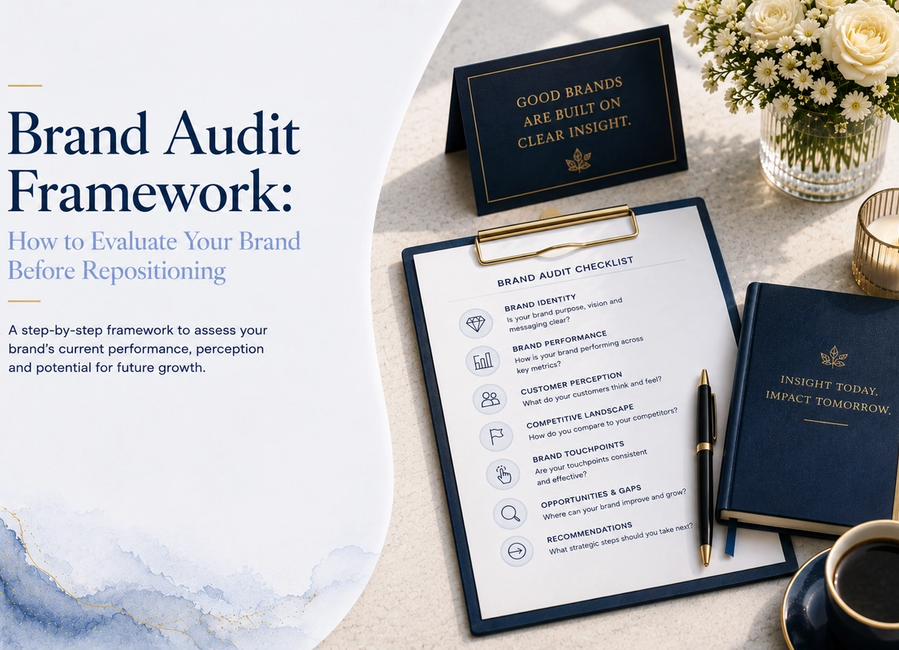
A structured brand audit framework can help organise this evaluation before major positioning decisions are made.
Step 3: Identify the Ideal Customer
A GTM strategy becomes much stronger when the target customer is specific.
Instead of:
Women aged 20–40
define:
Who is most likely to need this product?
What triggers the need?
What alternatives do they currently use?
What frustrates them?
What do they value?
Where do they discover brands?
What objections prevent purchase?
What influences their decision?
What would make them switch?
The ideal customer profile should influence nearly every later GTM decision.
Step 4: Segment the Target Audience
Not every customer should receive the same message.
Useful segmentation may be based on:
need,
purchase intent,
location,
income,
lifestyle,
category awareness,
behaviour,
profession,
business size,
or customer value.
A premium luggage company, for example, might identify:
frequent business travellers,
international leisure travellers,
destination wedding travellers,
and premium gifting customers.
All may purchase luggage.
But their motivations are different.
Segmentation allows the brand to build more relevant offers and campaigns.
Step 5: Define Brand Positioning
Positioning answers one of the most important questions in business:
What should customers remember about this brand compared with alternatives?
Strong positioning is not simply a slogan.
It should influence:
product,
price,
design,
content,
customer experience,
distribution,
and communication.
A useful positioning framework asks:
Who are we for?
What category do we compete in?
What value do we provide?
Why are we different?
Why should customers believe us?
Brands competing at the premium end of the market can explore these questions further through DTS's guide to luxury brand positioning, perception, pricing and differentiation.
Step 6: Build a Clear Value Proposition
Positioning defines the space the brand wants to occupy.
The value proposition explains why the customer should care.
A strong value proposition should connect:
Customer Problem → Product Solution → Meaningful Benefit → Reason to Believe
For example, simply saying:
“Premium skincare with advanced ingredients”
may not be enough.
What customer problem does it solve?
Why are those ingredients relevant?
How is the experience different?
What makes the claim credible?
The clearer the answer, the easier it becomes to build marketing around it.
Step 7: Decide the Pricing Strategy
Pricing is part of positioning.
A premium brand cannot communicate exclusivity while using constant heavy discounts without affecting customer perception.
Similarly, a value-oriented product cannot ignore price sensitivity.
Pricing decisions should consider:
cost structure,
competitor pricing,
customer willingness to pay,
margin,
distribution fees,
discount strategy,
shipping,
marketplace commissions,
and acquisition cost.
For premium brands, price also communicates perceived value.
A GTM plan should therefore define both the initial price and how promotional pricing will be controlled.
Step 8: Choose the Market Entry Model
A new brand does not necessarily need to launch everywhere at once.
Possible entry models include:
digital-first launch,
marketplace-first launch,
retail-first launch,
city-first launch,
D2C-first launch,
B2B partnership launch,
or omnichannel launch.
The right model depends on the category.
A digital-native beauty brand may begin online.
A premium interior product may require physical experience.
A luxury hospitality service may depend on partnerships.
A B2B company may begin through direct sales.
The GTM strategy should reflect how customers naturally buy the category.
Step 9: Select Distribution and Sales Channels
Distribution answers:
Where can customers actually buy?
Potential channels include:
own website,
Amazon,
Flipkart,
Myntra,
Nykaa,
specialist marketplaces,
retail stores,
distributors,
dealers,
sales teams,
WhatsApp,
social commerce,
and channel partners.
Each channel affects:
margin,
customer data,
brand control,
reach,
and customer experience.
The best channel is not always the one with the largest audience.
It is the one that aligns with the economics and positioning of the brand.
Retail vs D2C vs Omnichannel
D2C
Selling directly gives brands more control over customer experience and first-party customer relationships.
However, the brand must generate its own demand.
Marketplace
Marketplaces can provide discovery and existing purchase behaviour.
But competition and price comparison can be intense.
Retail
Physical retail provides touch, trial and immediate experience.
It can be especially valuable for certain premium, fashion, beauty and lifestyle categories.
Omnichannel
An omnichannel model combines several touchpoints.
This can provide scale but requires stronger operational coordination.
New brands should avoid choosing every channel simply because it is available.
Step 10: Build the Digital Foundation Before Launch
A brand should not create demand before its digital infrastructure is ready to receive it.
At minimum, customers should be able to:
understand the brand,
understand the offer,
evaluate the product,
trust the business,
and complete the intended action.
For many businesses, the website becomes the central conversion environment.
It should communicate:
positioning,
products or services,
proof,
FAQs,
contact information,
and clear next steps.
Brands building this foundation can explore DTS's web development and marketing services.
Website Strategy Before Launch
A new website should not be treated only as a visual design project.
It should support the customer journey.
Ask:
What will customers search for?
What questions will they have?
What objections need to be resolved?
What proof will they need?
What action should they take?
The website should be designed around these answers.
Content architecture is equally important. A structured content strategy for brand websites can help connect service pages, editorial content and conversion pathways.
SEO Strategy for a New Brand
SEO takes time.
That is exactly why it should begin early.
A new brand should identify:
branded keywords,
category keywords,
commercial-intent terms,
problem-based searches,
location terms,
comparison queries,
and informational topics.
SEO is not simply about writing blogs.
It also involves:
site structure,
technical SEO,
on-page optimisation,
internal linking,
authority,
content quality,
and user experience.
Premium businesses can also study DTS's framework for SEO for luxury brands, particularly where search positioning and authority need to support a higher-value offer.
Social Media Strategy Before Launch
Social media should begin building context before the product becomes available.
Pre-launch content can introduce:
the problem,
brand philosophy,
product development,
founder story,
category education,
behind-the-scenes content,
and launch anticipation.
The objective is to avoid appearing suddenly with:
“We launched. Buy now.”
Customers are more likely to understand the offer if the brand has already built familiarity.
Performance Marketing for Customer Acquisition
Paid advertising can accelerate customer acquisition.
But paid media works best when the fundamentals are already strong.
A campaign still needs:
a clear audience,
strong creative,
compelling offer,
relevant landing page,
and conversion tracking.
Meta may be useful for discovery and visual products.
Google can capture existing search demand.
LinkedIn may be valuable for certain B2B audiences.
The channel should follow customer behaviour.
DTS's guide to performance digital ads across Meta, Google and LinkedIn explains how these platforms can serve different acquisition objectives.
PR Strategy for a New Brand Launch
PR can help a new brand establish credibility beyond its own advertising.
Customers expect brands to say positive things about themselves.
Third-party media visibility can provide a different form of validation.
PR opportunities may include:
founder stories,
industry insights,
product innovation,
market trends,
launch announcements,
expert commentary,
partnerships,
and experiential stories.
PR should begin before launch rather than being added after everything else is complete.
DTS's PR strategy for a new brand launch in India provides a dedicated framework for planning media visibility around market entry.
Brands that need execution support can also explore PR & Media Marketing services.
Influencer and Creator Strategy
Creators can accelerate discovery, but follower count alone is not a strategy.
Evaluate creators based on:
audience relevance,
credibility,
content quality,
engagement,
brand fit,
category expertise,
and campaign objective.
Some creators may be useful for awareness.
Others may be stronger for product education.
Some may create high-performing advertising assets even if their organic audience is smaller.
The partnership structure should reflect the objective.
For a more detailed framework, see influencer and KOL collaborations: selection, contracts and measurement.
Events and Experiential Marketing
Physical experiences can be particularly powerful for:
luxury,
fashion,
automotive,
beauty,
hospitality,
and lifestyle brands.
A launch event can create:
media content,
creator participation,
customer experience,
social proof,
product demonstrations,
and relationship-building opportunities.
However, the event should be integrated into the wider GTM strategy.
An expensive event that produces no meaningful content, PR, leads or customer relationships may generate visibility without commercial value.
Events, PR and digital marketing should therefore reinforce each other rather than operate separately. DTS explores this approach in integrating events, PR and digital into a brand roadmap.
Ecommerce and Marketplace Strategy
For ecommerce brands, the product page is part of the sales team.
It should communicate:
what the product is,
who it is for,
why it matters,
how it works,
what makes it different,
and why the customer should trust it.
Strong product pages may include:
clear imagery,
video,
benefits,
specifications,
FAQs,
reviews,
shipping information,
and return policies.
Marketplace listings should also be optimised individually.
Simply copying the website description may not be enough.
Content Strategy for Market Entry
Content has several jobs during GTM.
It can create awareness.
It can educate customers.
It can answer objections.
It can support SEO.
It can give sales teams useful material.
It can provide PR narratives.
It can help retargeting audiences.
A useful content system may include:
short-form video,
founder content,
blogs,
FAQs,
product demonstrations,
comparison content,
customer stories,
email,
and educational social posts.
Each format should support a stage in the customer journey.
Build Trust Before Asking Customers to Buy
New brands have a trust problem.
Customers may ask:
Who are you?
Why should I believe you?
Will the product arrive?
Is the quality good?
Can I return it?
Who else uses it?
Is the company legitimate?
A GTM strategy needs trust signals.
Depending on the business, these may include:
media coverage,
reviews,
founder visibility,
expert endorsements,
transparent policies,
professional website design,
real contact information,
product demonstrations,
certifications,
and partnerships.
Trust should be built throughout the launch journey.
How to Structure a Brand Launch Campaign
A launch should be treated as a sequence rather than one announcement.
A useful structure is:
Pre-Launch → Launch → Post-Launch → Optimisation
Each phase has a different purpose.
Phase 1: Pre-Launch
The objective is preparation and anticipation.
Key activities may include:
finalising positioning,
website preparation,
analytics setup,
SEO foundations,
social content,
media outreach,
creator seeding,
email collection,
launch assets,
and campaign testing.
This phase should also confirm operational readiness.
There is little value in generating demand if fulfilment cannot handle it.
Phase 2: Launch
The objective is concentrated visibility and customer acquisition.
Activities may include:
PR,
creator content,
paid advertising,
launch offers,
events,
founder communication,
email,
social content,
and partnerships.
The campaign should feel coordinated.
Customers may encounter the brand through multiple channels within the same period.
That repetition can strengthen recognition.
Phase 3: Post-Launch
Many brands reduce marketing immediately after launch.
That is often a mistake.
The post-launch phase is where the brand begins learning from real customer behaviour.
Analyse:
which audiences converted,
which creative performed,
which objections appeared,
which channels generated quality customers,
which products sold,
and where customers dropped off.
These insights should shape the next campaign cycle.
The 30-60-90 Day Go-to-Market Framework
A practical GTM plan can be organised into three stages.
Days 1–30: Foundation
Focus on:
market research,
customer definition,
competitor analysis,
positioning,
value proposition,
pricing,
channel selection,
website preparation,
content planning,
analytics,
and PR preparation.
The objective is clarity.
Do not rush into advertising before the foundation is ready.
Days 31–60: Market Entry
Begin:
launch communication,
PR outreach,
creator partnerships,
paid media,
social campaigns,
email,
partnerships,
and initial customer acquisition.
Track results closely.
The objective is not only sales.
It is learning.
Days 61–90: Optimisation
Identify what is working.
Scale stronger:
audiences,
creatives,
products,
channels,
and messages.
Reduce spending on weak assumptions.
Improve:
landing pages,
offers,
customer experience,
content,
and remarketing.
DTS's detailed 1–90 day brand launch and relaunch strategy can be used alongside this GTM framework.
Go-to-Market Strategy for D2C Brands
D2C brands need a particularly strong relationship between:
product,
creative,
website,
paid acquisition,
and retention.
A typical D2C GTM system may include:
social content,
creator partnerships,
Meta Ads,
Google Search,
website conversion,
email or WhatsApp,
reviews,
and repeat-purchase strategies.
One of the biggest mistakes is focusing only on customer acquisition cost.
The business should also understand:
average order value,
gross margin,
repeat purchase,
refunds,
retention,
and lifetime value.
Growth is not sustainable if every new customer is economically unprofitable.
GTM Strategy for Luxury and Premium Brands
Premium brands require a different approach.
The objective is not simply maximum reach.
Luxury positioning depends on:
perception,
scarcity,
experience,
service,
story,
and selective association.
Constant discounting can weaken positioning.
Mass creator partnerships can make exclusivity difficult to maintain.
Poor website design can contradict premium pricing.
For these brands, GTM should align every touchpoint with the intended perception.
A strategic brand roadmap for premium brands in India can help connect launch decisions with longer-term brand development.
GTM Strategy for Service Businesses
Service businesses sell something less tangible.
Customers cannot always inspect the service before purchasing.
This makes credibility especially important.
A service GTM plan may rely more heavily on:
case studies,
founder authority,
SEO,
LinkedIn,
PR,
consultations,
referrals,
and lead nurturing.
The website should clearly explain:
the problem,
service,
process,
proof,
and next step.
For high-ticket services, the conversion may not be an immediate purchase.
It may be a qualified conversation.
GTM Strategy for International Brands Entering India
International brands should avoid assuming that a successful global strategy can simply be copied into India.
Market entry may require adaptation across:
pricing,
pack sizes,
communication,
distribution,
payments,
customer support,
language,
media,
and partnerships.
The core brand can remain consistent while execution becomes locally relevant.
International prestige can be an advantage, but it does not replace understanding Indian customers.
National Launch vs City-by-City Launch
Not every brand should launch nationally on day one.
A city-first strategy can provide several advantages.
The brand can:
concentrate media spend,
build local partnerships,
improve logistics,
learn from customers,
and develop proof before expansion.
For example, a premium service may initially focus on Mumbai, Delhi and Bangalore rather than trying to acquire customers everywhere.
Once the model is validated, expansion can become more efficient.
The right geography depends on category demand and operational capacity.
How Much Should a Brand Spend on GTM?
There is no universal GTM budget.
Investment depends on:
category,
market size,
business model,
competition,
product margin,
geography,
distribution,
creative requirements,
and growth objectives.
The budget may include:
strategy,
branding,
website,
content production,
PR,
influencers,
events,
advertising,
SEO,
technology,
sales,
and distribution.
A better question than:
“How much should we spend on marketing?”
is:
“What capabilities and channels need to be funded for this GTM model to work?”
Budget should follow strategy.
Important GTM Metrics and KPIs
Measurement should begin before launch.
Awareness Metrics
Reach, impressions, branded searches, media visibility and direct traffic can indicate growing awareness.
Acquisition Metrics
Track customer acquisition cost, cost per lead and channel performance.
Conversion Metrics
Monitor website conversion rate, lead-to-sale conversion and checkout performance.
Revenue Metrics
Track revenue, average order value and contribution margin.
Retention Metrics
Monitor repeat purchase, churn and customer lifetime value where relevant.
PR Metrics
Track quality of media coverage, relevance, share of voice and resulting traffic or leads.
Content Metrics
Look beyond likes.
Track whether content drives:
qualified traffic,
search visibility,
leads,
sales,
or meaningful audience growth.
The correct KPI depends on the stage of the GTM journey.
Customer Feedback Is Part of GTM
The first customers are not only revenue.
They are a source of information.
Ask:
Why did they purchase?
What nearly stopped them?
How did they discover the brand?
What did they misunderstand?
What did they value most?
Would they recommend it?
This information can improve:
messaging,
product,
website,
advertising,
sales,
and customer experience.
A GTM strategy should therefore contain a feedback loop.
Common Go-to-Market Mistakes
Launching Before Positioning Is Clear
More visibility will not solve unclear positioning.
Targeting Everyone
Broad targeting often produces weak messaging.
Copying Competitors
Category familiarity matters, but differentiation matters too.
Choosing Too Many Channels
Every channel requires resources.
Spending on Ads Before the Website Is Ready
Traffic cannot compensate for a poor conversion experience.
Depending Entirely on Paid Media
Brands need multiple sources of demand over time.
Ignoring PR and Authority
New brands need trust, not only reach.
Overusing Discounts
Discount-led acquisition can shape customer expectations.
Launching Nationally Too Early
Scale should follow operational readiness.
Treating Launch Day as the Finish Line
The most valuable learning often begins after launch.
How to Choose a Go-to-Market Strategy Agency
A GTM partner should understand more than advertising.
The agency should be able to connect:
brand positioning,
digital strategy,
PR,
website,
SEO,
content,
creator marketing,
paid media,
events,
and measurement.
Ask how the agency conducts research.
Ask how positioning informs campaigns.
Ask how channels are prioritised.
Ask how success will be measured.
Ask what happens after launch.
A strong GTM partner should help the brand make strategic choices rather than simply sell a list of services.
A Complete GTM Checklist for New Brands
Before launch, confirm that you can answer the following questions clearly.
Who is the priority customer?
What problem are we solving?
Why should they choose us?
How are we positioned?
What is our value proposition?
What is our pricing strategy?
Where will customers discover us?
Where will they purchase?
What proof will establish trust?
What is the website supposed to convert?
What role will SEO play?
What role will PR play?
Which creators or partners are relevant?
Which paid channels will be tested?
What happens during launch week?
What happens after launch?
Which KPIs determine whether the strategy is working?
If several of these answers remain unclear, the brand may not be ready to scale marketing yet.
The Complete Go-to-Market Framework
A practical GTM system for a new brand in India can be summarised as:
1. Market Research
Understand the category, opportunity and competition.
2. Customer Segmentation
Identify the audiences most likely to purchase.
3. Positioning
Decide what the brand should represent.
4. Value Proposition
Explain why customers should care.
5. Pricing
Align economics with positioning.
6. Distribution
Decide where the product will be sold.
7. Digital Foundation
Build the website, analytics and search infrastructure.
8. Content
Educate, persuade and build familiarity.
9. PR
Create third-party credibility.
10. Influencers and Partnerships
Access relevant communities.
11. Performance Marketing
Acquire customers and test messages.
12. Launch
Coordinate channels around a concentrated market-entry period.
13. Measurement
Understand what is actually working.
14. Optimisation
Improve based on customer and campaign data.
15. Scale
Expand only after stronger patterns emerge.
The strategy should therefore move through:
Research → Positioning → Offer → Distribution → Visibility → Acquisition → Learning → Scale
Frequently Asked Questions About Go-to-Market Strategy in India
What is a go-to-market strategy?
A go-to-market strategy is a structured plan explaining how a business will enter a market, reach target customers, communicate its value, distribute its offer and generate sustainable demand.
What does GTM mean in business?
GTM stands for go-to-market. It describes the strategy used to bring a product, service or brand to its intended customers.
How do you create a go-to-market strategy in India?
Begin with market research, identify priority customer segments, define positioning and pricing, choose distribution channels, build the digital foundation and plan PR, content, creator marketing, paid acquisition, launch execution and measurement.
Why do new brands need a GTM plan?
New brands have limited awareness and historical data. A GTM plan helps them prioritise audiences, channels, budgets and messages instead of investing in disconnected marketing activities.
What is the difference between GTM strategy and marketing strategy?
GTM focuses specifically on entering a market and acquiring initial customers. Marketing strategy is broader and includes ongoing brand building, customer acquisition, retention and communication.
What are the main components of a GTM strategy?
Core components include market research, customer segmentation, positioning, value proposition, pricing, distribution, sales, marketing channels, launch planning and measurement.
How important is brand positioning in a GTM strategy?
Positioning is fundamental because it determines how customers should understand the brand compared with alternatives. It influences messaging, pricing, design, content and channel strategy.
What is the best launch strategy for a new brand in India?
There is no universal strategy. The best approach depends on category, customer, price, geography, distribution and business model. Some brands should launch digitally, while others benefit from marketplaces, retail, partnerships or city-first expansion.
Should a new brand invest in PR before launch?
Often, yes. Pre-launch PR can help build relationships, establish the narrative and prepare media opportunities before the public launch. The approach should depend on whether the brand has a genuinely relevant story.
How much should a new brand spend on launch marketing?
There is no fixed percentage that applies to every brand. Budget should be based on category economics, growth objectives, acquisition costs, creative requirements and the channels required by the GTM model.
Should a new brand launch nationally or city by city?
A city-first strategy can be more effective when logistics, budgets or customer behaviour vary significantly. National launches make more sense when operations and distribution can support broad demand.
What is a 90-day go-to-market plan?
A 90-day GTM plan typically uses the first 30 days for strategy and infrastructure, days 31–60 for launch and customer acquisition, and days 61–90 for optimisation and scaling.
What KPIs should be tracked during a launch?
Useful KPIs can include reach, branded search, qualified traffic, leads, customer acquisition cost, conversion rate, revenue, average order value, retention and channel-specific performance.
How long does it take to create a GTM strategy?
The timeline depends on the complexity of the market, research requirements and launch readiness. Strategy should be developed before large-scale acquisition begins, while optimisation continues after launch.
What are the biggest GTM mistakes?
Common mistakes include targeting everyone, unclear positioning, copying competitors, launching across too many channels, scaling paid media before conversion infrastructure is ready and failing to learn from early customers.
How should international brands enter India?
International brands should preserve their core identity while adapting pricing, distribution, communication, partnerships and customer experience to Indian market conditions.
How do you choose a GTM agency in India?
Choose a partner that can connect strategy with execution across positioning, digital, PR, content, websites, SEO, paid media, influencers and measurement rather than treating each activity as an isolated service.
Final Thoughts
A successful go-to-market strategy is not a collection of marketing tactics.
It is a sequence of business decisions.
First, understand the market.
Then identify the customer.
Define the position.
Build the offer.
Set the price.
Choose the channels.
Create the digital foundation.
Build credibility.
Generate demand.
Measure what happens.
Then scale what works.
For new brands entering India, this discipline is particularly important.
The size of the market can make broad expansion attractive, but India rewards relevance.
A brand does not need to reach everyone immediately.
It needs to become highly relevant to the right customers first.
The strongest GTM strategies therefore balance ambition with focus.
They combine brand strategy, distribution, PR, digital marketing, SEO, content, creators, paid acquisition and customer experience into one commercial roadmap.
A launch creates a moment.
A strong go-to-market strategy creates what happens after that moment.
Build Your Go-to-Market Strategy With Double Trouble Studio
Double Trouble Studio helps brands build integrated market-entry and growth strategies across brand positioning, PR and media, website development, SEO, digital marketing, performance advertising, influencer collaborations, content and events.
Whether you are launching a new D2C brand, premium business, consumer product, service company or entering the Indian market for the first time, the objective is to build a GTM system that connects visibility with measurable business growth.
Explore Double Trouble Studio's work or contact DTS to discuss your brand launch and go-to-market strategy.
📩 info@dtsworld.in 📞 +91 80000 06021 📍 Andheri (West), Mumbai.
Need this for your brand?
Let DTS build your next campaign.
From PR, celebrity management and events to websites, social media, SEO and AI video production — Double Trouble Studio helps brands grow with strategy and execution.
Discuss Your Requirement →